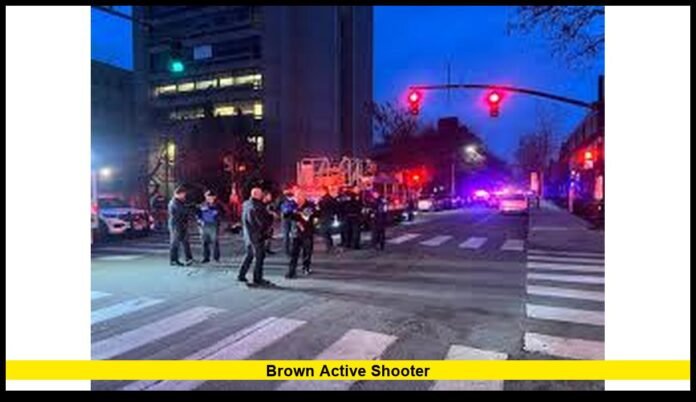

A brown active shooter alert prompted an urgent, multi-agency police response at Brown University in Providence, Rhode Island, on Saturday, December 13, 2025, after confirmed reports of gunfire near campus and in surrounding streets. Authorities verified that multiple people were shot, triggering emergency alerts, shelter-in-place instructions, and widespread disruption across the university and nearby neighborhoods.
The incident unfolded during an active part of the academic calendar, increasing concern for student safety and drawing immediate attention from city officials, law enforcement, and campus administrators.
Initial reports and emergency alerts
The first emergency notifications warned of an active shooter situation near central campus facilities. Brown University’s alert system instructed students, faculty, staff, and visitors to take immediate protective action and remain where they were unless evacuation could be done safely.
These alerts were issued quickly as police responded to calls of gunfire. The purpose was to reduce movement, limit exposure, and allow officers to secure areas without added risk to the public.
Areas affected on and near campus
Early reports focused on the area near the Barus & Holley Engineering building, a heavily used academic space. This location is close to several high-traffic pedestrian routes used by students throughout the day.
As officers expanded their response, reports also referenced nearby streets off campus, including residential and mixed-use areas frequented by students. Because Brown’s campus blends closely into the surrounding city, police treated the situation as both a campus and neighborhood emergency.
Road closures, restricted access, and visible police activity spread quickly beyond the initial location.
Confirmed police response
Providence police confirmed that multiple people were shot during the incident. Emergency medical services responded alongside officers, while additional law-enforcement units assisted with securing locations and searching for a suspect.
Police activity included:
- Establishing safety perimeters
- Clearing buildings methodically
- Monitoring nearby streets and transit routes
- Coordinating with university officials on alerts
Authorities emphasized that the situation was active and fluid during the initial response phase.
Confusion during early custody reports
During the early stages of the response, communications changed regarding whether a suspect had been taken into custody. Initial messaging suggested a person may have been detained, but later updates clarified that no confirmed custody had been established at that time.
This type of clarification is common in fast-moving emergencies, where officers must verify information from multiple scenes and witness accounts before issuing definitive statements.
The official position remained focused on safety guidance rather than suspect details until confirmation could be made.
Impact on students and campus operations
The incident occurred during final exam season, a time when academic buildings, libraries, and study spaces are heavily occupied. Many students were inside classrooms, labs, or dormitories when alerts were sent.
Shelter-in-place instructions meant:
- Classes and exams were disrupted
- Campus movement stopped abruptly
- Students remained locked inside buildings
- Faculty adjusted academic schedules in real time
University staff coordinated internally to monitor student safety and prepare for follow-up guidance once police cleared affected areas.
Safety instructions issued during the incident
Emergency alerts and police guidance reinforced standard safety protocols for active threats. Instructions included:
- Stay inside and secure doors
- Remain quiet and out of sight
- Avoid windows and exterior doors
- Do not leave until official clearance
These steps are designed to minimize risk and help officers distinguish between suspects and civilians during searches.
Neighborhood and citywide effects
Because Brown University is embedded within Providence neighborhoods, the response affected more than just campus grounds. Residents in nearby housing areas received warnings to stay indoors or avoid travel through certain streets.
Public transportation routes experienced delays, and traffic restrictions were implemented to allow emergency vehicles unimpeded access. Businesses near campus also adjusted operations as police activity continued.
The incident underscored how campus safety events can quickly become broader public-safety concerns in urban environments.
What authorities have not yet confirmed
As of today, officials have not publicly released:
- The identities of those injured
- A confirmed total number of victims
- The condition of those hospitalized
- The identity of the shooter
- A motive for the shooting
Law enforcement commonly withholds such details during active investigations to protect evidence, witnesses, and the integrity of ongoing operations.
How active shooter investigations proceed
After immediate threats are addressed, investigators typically move into an intensive evidence-gathering phase. This includes:
- Reviewing security camera footage
- Interviewing witnesses and first responders
- Tracing the sequence of reported gunfire
- Coordinating with hospitals for verified injury counts
- Analyzing physical evidence recovered at scenes
University officials often work alongside city police to manage campus access, counseling resources, and communications with students and families.
Role of emergency alert systems
The rapid issuance of a brown active shooter alert played a critical role in limiting exposure during the incident. Emergency notification systems are designed to reach thousands of people within minutes, providing clear instructions during high-risk situations.
In campus environments, these alerts are especially important because of dense populations and shared facilities. Prompt warnings allow individuals to make immediate safety decisions while authorities respond.
Emotional and academic aftermath
Beyond the physical response, incidents like this have lasting emotional impacts. Students and staff may experience stress, anxiety, or fear even after police clear the area.
Universities typically prepare to:
- Offer counseling and mental health support
- Provide academic flexibility where needed
- Review security measures and response protocols
- Communicate transparently as verified details emerge
While classes and activities may resume, the effects of such events often linger within campus communities.
What to expect next
The next phase of updates will likely include:
- Official confirmation of victim counts and conditions
- Clarified suspect status
- Possible arrest announcements
- Changes to campus access or security policies
Authorities generally release this information once it is fully verified and no longer risks compromising the investigation.
Importance of verified information
In situations involving campus shootings, unverified claims can spread rapidly. Officials have consistently emphasized the need for patience while investigators confirm facts.
Accurate, verified updates help prevent panic, protect ongoing police work, and ensure the public understands what has truly occurred.
Why this incident remains significant
The brown active shooter incident highlights ongoing concerns around campus safety, emergency preparedness, and rapid communication in densely populated academic environments.
As the investigation continues, confirmed information will shape how Brown University and city officials respond, support affected individuals, and review security practices moving forward.