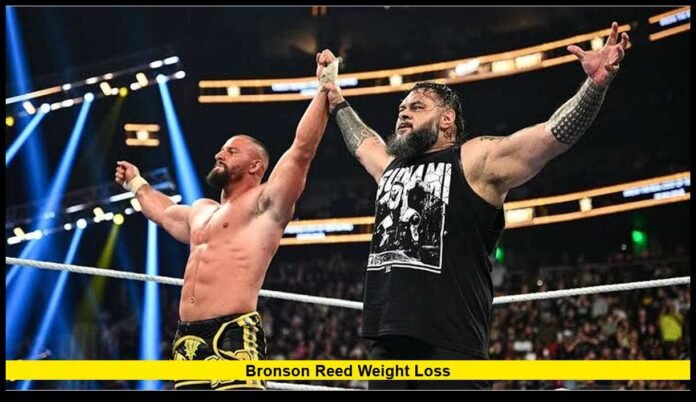

Bronson Reed weight loss became one of the most talked-about developments surrounding the WWE powerhouse after fans noticed a dramatic difference in his physique during his return to the wrestling spotlight. Known for his intimidating size, strength, and ability to deliver devastating high-impact moves, Reed appeared noticeably leaner and more conditioned after spending time away from the ring. His transformation generated considerable interest because it represented more than a change in appearance. It reflected a period of recovery, personal discipline, physical preparation, and renewed determination to compete at the highest level of professional wrestling.
Reed publicly discussed his efforts to improve his physical condition during his time away from WWE. He explained that he worked with a coach, focused on nutrition, and incorporated strength and conditioning into his preparation. His weight-loss journey attracted attention because of the significant difference between his previous physique and the appearance he presented when preparing to return to competition.
For wrestling fans, the transformation also raised interest in how a performer known primarily for power could make substantial changes while maintaining the strength and presence that define his character. Reed’s journey became an important part of the conversation surrounding his comeback, career development, and physical preparation for the demands of WWE.
What Led to Bronson Reed’s Weight Loss?
Reed’s physical transformation developed during a period when his wrestling career temporarily stopped because of injury. In February 2026, he suffered a torn biceps that forced him away from regular WWE competition. The injury arrived at a difficult time because Reed had been building momentum and hoped to remain involved in major wrestling events.
Instead of viewing the setback only as a lost opportunity, he decided to use the rehabilitation period to make meaningful changes to his physical condition. He wanted to return with a different look, improved conditioning, and a renewed sense of purpose.
The decision was closely connected to his professional ambitions. Reed had experienced significant injuries previously, and he understood how quickly an absence could affect a wrestler’s career. Rather than returning with exactly the same physique and training approach, he wanted to make changes that could help him move forward.
His transformation was not presented as an overnight achievement. It developed over months of preparation, training, and changes to his eating habits. The time away from the weekly wrestling schedule also allowed him to focus more consistently on his physical goals.
Reed’s experience illustrates how an injury-related break can become an opportunity for a professional athlete to reassess their training, performance, and personal priorities.
Bronson Reed Reportedly Lost Around 50 Pounds During His Recovery
One of the most significant details Reed shared about his transformation involved the amount of weight he lost during his injury recovery.
He explained that he lost approximately 50 pounds over six months while he was sidelined with the torn biceps. The reported reduction was around 20 kilograms, making it a substantial change in his overall body weight.
The timeframe is important because Reed did not describe the result as something achieved in only a few weeks. His comments indicated that he worked consistently during the months he spent away from the ring.
The transformation became particularly noticeable when he began sharing images and videos showing his training. Fans could see that his physique had changed, with a more defined appearance and a noticeably different overall build.
The change also attracted attention because Reed was already known for being a large wrestler. Losing approximately 50 pounds while remaining a powerful professional athlete created an interesting contrast between his previous appearance and the physique he presented ahead of his return.
Reed’s own comments emphasized the effort behind the change. He said he had become more focused on his nutrition and strength and conditioning, using his time away from WWE to work toward a specific physical goal.
The Difference Between His 50-Pound Loss and Nearly 100-Pound Transformation
The numbers associated with Bronson Reed weight loss can sometimes create confusion because he discussed more than one comparison.
During his injury recovery, Reed said he lost approximately 50 pounds over six months. That figure referred to the weight he dropped during the period he was sidelined with the biceps injury.
Separately, Reed discussed his weight when he returned to WWE in late 2022. He said he weighed approximately 365 pounds at his heaviest during that period and expected to weigh around 265 to 270 pounds when he returned following his 2026 recovery.
That comparison represents a difference of approximately 90 to 100 pounds.
The two figures describe different stages of his physical journey. The 50-pound reduction was associated with the six-month recovery period, while the larger difference compared his projected return weight with his previous heaviest weight.
Understanding the distinction provides a more accurate picture of the transformation. Reed’s body changes did not necessarily occur entirely during one six-month period. His overall weight evolution developed over a longer period, with the injury recovery serving as an important phase in his progress.
Why Reed Decided to Transform His Body
Reed’s motivation was connected to his desire to return to WWE in a way that would immediately attract attention. He had already established himself as a powerful performer, but he wanted to create a new impression when he returned.
Professional wrestling is an entertainment industry where performers must continually develop their characters, physical presentation, and in-ring abilities. Wrestlers who remain on the roster for many years often make adjustments to their style or appearance to keep their performances fresh.
Reed understood that principle and wanted to use his injury absence productively.
He discussed the importance of evolving in wrestling, explaining that performers must continue moving forward because the industry is constantly changing. New wrestlers arrive, existing stars improve, and competition for television time and major storylines remains intense.
His weight-loss journey was therefore connected to his professional identity. He wanted to show fans that he had not simply returned after rehabilitation. He wanted them to see a performer who had taken the time away to improve himself.
The transformation also helped him establish a different visual identity when he returned to WWE television.
A Coach Helped Bronson Reed With Nutrition and Conditioning
Reed credited a coach in Australia with helping him during the transformation. He explained that the coach assisted him with nutrition, strength training, and conditioning.
Having guidance was an important part of his approach because professional wrestling requires a combination of physical abilities. Wrestlers need strength, endurance, mobility, balance, coordination, and the ability to recover between demanding performances.
Reed’s reported training changes focused on improving his overall physical condition rather than simply reducing the number on the scale.
Nutrition was another significant part of his preparation. Reed explained that being away from the constant travel and busy schedule of WWE made it easier for him to concentrate on eating properly.
Professional wrestlers frequently travel between cities, attend media appearances, participate in television tapings, and perform at live events. Such a schedule can make maintaining consistent meals and training routines difficult.
During his recovery, Reed had more control over his daily schedule. That gave him an opportunity to make nutrition a more consistent part of his preparation.
He did not publicly reveal a complete diet plan or specific calorie targets. Therefore, the details of his daily meals, exact nutritional intake, and individual training program remain unconfirmed.
What he publicly discussed was a structured approach involving professional coaching, improved nutrition, and strength and conditioning.
Strength Training Remained Important During His Weight Loss
Reed’s transformation did not involve abandoning strength training. He emphasized physical preparation and conditioning as part of the process, which was important for maintaining the capabilities required by his wrestling style.
Professional wrestling is physically demanding even when a performer is not involved in a traditional competitive sport. A wrestler must perform repeated movements, lift opponents, maintain control during sequences, absorb impacts, and execute finishing moves safely and consistently.
For a powerhouse such as Reed, strength remained central to his identity. His goal was not to become a smaller wrestler who relied entirely on speed. Instead, he wanted to retain his power while improving his overall athletic condition.
Strength and conditioning also allowed him to work on areas beyond appearance. Improving his physical fitness could help him prepare for the demands of matches, promotional appearances, travel, and the unpredictable nature of professional wrestling.
Reed’s approach demonstrated that weight reduction and strength development can be part of the same broader training objective. He wanted to return feeling stronger, better conditioned, and more capable of performing the moves that audiences expected from him.
How His New Physique Could Affect His In-Ring Performance
Reed’s changed appearance naturally raised questions about how his body transformation could influence his wrestling style.
His previous presentation relied heavily on his size, strength, and ability to overwhelm opponents. His signature moves often involved dramatic displays of power, making his physical build an important part of his character.
After losing weight, Reed appeared more defined and mobile. The transformation potentially allowed him to move with greater efficiency while maintaining the strength required for his powerhouse style.
Professional wrestlers must balance several physical demands. Being strong is important, but movement, endurance, timing, flexibility, and the ability to maintain performance throughout a match also matter.
Reed discussed feeling better physically after his changes. He indicated that his improved condition could provide advantages inside the ring, including more energy and greater movement.
His transformation therefore represented a potential change in the way audiences could experience his wrestling. Rather than relying exclusively on his size, he could combine his physical presence with improved conditioning and mobility.
The important point is that Reed remained a powerhouse. His transformation did not remove the characteristics that made him recognizable. Instead, it offered a different version of the same wrestler.
Bronson Reed’s Tsunami Splash Remained His Signature Move
The Tsunami splash is one of Reed’s most recognizable finishing moves. He climbs to the top rope and delivers a high-impact splash onto his opponent, using his size and momentum to create a dramatic finishing sequence.
The move became closely associated with his identity in WWE because of the visual impact it creates. Few wrestlers combine the same physical dimensions and top-rope movement in the way Reed does.
His transformation generated additional interest in the move because fans wondered whether a leaner physique could change the way he performed it.
Reed’s improved conditioning could potentially influence his movement, positioning, and ability to execute the move. A wrestler who feels more comfortable moving around the ring may be able to make adjustments to their performance.
However, Reed’s signature move remained the Tsunami. His new physique did not require him to abandon the finishing maneuver that had become a major part of his character.
The combination of a large physical presence, improved conditioning, and the Tsunami splash continued to give Reed a distinctive presentation.
The Injury Recovery Period Also Affected His Personal Life
Reed’s time away from WWE was not limited to training and rehabilitation. His recovery also gave him more time at home with his family.
He spoke about fatherhood and the experience of spending more time with his daughter while he was away from the wrestling schedule.
For professional wrestlers, the regular travel schedule can make family life challenging. WWE performers frequently travel across the United States and internationally, with schedules that may involve multiple events and long periods away from home.
An injury can interrupt a career, but it can also change a person’s daily routine. Reed’s recovery gave him an opportunity to spend more time with his family while focusing on his physical goals.
The weight-loss process was therefore part of a broader period of personal change. He was recovering from an injury, working toward a return to competition, adjusting his training, and spending additional time with loved ones.
That combination of professional and personal experiences helped explain why Reed described the transformation as meaningful beyond its visual impact.
Bronson Reed’s Previous Injuries and His Desire to Stay Competitive
Reed’s biceps injury in February 2026 was not the first significant physical setback of his wrestling career.
He had previously dealt with a serious foot injury that kept him away from competition for an extended period. These setbacks interrupted his momentum and affected opportunities to compete at major WWE events.
For a wrestler who had ambitions of reaching the top of the company, repeated injuries could create frustration. Reed acknowledged that setbacks had affected his career and that he wanted to make changes to help him remain competitive.
The physical transformation became part of that effort.
He discussed the benefits of carrying less weight, including feeling better during everyday activities and experiencing improvements in movement. He also explained that reducing the load on his body could potentially help with his joints and physical comfort.
Reed’s comments reflected his desire to remain active in professional wrestling for as long as possible. The demands of the industry can be difficult on performers, particularly those who compete in high-impact matches and regularly execute physically demanding moves.
His weight-loss efforts were therefore connected to his broader goal of improving his physical condition and preparing for the future.
Why Fans Noticed His Transformation Immediately
Reed’s transformation attracted attention because it was visible and substantial.
Before his injury, audiences were familiar with his powerful build and large frame. When he returned, the difference in his appearance was immediately noticeable in photographs, videos, and televised segments.
Fans often pay attention to physical changes involving professional wrestlers because a wrestler’s appearance is closely connected to their character. A new physique can affect how a performer is presented, how audiences perceive their athleticism, and how their character fits into WWE storylines.
Reed’s transformation also came after a period of absence, which made the difference more noticeable. Fans had not seen him regularly during the months when he was working on his physical condition.
The timing of his return created an opportunity for WWE to present him with a fresh look. His comeback was not simply the return of a wrestler who had been injured. It was the return of a performer whose appearance had changed considerably.
That visual difference helped make his comeback memorable.
Bronson Reed’s WWE Return Showcased His New Look
Reed returned to WWE television at Sunday Night’s Main Event on September 6, 2026. His comeback attracted immediate attention because fans were seeing him after months away from the ring and following a noticeable physical transformation.
His return involved the ongoing storyline surrounding The Vision and Oba Femi. Reed interfered during the match involving Bron Breakker and Femi, attacking Femi and helping create a dramatic moment on the show.
The comeback reinforced Reed’s role as a powerful member of The Vision while introducing audiences to his changed physique. WWE presented him as a performer who had used his time away to rebuild himself physically and prepare for the next stage of his career.
His return was particularly significant because the biceps injury had interrupted his momentum earlier in the year. Reed had been forced to step away from competition, and his comeback provided an opportunity to re-establish himself on WWE television.
The transformation became one of the most talked-about aspects of his return. Fans noticed his more defined appearance, while Reed explained that he had been working hard during the months he was away.
The comeback also helped create renewed interest in his future matches and potential rivalries.
The Vision, WWE Storylines, and Reed’s Role
Reed’s WWE career during this period was closely connected to The Vision, a faction that included several major performers and played a prominent role in WWE storylines.
His physical presence made him an important part of the group. Reed could serve as the powerhouse capable of intimidating opponents, interfering in matches, and creating dramatic moments.
The faction’s storylines gave him opportunities to appear alongside other wrestlers while continuing to develop his own identity.
The transformation also created a new visual contrast within the group. Reed remained a large and imposing performer, but his more conditioned physique gave him a different appearance compared with earlier versions of his WWE character.
His role was not limited to being the largest member of a group. Reed continued to pursue individual opportunities, and his rivalry with Oba Femi became one of the storylines surrounding his return.
The physical transformation added another layer to his presentation, giving WWE an additional element to highlight when promoting his comeback.
Bronson Reed’s Weight Loss and Mobility
One of the personal benefits Reed discussed was improved mobility.
He explained that everyday activities had become easier after losing weight. This was an important part of his experience because the transformation was not only about his appearance on television.
Carrying less weight can change the way a person moves, but Reed’s own comments were the most relevant evidence of how he experienced his transformation. He said he felt better and noticed improvements in his day-to-day life.
For a professional wrestler, movement is especially important. The job involves climbing, running, jumping, lifting, turning, and repeatedly performing physically demanding sequences.
Reed’s conditioning work was intended to help him prepare for those demands. His new physique suggested that he was working toward greater physical efficiency while maintaining the strength necessary for his wrestling style.
His transformation also gave him a different approach to movement inside the ring. He remained a powerhouse, but his conditioning could help him execute his wrestling sequences with improved energy and mobility.
The Latest Developments Surrounding Bronson Reed
The latest developments involving Bronson Reed are now extremely serious and have changed the context surrounding his weight-loss journey.
WWE announced on November 28, 2026, that Jermaine Haley, known professionally as Bronson Reed, had died at the age of 38. The company confirmed that his death occurred earlier that day and attributed it to medical complications.
WWE’s announcement described Reed as a larger-than-life performer, a devoted family man, and a beloved colleague. The company also expressed condolences to his wife, Paige, their daughter, friends, coworkers, and fans.
Reed’s death comes after his recent injury at Crown Jewel in Saudi Arabia on November 7. During the event, he became involved in a World Tag Team Championship match featuring his Vision stablemates Bron Breakker and Austin Theory.
Reed was thrown from the stage by Oba Femi during the segment and landed through tables and production equipment. Reports following the incident indicated that he suffered serious injuries, including broken ribs and a kidney injury.
He reportedly remained in Saudi Arabia for medical treatment before returning home later in November. News of his death was announced today, and WWE confirmed medical complications as the cause.
However, WWE has not publicly established that the injuries sustained at Crown Jewel caused his death. The connection between the earlier incident and the medical complications has not been officially explained, and it would be inappropriate to present an unconfirmed cause as fact.
The announcement has led to an outpouring of sadness from wrestling fans and members of the professional wrestling community.
What Bronson Reed’s Transformation Meant for His Career
Reed’s weight-loss journey was closely tied to his ambitions as a professional wrestler. He wanted to remain competitive, improve his performance, and return to WWE with a physical presentation that could attract attention.
His transformation showed that he was willing to make significant changes rather than simply return to the same routine he had followed before his injury.
The wrestling business demands constant adaptation. Performers need to remain physically prepared, develop their characters, and find ways to stand out. Reed understood that reality and used his time away to work toward a new version of himself.
His transformation also demonstrated the importance of long-term preparation. The reported 50-pound loss during his recovery was not described as a short-term cosmetic change. Reed discussed working with a coach and focusing on nutrition, strength, and conditioning over several months.
That preparation became part of the story surrounding his return.
His physical evolution could have opened new possibilities for his wrestling style, including more movement, improved conditioning, and a different balance between power and athleticism. Although his future career plans have now been cut short by his death, his transformation remains an important part of the final chapter of his WWE career.
Bronson Reed’s Legacy Beyond His Weight Loss
Bronson Reed was known to WWE audiences for his power, commanding presence, and memorable performances. His signature Tsunami splash helped establish him as a distinctive performer, while his career included championship success and appearances in major WWE storylines.
His professional wrestling journey began years before his latest WWE run. He competed in different wrestling promotions and developed experience before becoming a recognizable name to WWE audiences.
Reed’s career included winning the NXT North American Championship and the 2024 André the Giant Memorial Battle Royal. Those accomplishments helped establish him as a wrestler capable of competing in prominent positions within WWE.
His weight-loss transformation added another chapter to that career. It demonstrated his willingness to change, his determination to recover from injuries, and his desire to return in a stronger physical condition.
For fans, his transformation will remain connected to the comeback that followed his biceps injury. The images of a leaner Reed returning to WWE television became a memorable moment, particularly because the physical change was so noticeable.
His death at age 38 has brought renewed attention to his career, personal life, and contributions to professional wrestling. Fans are remembering not only his physical presence but also the performances, storylines, and moments that made him a recognizable figure.
Final Thoughts on Bronson Reed Weight Loss
Bronson Reed weight loss was one of the most noticeable aspects of his 2026 WWE comeback. The Australian wrestler publicly discussed losing approximately 50 pounds during a six-month injury recovery period, while also describing a larger difference between his previous heaviest weight and the weight he expected to carry when returning to competition.
His transformation involved coaching, nutrition changes, strength training, and conditioning. Reed explained that he wanted to stand out when he returned, improve his movement, feel better physically, and continue evolving as a professional wrestler.
The change was about more than appearance. Reed described improvements in everyday life and believed his new physical condition could benefit his movement and performance inside the ring.
His return in September showcased the results of his work and gave fans a different version of the powerhouse they remembered.
The latest news about Reed’s death at 38 has brought a tragic conclusion to the story of his comeback. WWE confirmed that he died from medical complications, but the company has not publicly confirmed a connection between those complications and his earlier Crown Jewel injuries.
His transformation, career accomplishments, and wrestling performances remain part of his legacy. Fans who followed his journey will remember the determination he displayed while recovering, the dramatic physical changes he made, and the impact he had inside the ring.
Share your memories and thoughts about Bronson Reed in the comments, and stay updated for verified developments surrounding his career and legacy.