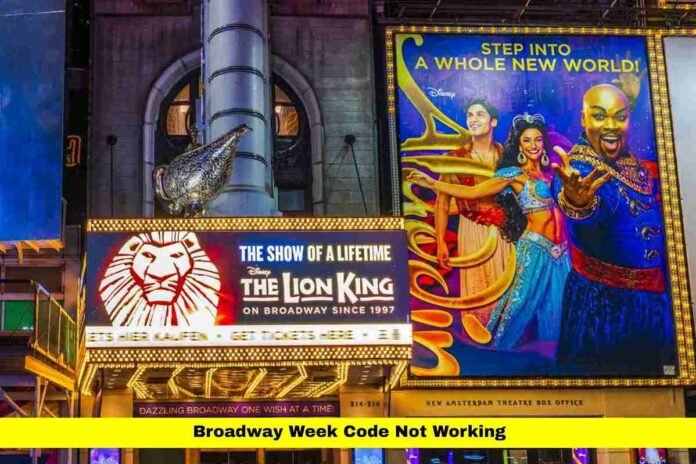

Broadway Week code issues usually happen due to limited discounted seat inventory, restricted performance dates, or timing delays during high traffic. Understanding these limits helps buyers improve their chances of successfully securing discounted tickets.
The broadway week code not working issue has become one of the most talked-about frustrations among theater fans as winter ticket sales open, with buyers across the U.S. reporting checkout errors, missing discounts, and confusing price displays. Broadway Week is designed to make theater more accessible through limited-time ticket offers, but when codes fail to apply correctly, excitement can quickly turn into disappointment. This in-depth guide explains what Broadway Week is, why code issues happen, how the system actually works behind the scenes, and what ticket buyers can realistically do to improve their chances of securing discounted seats.
Understanding Broadway Week and Its Purpose
Broadway Week is a recurring promotional event that typically takes place twice a year, offering reduced-price tickets for select Broadway productions during a specific performance window. The event aims to attract both longtime theatergoers and first-time attendees by lowering the cost barrier to seeing Broadway shows in New York City.
The promotion usually operates on a limited inventory model. Participating shows allocate a fixed number of seats per performance at discounted rates. Once those seats are gone, the promotion may still appear active, but the actual discounts are no longer available for that date or seating section.
This structure plays a major role in why ticket buyers often believe something is wrong with the promo system.
Why Ticket Codes Fail Even When the Promotion Is Live
One of the biggest misunderstandings surrounding Broadway Week is the assumption that a promotional code guarantees a discount on any seat for any performance date. In reality, the system is far more restrictive.
Several factors commonly cause codes to fail at checkout:
Limited Discount Inventory
Each show sets aside only a portion of seats for Broadway Week pricing. When those seats sell out, the discount no longer applies, even though the promotion itself is still ongoing.
Performance-Specific Eligibility
Not all performances during the promotional window qualify. Weekend shows, evening performances, or high-demand dates often have fewer discounted seats or none at all.
Timing of Code Activation
Promo codes often activate at a specific time of day. Buyers who attempt to purchase tickets before full activation may see error messages or unchanged pricing.
Platform Processing Delays
Ticketing platforms sometimes update inventory and pricing in stages. During peak demand, system lag can prevent discounts from appearing immediately.
These factors combined often create the impression that the code is broken, when in fact the discount inventory has simply been exhausted or restricted.
How the Broadway Week Checkout System Actually Works
To understand why codes don’t always apply, it helps to know how ticketing systems handle promotional pricing.
First, the system checks whether the selected show participates in the promotion. Next, it verifies whether the chosen performance date qualifies. Then it checks if eligible discounted seats remain available. Only after those conditions are met does the system apply the promotional pricing.
If even one of those conditions fails, the discount does not appear.
This layered process explains why two users may have very different experiences attempting to purchase tickets for the same show on the same day.
Common Checkout Scenarios That Cause Confusion
Many buyers report similar patterns when encountering problems:
- The promo code is accepted, but ticket prices remain unchanged
- The system displays full-price seats even after code entry
- Discounted seats appear unavailable despite early access
- Fees make the final total appear higher than expected
Each of these situations has a logical explanation tied to inventory rules or pricing structure, but the lack of clear messaging often leads buyers to assume a technical failure.
Why Fees Make Discounts Look Smaller Than Expected
Another major source of frustration is the way ticket prices are displayed. Broadway Week discounts usually apply only to the base ticket price, not to service fees or taxes.
This means that even when a discount is correctly applied, the final checkout total may still seem high. Buyers often expect a 50% reduction on the total cost, but instead see a smaller overall savings due to added fees.
This pricing structure is standard across ticketing platforms, but it contributes significantly to confusion during Broadway Week.
High Demand and Traffic Spikes
Broadway Week promotions generate intense demand within the first few hours of launch. Thousands of users may attempt to purchase tickets simultaneously, especially for popular shows.
During these peak periods, ticketing systems may slow down or temporarily fail to update pricing correctly. Pages may refresh slowly, carts may time out, or promo fields may not respond as expected.
In most cases, these issues resolve once traffic stabilizes later in the day.
Why Some Shows Sell Out Instantly
Not all Broadway productions participate equally in promotional events. High-profile shows often allocate fewer discounted seats due to strong regular demand.
As a result, popular titles may appear sold out for promotional pricing within minutes. Buyers arriving even slightly later may find that the promotion no longer applies, despite being advertised as ongoing.
This reality underscores the importance of flexibility when shopping during Broadway Week.
Strategies That Improve Success Rates
While there is no guaranteed fix, several practical approaches can increase the likelihood of securing discounted tickets:
Try Multiple Performance Dates
Weekday matinees and less popular time slots often have more available discounted seats.
Refresh Inventory Later in the Day
If early attempts fail, checking again after peak traffic hours can yield better results.
Select Seats Automatically
Manual seat selection may limit options. Automatic seat assignment often pulls from discounted inventory first.
Be Open to Alternate Sections
Premium seating rarely qualifies for promotions. Mid-level or rear orchestra sections are more likely to include discounts.
These tactics won’t overcome inventory limitations, but they can improve outcomes in many cases.
Why the Issue Feels Worse Each Year
Social media and online forums amplify frustrations during Broadway Week. As more buyers share negative experiences, it can create the impression that the system is broken across the board.
In reality, many buyers successfully purchase discounted tickets, but satisfied customers are far less likely to post about smooth transactions.
This imbalance in feedback skews public perception and makes the problem feel more widespread than it actually is.
The Role of Transparency in Ticketing
One of the biggest challenges facing Broadway Week promotions is the lack of transparency around seat allocation and eligibility. Buyers are rarely told how many discounted seats are available or when they sell out.
Clearer communication about inventory limits and pricing rules would significantly reduce confusion and frustration. Until then, buyers are left to interpret vague error messages and inconsistent pricing displays.
What Buyers Should Expect Going Forward
Broadway Week promotions are unlikely to change fundamentally in the near future. Limited inventory, performance restrictions, and high demand will continue to shape the experience.
Understanding these constraints helps set realistic expectations. Broadway Week is best viewed as an opportunity, not a guarantee. Some buyers will secure excellent deals, while others may find that discounts are unavailable for their preferred shows.
Why Broadway Week Still Matters
Despite its challenges, Broadway Week remains one of the most accessible ways for new audiences to experience live theater. For many attendees, these promotions provide a first introduction to Broadway that might otherwise be financially out of reach.
The program also supports theaters by filling seats during traditionally slower periods, creating a win-win scenario when expectations are properly managed.
Revisiting the Core Issue
At its core, the broadway week code not working concern is less about malfunctioning systems and more about limited supply, timing, and pricing structure. Once discounted seats are gone, no amount of refreshing or re-entering codes will change availability.
Recognizing this reality can help buyers avoid unnecessary stress and approach Broadway Week with a more informed mindset.
Final Thoughts on Navigating Broadway Week
Broadway Week is fast-paced, competitive, and occasionally frustrating. But for buyers who understand how the system operates and remain flexible with dates and seating, it can still deliver meaningful savings.
Patience, timing, and adaptability remain the most effective tools for navigating this popular ticket promotion.
Have you experienced issues during Broadway Week, or did you manage to secure tickets successfully? Share your experience and help other theater fans navigate the process.