
The British royal family caribbean tour backlash has renewed debate about the monarchy’s historical connections to slavery, the legacy of British colonial rule, and growing calls for reparations across the Caribbean. King Charles III and Queen Camilla’s recent Caribbean visit brought these long-standing concerns into the spotlight, while also reviving memories of the criticism that Prince William and Catherine, Princess of Wales, faced during their 2022 regional tour.
The controversy extends beyond individual royal appearances. For many Caribbean campaigners, the central questions concern historical accountability, the recognition of suffering caused by slavery, and whether the British monarchy continues to have a meaningful role in independent Caribbean nations. Others emphasize the diplomatic, cultural, and economic relationships that royal visits are intended to strengthen.
The latest developments show why royal tours remain politically sensitive, even when their official purpose is to celebrate local communities and strengthen international partnerships. The response to the monarchy also varies across countries, reflecting different constitutional arrangements, historical experiences, and public views about the future of the Commonwealth.
What Happened During the British Royal Family’s Caribbean Tours?
The latest controversy surrounding the British royal family’s Caribbean tour has two important chapters: the 2022 visit by Prince William and Catherine, Princess of Wales, and King Charles III’s Caribbean tour in late October and early November 2026.
Although both visits were intended to strengthen relationships between the monarchy and Caribbean communities, they took place against a difficult historical background. Several countries in the region were once under British colonial rule, and the transatlantic slave trade remains a major source of historical grievance.
The 2022 Tour That Sparked Widespread Criticism
In March 2022, William and Catherine, then known as the Duke and Duchess of Cambridge, visited Belize, Jamaica, and The Bahamas as part of celebrations marking Queen Elizabeth II’s Platinum Jubilee.
The tour included cultural performances, meetings with government leaders, community engagements, and events intended to recognize the region’s relationship with the British Crown.
However, the visit also encountered protests and criticism. Activists called for an apology for slavery, demands for reparations, and greater recognition of the consequences of colonial rule.
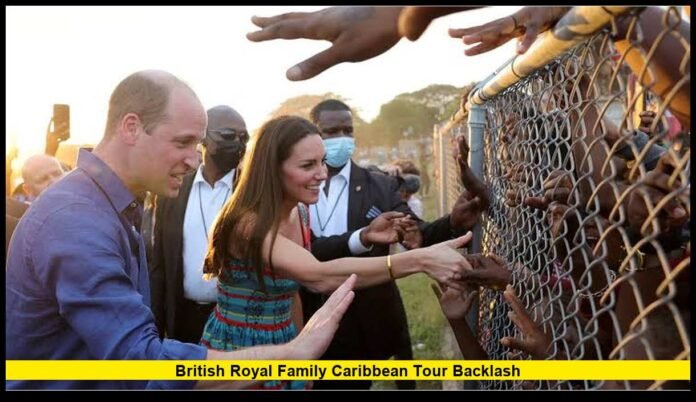
One widely discussed moment involved photographs of William and Catherine greeting children through a wire fence during an engagement in Jamaica. The images drew criticism from people who considered the arrangement an uncomfortable reminder of racial segregation and colonial-era power structures.
The criticism was not simply about one photograph. For many observers, the incident highlighted a broader concern about how royal visits are organized and whether traditional ceremonial practices adequately reflect the experiences and expectations of modern Caribbean societies.
The tour also faced opposition in Belize, where local concerns over land and community interests contributed to changes in the original schedule.
The visit demonstrated that a royal tour could attract enthusiastic crowds and still generate significant political criticism. Public participation in celebrations did not necessarily mean that everyone supported the monarchy or agreed with its historical role.
Why the 2026 Tour Renewed the Debate
King Charles III’s 2026 Caribbean tour brought the same underlying questions back into the public conversation, but on a different scale.
The King visited The Bahamas and Guyana before joining Queen Camilla in Antigua and Barbuda for the Commonwealth Heads of Government Meeting. The official itinerary ran from October 27 through November 4, 2026.
Unlike the 2022 visit, which focused on William and Catherine’s role in the Queen’s Jubilee celebrations, the 2026 trip placed Charles directly at the center of discussions about the monarchy’s historical responsibilities.
The visit took place as Caribbean leaders, campaigners, and members of the public continued to press Britain for a formal apology for slavery and reparations.
Charles acknowledged the suffering and injustice associated with slavery during the tour, but he did not issue a formal apology or announce financial compensation.
His response became a central point of discussion because campaigners were seeking a more explicit commitment to historical accountability.
By the time the tour concluded, the debate had extended beyond the King’s speeches to encompass the future of the monarchy, the Commonwealth, and Britain’s relationships with independent Caribbean countries.
Why Is the British Royal Family Caribbean Tour Backlash Happening?
The backlash has several interconnected causes. Understanding these issues is essential to explaining why royal appearances can become controversial even when the official program emphasizes friendship, culture, and cooperation.
1. The historical legacy of slavery
Britain played a significant role in the transatlantic slave trade, through which millions of Africans were forcibly transported across the Atlantic and subjected to enslavement.
Enslaved people were compelled to work on plantations and in other industries that generated wealth for plantation owners, merchants, and parts of the British economy.
The consequences extended beyond the period of slavery itself. Generations experienced family separation, violence, racial discrimination, and restrictions on freedom. The economic and social structures created under colonial rule also influenced the development of Caribbean societies.
For campaigners seeking reparations, these historical realities cannot be separated from present-day questions about inequality, development, and the distribution of wealth.
They argue that acknowledging the past is important, but that recognition should also be accompanied by meaningful action.
2. Calls for a formal apology
One of the most prominent demands during the 2026 tour was for the British government and monarchy to issue a formal apology for the country’s role in slavery.
King Charles has previously acknowledged slavery as an appalling atrocity and expressed sorrow over the suffering it caused. During the recent visit, he again recognized the injustices of the past.
However, campaigners have argued that expressions of sorrow are not equivalent to a direct apology that accepts responsibility.
The distinction matters because an apology can carry considerable symbolic importance for communities seeking recognition of historical harm.
For those advocating reparations, a formal apology could also represent a starting point for more substantive discussions about responsibility, restitution, and future cooperation.
The British government’s position has remained that it will not issue a formal apology or provide slavery reparations. Buckingham Palace has indicated that decisions on these matters are for the government rather than the King acting independently.
3. Demands for slavery reparations
Reparations are another major source of disagreement.
Supporters argue that countries and communities affected by slavery should receive compensation or other forms of assistance that address its long-term consequences.
The proposals vary. Some campaigners emphasize direct financial compensation, while others support investment in education, healthcare, infrastructure, cultural preservation, and economic development.
Reparations advocates generally argue that the effects of slavery did not end when legal emancipation took place. They believe historical exploitation contributed to structural disadvantages that deserve a serious response.
Opponents of financial reparations question the legal basis for compensation, how liability should be determined, and how payments would be calculated and administered.
The British government has rejected calls for slavery reparations. No compensation agreement was announced during the 2026 royal tour.
This disagreement explains why the King’s expressions of sorrow, while welcomed by some Commonwealth leaders, did not satisfy every campaigner.
4. Questions about the monarchy’s relevance
The backlash also reflects changing attitudes toward the British monarchy in countries that became independent decades ago.
Some Caribbean nations retain Charles as their constitutional head of state, while others have established republican systems. These different arrangements reflect national decisions about governance, identity, and constitutional reform.
For critics, the monarchy represents a continuing connection to Britain’s colonial past. They question whether an inherited institution based in another country should retain a formal constitutional role in independent Caribbean nations.
Supporters of maintaining the monarchy may place greater emphasis on constitutional continuity, diplomatic relationships, cultural traditions, or the practical value of existing arrangements.
The debate is therefore not uniform across the Caribbean. Public opinion differs by country, generation, political outlook, and personal experience.
5. Concerns about royal tour presentation
The 2022 backlash also demonstrated how photographs, ceremonial arrangements, and public engagements can influence perceptions of the monarchy.
A royal visit is carefully planned, but images may take on meanings that organizers did not intend. A scene designed to show community engagement may be interpreted differently when viewed against the history of colonial rule and racial inequality.
Criticism of the William and Catherine tour helped intensify scrutiny of how the royal household approaches future visits to the region.
During the 2026 tour, the larger historical and political debate was already well established before the King arrived. That made it difficult for cultural events and diplomatic engagements to remain separate from demands for accountability.
King Charles’s 2026 Caribbean Tour: The Latest Developments
The most recent tour concluded on November 4, 2026. Its outcome provides a clearer picture of how the monarchy responded to the criticism and which issues remain unresolved.
The Bahamas: Acknowledging Historical Suffering
The Bahamas was the first stop on the King’s itinerary.
Charles attended official engagements and a youth rally in Nassau, where he recognized the suffering and injustices associated with the country’s history.
His remarks connected the past with the need to build opportunities for future generations. The visit also featured celebrations of Bahamian culture, music, and community achievements.
However, the public program unfolded alongside demands for reparations and questions about the continuing role of the Crown.
The Bahamas became independent in 1973 but remains a constitutional monarchy, with Charles serving as its head of state.
That arrangement makes the relationship between historical independence and the continuing monarchy particularly relevant to discussions about the royal family’s role.
For some campaigners, the visit presented an opportunity to demand greater accountability. Others participated in the official celebrations and welcomed the attention given to Bahamian culture and young people.
Charles’s acknowledgment of historical suffering was a significant part of the visit, but it did not produce a formal apology or reparations commitment.
Guyana: A Visit Shaped by the History of Slavery
Guyana was another important stop because of its history under British colonial rule and the violence associated with slavery.
The country was the site of the 1823 Demerara rebellion, during which enslaved people rose against the plantation system. More than 200 enslaved people were killed in the aftermath.
The historical significance of the rebellion remains important to discussions about colonial exploitation, resistance, and the treatment of enslaved Africans.
During the 2026 visit, the debate over an apology continued. Guyanese leaders and campaigners have argued that acknowledging the suffering caused by slavery should lead to a more direct expression of remorse from Britain.
The tour also highlighted issues beyond slavery, including Indigenous rights and longstanding concerns about land.
These matters illustrate why historical accountability can involve several overlapping questions. The effects of colonial rule are not limited to one community or one historical period, and official visits can bring multiple unresolved issues into public discussion.
Charles’s visit strengthened diplomatic engagement, but it did not settle the wider debate over reparations or historical responsibility.
Antigua and Barbuda: The Commonwealth Debate
The final stage of the tour brought Charles and Camilla to Antigua and Barbuda, where they participated in the Commonwealth Heads of Government Meeting.
The summit brought together representatives of Commonwealth member countries to discuss shared priorities, including economic development, climate change, trade, and international cooperation.
However, the legacy of slavery remained a major issue in discussions surrounding the gathering.
For Caribbean campaigners, the Commonwealth provided an opportunity to press Britain and other countries to address historical injustices. Some argued that discussions about the organization’s future should include a serious examination of slavery and colonialism.
The summit also highlighted the fact that Commonwealth membership and constitutional monarchy are not the same thing. Countries can belong to the Commonwealth without recognizing the British monarch as their head of state.
That distinction matters because debates about reparations and historical accountability can continue regardless of whether a country retains the Crown.
The meeting offered opportunities for dialogue, but the conclusion of the tour did not bring a formal British apology or a reparations agreement.
How Did the Royal Family Respond to the Backlash?
The royal family’s response has involved acknowledging historical suffering while continuing to follow the British government’s position on formal apologies and compensation.
King Charles has publicly recognized the brutality and injustice of slavery on previous occasions. His comments during the latest tour continued that approach.
However, the monarchy operates within a constitutional system. The King is expected to follow government advice in the exercise of his official duties and cannot independently determine Britain’s reparations policy.
Buckingham Palace has maintained that a formal apology is a matter for the government. The government, in turn, has not agreed to pay slavery reparations.
This division of responsibility helps explain why Charles could express sorrow without announcing a new policy.
Nevertheless, campaigners have argued that the distinction between the monarch and the government does not fully address the symbolic responsibility associated with the Crown’s historical role.
The response also illustrates the limits of diplomatic language. A statement intended to recognize suffering may be considered constructive by some audiences while being viewed as insufficient by others.
As a result, the royal family faces a continuing challenge: acknowledging historical wrongdoing in a way that is meaningful to affected communities without making commitments that the institution or government is unwilling to undertake.
What Role Does the British Government Play?
The controversy is not solely a royal family issue. Decisions about official apologies, financial compensation, and reparations involve government policy and potentially complex legal and diplomatic questions.
Royal tours are generally organized in coordination with the government, particularly when they involve foreign relations or the King’s constitutional responsibilities.
The monarch’s public statements can carry diplomatic weight, but they do not automatically change the government’s position.
During the 2026 tour, the government maintained its opposition to a formal apology and financial reparations for slavery. Charles did not depart from that position.
Campaigners have challenged the government’s approach, arguing that the moral questions surrounding slavery should not be dismissed solely on the basis of contemporary legal and political considerations.
Other voices have questioned whether direct financial compensation would be fair, practical, or effective, and have called for Caribbean governments to focus on domestic economic priorities.
These competing positions demonstrate that reparations are not a simple matter of issuing a statement or making a payment. Any proposed agreement would involve questions about historical responsibility, eligible recipients, the form of compensation, and the relationship between past injustice and present circumstances.
The royal tour raised these questions again but did not resolve them.
How the Backlash Could Affect the Commonwealth
The Commonwealth is a voluntary association of independent countries, many of which share historical connections to the former British Empire.
Its members have different constitutional systems, political priorities, and views about the monarchy. Some recognize Charles as their head of state, while others are republics.
The Caribbean tour highlighted the challenge of maintaining a shared organization when members have different interpretations of their common history.
For supporters, the Commonwealth can provide a framework for cooperation in areas such as education, development, climate resilience, and trade.
For critics, the organization must confront the legacy of colonial rule more directly if it wants to maintain credibility among younger generations and communities seeking historical justice.
The reparations debate may therefore influence how some Caribbean governments approach their relationship with Britain and the wider Commonwealth.
It is important, however, not to assume that all member states share the same position. Some governments have prioritized reparations, while others have placed greater emphasis on economic cooperation or other policy objectives.
The latest tour did not establish a unified regional position on the monarchy’s future. It did, however, demonstrate that historical accountability remains a significant issue in Commonwealth relations.
Why the Debate About Reparations Matters Beyond the Caribbean
The British royal family Caribbean tour backlash has implications beyond the countries visited by Charles and Camilla.
Across the world, governments, institutions, universities, businesses, and families with historical connections to slavery have faced questions about how they should acknowledge past wrongdoing.
These debates often involve the difference between recognizing historical events and accepting responsibility for their consequences.
Some institutions have pursued historical investigations, public acknowledgments, memorial projects, or community investment. Others have resisted financial compensation or formal apologies.
The Caribbean debate is especially significant because the region experienced extensive plantation slavery and colonial exploitation, while many of its countries now operate as independent states.
The demands raised during the tour also connect to wider discussions about racial inequality, cultural heritage, historical education, and economic development.
For supporters of reparations, the issue is not simply about assigning blame to people living today for actions committed by previous generations. It is about determining whether institutions that benefited from historical exploitation should contribute to addressing its lasting effects.
Critics of reparations may accept the historical importance of slavery while disagreeing over the appropriate form of modern responsibility.
These disagreements are likely to continue because they involve moral judgments, political choices, economic considerations, and differing interpretations of history.
Will the British Royal Family Face More Backlash in Future Caribbean Visits?
Future royal visits may continue to attract criticism if the underlying disputes remain unresolved.
The 2022 tour demonstrated that public relations planning alone cannot prevent controversy when a visit intersects with historical grievances. The 2026 tour showed that even carefully prepared speeches and cultural engagements cannot eliminate demands for an apology or reparations.
Several factors may influence future reactions.
- The government’s position on reparations: A change in policy could alter the tone of future discussions, while continued opposition may sustain criticism.
- Constitutional reform: Countries considering becoming republics may continue to debate whether retaining the British monarch as head of state serves their national interests.
- Engagement with local communities: Meaningful consultation and an understanding of local concerns may help prevent avoidable misunderstandings during royal visits.
- Recognition of historical experiences: Educational initiatives, public acknowledgments, and discussions about colonial history may influence how communities assess the monarchy’s response.
- The priorities of younger generations: Future attitudes may depend on how younger Caribbean citizens view national identity, independence, and the practical benefits of maintaining ties with Britain.
These are possible influences rather than confirmed predictions. There is no official confirmation of a specific future royal tour designed to resolve the reparations dispute.
What is clear is that future visits will take place within a relationship shaped by both historical connections and modern political realities.
Public Opinion Is Not the Same Across the Caribbean
One important point is often lost in coverage of the British royal family Caribbean tour backlash: the Caribbean is not a single political or cultural community with one view of the monarchy.
The region includes independent republics, constitutional monarchies, and countries with different relationships to Britain.
Some residents welcome royal visits as opportunities to showcase their culture, attract international attention, and strengthen diplomatic ties. Others see the visits as reminders of colonial domination and argue that ceremonial celebrations should not overshadow demands for justice.
There are also people who may value aspects of the relationship with Britain while supporting further constitutional independence or historical acknowledgment.
Generational differences can influence these perspectives, but age alone does not determine an individual’s position.
The same is true of reparations. Although many campaigners and regional leaders have called for compensation, there is no basis for assuming that every Caribbean citizen supports the same proposal or agrees on how reparations should work.
A balanced understanding of the controversy requires recognizing this diversity of opinion.
The backlash is best understood as a debate involving competing views about historical responsibility, national identity, constitutional arrangements, and the future of international relationships.
Latest Update: What Happened After the Tour Ended?
As of November 8, 2026, King Charles and Queen Camilla have completed their Caribbean tour, which ended on November 4.
The visit brought renewed attention to slavery reparations, calls for a formal British apology, and questions about the monarchy’s future role in the region.
The King acknowledged historical suffering and expressed sorrow about slavery’s horrors. However, he did not issue a formal apology or announce financial compensation, in line with the British government’s policy.
Following the tour, a senior royal aide described the trip as diplomatically challenging while arguing that Charles had helped maintain relationships in a politically sensitive environment.
The reaction from campaigners remained mixed. Expressions of sorrow were regarded by some as meaningful, but others continued to demand a direct apology and practical measures addressing historical injustice.
The visit also underscored that the constitutional future of individual Caribbean countries remains a matter for those nations to determine.
There has been no official announcement that the tour resulted in a new reparations agreement or a change in the British government’s policy.
The immediate diplomatic engagement has concluded, but the broader political and historical debate remains unresolved.
Final Thoughts
The British royal family Caribbean tour backlash reflects a deeper disagreement over how Britain and the monarchy should address the legacy of slavery and colonialism.
The 2022 visit by William and Catherine exposed concerns about the presentation of royal engagements and the relevance of traditional ceremonial practices. The 2026 tour involving Charles and Camilla brought the debate into sharper focus by placing historical accountability and reparations at the center of public discussion.
The King’s acknowledgment of suffering demonstrated a willingness to discuss the past, but it did not satisfy campaigners seeking a formal apology and concrete action.
For the monarchy, the challenge is to maintain relationships with Caribbean countries while recognizing that their citizens and governments have independent political priorities. For campaigners, the challenge is to turn historical recognition into outcomes they consider meaningful.
The future of the relationship will depend on decisions made by Caribbean nations, the British government, and the institutions involved in these discussions. No single royal visit can settle questions that have developed over centuries.
What the latest tour has made clear is that the monarchy’s historical legacy remains an active political issue rather than a matter confined to the past.
FAQs
Q1. Why did the British royal family Caribbean tour face backlash?
A: The backlash stemmed primarily from demands for a formal apology for slavery, calls for reparations, criticism of the monarchy’s colonial legacy, and questions about whether the British Crown should retain a constitutional role in independent Caribbean nations.
Q2. What happened during William and Catherine’s 2022 Caribbean tour?
A: Prince William and Catherine visited Belize, Jamaica, and The Bahamas in March 2022 to mark Queen Elizabeth II’s Platinum Jubilee. The tour faced protests and criticism over slavery, reparations, and the presentation of certain royal engagements, including photographs of the couple greeting children through a wire fence in Jamaica.
Q3. Which countries did King Charles visit in 2026?
A: King Charles visited The Bahamas and Guyana before joining Queen Camilla in Antigua and Barbuda. The royal tour took place from October 27 to November 4, 2026, and included participation in the Commonwealth Heads of Government Meeting.
Q4. Did King Charles apologize for slavery during the 2026 tour?
A: No formal apology was issued during the tour. Charles acknowledged the suffering and injustice associated with slavery and expressed sorrow about its horrors, but he did not make a formal apology on behalf of Britain.
Q5. Are Caribbean countries demanding reparations from Britain?
A: Yes. Caribbean campaigners and some regional leaders have called for reparations to address the consequences of slavery and colonial exploitation. Proposals differ and can include financial compensation, investment, and other forms of restitution. The British government has rejected demands for slavery reparations.
What do you think the British royal family should do next to address the Caribbean’s concerns about slavery and colonial history? Share your views in the comments and stay updated on the latest royal family developments.