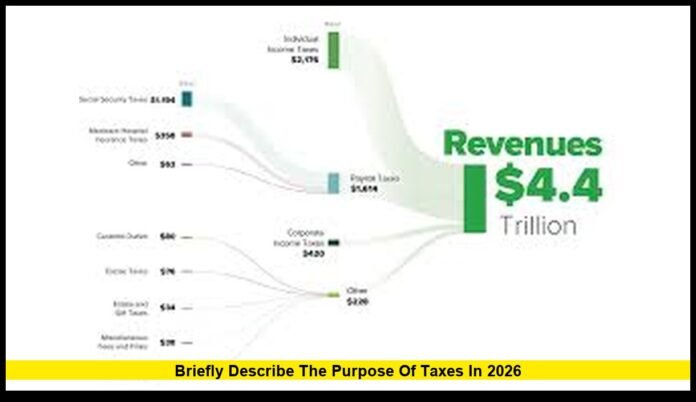

Briefly describe the purpose of taxes and you explain how the United States funds its government operations and public services in 2026. Taxes provide the primary source of revenue for federal, state, and local governments, supporting everything from Social Security and national defense to public schools, highways, and emergency services.
Every year, Americans contribute through income taxes, payroll taxes, sales taxes, property taxes, and other levies authorized by law. Those dollars finance programs and institutions that shape daily life across the country.
This in-depth guide breaks down what taxes are, why they exist, how they are collected, and where the money goes today.
What Are Taxes?
Taxes are mandatory payments imposed by government entities on individuals and businesses. In the United States, taxation exists at three main levels:
- Federal government
- State governments
- Local governments
Each level has authority to collect certain types of taxes and allocate revenue toward specific responsibilities.
The U.S. Constitution grants Congress the power to levy taxes. The ratification of the 16th Amendment in 1913 authorized the federal income tax system, which remains a cornerstone of federal funding.
States and municipalities derive authority from state constitutions and local laws.
The Core Purpose of Taxes in America
The central purpose of taxes is to generate revenue that funds public goods and services. These services benefit the broader population rather than individual consumers alone.
Tax dollars support:
- National defense and homeland security
- Social Security retirement benefits
- Medicare and Medicaid
- Public education
- Transportation infrastructure
- Law enforcement and courts
- Disaster response
- Public health systems
Without tax revenue, these essential services would not operate at scale.
When policymakers or educators briefly describe the purpose of taxes, they emphasize collective funding for shared responsibilities.
Federal Taxes: The Largest Revenue Source
The federal government collects the largest portion of total tax revenue in the United States.
Major Federal Revenue Streams
- Individual Income Taxes
These account for the largest share of federal revenue. Workers pay taxes on wages, salaries, and certain investments. - Payroll Taxes
Payroll deductions fund Social Security and Medicare programs. - Corporate Income Taxes
Businesses pay taxes on profits. - Excise Taxes
Applied to specific goods such as gasoline, tobacco, and alcohol.
The Internal Revenue Service administers federal tax collection. Taxpayers file annual returns and pay any owed balance by April deadlines, unless extensions apply.
How Federal Tax Revenue Is Spent
Congress passes an annual federal budget outlining spending priorities.
Federal expenditures include:
- Social Security benefits for retirees and disabled individuals
- Medicare and Medicaid healthcare programs
- Military operations and veterans services
- Interest payments on the national debt
- Federal agency operations
Social Security and healthcare programs represent the largest categories of federal spending.
Defense spending also accounts for a significant portion of the budget.
State Taxes and Their Role
States maintain independent tax systems to finance state-level services.
Common State Taxes
- State income taxes (in most states)
- Sales taxes
- Corporate taxes
- Motor fuel taxes
Some states, such as Texas and Florida, do not impose a personal income tax. These states rely more heavily on sales taxes and property taxes.
State Spending Priorities
State governments allocate revenue to:
- Public universities and K–12 education
- Transportation and road maintenance
- State police and corrections
- Public health departments
Unlike the federal government, most states must balance their budgets each fiscal year.
Local Taxes and Community Funding
Local governments depend heavily on property taxes.
Local Revenue Sources
- Property taxes
- Local sales taxes
- Fees and permits
Property taxes fund many community services, including:
- Public schools
- Fire departments
- Police departments
- Libraries
- Parks and recreation programs
Local taxation directly impacts neighborhood services and school funding levels.
Social Security and Payroll Taxes
Payroll taxes play a vital role in funding Social Security.
Employees and employers each contribute a percentage of wages up to a taxable maximum. These contributions support retirement, disability, and survivor benefits.
As of 2026, millions of Americans rely on Social Security as a primary source of retirement income.
Payroll taxes also finance Medicare Part A, which covers hospital care for eligible individuals.
This system reflects a direct connection between tax contributions and social insurance benefits.
Infrastructure and Public Investment
Taxes fund the infrastructure Americans use daily.
Examples include:
- Interstate highways
- Public transit systems
- Bridges and tunnels
- Airports
- Water and sewer systems
Fuel taxes and transportation-related revenues often support these projects.
Infrastructure investments promote economic growth and public safety.
Education and Tax Funding
Public education receives funding from federal, state, and local sources.
Local property taxes often form the backbone of school district budgets.
State funding supplements local contributions. Federal funding supports specific programs, including assistance for low-income students and students with disabilities.
Education spending demonstrates how taxes directly impact future generations.
National Defense and Security
A significant share of federal tax revenue supports national defense.
Defense spending covers:
- Military personnel salaries
- Equipment and training
- Overseas operations
- Research and development
Veterans benefits and services also receive federal funding.
National security functions represent one of the most visible uses of federal tax dollars.
Tax Policy and Economic Incentives
Tax laws influence economic behavior.
Policymakers adjust tax rates, deductions, and credits to encourage:
- Homeownership
- Business investment
- Retirement savings
- Charitable giving
Credits such as the Child Tax Credit and Earned Income Tax Credit provide financial relief to qualifying families.
Corporate tax policies affect business decisions on hiring and expansion.
Tax Compliance and Enforcement
The IRS oversees federal tax compliance.
Its responsibilities include:
- Processing tax returns
- Issuing refunds
- Conducting audits
- Enforcing penalties for noncompliance
State revenue departments manage state-level enforcement.
Failure to comply with tax laws can result in financial penalties and legal consequences.
Compliance ensures government operations remain funded.
Transparency and Public Accountability
Government budgets are publicly accessible documents.
Citizens can review spending categories and revenue breakdowns.
At the federal level, Congress debates and approves appropriations. State legislatures follow similar processes.
Public oversight helps ensure accountability in how tax dollars are spent.
Why Taxes Affect Everyday Life
Taxes support many services Americans use without direct payment at the point of service.
Daily examples include:
- Emergency medical response
- Public school attendance
- Safe highways and roads
- Clean water systems
- Public parks
Even programs that individuals do not personally use contribute to broader economic stability.
The interconnected nature of tax-funded systems reinforces their importance.
Ongoing Tax Debates in 2026
Tax policy remains central to political discussions.
Common topics include:
- Federal income tax rates
- Corporate taxation levels
- Budget deficits and debt
- Funding for entitlement programs
- State property tax reforms
Elected officials propose changes based on economic conditions and fiscal priorities.
Voters influence tax policy through elections and civic participation.
A Clear Explanation of Tax Purpose
If someone asks you to briefly describe the purpose of taxes, the most accurate response is this: taxes finance the public institutions, infrastructure, and programs that support society as a whole.
They enable governments to function.
They fund shared services.
They maintain national and local systems that individuals alone could not sustain.
Taxes represent a collective investment in public goods.
Taxes remain a defining feature of civic life in the United States. From payroll deductions to property assessments, Americans contribute to funding the systems that shape daily living.
Understanding how tax revenue works empowers citizens to engage thoughtfully in discussions about public policy and fiscal responsibility.
What are your views on how tax dollars should be allocated in 2026? Share your thoughts and stay informed about the policies shaping America’s future.