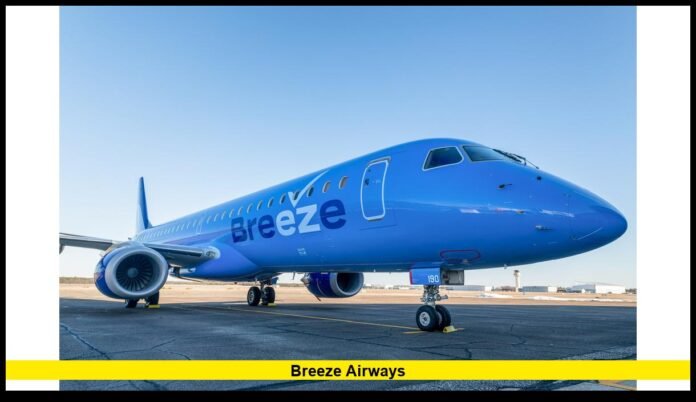

The growth story of Breeze Airways has taken another leap forward in 2025. Known for its low-cost flights and innovative network, the airline has now been officially certified as a U.S. flag carrier—giving it the authority to operate international routes. From underserved domestic cities to popular vacation destinations abroad, Breeze is reshaping the way travelers think about affordable air travel.
The Journey From Startup to Flag Carrier
Founded in 2018 by JetBlue’s David Neeleman, Breeze Airways first entered the skies in May 2021. Its mission was straightforward: connect secondary airports with nonstop service that larger carriers often ignored. In just four years, the airline has transformed from a domestic upstart into an international contender.
The U.S. flag carrier certification earned this year is especially significant. It not only validates Breeze as a serious competitor but also positions it among legacy names like American, United, and Delta. For a startup airline to achieve this status so quickly highlights both the strength of its business model and its ambitious long-term vision.
New International Routes on the Horizon
Beginning in January 2026, Breeze will launch its first slate of international services. Initial destinations will focus on Mexico and the Caribbean, a logical step given the strong demand for leisure travel in these markets.
The first confirmed route is a New Orleans to Cancún nonstop, set to operate weekly with introductory fares starting at $99 one way. Additional routes to Caribbean islands will follow, positioning Breeze as a new low-cost option for winter getaways.
This marks a milestone not only for Breeze but for U.S. aviation more broadly, as no other new carrier in recent years has broken into international markets so quickly.
Domestic Network Still Expanding
While international plans dominate headlines, Breeze Airways continues to grow its U.S. network aggressively. The airline now serves close to 70 destinations, including new nonstop service in 2025 between Hartford, Connecticut and Greensboro, North Carolina.
Breeze has succeeded by focusing on underserved routes that legacy carriers overlook. By connecting smaller cities directly, it saves travelers from the hassle of connecting through busy hubs like Atlanta or Chicago. This “point-to-point” model has proven especially popular with families, budget-conscious travelers, and business flyers looking for convenience.
Fleet Strategy: Building For Growth
Breeze operates a mix of Airbus A220-300 and Embraer 190/195 aircraft. The A220 is the star of the fleet, with modern fuel efficiency, extended range, and a comfortable cabin. It also enables Breeze to operate longer domestic routes and soon international flights.
Key advantages of the fleet include:
- Fuel Efficiency: Lower operating costs help Breeze maintain low fares.
- Range: The A220 can connect U.S. cities to Mexico, the Caribbean, and potentially Canada.
- Passenger Comfort: With wider seats and large windows, the aircraft is consistently praised by travelers.
- Flexible Cabin Layouts: Breeze offers premium seating (“Nicest”) on these jets, giving budget travelers access to business-class comfort at affordable rates.
This flexible fleet strategy supports both short-haul domestic flights and medium-haul international expansion.
Fare Classes and Customer Experience
Breeze Airways takes a different approach to fares compared to traditional low-cost carriers. Instead of a single stripped-down model, it offers four tiers:
- Nice: The most basic, no-frills fare.
- Nicer: Includes extra legroom and one checked bag.
- Nicest: Provides first-class style seating on A220s with meals and priority boarding.
- No Flex Fare: For travelers confident in their plans and looking for the cheapest option.
This structure gives passengers flexibility without overwhelming them with fees. Combined with features like no change penalties and easy mobile booking, Breeze has built a reputation for customer-friendly policies.
Recent Challenges and Incidents
As Breeze grows, it has also faced hurdles:
- Disruptive Passenger Incident: In August 2025, a cross-country flight diverted after a passenger carrying a skateboard became unruly, causing a seven-hour delay.
- Ground Collision: Earlier in 2025, a Breeze Airbus A220 parked in Charleston was struck by a taxiing widebody jet, leading to minor injuries and safety reviews.
These events highlight the realities of rapid growth and the importance of robust safety and operational standards. Despite these setbacks, Breeze has continued expanding its network without major disruptions.
Competitive Landscape: Where Breeze Fits In
The airline industry is notoriously competitive, but Breeze Airways has carved a distinct space. Unlike ultra-low-cost carriers that focus heavily on price, Breeze emphasizes affordability plus convenience.
What sets Breeze apart:
- It avoids congested hubs and instead connects overlooked city pairs.
- It offers budget-friendly fares without eliminating comfort.
- It scales operations carefully, focusing on sustainability rather than overexpansion.
This strategy puts Breeze in a middle ground between ultra-low-cost carriers like Spirit and traditional legacy airlines. By appealing to both budget and comfort-seeking travelers, it is tapping into a wide customer base.
Strategic Advantages
- First-mover in international low-cost expansion: No other new airline has entered these routes with such speed.
- Strong leadership: Founder David Neeleman brings experience from JetBlue, Azul, and other successful airlines.
- Efficient operations: Smaller aircraft mean lower fuel costs and access to airports with shorter runways.
- Community loyalty: Breeze is building strong followings in smaller cities that rarely see direct flights.
Risks and Challenges Ahead
Despite the momentum, risks remain:
- Economic downturns: As a low-cost airline, Breeze is vulnerable to drops in consumer travel spending.
- Competition: Legacy carriers may introduce direct flights on Breeze’s profitable routes.
- Operational complexity: Expanding to international markets requires mastering customs, partnerships, and new regulations.
- Margin pressure: Rising fuel costs and infrastructure expenses could squeeze profitability.
The next two years will be critical in determining whether Breeze can sustain its rapid growth.
What to Watch For in 2026
As Breeze Airways prepares for international service, several developments will shape its future:
- Performance of international routes: Success in Cancún and Caribbean markets will test its global viability.
- Crew base at Raleigh-Durham: A major step in scaling operations and supporting cross-border flights.
- Fleet expansion: Deliveries of additional Airbus A220s will signal readiness for more long-haul routes.
- Partnerships: Potential alliances with hotels or travel companies could strengthen brand loyalty.
- Further markets: Expansion into Canada or Central America may be on the horizon.
Quick Facts About Breeze Airways
| Category | Detail |
|---|---|
| Founded | 2018 |
| First Flight | May 2021 |
| Founder | David Neeleman |
| Current Destinations | Nearly 70 in the U.S. |
| Fleet | Airbus A220-300, Embraer 190/195 |
| Business Model | Low-cost, point-to-point |
| Certification | U.S. flag carrier (2025) |
| International Launch | January 2026 |
| First Route Abroad | New Orleans to Cancún |
| New Crew Base | Raleigh-Durham (2026) |
Why Breeze Airways Matters in 2025
The rise of Breeze Airways is one of the most notable stories in modern aviation. Its ability to blend low-cost efficiency with convenience and comfort has already disrupted domestic travel. With international certification secured, the airline is now ready to compete on a bigger stage.
If its strategy succeeds, Breeze could reshape how Americans view affordable travel—not just across the U.S., but abroad as well.
Closing Thoughts
From underserved domestic routes to international destinations, Breeze Airways has shown how innovation and smart strategy can propel a young airline to the forefront of the industry. Its upcoming leap into international service marks a new chapter filled with both opportunity and challenge.
As travelers look forward to 2026, all eyes will be on Breeze to see if it can maintain its promise of “seriously nice” service at affordable prices. Will it rise as a lasting global contender or face turbulence along the way? The next chapter begins soon, and passengers are eager to be part of the journey.