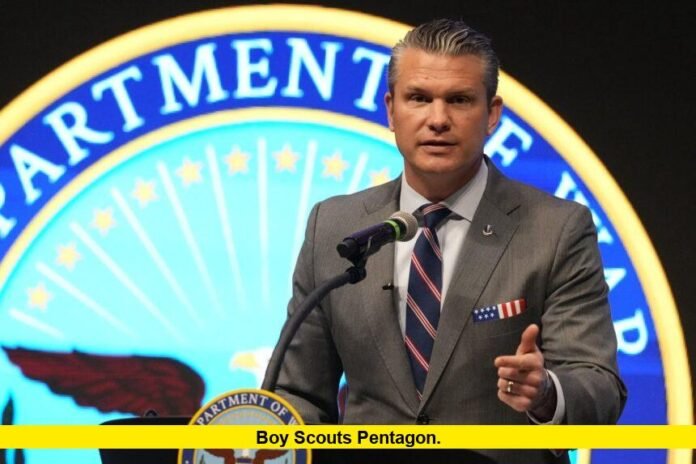

The long-standing relationship between the U.S. military and Scouting America has entered uncertain territory after a sharp warning from the Department of Defense. The boy scouts pentagon dispute escalated this week when defense officials signaled that continued military support could be withdrawn unless the youth organization adopts what the Pentagon describes as “core value reforms.”
The statement has sparked national attention because the military and the former Boy Scouts of America have shared more than a century of partnership rooted in leadership development, service, and patriotism. Now, that alliance faces one of its most serious tests in decades.
If you have strong opinions about the future of Scouting and military partnerships, now is the time to speak up and join the conversation.
What the Pentagon Is Saying
Defense officials made clear that Scouting America’s access to military resources is under review. That includes logistical assistance at large-scale events, the use of military installations for troop meetings, and other forms of institutional support that have traditionally strengthened the organization’s programs.
The Pentagon emphasized that it expects the organization to realign with what it describes as foundational principles consistent with long-standing American and military values. Officials indicated that further announcements may follow depending on how Scouting America responds.
While the Defense Department has not publicly released a detailed list of policy changes it wants implemented, the tone of the message suggests urgency. Military leaders appear to be evaluating whether the organization’s recent policy shifts align with current defense priorities.
A Partnership More Than 100 Years Old
The relationship between the military and the Boy Scouts has historically been close and symbolic. Since the early 20th century, the organization has promoted leadership, discipline, citizenship, and outdoor skills — qualities that overlap with military training and values.
Federal law has recognized the role of Scouting in American civic life. Over the decades, the military has provided manpower and equipment support for national events such as the National Scout Jamboree. National Guard units have assisted with infrastructure, security, medical services, and logistics at these massive gatherings.
Scouts who earn top distinctions such as Eagle Scout have also traditionally received benefits when entering military service, including advanced rank upon enlistment. This longstanding recognition underscores how deeply intertwined the two institutions have been.
Why Tensions Have Emerged
Scouting America has undergone significant changes in recent years. The organization officially changed its name from the Boy Scouts of America and expanded its membership policies to include girls in all programs. It has also broadened its inclusivity framework to welcome youth from diverse backgrounds.
Those shifts reflect the organization’s stated goal of modernizing and expanding its reach. However, some defense leaders have questioned whether these changes align with what they describe as traditional core values.
The Pentagon has recently moved to scale back or eliminate certain diversity, equity, and inclusion initiatives within the armed forces. That broader policy shift may be influencing how defense officials evaluate external partnerships, including their support for youth organizations.
The current dispute appears to center on philosophical alignment rather than a specific operational issue. Still, the practical consequences could be substantial.
What Could Change for Scouts
If the military withdraws support, the impact would likely be felt across several areas:
National Events
Large gatherings such as the National Scout Jamboree rely on significant logistical support. Military involvement has historically helped ensure safety, infrastructure readiness, and operational coordination. Without that backing, event planning and costs could change significantly.
Troops on Military Bases
Many Scout troops meet on domestic and overseas military installations, particularly those serving military families. If access to those facilities is restricted, families stationed abroad or living on bases may face fewer organized youth opportunities.
Recruitment and Career Pathways
Scouting has long served as a pipeline for young people considering military service. The connection fosters familiarity with structured leadership and civic responsibility. A weakened relationship could alter how those pathways function in the future.
Community Engagement
Military communities often rely on local organizations to provide structure and enrichment for children. A shift in the Pentagon’s stance could reshape how these communities coordinate youth programming.
How Scouting America Has Responded
Scouting America acknowledged the Pentagon’s concerns and expressed openness to dialogue. Leaders reiterated the organization’s commitment to developing character, citizenship, and leadership skills in young people nationwide.
The group emphasized its history of working with different administrations and maintaining partnerships across political lines. Officials also highlighted their focus on service, outdoor education, and community involvement.
At this stage, the organization has not announced any specific policy reversals or reforms in response to the Defense Department’s warning.
Broader Political and Public Reaction
The dispute has generated debate across political and civic circles. Supporters of maintaining the partnership argue that Scouting remains a powerful leadership development program that benefits both communities and the armed forces.
Others contend that federal support should align strictly with current defense priorities and philosophical standards. The situation has become part of a wider national conversation about the evolving identity of institutions that have existed for more than a century.
For families, volunteers, and veterans connected to Scouting, the issue carries emotional weight. Many see the relationship between Scouts and the military as symbolic of shared American traditions.
What Happens Next
For now, no formal termination of support has been announced. Preparations for upcoming events continue while discussions unfold behind the scenes. The Defense Department has indicated that additional statements may clarify its expectations.
The coming weeks could determine whether the two institutions reaffirm their partnership or move in separate directions.
If changes occur, they may redefine how federal agencies engage with civic organizations that evolve over time. The outcome could influence not only Scouting America but also other nonprofits that collaborate with government institutions.
The future of this historic partnership now hinges on dialogue, policy decisions, and how both sides choose to define core values in today’s environment.
What do you think this means for the next generation of Scouts and military families? Share your perspective below and stay connected as this story continues to unfold.