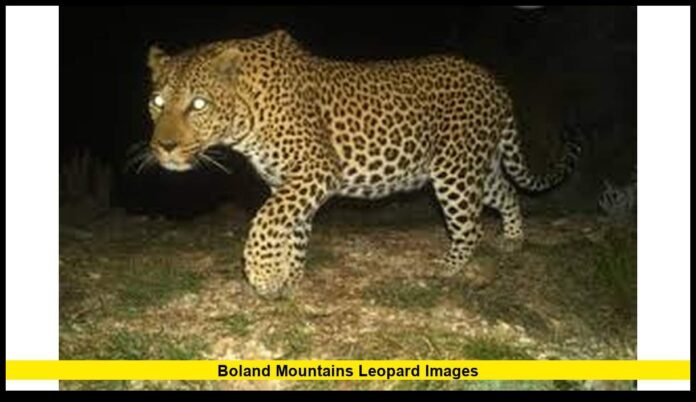

Boland mountains leopard images continue to draw global attention as newly verified photographs confirm that leopards remain active, breeding, and widely distributed across South Africa’s rugged Boland Mountain system.
Captured through carefully managed camera monitoring and controlled photographic surveys, these images provide clear, factual insight into one of Africa’s most elusive leopard populations. They show adult males, females, and younger animals navigating steep slopes, rocky passes, and dense fynbos vegetation in a landscape shaped by isolation and elevation. The visuals are current, authentic, and reflect natural behavior rather than chance encounters.
For readers in the United States, boland mountains leopard images offer a rare look at wildlife survival under pressure and demonstrate how evidence-based conservation works in real time.
A Mountain Landscape That Shapes Leopard Survival
The Boland Mountains are part of South Africa’s ancient Cape Fold Belt, defined by steep ridgelines, narrow valleys, and dramatic elevation changes. This terrain limits human access while creating ideal conditions for predators that rely on secrecy rather than visibility.
Leopards in this region do not live in open grasslands or dense forests. Instead, they occupy a complex mosaic of rock faces, shrub-covered slopes, and isolated corridors that connect fragmented habitats. These conditions shape how they move, hunt, and rest.
Boland mountains leopard images consistently show:
- Movement along natural ridgelines and cliff edges
- Use of narrow paths that reduce energy loss
- Preference for cover-rich routes
- Avoidance of open, exposed ground
This terrain-driven behavior explains why leopards here remain rarely seen by people.
What the Latest Images Reveal About Leopard Presence
Recent boland mountains leopard images confirm that leopards are not confined to a single reserve or valley. Instead, they appear across multiple sections of the mountain complex, demonstrating wide distribution despite low overall numbers.
Key findings visible through verified imagery include:
- Adult leopards maintaining stable territories
- Both sexes present across the landscape
- Repeated appearances of known individuals over time
- Evidence of breeding, including females accompanied by cubs
- Healthy body condition with no signs of malnutrition
These visual confirmations show persistence rather than decline, though population density remains naturally low.
Why Images Matter More Than Sightings
In mountain ecosystems, sightings alone provide limited value. Leopards avoid people by design, and most movement occurs at night.
Boland mountains leopard images provide:
- Direct visual proof of presence
- Identification through unique rosette patterns
- Confirmation of territory use
- Long-term tracking without disturbance
Each image contributes to a larger dataset that replaces assumption with evidence.
How Leopards Are Photographed Without Disturbance
The majority of boland mountains leopard images come from motion-activated camera traps placed along natural travel routes. These devices operate silently and without bait.
Strict monitoring standards ensure accuracy:
- Cameras are installed away from hiking trails
- No food or scent attractants are used
- Locations are rotated to avoid predictability
- Images are reviewed and verified before analysis
This approach allows leopards to behave naturally.
Visual Proof of Mountain Adaptation
One of the most striking aspects of boland mountains leopard images is how seamlessly leopards blend into their surroundings.
Photographs often capture:
- Careful foot placement on steep inclines
- Use of shadowed rock formations for concealment
- Pausing behavior to scan terrain
- Activity during low-light hours
Their spotted coats mirror the patterns of rock and vegetation, making detection extremely difficult without cameras.
Understanding Leopard Territory in the Boland Mountains
Mountain leopards require far more space than their lowland counterparts. Limited prey and steep terrain demand large territories.
Images confirm that:
- Individual leopards range across extensive areas
- Overlap between adults is minimal
- Encounters between leopards are rare
- Territory boundaries remain stable over time
This spatial reality explains why even a healthy population appears sparse.
Human Avoidance Captured on Camera
Boland mountains leopard images consistently show avoidance of human activity.
Documented patterns include:
- Peak movement after midnight
- Minimal daylight travel
- Rapid crossing of open areas
- Preference for undeveloped zones
These behaviors reflect learned survival strategies shaped by proximity to people.
Common Misinterpretations of Leopard Images
Repeated images can create the illusion of abundance. In reality, the same leopard may appear dozens of times across months.
Important clarifications:
- One leopard may trigger multiple cameras
- Repetition does not equal population growth
- Absence of images does not mean absence of animals
- Low density is normal for mountain predators
Accurate interpretation is essential for public understanding.
Ethical Handling of Leopard Images
Responsible use of boland mountains leopard images is critical to conservation.
Best practices include:
- Delayed public release
- Removal of identifiable landmarks
- No real-time location sharing
- Neutral, factual presentation
These safeguards reduce risk to leopards while allowing awareness.
The Ecological Role of Leopards in the Boland Mountains
Even at low density, leopards play a vital role in maintaining balance.
Their presence helps regulate:
- Medium-sized herbivore populations
- Predator-prey dynamics
- Ecosystem stability across elevations
Images confirming their movement reinforce their importance as apex predators.
How Mountain Leopards Differ From Other Regions
Boland mountains leopard images highlight major differences compared to leopards in open landscapes.
| Feature | Boland Mountains | Open Landscapes |
|---|---|---|
| Visibility | Extremely rare | Moderate |
| Activity | Mostly nocturnal | Mixed |
| Territory size | Very large | Smaller |
| Human tolerance | Very low | Variable |
These differences explain why mountain leopard monitoring relies so heavily on imaging technology.
Technology’s Growing Role in Leopard Monitoring
Modern camera systems have transformed leopard research in steep terrain.
Key advantages include:
- Non-invasive data collection
- Continuous long-term monitoring
- Reliable confirmation of survival
- Improved conservation planning
Without imaging technology, monitoring in the Boland Mountains would remain limited and uncertain.
Long-Term Data and Why It Matters
Boland mountains leopard images gain value over time. A single photo confirms presence. Years of images reveal trends.
Long-term analysis allows:
- Detection of territory shifts
- Monitoring of breeding success
- Assessment of survival over decades
- Separation of short-term change from long-term patterns
Consistency is more valuable than volume.
Challenges Behind Capturing These Images
Monitoring in the Boland Mountains is demanding.
Common challenges include:
- Extreme weather fluctuations
- Moisture damage to equipment
- Difficult access for maintenance
- Wildlife interference with cameras
Despite this, image collection continues successfully.
What Images Cannot Show Alone
While powerful, images are not complete on their own. Even the most detailed boland mountains leopard images represent moments in time, not the full biological or ecological story of a population.
Photographs cannot reveal genetic diversity, which is critical for long-term survival. Two leopards may appear healthy on camera, yet genetic isolation or inbreeding risks can only be understood through broader scientific analysis beyond visual records.
Images also provide limited insight into cub survival beyond early stages. While cameras may capture females with young cubs, they cannot track whether those cubs survive to independence, establish territories, or reproduce. That information requires long-term monitoring and population modeling.
Long-term health trends are another blind spot. A leopard may look strong in an image, but subtle issues such as disease exposure, chronic injury, or nutritional stress are rarely visible unless severe. Health assessments depend on repeated data over time rather than single visual confirmations.
Not all human–wildlife conflict events appear on camera either. Incidents involving livestock, road crossings, or illegal activity often occur outside monitored areas, meaning images alone cannot capture the full scope of human pressures on leopards.
For these reasons, images work best when combined with broader ecological monitoring, including habitat assessment, prey surveys, movement analysis, and long-term data comparison. Together, these tools create a more complete and accurate understanding of how leopards persist in the Boland Mountains — beyond what any single photograph can show.
Conservation Reality Remains Fragile
Boland mountains leopard images confirm survival, not security.
Ongoing pressures include:
- Habitat fragmentation
- Road expansion
- Illegal killing
- Declining prey availability
Protection remains essential.
Why These Images Matter to Readers
For U.S. audiences, boland mountains leopard images provide a factual look at wildlife resilience in a rapidly changing world. They show how predators adapt to extreme environments and why conservation depends on evidence rather than assumption.
These visuals also mirror challenges faced closer to home, where large predators navigate human-dominated landscapes. The lessons are global, even when the mountains are far away.
The Future of Leopard Imaging in the Boland Mountains
The future of leopard imaging in the Boland Mountains is increasingly defined by depth of understanding rather than public exposure. As monitoring efforts continue, the emphasis is shifting toward collecting richer, more consistent data that strengthens long-term conservation outcomes without increasing risk to the animals.
Future monitoring will rely on broader but carefully positioned camera coverage. Instead of placing more cameras in easily accessible areas, researchers are focusing on strategic locations that reflect natural movement corridors, elevation changes, and seasonal habitat use. This approach improves data quality while reducing the chance of human interference or disturbance.
Another major priority is the continued refinement of image identification tools. Advances in pattern recognition allow individual leopards to be matched more accurately across years, even when images are taken under different lighting or angles. This improves confidence in population estimates and helps track survival, territory stability, and breeding patterns without the need for invasive methods.
Long-term data comparison remains central to future success. By maintaining consistent monitoring protocols and archiving images over many years, conservation teams can identify meaningful trends rather than reacting to short-term changes. This long-view perspective helps distinguish natural fluctuations from real ecological shifts.
Public education will also play an important role, but with clear boundaries. Verified visuals are used selectively to explain why leopards are rarely seen, how they avoid people, and why discretion is essential for their survival. The focus is on understanding, not access.
Ultimately, the goal of future leopard imaging in the Boland Mountains is protection through knowledge rather than visibility — ensuring that these predators continue to move unseen through their mountain landscape while their presence is clearly understood in the data that supports their conservation.
A Quiet Success Story Still Unfolding
Boland mountains leopard images tell a story of quiet persistence rather than spectacle, illustrating how one of Africa’s most elusive big cats continues to navigate a rugged landscape far from public view. These images, drawn from long-term monitoring efforts, show leopards moving with purpose through shadowed ridges and steep valleys, suggesting that survival here is not accidental but the result of deep ecological adaptation and resilience.
More than just photographs, these visuals act as data points in an ongoing narrative of survival, providing repeated evidence that leopards are maintaining territories, reproducing, and sustaining themselves across a challenging mountain system. Leopards photographed at night, traversing rocky corridors, or pausing among dense shrubbery reveal how they have adapted their behavior to minimize conflict with humans and maximize access to prey in areas where it may be sparse.
What makes this story remarkable is not dramatic footage or once-in-a-lifetime encounters, but the consistency of presence over time. Individual animals have been photographed multiple times across seasons and years, indicating that they are not transient visitors but established residents of the Boland Mountains. Several leopards appear to use the same connections between valleys and slopes year after year, suggesting that traditional movement routes and hunting grounds remain viable despite ecological pressures.
These images also highlight the importance of invisible work in conservation science. Many of the leopards captured were never seen by researchers in person — their existence confirmed only by motion-sensitive cameras working quietly in remote valleys. This underlines a shift in how success is measured: not by public sightings or charismatic narratives, but by long-term evidence of life, movement, and reproduction.
Every authenticated image reinforces that these leopards remain where they belong — part of a functioning ecosystem, shaping and shaped by the rhythms of mountain life. Their persistence is a testament both to the ruggedness of the Boland landscape and to modern conservation strategies that respect the animals’ need for space and secrecy.
In a world where wildlife stories are often defined by loss or conflict, the ongoing visual record of Boland Mountains leopards represents something different: steady survival, recorded in flashes of infrared light and cataloged in databases that help scientists and conservationists understand not just where these leopards are, but how they live, move, and endure.
What do these images mean to you, and how do you think wildlife photography influences conservation awareness? Share your thoughts and stay connected as new verified visuals continue to emerge.