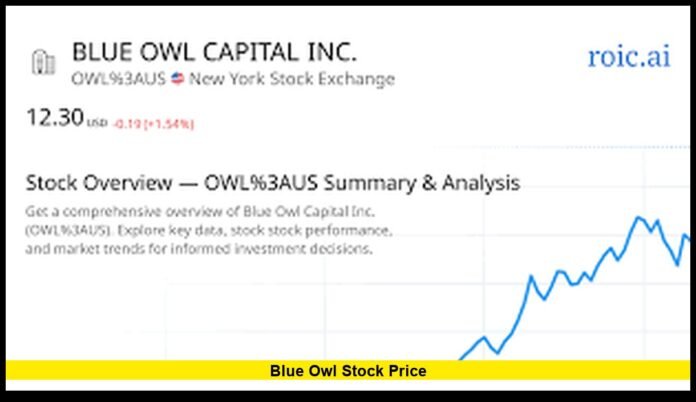

Blue Owl stock price continues to draw strong investor focus as Blue Owl Capital Inc. maintains steady growth across private credit and alternative investment platforms. Recent market activity shows the stock trading within a stable range while investors analyze earnings momentum, fundraising strength, and dividend reliability.
Blue Owl Capital Inc., trading under the ticker OWL on the New York Stock Exchange, has emerged as a major alternative asset manager. Its fee-driven business model and expanding assets under management remain central to how the market values the stock.
Latest Blue Owl Stock Price Overview
During recent trading sessions in early 2026, Blue Owl shares have moved within the mid-teens range. This relatively steady performance reflects investor confidence in recurring revenue and long-term platform growth.
Quick snapshot
- Company: Blue Owl Capital Inc.
- Ticker: OWL
- Exchange: NYSE
- Core segments: Private credit, GP strategic capital, real estate
- Dividend: Ongoing quarterly payouts
The stock’s stability has helped position it as a lower-volatility option among publicly traded alternative asset managers.
Recent Performance Trends
Over the past year, Blue Owl has shown gradual price appreciation supported by strong capital inflows and expanding strategies. Market participants continue to focus on the company’s ability to scale fee-generating assets.
Key performance themes include:
- Consistent trading relative to sector peers
- Continued demand for private credit funds
- Positive sentiment around fee-related earnings growth
- Dividend yield supporting investor interest
Short-term price movement still reacts to broader market conditions, particularly interest-rate expectations.
Main Drivers Behind Blue Owl Stock Price
Multiple factors currently shape how the market values Blue Owl shares.
Assets Under Management Expansion
Rising assets under management remain one of the strongest drivers of valuation. As Blue Owl attracts institutional capital, recurring management fees increase.
Investors often treat AUM growth as a signal of future earnings visibility.
Dividend Consistency
The company’s dividend remains a core attraction. Income-focused investors frequently view Blue Owl as a reliable yield opportunity within the asset management sector.
Dividend predictability tends to support price stability during uncertain markets.
Platform Growth Strategy
Blue Owl continues expanding through new products, partnerships, and platform development. This strategy improves long-term revenue visibility and strengthens competitive positioning.
Growth through scalable strategies remains central to investor confidence.
Interest-Rate Influence
Interest rates play a direct role in private credit demand. Higher yields can make private credit strategies more attractive, supporting fundraising activity.
At the same time, rate uncertainty can drive short-term stock fluctuations.
Earnings as a Key Catalyst
Quarterly results remain one of the most important triggers for price movement.
Investors monitor:
- Fee-related earnings performance
- Realized investment income
- Fundraising totals
- Management outlook
Recent earnings trends have highlighted steady fee growth and strong capital raising. Market reactions have been measured, reinforcing the stock’s reputation for consistency.
Investor Sentiment Around Blue Owl
Overall sentiment toward Blue Owl remains constructive. Many investors see the company as a long-term compounder within the alternative asset space.
Common themes shaping sentiment:
- Long-term expansion of private credit
- Predictable fee-based business model
- Competitive dividend yield
- Scalable institutional platform
Some investors remain cautious about valuation levels compared with traditional asset managers, but structural growth in alternatives continues to support demand.
Peer Positioning in the Asset Management Sector
Blue Owl occupies a distinct position among publicly traded alternative managers due to its strong emphasis on private credit.
Investor comparison factors
| Metric | Blue Owl Position |
|---|---|
| Revenue visibility | Strong |
| Volatility profile | Moderate |
| Dividend attractiveness | Competitive |
| Growth model | Fundraising-driven expansion |
| Market focus | Private credit leadership |
This positioning appeals to investors seeking exposure to alternatives without extreme price swings.
Trading Behavior and Volatility Patterns
Blue Owl shares typically show moderate volatility compared with higher-growth asset managers.
Observed patterns:
- Earnings releases create temporary price movement
- Rate expectations influence sentiment
- Fundraising announcements support upside momentum
- Sector-wide asset manager trends impact valuation
Large price moves usually follow clear fundamental updates.
Institutional Ownership Impact
Institutional investors hold a significant share of Blue Owl stock. This ownership profile contributes to steadier trading behavior and longer investment horizons.
Institutional focus often centers on:
- Fee growth sustainability
- Platform scale advantages
- Dividend durability
This long-term orientation reduces speculative swings.
Long-Term Signals From Current Price Levels
Recent price trends suggest the market views Blue Owl as a stable growth company rather than a high-risk growth stock.
Long-term drivers investors continue tracking:
- Expansion of global private credit markets
- Increasing institutional allocation to alternatives
- Growth of permanent capital vehicles
- Continued fundraising strength
These structural trends remain central to long-term valuation discussions.
Risks That Could Influence Price Movement
Despite steady performance, several risks could affect the stock.
Key risks include:
- Slower fundraising cycles
- Credit market stress
- Interest-rate changes affecting investor demand
- Competitive fee pressure
- Broader market sentiment toward alternative assets
These factors can create short-term volatility even when long-term fundamentals remain intact.
Why the Market Keeps Watching Blue Owl
Blue Owl combines income characteristics with structural growth exposure. This combination continues to attract both institutional and retail investors.
Reasons the stock remains widely monitored:
- Reliable dividend narrative
- Strong private credit demand
- Recurring revenue visibility
- Platform expansion strategy
- Increasing market recognition
Many investors consider the stock a core holding within the alternatives theme.
What Current Blue Owl Stock Price Trends Suggest
Recent trading behavior indicates investors value Blue Owl for consistency and predictable earnings rather than rapid price expansion.
Market signals currently point to:
- Confidence in recurring fee growth
- Continued interest in private credit exposure
- Expectations for steady earnings progression
- Ongoing focus on dividend sustainability
Consistency remains the primary driver of valuation.
Investor Perspective
Blue Owl Capital’s strategy centers on disciplined growth and scalable fee revenue. This approach explains why the stock often moves gradually instead of showing sharp volatility.
As private credit continues expanding, investors will likely keep focusing on fundraising momentum, earnings quality, and dividend policy to assess future price direction.
Blue Owl stock price remains an important indicator of investor confidence in alternative asset managers.
Do you see Blue Owl as a steady income opportunity or a long-term growth story? Share your thoughts and stay updated.