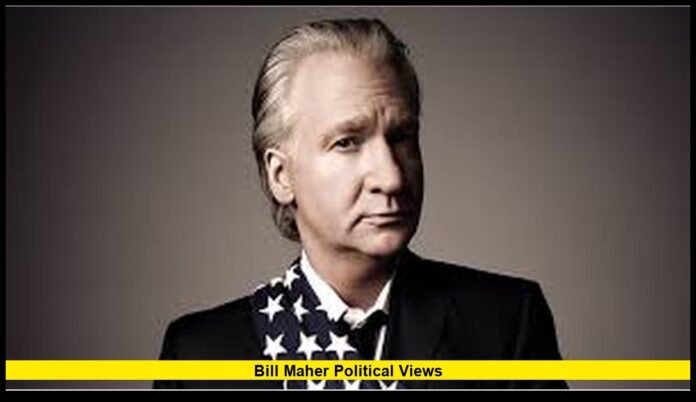

Bill Maher political views remain a major force in American political conversation as of 2026, with the longtime television host continuing to challenge both major parties while maintaining a distinct liberal identity. Through his HBO show and public commentary, Maher has positioned himself as a voice for centrism, free speech, and skepticism toward ideological extremes.
His influence extends beyond entertainment. Maher regularly shapes national debates on culture, elections, and policy. His positions often spark strong reactions because they don’t fit neatly into today’s polarized political landscape.
A Liberal Identity Rooted in Individualism
Maher identifies as a liberal, but his version of liberalism differs from what many associate with modern progressive politics.
His core beliefs include:
- Strong support for civil liberties and free expression
- Advocacy for church-state separation
- Backing scientific research and evidence-based policy
- Support for marijuana legalization and criminal justice reform
He often emphasizes individual responsibility alongside government action. This approach places him closer to traditional liberalism than to newer progressive movements.
Maher has made it clear that he still aligns with Democratic values overall. However, he frequently points out what he sees as messaging problems within the party.
Frequent Criticism of Progressive Politics
A defining feature of Maher’s current stance is his critique of progressive activism. He argues that certain trends within the left are counterproductive.
His concerns include:
- A growing focus on identity over shared national issues
- Increased use of language policing and social pressure
- Political messaging that may alienate moderate voters
Maher often discusses how cultural debates can overshadow economic and policy priorities. He believes that elections are won by appealing to a broad coalition, not just a specific ideological base.
In recent discussions, he has warned that voters in swing regions may feel disconnected from messaging that focuses heavily on niche cultural topics.
Clear Opposition to Donald Trump and Political Extremism
Maher’s criticism of Democrats does not extend to support for conservative populism. He remains firmly opposed to Donald Trump and the broader movement surrounding him.
His positions include:
- Strong warnings about threats to democratic norms
- Rejection of election denial narratives
- Concerns about authoritarian tendencies in politics
Maher frequently highlights the importance of preserving democratic institutions. He has argued that political leaders must respect election outcomes and uphold constitutional principles.
He also criticizes what he sees as a lack of accountability within certain segments of conservative leadership.
Free Speech as a Central Principle
Few issues define Maher’s political outlook more than free speech.
He consistently argues that:
- Open debate is essential for a healthy democracy
- Suppressing unpopular opinions weakens public discourse
- Universities should encourage, not limit, discussion
Maher has expressed concern about the impact of social media outrage on public conversation. He believes fear of backlash can prevent people from speaking honestly.
On his show, he often invites guests with differing viewpoints. This format reflects his belief that meaningful dialogue requires exposure to opposing ideas.
Critique of “Woke” Culture
Maher has become one of the most visible critics of what he calls “woke culture,” a term he uses to describe certain social and political trends.
His criticism focuses on:
- Overemphasis on identity labels
- Corporate adoption of social messaging campaigns
- Public backlash against individuals for controversial statements
He argues that some movements prioritize symbolic actions over practical change. At the same time, Maher continues to support the broader goals behind many social justice causes.
He has consistently backed:
- LGBTQ+ equality
- Anti-discrimination protections
- Efforts to address racial inequality
This dual approach defines his position. He supports progress but questions the methods used to achieve it.
Climate Policy and Scientific Integrity
Maher strongly supports climate action and places heavy emphasis on scientific credibility.
His positions include:
- Acceptance of climate change as an urgent issue
- Advocacy for renewable energy and sustainability
- Criticism of climate denial and misinformation
He has also pushed for practical solutions rather than symbolic gestures. Maher often stresses that meaningful progress requires both policy changes and personal accountability.
Environmental discussions remain a regular part of his commentary, reflecting his long-standing interest in science-based policy.
Economic Outlook and Policy Priorities
On economic issues, Maher aligns with mainstream Democratic positions but avoids more aggressive proposals.
He supports:
- Policies aimed at strengthening the middle class
- Investments in infrastructure and public services
- A balanced approach to taxation and regulation
However, he has raised concerns about:
- Large-scale spending without clear results
- Messaging that fails to connect with everyday voters
- Overly complex policy proposals
Maher often emphasizes clarity and practicality. He believes policies should be easy to understand and directly improve people’s lives.
Public Health and Pandemic Reflections
Maher’s views on public health gained attention during the COVID-19 pandemic and continue to influence his commentary.
He supported:
- Vaccination efforts
- Scientific research and medical innovation
At the same time, he questioned:
- Long-term restrictions and their societal impact
- The balance between safety and personal freedom
Maher has argued that policymakers must consider economic and mental health consequences alongside public health goals. His commentary reflects a broader debate about how to handle large-scale crises.
Criticism of Media and Information Culture
Maher has repeatedly criticized modern media systems, arguing that they contribute to political division.
He points to:
- The rise of partisan news coverage
- Social media algorithms that reward extreme content
- A decline in nuanced, balanced reporting
Maher believes many Americans are exposed primarily to viewpoints that reinforce their existing beliefs. He has called for more critical thinking and media literacy.
His critiques target both conservative and liberal outlets, reinforcing his reputation as an independent-minded commentator.
Generational Divide in Politics
Maher frequently discusses differences between older and younger voters.
He has expressed concern that:
- Younger generations may be more ideologically rigid
- Online activism sometimes replaces real-world engagement
- Exposure to diverse viewpoints can be limited
He encourages younger audiences to engage with history and opposing perspectives. Maher often frames this as essential for maintaining a healthy democracy.
At the same time, he acknowledges that younger voters are driving important conversations about social change.
Public Reaction and Ongoing Debate
Maher’s political views continue to generate strong reactions across the country.
Supporters argue that he:
- Brings honesty to political discussions
- Challenges groupthink within parties
- Encourages open dialogue
Critics say that he:
- Minimizes systemic issues
- Focuses too heavily on cultural critiques
- Can appear dismissive of progressive movements
This divide reflects broader tensions within American politics. Maher’s ability to provoke discussion ensures his continued relevance.
Where He Fits in Today’s Political Landscape
Maher occupies a unique position that does not align fully with any political faction.
He can be described as:
- A liberal voice critical of progressive excess
- A firm opponent of right-wing populism
- A defender of free speech and open debate
This positioning resonates with moderates who feel politically homeless in a polarized environment. It also attracts criticism from those who prefer clearer ideological alignment.
Maher’s approach highlights an ongoing shift in how Americans define political identity.
The Continuing Impact of His Commentary
Maher’s influence comes from consistency and visibility. His long-running platform allows him to engage with current events in real time.
He continues to:
- Address controversial topics directly
- Invite diverse perspectives onto his show
- Challenge political narratives from multiple angles
His commentary often reflects broader national conversations. Whether viewers agree or disagree, his views remain part of the ongoing debate about America’s political future.
Conclusion
The evolution of Bill Maher political views shows a consistent commitment to liberal principles combined with a willingness to challenge both sides. His focus on free speech, skepticism of extremes, and emphasis on practical policy continues to shape public discourse in 2026.
Do you agree with Maher’s take on today’s political climate, or do you think he misses key issues? Share your thoughts and join the discussion.