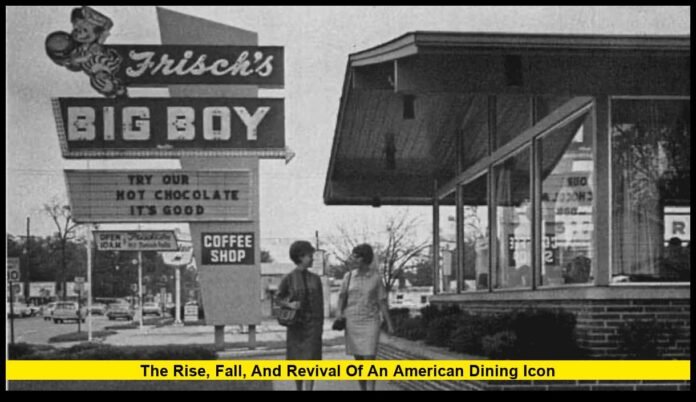

The Big Boy restaurants chain has been a cornerstone of American dining culture for nearly nine decades — a symbol of classic comfort food, family gatherings, and the golden age of diners. But as 2025 unfolds, the brand faces one of its most turbulent chapters yet, marked by location closures, legal battles, and an ongoing struggle to redefine itself in a rapidly changing restaurant landscape.
While the smiling mascot holding up a double-decker burger remains an enduring image of Americana, the question now is whether Big Boy can preserve its legacy in the modern era of fast-casual dining, delivery apps, and franchise restructuring.
A Legacy Built on a Burger: The Origin of Big Boy Restaurants
The story of Big Boy restaurants began in 1936 when entrepreneur Bob Wian opened a small hamburger stand in Glendale, California. One night, he decided to experiment with a double-decker hamburger topped with a unique homemade sauce. The creation became an instant hit, and one of his young customers — affectionately nicknamed “Big Boy” — inspired the restaurant’s name and now-famous mascot.
By the 1950s, Big Boy had become one of the fastest-growing restaurant chains in America. The iconic Big Boy statue, featuring a smiling boy in red checkered overalls proudly lifting a burger, became a roadside symbol for travelers across the country.
At its peak, the Big Boy brand represented more than 1,000 locations nationwide, making it one of the largest family-dining franchises in the United States.
The appeal was simple but effective — hearty portions, friendly service, and a menu built around American staples like burgers, fries, milkshakes, and all-day breakfast. Families came to Big Boy for a reliable, affordable meal in a comfortable, nostalgic setting.
Franchising and Fragmentation: How the Brand Split in Two
What made Big Boy’s early success remarkable also laid the foundation for its complications decades later. Bob Wian’s business model allowed independent operators to open Big Boy restaurants under franchise agreements — but with significant regional autonomy.
Over time, these regional franchisees developed distinct menus, interior designs, and even variations of the mascot. Some of the most well-known included:
- Bob’s Big Boy – The original West Coast brand in California.
- Frisch’s Big Boy – Based in Cincinnati, Ohio, controlling the Midwest territory.
- Shoney’s Big Boy – Operating in the Southern states until eventually splitting off completely as “Shoney’s.”
- Eat’n Park Big Boy – Once part of the Big Boy network in Pennsylvania before rebranding independently.
By the 1980s, the decentralized structure had become a legal and marketing headache. Each regional operator owned specific trademark rights, preventing Big Boy from functioning as a unified national brand.
The most significant division remains between Big Boy Restaurant Group, based in Michigan, and Frisch’s Big Boy, based in Cincinnati — both of which continue to operate under separate ownership today.
Big Boy in 2025: A Brand at a Crossroads
In October 2025, Big Boy restaurants made national headlines when it confirmed the closure of six Dolly’s Burgers & Shakes locations in the Cincinnati and Dayton areas. These restaurants were launched earlier this year by the Michigan-based Big Boy Restaurant Group as part of a regional expansion.
However, legal issues quickly halted those plans. The Cincinnati region already falls under the trademark jurisdiction of Frisch’s Big Boy, which holds exclusive rights to use the “Big Boy” name in Ohio, Indiana, and Kentucky.
A court injunction prevented Big Boy Restaurant Group from operating in that area, forcing the closure of all Dolly’s-branded outlets just months after opening.
The company’s leadership acknowledged the difficulty of the decision but maintained that protecting the brand’s integrity remains the priority.
While the closures represent a setback, they also underscore the brand’s enduring visibility — even decades after its peak, Big Boy continues to generate national attention whenever change occurs.
Frisch’s Big Boy vs. Big Boy Restaurant Group: Understanding the Divide
The two major arms of the brand operate under distinct ownership and management structures:
| Company | Headquarters | Regions of Operation | Approximate Locations (2025) | Signature Offerings |
|---|---|---|---|---|
| Big Boy Restaurant Group | Warren, Michigan | Michigan, Nevada, North Dakota, parts of Ohio | 50+ | The Classic Big Boy Burger, Slim Jim Sandwich, Shakes |
| Frisch’s Big Boy | Cincinnati, Ohio | Ohio, Kentucky, Indiana | 30+ | Frisch’s Big Boy Burger, Hot Fudge Cake, Breakfast Bar |
This long-standing division has allowed both entities to survive independently but has also created confusion among customers who assume they are part of one national chain.
Each operates with its own management, marketing strategy, and product innovations — occasionally leading to subtle differences in taste, décor, and even the Big Boy mascot’s design.
Adapting to Modern Tastes: Reinventing the Menu and Experience
To stay relevant in today’s competitive restaurant market, Big Boy has been actively modernizing its menu and restaurant design.
Recent menu updates include:
- The introduction of plant-based burgers to appeal to health-conscious diners.
- Loaded breakfast sandwiches and customizable breakfast platters to compete with fast-food breakfast chains.
- Seasonal items like apple crumble pancakes, fish sandwiches, and specialty milkshakes.
- A growing focus on digital ordering and delivery, partnering with platforms like DoorDash and Uber Eats.
Additionally, Big Boy locations in Michigan and Nevada have begun pilot-testing express-style diners, designed for faster service and smaller footprints. These updated designs blend nostalgic charm with a sleek, modern look — featuring open kitchens, retro-inspired booths, and digital kiosks for ordering.
The Legal Challenges and Market Pressures
The closure of the Ohio-based Dolly’s locations is a stark reminder of the complex legal framework that Big Boy must navigate. The trademark dispute with Frisch’s Big Boy isn’t new — it dates back to when the companies formally split their territories in the mid-20th century.
But in 2025, the impact is more visible than ever. With restaurant expansion already difficult due to inflation, labor shortages, and rising ingredient costs, the inability to operate in certain high-demand regions limits Big Boy’s potential growth.
In addition to legal boundaries, Big Boy faces the same pressures as many long-standing restaurant chains:
- Labor costs have risen nationwide, cutting into profit margins.
- Food inflation has made menu pricing delicate — raising prices risks alienating loyal customers, while keeping them low squeezes profit.
- Competition from younger, tech-driven chains like Shake Shack, Freddy’s Frozen Custard, and Five Guys has intensified.
Despite these challenges, Big Boy’s leadership continues to emphasize resilience, pointing to loyal customers and decades of brand recognition as key advantages.
Nostalgia and Cultural Legacy of Big Boy Restaurants
For millions of Americans, Big Boy is more than just a restaurant — it’s a cultural memory. Generations grew up visiting their local Big Boy after school, during road trips, or on weekend breakfasts with family.
The mascot itself is one of the most recognizable in U.S. restaurant history. That smiling boy in checkered overalls has appeared on everything from collectible mugs to neon signs, becoming an enduring symbol of 20th-century Americana.
In fact, Big Boy’s cultural influence extends beyond food:
- Movies & TV: The Bob’s Big Boy location in Burbank, California, remains a filming favorite, appearing in films like Heat and Austin Powers: International Man of Mystery.
- Pop Culture: The mascot inspired parodies in art, comics, and even toy lines.
- Memorabilia: Vintage Big Boy collectibles — menus, figurines, and signage — are highly sought after by nostalgic collectors.
This nostalgic factor continues to attract loyal fans and new generations who crave a retro dining experience with modern comfort.
International Footprint and Growth Opportunities
While Big Boy’s U.S. operations face challenges, the brand has enjoyed surprising international success — particularly in Japan.
Big Boy Japan, operated under license by Zensho Holdings, now boasts over 200 restaurants nationwide. The Japanese version of Big Boy offers an elevated menu with steaks, soups, and salad bars — blending Western comfort food with local tastes.
This international success proves that the Big Boy concept still resonates with modern diners when adapted thoughtfully. Some U.S. executives have hinted at plans to learn from the Japanese model, exploring possibilities for menu diversification and global collaboration.
What the Future Holds for Big Boy Restaurants
As the Big Boy restaurants brand moves forward, its future may depend on how effectively it balances heritage with innovation.
The company is expected to focus on:
- Strengthening its foothold in Michigan and Nevada, where customer loyalty remains strongest.
- Launching revamped franchise models to attract new operators with lower startup costs.
- Developing smaller, drive-thru-oriented restaurants to meet evolving dining habits.
- Exploring new branding strategies that celebrate nostalgia while appealing to modern sensibilities.
Franchise leaders believe that Big Boy’s identity as a family-oriented, all-American diner still holds tremendous potential — provided the brand continues to evolve without losing its heart.
Final Thoughts: The Enduring Spirit of Big Boy
The story of Big Boy restaurants is one of reinvention, resilience, and nostalgia. From its humble beginnings as a single California hamburger stand to becoming one of America’s most iconic dining franchises, Big Boy has weathered nearly a century of cultural and economic shifts.
Yes, the closures in 2025 are a setback. But Big Boy’s legacy runs deeper than a few shuttered stores. It’s a story of a brand that defined American family dining and continues to fight for relevance in a world of fast-paced, tech-driven eating.
The smiling Big Boy statue remains a symbol of simpler times — a reminder that some flavors, and some traditions, never truly fade away.
Have you ever visited a Big Boy restaurant? Share your memories or favorite menu item below — and keep the story of this American classic alive.