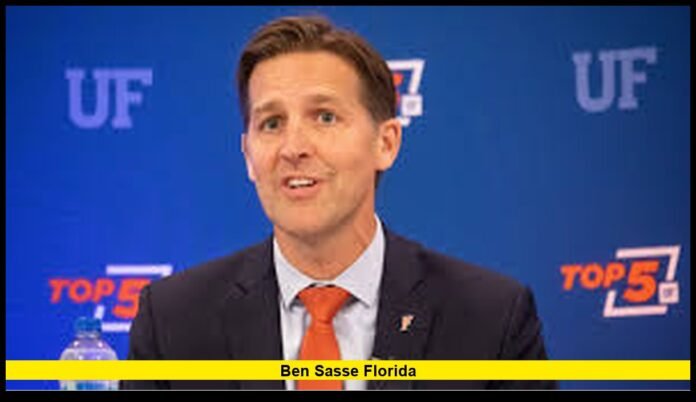

Ben Sasse Florida remains a widely discussed topic following a major personal disclosure by the former U.S. senator and former University of Florida president. Within the first days of December 2025, Sasse confirmed that he is living with stage-four metastatic pancreatic cancer, a diagnosis that has reshaped public conversation around his life, leadership, and legacy. The announcement brought renewed attention to his years in Florida, his path through national politics, and the deeply personal challenges now defining this chapter of his life.
This article presents a complete, factual, and up-to-date account for a U.S. audience. It focuses exclusively on Ben Sasse Florida, offering clarity, context, and depth without speculation or repetition.
Latest Update on Ben Sasse Florida and His Health
Ben Sasse Florida returned to national attention after Sasse publicly revealed that he has been diagnosed with stage-four pancreatic cancer. At 53 years old, he described the illness as terminal and acknowledged that the cancer has already spread beyond the pancreas. The disclosure was direct, sober, and personal.
Sasse did not soften the reality of the diagnosis. He made clear that the disease presents a severe medical challenge, while also expressing resolve to pursue treatment and remain engaged with his family and personal values. His statement reflected acceptance of medical facts alongside determination to live meaningfully during the time ahead.
The news immediately resonated across Florida and the broader United States, particularly among those who followed his tenure at the University of Florida and his earlier career in Washington.
How Ben Sasse’s Path Led to Florida
To understand why Ben Sasse Florida continues to generate interest, it is important to examine the arc of his career and the circumstances that brought him to the state.
Early Academic and Policy Background
Before entering electoral politics, Sasse built a reputation as a scholar and policy expert. His academic background and experience in federal administration shaped his emphasis on institutions, civic responsibility, and long-term thinking. These themes would later define both his political career and his leadership style in higher education.
U.S. Senate Years
Sasse was elected to the U.S. Senate in 2014, representing Nebraska. During his time in office, he gained national attention for his willingness to challenge political norms and emphasize constitutional principles over party loyalty. His tenure coincided with a highly polarized era in American politics, placing him frequently at the center of national debate.
While serving in the Senate, Sasse often spoke about the importance of strong institutions, ethical leadership, and civic trust. These ideas would later play a role in his transition from politics to academia.
The Transition That Defined Ben Sasse Florida
In early 2023, Sasse made a career move that surprised many observers. He resigned from the U.S. Senate after being selected as president of the University of Florida, one of the nation’s largest public research universities. This decision marked a turning point and firmly linked his name with Florida.
Arrival at the University of Florida
Sasse officially assumed the presidency in February 2023. His appointment drew significant attention due to both his national profile and the unconventional selection process used by the university’s governing board. Reactions across the campus and state were mixed from the start.
Supporters highlighted his academic credentials, leadership experience, and national visibility. Critics raised concerns about governance, transparency, and his background in partisan politics. These debates became a defining feature of his presidency.
Leadership Style and Priorities
During his time leading the university, Sasse emphasized institutional stability, civic education, and national competitiveness. He spoke frequently about the role of universities in sustaining democratic culture and preparing students for leadership.
His administration focused on structural decisions and long-term planning. At the same time, his leadership faced scrutiny related to administrative decisions, compensation matters, and faculty relations. These issues kept the University of Florida in the public spotlight throughout much of his tenure.
Departure From the Presidency
In July 2024, Sasse announced that he would step down as president of the University of Florida. He cited serious family health concerns as the reason for his resignation, explaining that personal responsibilities required his full attention.
The announcement marked the end of his formal role in Florida’s higher education system. While the resignation surprised some observers, it aligned with his long-stated emphasis on family and personal responsibility.
Following his departure, Sasse reduced his public presence significantly. For many months, he avoided national commentary, leading to speculation that he was facing challenges beyond those publicly known at the time.
Ben Sasse Florida After Public Office
Even after leaving the University of Florida, the association between Sasse and the state remained strong. His presidency placed him at the center of ongoing conversations about higher education governance, political influence, and institutional leadership in Florida.
Academic and Civic Influence
Although his tenure was relatively brief, Sasse’s leadership period coincided with a time of heightened national focus on public universities. His decisions and statements continued to be referenced in discussions about the future of higher education.
Public Identity
For many Floridians, Sasse became a familiar public figure through his role at the university. His later health announcement added a deeply human dimension to that public identity, shifting focus away from policy debates toward personal resilience.
The Human Story Behind the Diagnosis
The cancer announcement revealed aspects of Sasse’s life that had largely remained private. He spoke openly about the emotional impact of receiving a terminal diagnosis and the challenges of processing such news as a husband and father.
He shared reflections on time, work, and relationships, emphasizing that life does not pause for illness. His message conveyed gratitude for family milestones and everyday moments, even amid medical uncertainty.
Rather than framing his situation as purely tragic, Sasse presented it as a reality to be faced with honesty and intention. This tone shaped much of the public response.
Family at the Center
Family has long played a central role in Sasse’s decision-making. That theme appeared again in his health disclosure.
He referenced his wife and children, highlighting their achievements and daily lives. These details underscored his belief that public roles are secondary to personal relationships. The emphasis on family continuity resonated widely, particularly among readers who followed his earlier decision to leave public office.
Medical Context Without Speculation
Stage-four pancreatic cancer is among the most serious cancer diagnoses. At this stage, the disease has spread beyond the pancreas, limiting treatment options and affecting prognosis.
Sasse acknowledged these realities directly. He also noted that medical science continues to advance, offering treatments that were not available in previous decades. His outlook balanced realism with appreciation for modern medicine, without making predictions or promises.
National and Florida Response
Reaction to the news crossed political and ideological lines. Former colleagues, academic leaders, and members of the public expressed empathy and respect.
In Florida, the response reflected the state’s unique connection to Sasse through the University of Florida. Many reactions focused on his openness and the dignity with which he addressed his situation.
The announcement reframed how many people viewed his time in public life. Political disagreements faded into the background as attention turned toward his personal courage.
How Ben Sasse Florida Fits Into His Broader Legacy
The phrase Ben Sasse Florida now represents more than a professional chapter. It connects several phases of his life:
- A national political career marked by independence
- A transition into academic leadership during a turbulent period
- A decision to step away from power for family reasons
- A public confrontation with serious illness
Together, these elements form a complex portrait of a public figure navigating responsibility, conviction, and vulnerability.
A Timeline of Key Moments
1972 – Born in Nebraska
2014 – Elected to the U.S. Senate
2015–2023 – Served in the Senate
February 2023 – Became president of the University of Florida
July 2024 – Resigned from UF presidency
December 2025 – Announced stage-four pancreatic cancer diagnosis
What Comes Next
At present, Sasse has not outlined future professional plans. His focus appears centered on treatment, family, and personal reflection. There is no indication that he intends to return to public office or academic leadership.
For many observers, the current chapter of Ben Sasse Florida is defined less by titles and more by perspective. His willingness to speak openly about mortality has added a new dimension to how his career is understood.
Why the Story Continues to Matter
Stories like this endure because they blend public history with personal truth. Sasse’s journey through politics, education, and illness reflects challenges faced by many, even if lived under a public spotlight.
His experience serves as a reminder that leadership does not end when office does, and that personal integrity often becomes most visible during hardship.
How do you view the Ben Sasse Florida chapter of his life, especially in light of these recent developments? Share your thoughts and stay connected as this story continues to unfold.