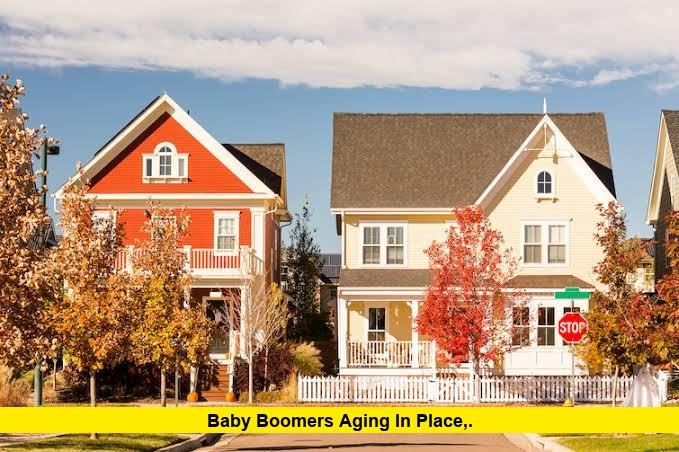

The trend of baby boomers aging in place is becoming increasingly important as millions of older Americans choose to remain in the homes and communities they know rather than move into assisted living or downsize. The decision is being shaped by personal preferences, housing costs, limited inventory, mortgage rates, home equity and the growing availability of ways to modify existing homes for changing needs.
The shift is occurring at a significant demographic moment. The oldest members of the baby boomer generation, born between 1946 and 1964, are now reaching their 80s. New analysis from Harvard’s Joint Center for Housing Studies says the number of households headed by someone age 80 or older is projected to double over the next two decades. At the same time, the number of households headed by baby boomers declined by 3.5 million between 2015 and 2025, reflecting the generation’s movement into older age.
For many homeowners, staying put is no longer simply about avoiding a move. It is becoming a long-term housing strategy.
What Aging in Place Means for Baby Boomers
Aging in place generally means continuing to live safely and independently in one’s own home and community as needs change with age.
That does not necessarily mean remaining in exactly the same physical setup forever. A homeowner may remodel a bathroom, remove barriers, improve lighting, install accessibility equipment, bring relatives closer through an accessory dwelling unit or arrange in-home services.
The Administration for Community Living recommends considering several factors before committing to long-term living at home, including the condition of the property, whether it can be modified, access to medical facilities and long-term-care services, transportation, community resources and financial considerations.
For baby boomers, those questions are becoming more urgent because the generation is entering an age when mobility, caregiving and accessibility needs can change quickly.
Why More Baby Boomers Are Staying in Their Homes
Housing economics are one of the strongest forces behind the current trend.
Baby boomers represent a substantial share of U.S. homeowners, and many have accumulated significant equity over decades of ownership. Some homeowners also have little or no mortgage debt. Selling a long-held property can therefore mean giving up a favorable financial position and purchasing another property at today’s prices and borrowing costs.
Recent housing coverage has also highlighted another problem: there may simply be fewer affordable, appropriately sized alternatives available to older homeowners who want to move. Smaller homes, condominiums and retirement-friendly properties can be expensive, while insurance, property taxes, maintenance and association fees can further affect the economics of downsizing.
That creates a complicated situation. A home may be larger than a retiree needs, yet selling it does not necessarily produce an affordable or more convenient alternative.
As a result, remodeling the existing property can become a practical alternative to moving.
Home Remodeling Is Becoming Part of the Aging-in-Place Strategy
The remodeling market is already responding to the demographic shift.
The National Association of Home Builders said in February 2026 that an aging housing stock, mortgage-rate lock-in and the tendency of older homeowners to age in place are continuing to support demand for remodeling.
Recent renovation data also show the important role baby boomers play in the remodeling market. A 2026 report based on the Houzz & Home Study found that baby boomers represented 54% of renovating homeowners in 2025, while seniors recorded a median renovation expenditure of $25,000.
The projects can range from relatively inexpensive safety improvements to major structural renovations.
Common changes include:
- Walk-in or roll-in showers
- Grab bars and handrails
- Wider doorways
- Step-free entrances
- Improved lighting
- Nonslip flooring
- Lever-style handles
- First-floor bedrooms and bathrooms
- Stair lifts
- Lower or easier-to-reach storage
- More accessible kitchen layouts
The goal is not necessarily to make a house look like a medical facility. Increasingly, homeowners are incorporating accessibility features into attractive modern designs.
Universal Design Is Gaining Attention
Universal design is becoming an important part of the conversation surrounding baby boomers aging in place.
Rather than waiting until someone develops a mobility limitation and then remodeling a home, universal design incorporates features that can work for people with different ages and abilities from the beginning.
AARP research published in 2026 found that 68% of Americans 50 and older consider universal design features important. Wider doorways and hallways were identified as important by 67%, nonslip flooring by 64%, step-free showers by 57%, and grab bars and handrails by 55%.
These features can also benefit people who are not elderly. A step-free entrance can help someone using a stroller, while a walk-in shower can be useful for virtually any adult.
That broader usefulness is one reason accessibility is increasingly being treated as a housing feature rather than simply a senior-care modification.
The Existing Housing Stock Creates a Major Challenge
The desire to age in place does not mean every home is ready for it.
The U.S. Census Bureau previously found that only about 40% of U.S. homes had the most basic aging-ready characteristics: a step-free entrance and a bedroom and full bathroom on the first floor. About 4 million households with an adult age 65 or older reported difficulty living in or using some features of their home.
The problem becomes more significant as people reach advanced ages.
A house that works well for a healthy 65-year-old may become substantially more difficult to navigate at 80 or 85. Stairs, narrow bathrooms, uneven entrances and inadequate lighting can become obstacles that were barely noticed decades earlier.
Harvard’s Joint Center for Housing Studies also reported in July 2026 that the U.S. housing stock had reached a median age of 44 years in 2023, compared with 39 years in 2013 and 28 years in 1993. The analysis found significant differences in the ability of homeowners at different income levels to afford necessary repairs and improvements.
That financial divide is important because aging in place can be easier for homeowners with substantial savings and home equity than for people living on limited retirement income.
Affordability Can Determine Whether Aging in Place Works
Remaining at home does not automatically mean remaining financially secure.
Property taxes, homeowners insurance, utilities, maintenance, repairs and accessibility renovations can become substantial expenses during retirement.
AARP reported in August 2026 that 87% of Americans age 50 and older consider the lack of affordable housing nationwide a significant problem, while 86% said housing costs in their own communities were too high. The survey included 1,017 U.S. adults age 50 and older and was conducted in July 2026.
For homeowners who have paid off their mortgages, the absence of a monthly mortgage payment can make staying attractive. But an older homeowner may still face major costs for roof repairs, plumbing, heating and cooling systems, property insurance or accessibility upgrades.
This means the financial side of aging in place needs to be considered alongside the emotional value of remaining in a familiar home.
Caregiving Is Another Major Piece of the Puzzle
Aging in place also depends on whether adequate support is available.
Someone may be able to live independently at 70 but need assistance with transportation, meals, medication management, household tasks or personal care later.
AARP’s 2026 research on community-based care models noted that rising care costs, workforce constraints and limited access to affordable long-term-care options are creating challenges for older adults who need help remaining at home. In some cases, families are filling the gap through unpaid caregiving.
This makes the surrounding community almost as important as the house itself.
A home located near grocery stores, medical offices, pharmacies, public transportation, family members and community services can be much easier to remain in than an isolated property that requires driving for every essential activity.
ADUs Could Give Baby Boomers Another Option
Accessory dwelling units, or ADUs, are also becoming part of the aging-in-place discussion.
An ADU can provide a smaller living space for an older adult while keeping family members nearby. Depending on local regulations and the property’s design, it can also provide space for caregivers or family members while preserving some independence and privacy.
AARP updated its guidance on ADUs in August 2026, highlighting their potential to help older adults remain close to family, manage caregiving arrangements and potentially offset housing costs.
For some families, an ADU can provide an alternative to either moving an older relative into a separate facility or having multiple generations share one living space.
Aging in Place Does Not Mean Staying Alone
One misconception about aging in place is that it necessarily means living independently without assistance.
In reality, aging in place can involve a network of family caregivers, professional home-care workers, transportation services, meal programs, community organizations and technology.
The Administration for Community Living identifies services such as transportation, home-delivered meals, help with household chores, personal-care assistance and adult day programs as potential supports for people who want to remain at home.
Technology can also play a role, although it cannot replace human support. Medical alert systems, smart-home devices, automated lighting and other assistive technologies can make certain daily tasks easier and provide additional safety measures.
The Housing Market Is Being Affected Too
The growing number of baby boomers remaining in their homes has implications beyond individual households.
When older homeowners stay in large properties for longer periods, fewer of those homes become available for younger households. Recent housing analyses have connected the tendency of older homeowners to remain in place with broader inventory constraints.
At the same time, moving older adults into smaller housing does not automatically solve the problem. The United States needs enough affordable, accessible and appropriately located housing for older residents before downsizing becomes a realistic option for everyone.
Harvard’s latest analysis suggests the demographic transition will increasingly reshape housing demand as the population aged 80 and older expands.
The challenge, therefore, is not simply getting baby boomers to move. It is creating a housing system that gives older adults meaningful choices.
What Baby Boomers Should Consider Before Aging in Place
For homeowners considering remaining in their current property, planning ahead can reduce future difficulties.
Important questions include whether there is a bedroom and full bathroom on the main floor, whether entrances can be made step-free, whether a bathroom can accommodate mobility equipment, and whether essential services are accessible without driving.
Homeowners should also consider how they would pay for major repairs or modifications and who could provide assistance if their needs change.
The Administration for Community Living notes that some state and local programs may provide loans or grants for home modifications and repairs. Older adults can also contact their local Area Agency on Aging to learn about available services and financial assistance.
Planning before a crisis occurs can make the transition much easier.
The Future of Baby Boomers Aging in Place
The aging-in-place trend is likely to remain a major feature of the U.S. housing market as the baby boomer generation moves deeper into retirement.
The preference for remaining at home is strong. Pew Research Center reported in 2026 that 93% of U.S. adults age 65 and older live in their own home or apartment. Among older adults living independently in their own homes, 60% said they would prefer to remain there with someone providing care if they could no longer manage independently.
At the same time, the latest housing research shows that preference alone is not enough. Homes need to be physically adaptable, communities need accessible services and transportation, and older adults need financial resources to maintain their properties.
The result is a major shift in how Americans think about retirement housing. For many baby boomers, the goal is no longer simply finding a retirement destination. It is transforming an existing home into a place that can continue working as life changes.
The Bottom Line
Baby boomers aging in place is being driven by a combination of personal preference, housing economics, limited alternatives and a growing recognition that homes can be adapted for later life. From wider doorways and safer bathrooms to ADUs and community-based care, the concept is evolving beyond simply staying in one house.
The biggest challenge will be making aging in place possible not only for homeowners with substantial resources, but also for older Americans facing high housing costs, limited savings or homes that require significant repairs.
As the oldest baby boomers enter their 80s, the decisions made today about housing design, affordability, caregiving and community services will increasingly shape what aging in America looks like.
What do you think the future of aging in place will look like for baby boomers? Share your thoughts and stay tuned for the latest developments in U.S. housing and aging trends.