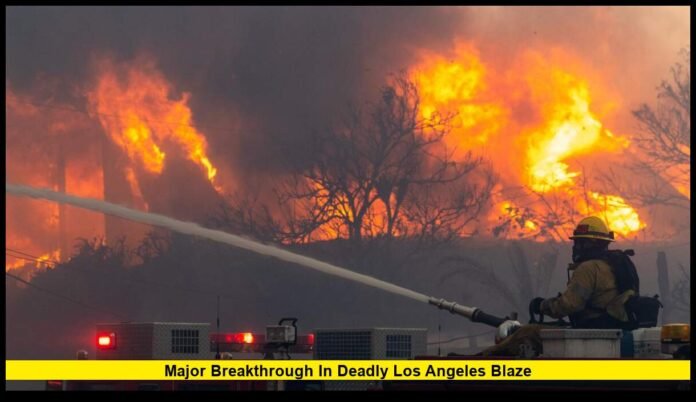

An arrest made in Palisades Fire has brought a major breakthrough in one of California’s deadliest wildfires in recent years. Authorities have confirmed that a 29-year-old man has been taken into custody in connection with the January 2025 blaze that devastated Pacific Palisades and surrounding neighborhoods in Los Angeles County.
The fire killed 12 people, destroyed thousands of buildings, and forced tens of thousands of residents to evacuate in the middle of the night. Officials say the suspect intentionally started the fire, and his arrest ends months of intense investigation into the tragedy that shook Southern California.
The Arrest and Charges
On October 8, 2025, law enforcement announced the arrest of the suspect believed to have started the blaze. The man was apprehended out of state and will be extradited to California to face multiple federal charges, including arson resulting in death.
Investigators allege that he deliberately set the fire late on the night of January 1, near a hiking trail in the Pacific Palisades hills. The area was dry, winds were strong, and humidity was low—perfect conditions for a small flame to become a fast-moving inferno.
After setting the fire, officials say the suspect left the area, allowing the flames to grow unchecked overnight. By morning, the fire had already spread across hillsides and into residential neighborhoods.
The investigation took months and involved federal, state, and local agencies. Fire experts examined burn patterns, forensic evidence, surveillance footage, and witness statements to track down the individual responsible. Prosecutors have stated they will seek the maximum penalty allowed by law. If convicted, the suspect could face life in prison.
How the Palisades Fire Began
The Palisades Fire ignited just after midnight on January 2, 2025. It began near a trailhead in brushy terrain overlooking Pacific Palisades, a coastal neighborhood known for its scenic views and winding canyon roads.
The weather that night was a dangerous mix of strong Santa Ana winds and bone-dry vegetation. Once the fire started, winds carried embers across canyons, igniting multiple fires almost simultaneously. Within hours, the blaze had grown beyond the capacity of local crews to contain.
Residents awoke to evacuation alerts, sirens, and, in many cases, the orange glow of flames near their homes. Many had only minutes to gather essentials and escape through smoke-filled streets. Narrow canyon roads quickly became congested as thousands of people tried to leave at once.
The Scale of Destruction
The Palisades Fire became one of the deadliest and most destructive wildfires in Los Angeles County history.
Key figures show the scale of the disaster:
- Acres burned: More than 23,000
- Structures destroyed or damaged: Around 6,800 homes, businesses, and buildings
- Lives lost: 12 people, including residents and emergency personnel
- Evacuations: Tens of thousands of residents displaced
- Containment: Achieved by late January 2025 after weeks of firefighting
Entire neighborhoods were wiped out. Businesses that had been family-owned for generations were reduced to ash. Smoke blanketed the region for days, forcing schools to close and worsening air quality across Los Angeles.
The environmental toll was also immense. Vegetation that helped stabilize hillsides was destroyed, increasing the risk of mudslides during the rainy season. Wildlife habitats were lost, and natural landscapes in the Santa Monica Mountains were permanently altered.
Emergency Response: Quick Action, Lingering Issues
Firefighters and first responders worked heroically during the Palisades Fire. Crews battled extreme conditions, often facing unpredictable winds and walls of flames. Their efforts saved countless lives and prevented even greater destruction.
However, the fire also exposed critical weaknesses in emergency systems. A post-incident review highlighted several key issues:
- Delayed or inconsistent evacuation alerts in some neighborhoods caused confusion and slowed evacuations.
- Coordination between agencies was sometimes fragmented, slowing response times.
- Emergency protocols were not fully adapted to the speed and scale of modern wildfires.
- Technology gaps meant not all residents received timely alerts.
These findings prompted calls for stronger evacuation planning, improved interagency communication, and investment in modern wildfire detection systems. Officials acknowledged that while the firefighting response was strong, communication and planning must improve to save more lives in future disasters.
Legal Implications of the Arrest
The arrest made in Palisades Fire has significant legal implications. The suspect faces multiple federal charges, including arson resulting in death—one of the most serious wildfire-related crimes under U.S. law. Convictions on such charges can result in life sentences.
Beyond the criminal case, civil lawsuits are expected. Victims, insurance companies, and local governments are likely to seek damages for the billions of dollars in destruction the fire caused. These legal proceedings could take years and set important precedents for future wildfire cases, especially those involving intentional acts.
Policy Changes on the Table
The fire has also accelerated discussions at state and local levels about how to better prevent and respond to wildfires. Lawmakers and fire officials are evaluating several key measures, including:
- Early detection systems: Using satellite imagery, cameras, and AI-powered monitoring to spot fires faster.
- Evacuation protocols: Modernizing alert systems to ensure everyone receives clear, timely instructions.
- Stronger arson penalties: Increasing consequences for intentional fires set in high-risk areas.
- Vegetation management: Reducing wildfire fuel near homes and neighborhoods.
- Better coordination: Improving how local, state, and federal agencies work together during emergencies.
These potential changes reflect a growing reality: wildfires are becoming more frequent, more intense, and more urban. Communities like Pacific Palisades are on the front lines.
Recovery and Rebuilding
Once the fire was fully contained by late January 2025, recovery efforts began. The first phase focused on debris removal to make neighborhoods safe. By summer, most burned properties had been cleared, and homeowners began the long road to rebuilding.
Recovery milestones include:
- Debris cleared from nearly all affected properties.
- Temporary housing provided to families who lost their homes.
- Fast-tracked permits to speed up reconstruction.
- Infrastructure repair on damaged roads, power lines, and water systems.
- Environmental restoration projects to stabilize burned terrain and restore ecosystems.
Rebuilding, however, is a slow process. Many families face insurance disputes, rising construction costs, and emotional trauma. Some neighborhoods may take years to fully recover.
Community Strength and Resilience
Despite the destruction, the Pacific Palisades community has shown remarkable resilience. Residents have supported one another through volunteer work, fundraising, and community rebuilding initiatives.
Many homeowners are now adopting fire-resistant building materials and creating defensible space around their properties. Local organizations are holding preparedness workshops to help residents better protect their homes in future fire seasons.
The tragedy has also brought people closer together. Neighbors who once barely knew each other have become partners in recovery, demonstrating the strength of community during times of crisis.
Looking Ahead
The arrest marks a crucial moment in the Palisades Fire story. For months, the community has waited for accountability, and this development brings a sense of justice. Legal proceedings will unfold in the months ahead, likely revealing more details about how and why the fire was started.
Meanwhile, recovery and rebuilding efforts continue, and state officials are working to modernize wildfire prevention strategies. The Palisades Fire is already shaping policies that will affect how California prepares for future fire seasons.
The arrest made in Palisades Fire case is more than a legal headline. It’s a reminder of the devastating human and environmental cost of wildfires—and the importance of preparation, communication, and accountability. The community’s recovery will take time, but this moment represents a significant step forward.