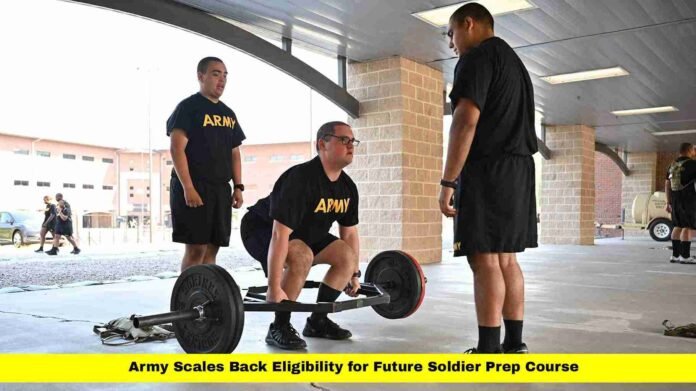

The Army scales back eligibility for Future Soldier Prep Course as part of its ongoing effort to streamline training and ensure recruits meet strict standards before entering basic training. This change affects how potential soldiers can access the preparatory program and focuses resources on targeted preparation in either physical fitness or academic skills.
Overview of the Future Soldier Preparatory Course
The Future Soldier Preparatory Course was created to help recruits achieve the Army’s physical and academic benchmarks before joining basic training. The program includes two main tracks: fitness and academic. The fitness track aims to improve strength, endurance, and overall readiness, while the academic track helps recruits enhance their test scores, particularly on the Armed Services Vocational Aptitude Battery (ASVAB). Since its launch, the course has helped thousands of recruits prepare effectively, giving them a stronger foundation for success in the Army. The program has been widely praised for reducing attrition rates in early training by ensuring that recruits arrive better prepared physically and mentally.
Recent Changes to Eligibility
The Army has recently announced that recruits will no longer be allowed to enroll in both tracks simultaneously. Recruits must now choose to focus on either the fitness or the academic track. This adjustment is intended to concentrate resources and training efforts more effectively, allowing instructors to provide targeted guidance in one area rather than dividing attention across both. By narrowing the eligibility, the Army aims to maintain high standards while optimizing the preparatory program for greater impact on recruits’ success. The change also encourages recruits to focus their personal preparation efforts strategically to meet Army requirements efficiently.
Impact on Recruits
Limiting enrollment to one track has several implications for potential recruits. First, it allows for more specialized and effective training, as instructors can devote full attention to either physical conditioning or academic improvement. This targeted approach may help recruits achieve higher performance outcomes in the chosen area. Second, the narrowed eligibility could reduce the total number of recruits participating in the preparatory course, ensuring that only those who meet specific criteria gain access. Third, it sets clearer expectations for recruits, signaling that the Army places a strong emphasis on readiness and standards before entry into basic training. Recruits now need to demonstrate commitment and progress in the chosen track to qualify for the program.
Benefits of the New Approach
By focusing on a single track, the Army can provide more efficient and impactful support for each recruit. Recruits concentrating on fitness will receive structured, rigorous training tailored to their needs, while those in the academic track will have dedicated time to strengthen their knowledge and improve ASVAB scores. The new system allows instructors to track progress more effectively and intervene with personalized guidance when necessary. Concentrating efforts in one area reduces distractions and increases the likelihood that recruits will meet the Army’s standards, ultimately creating a stronger and more capable cohort entering basic training.
Strategic Considerations for Recruits
Recruits considering the preparatory course should carefully evaluate their strengths and weaknesses to determine which track to pursue. Those needing improvement in physical readiness may benefit most from focusing on the fitness track, while recruits who struggle academically or need to boost ASVAB scores should prioritize the academic track. Proper planning, discipline, and commitment to the chosen path will be essential to succeeding in the program under the new eligibility guidelines. Additionally, recruits should maintain overall preparedness outside the program, including nutrition, rest, and personal study habits, to maximize their performance in basic training.
Looking Ahead
The Army’s decision to scale back eligibility reflects a broader focus on efficiency, readiness, and maintaining high standards for all incoming soldiers. While the preparatory course may see a reduction in total participants, those who do enroll will likely enter basic training better prepared for the physical and academic challenges ahead. The adjustment also signals that the Army is adapting its programs to meet evolving recruitment goals while providing meaningful support to recruits who demonstrate commitment and potential. Recruits are encouraged to stay informed about program updates and tailor their preparation to align with the Army’s expectations.
Conclusion
The Army’s revision of the Future Soldier Preparatory Course eligibility is a significant change that will shape how potential soldiers prepare for basic training. By limiting enrollment to one track, the Army is concentrating its resources, increasing training efficiency, and reinforcing high standards. Prospective recruits should evaluate their personal needs, select the appropriate track, and dedicate themselves fully to preparation. Staying focused and informed will give them the best chance of success in the Army and help ensure that they are ready to meet the challenges of military service.