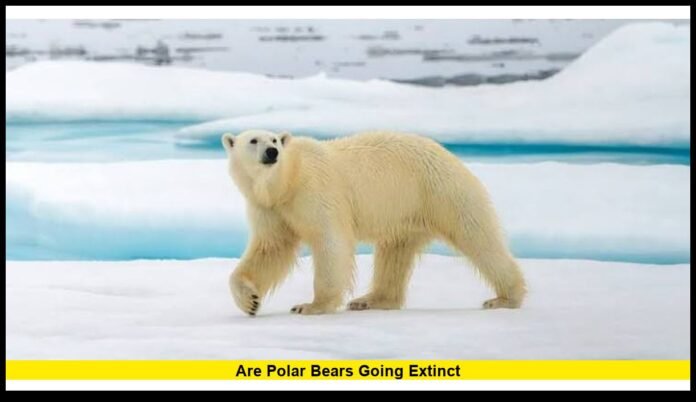

Are polar bears going extinct? It is one of the most searched wildlife questions in the United States, especially as climate change continues to reshape the Arctic. As of August 2026, the answer is no. Polar bears are not extinct, and they are not listed as endangered globally. However, scientists continue to classify the species as Vulnerable, reflecting serious long-term risks tied to the loss of Arctic sea ice. While some populations remain stable and a few have shown encouraging signs, the overall outlook remains closely linked to changes in the Arctic environment.
Why People Keep Asking if Polar Bears Are Going Extinct
Polar bears have become one of the most recognizable symbols of climate change. Images of bears traveling across shrinking sea ice often spark concern and raise questions about whether the species is disappearing.
The reality is more complex than many headlines suggest. Polar bears still live across vast areas of the Arctic, but conditions vary greatly from one region to another. Some populations face increasing challenges, while others have remained relatively stable under current conditions.
Scientists continue to monitor these differences carefully because the Arctic is changing at different rates depending on location.
Current Conservation Status in 2026
Polar bears are scientifically known as Ursus maritimus. They are found across the Arctic in:
- Alaska (United States)
- Canada
- Greenland
- Norway’s Svalbard archipelago
- Russia
The worldwide conservation classification remains Vulnerable in 2026.
This status does not mean extinction is imminent. Instead, it indicates that the species faces a significant risk if current environmental trends continue over the coming decades.
Wildlife experts continue to emphasize that protecting Arctic habitat remains essential for the long-term survival of polar bears.
How Many Polar Bears Live in the Wild?
Estimating the global population is difficult because polar bears inhabit one of the world’s most remote environments.
Researchers divide the species into 20 recognized subpopulations across the Arctic. Each group experiences different weather patterns, sea ice conditions, and food availability.
Current scientific assessments show:
| Category | Status |
|---|---|
| Global species | Still living throughout the Arctic |
| Conservation status | Vulnerable |
| Recognized subpopulations | 20 |
| Population trends | Mixed depending on region |
Some areas continue to experience population declines, while others remain stable. Several regions still require additional research before long-term trends can be confirmed.
Why Sea Ice Is Essential for Polar Bears
Unlike many other bear species, polar bears spend much of their lives on sea ice rather than land.
Sea ice serves as their primary hunting platform. From this frozen surface, they hunt seals, which provide the high-fat diet needed for survival.
Their favorite prey includes:
- Ringed seals
- Bearded seals
These marine mammals supply enough calories for polar bears to maintain body weight, survive harsh winters, and successfully raise cubs.
When sea ice melts earlier during spring and returns later in autumn, bears lose valuable hunting time.
This creates several challenges:
- Less access to seals
- Longer fasting periods
- Increased energy use while traveling
- Lower body condition
- Reduced reproductive success
Scientists continue to identify declining sea ice as the greatest long-term threat facing the species.
Climate Change Continues to Shape Polar Bear Habitat
The Arctic is warming faster than many other parts of the world.
As temperatures rise, seasonal sea ice forms later and melts sooner than it did decades ago.
This changing pattern affects nearly every part of a polar bear’s annual life cycle.
Adult bears often must travel farther to locate suitable hunting grounds. Mothers with cubs may struggle to find enough food before entering maternity dens. Young bears also face greater challenges because they have fewer fat reserves than experienced adults.
Although polar bears are strong swimmers, they are not designed to live permanently without sea ice.
Their survival depends on regular access to productive seal hunting areas.
Regional Differences Tell an Important Story
One reason wildlife experts avoid making broad statements about polar bears is that each Arctic region behaves differently.
Some populations have experienced noticeable declines where sea ice has changed rapidly.
Other populations remain relatively healthy because local ice conditions continue to support hunting.
Researchers therefore evaluate each subpopulation separately instead of assuming every group faces identical circumstances.
This regional approach provides a more accurate picture of how polar bears respond to environmental changes.
Encouraging Findings From Parts of the Arctic
Recent long-term monitoring has produced encouraging observations in certain Arctic regions.
In Svalbard, scientists found that many polar bears continue to maintain healthy body condition despite significant changes in local sea ice.
Researchers believe several factors contribute to this resilience.
Polar bears have shown flexibility by:
- Taking advantage of different food opportunities
- Feeding on marine mammal carcasses
- Hunting alternative prey when available
- Adjusting movement patterns
These findings demonstrate that polar bears possess greater adaptability than once believed.
However, researchers also stress that these observations do not eliminate the broader risks associated with continued Arctic warming.
Can Polar Bears Adapt Forever?
Adaptation has limits.
Polar bears occasionally eat birds, eggs, vegetation, or land mammals, but these foods cannot consistently replace the energy they obtain from seals.
Seal blubber contains exceptionally high levels of fat, making it the ideal food source for polar bears.
Without regular seal hunting opportunities, maintaining healthy body weight becomes increasingly difficult.
Scientists therefore continue to view sea ice conservation as the most important factor for the species’ future.
The Importance of Polar Bear Cubs
Cub survival plays a major role in determining future population health.
Female polar bears usually give birth during winter inside snow dens.
Young cubs depend entirely on their mothers during their first years of life.
Healthy mothers are more likely to:
- Produce larger litters
- Successfully nurse cubs
- Protect young bears during difficult conditions
- Raise offspring to independence
If mothers enter winter with poor body condition because of reduced hunting opportunities, cub survival rates may decline.
For this reason, researchers closely monitor reproductive success alongside adult survival.
How Scientists Monitor Polar Bears
Studying polar bears requires extensive fieldwork across challenging Arctic environments.
Researchers use several methods to understand population trends.
These include:
- Aerial surveys
- Satellite tracking
- GPS collars on selected adult females
- Genetic analysis
- Photographic identification
- Long-term field observations
These techniques help scientists estimate population size, movement patterns, reproduction, and survival.
Because the Arctic covers enormous distances, gathering reliable information often takes years.
The Biggest Threat Remains Habitat Loss
Scientists consistently identify habitat loss caused by climate change as the greatest long-term danger facing polar bears.
Sea ice supports nearly every aspect of their lifestyle.
Without sufficient ice, bears must spend more time on land, where food resources are much less predictable.
Habitat changes may also increase encounters between polar bears and people in Arctic communities.
Wildlife agencies continue working to reduce these conflicts while protecting both residents and bears.
Conservation Efforts Continue Across the Arctic
Several countries cooperate to manage and protect polar bear populations.
Current conservation work includes:
- Monitoring regional populations
- Protecting important denning habitat
- Managing legal harvests
- Reducing unnecessary human-bear conflicts
- Supporting Arctic wildlife research
- Expanding international scientific cooperation
Indigenous communities also play an important role by contributing generations of ecological knowledge that supports modern wildlife management.
Why Polar Bears Matter Beyond the Arctic
Polar bears occupy the top of the Arctic food chain.
Because they rely so heavily on sea ice, scientists consider them an important indicator species.
Changes affecting polar bears often reflect broader environmental changes occurring throughout Arctic ecosystems.
Monitoring the species helps researchers better understand:
- Sea ice conditions
- Marine food webs
- Seal populations
- Arctic biodiversity
- Climate-related environmental change
Protecting polar bears therefore benefits much more than a single species.
Common Misunderstandings About Polar Bears
Myth: Polar bears are already disappearing everywhere.
This is incorrect.
Different populations experience different environmental conditions, leading to different population trends.
Myth: Every polar bear is becoming thinner.
Not necessarily.
Researchers continue finding healthy bears in several regions, although conditions vary widely.
Myth: If one population is stable, climate change is no longer a concern.
This is also incorrect.
Scientists evaluate global trends rather than focusing on one location.
Stable populations do not change the broader understanding that long-term sea ice loss presents serious risks.
Myth: Polar bears can simply live on land permanently.
Polar bears can spend time on land, but their biology remains closely connected to hunting seals on sea ice.
Land-based foods generally cannot provide enough energy over extended periods.
What the Future Looks Like
Current scientific assessments continue to show that polar bears face long-term challenges as Arctic conditions evolve.
Future outcomes will depend largely on the availability of sea ice across the Arctic.
Scientists continue monitoring changes in every recognized subpopulation while improving research methods and conservation strategies.
Although some regions have produced encouraging findings, wildlife experts remain cautious because environmental conditions continue changing across much of the Arctic.
Frequently Asked Questions
Are polar bears going extinct today?
No. Polar bears continue to live across the Arctic, and the species remains widespread.
Are polar bears endangered?
Globally, they are classified as Vulnerable, not Endangered.
What is the biggest threat to polar bears?
The continued reduction of Arctic sea ice caused by climate change remains the leading concern.
Can conservation efforts make a difference?
Yes. Protecting habitat, monitoring populations, and managing wildlife responsibly all contribute to improving the species’ long-term outlook.
Why do some reports sound more optimistic than others?
Different studies often examine different Arctic regions. Since sea ice conditions vary across the Arctic, polar bear populations also experience different outcomes.
Final Thoughts
The answer to are polar bears going extinct remains clear in 2026: No, they are not. Polar bears continue to survive across the Arctic, and several populations remain stable or have shown encouraging resilience. At the same time, scientists agree that the ongoing loss of sea ice continues to present the most significant challenge for the species. Continued monitoring, habitat protection, and responsible conservation efforts will remain essential for understanding and protecting one of the Arctic’s most iconic animals for future generations.
What are your thoughts on the future of polar bears? Share your opinion in the comments and check back for the latest wildlife and environmental updates.