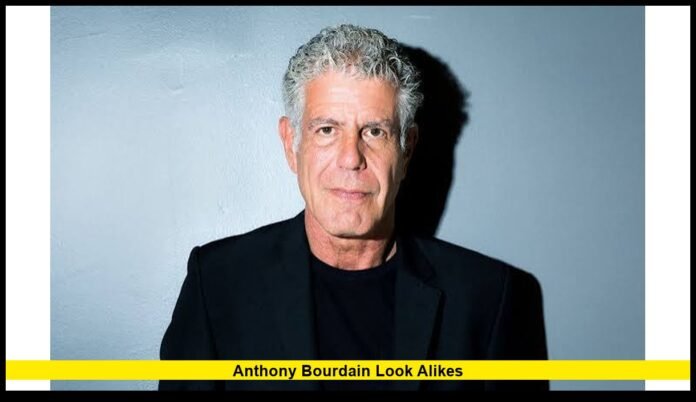

The anthony bourdain look alike search has attracted fresh attention in 2026 as audiences revisit the late chef, author and television personality through new screen projects and popular impersonations. Two names have become especially associated with the conversation: actor Dominic Sessa, who portrays a young Bourdain in the feature film Tony, and comedian Jonathan Kite, who has developed a widely recognized Bourdain-inspired character for his comedy videos.
Anthony Bourdain remains one of the most recognizable figures in food and travel television. His distinctive appearance, gravelly voice, dry humor and unconventional approach to storytelling made him instantly identifiable to audiences around the world. Even years after his death, his books, television programs and cultural influence continue to attract new viewers.
The renewed interest in people who resemble Bourdain is particularly notable because the current attention is not centered on just one type of impersonation. Sessa approaches the subject as an actor portraying Bourdain during his youth, while Kite uses recognizable characteristics associated with the television personality for comedy.
Dominic Sessa Brings Young Bourdain to the Screen
Dominic Sessa is at the center of much of the current discussion because of his role in Tony, a 2026 feature film directed by Matt Johnson.
The movie focuses on Bourdain at 19, long before he became an internationally recognized author and television host. Set during an important period of his early adulthood, the story explores his experiences working in restaurants in Provincetown, Massachusetts.
Sessa’s casting is significant because the actor has a physical appearance that can evoke photographs of Bourdain during his younger years. The resemblance becomes more apparent through the film’s period styling, hairstyle, clothing and restaurant settings.
Rather than recreating the older television personality familiar to millions of viewers, Sessa presents Bourdain before his career had taken its eventual direction. That gives audiences an opportunity to see a different side of the person behind the famous television image.
Sessa became widely known after his performance in The Holdovers, and his transition into the role of Bourdain represents a very different acting challenge. Instead of portraying a fictional character, he is playing a real person whose voice, writing, photographs and television appearances are extensively documented.
Why Dominic Sessa’s Resemblance Stands Out
Physical similarity is subjective, but several elements contribute to the comparison between Sessa and the younger Bourdain.
The shape of the face is one factor. Hairstyling also makes a substantial difference. Bourdain’s appearance during his early years was not identical to the image associated with his later television career, and the production of Tony takes that period into account.
Wardrobe and setting further strengthen the visual connection. Restaurant kitchens, period clothing and the atmosphere of the 1970s help place Sessa within the world associated with Bourdain’s youth.
There is also the matter of physical behavior. Bourdain spent much of his early adult life in professional kitchens, where posture, movement and interaction with other cooks were shaped by the demanding environment. Sessa’s preparation for the role involved learning practical restaurant skills and becoming familiar with the physical realities of kitchen work.
The result is intended to create a believable young Bourdain rather than simply place an actor in a costume.
Tony Explores Bourdain Before Fame
One of the most interesting aspects of Tony is its timing within Bourdain’s life.
Most audiences remember him from the period when he was already a successful author and television personality. By then, he had developed a highly recognizable public image: dark clothing, sunglasses, casual shirts, distinctive hair and a relaxed but observant presence in front of the camera.
The young man depicted in Tony existed before that image had been established.
At 19, Bourdain was still finding his way through the restaurant world. His later career as a writer and television personality was not yet visible. His experiences in professional kitchens would eventually become important material for his writing, particularly the stories and observations that helped make Kitchen Confidential a defining work in food writing.
The film therefore presents an earlier chapter in his life and provides context for the person audiences later came to know.
Jonathan Kite’s Bourdain-Inspired Comedy
Dominic Sessa is not the only person keeping Bourdain’s recognizable characteristics in the public conversation.
Comedian Jonathan Kite has developed a popular Bourdain-inspired persona through his Parts Well Known series. The title itself references Bourdain’s celebrated television program Parts Unknown.
Kite’s concept places the recognizable Bourdain style into everyday American food settings. His videos imagine how Bourdain might react while visiting familiar chain restaurants and other locations that differ dramatically from the international destinations featured in his television work.
The comedy relies on several elements that audiences associate with Bourdain. Kite recreates aspects of the voice, pacing, facial expressions and conversational rhythm that made Bourdain distinctive.
This is different from Sessa’s dramatic performance. Kite is creating an impression for comedic purposes, while Sessa is portraying Bourdain as a character in a scripted feature film.
Both approaches demonstrate how recognizable Bourdain’s public persona remains.
The Difference Between a Lookalike and an Impersonator
Celebrity resemblance can take several forms, and Bourdain provides an interesting example.
A person may naturally resemble a famous individual without intentionally copying them. Another person may deliberately recreate the celebrity’s appearance through makeup, clothing or hairstyle. An impersonator goes further by reproducing recognizable speech patterns, mannerisms and behavior.
An actor playing a real person occupies another category altogether.
Sessa’s work in Tony is primarily an acting performance. His appearance helps establish the character, but the role also requires him to communicate Bourdain’s personality and circumstances during a specific period of his life.
Kite’s work is closer to traditional impersonation because the humor depends on viewers recognizing Bourdain’s characteristic presentation.
These distinctions matter because resemblance does not necessarily mean two people are identical in appearance. A convincing portrayal can result from the combination of physical similarities, styling, movement, voice and performance.
Bourdain Had Different Looks Throughout His Life
There was never just one visual version of Anthony Bourdain.
Photographs from his youth show a very different appearance from the one that became familiar during his television career. His hair, facial hair, clothing and overall presentation evolved over time.
His later television image became particularly recognizable. Viewers became accustomed to seeing him traveling through cities, restaurants and markets while wearing casual clothing and often carrying sunglasses.
That evolution helps explain why some people may resemble young Bourdain while others evoke the television host audiences remember.
The visual identity associated with Bourdain was built over many years. It included his physical appearance but also his voice, expressions, posture and understated reactions to the places he visited.
For an actor portraying him, reproducing only the face would therefore not be enough.
The Importance of Voice and Mannerisms
Bourdain’s voice was almost as recognizable as his face.
His distinctive delivery became an important part of his television identity. He could move from serious cultural observations to dry humor without dramatically changing his tone.
His mannerisms were similarly understated. He often allowed a location, dish or conversation to speak for itself rather than presenting every moment with exaggerated enthusiasm.
For performers attempting to recreate Bourdain, those characteristics can be more challenging than physical appearance.
Kite’s comedy demonstrates how powerful the combination can be. His Bourdain-inspired performances are recognizable not simply because of visual similarities but because the audience hears familiar vocal patterns and sees familiar mannerisms.
Sessa faces a different challenge because Tony is designed as a dramatic portrayal rather than a direct imitation.
Why Bourdain Continues to Attract Attention
Bourdain died in 2018, but his cultural presence has remained unusually strong.
His writing introduced readers to the realities of professional kitchens while also offering a candid perspective on the food industry. His television career later expanded his audience far beyond food enthusiasts.
Programs such as No Reservations and Parts Unknown presented destinations through food, conversations and local culture. Bourdain frequently approached unfamiliar places with curiosity, allowing the people he met to become an important part of the storytelling.
That approach made his television work different from a conventional travel show.
His personality was also central to the appeal. Viewers could recognize him within seconds, even without seeing his name on screen.
That distinctive identity explains why actors and comedians can still create recognizable Bourdain portrayals years after his death.
What Makes the 2026 Interest Different?
The current attention has a particularly strong connection to Tony.
Earlier Bourdain impersonations generally focused on the image people remember from his television career. The new film instead takes viewers much further back in time.
Sessa’s portrayal provides an interpretation of Bourdain as a teenager approaching adulthood and discovering the restaurant world.
This creates a different visual reference point. Audiences familiar with Bourdain’s later appearance can compare the young character with archival photographs and recognize features that remained consistent over the years.
The result is a renewed discussion about what Bourdain looked like before he became famous.
At the same time, Kite’s ongoing comedy keeps the later television-era persona recognizable online. The two performances therefore represent different stages of Bourdain’s life and different approaches to portraying him.
Anthony Bourdain’s Influence on Modern Food Television
The continued attention also reflects Bourdain’s broader influence.
He helped establish a style of food and travel storytelling that placed people and culture alongside cuisine. Restaurants were not simply locations where meals were served; they could be windows into communities, traditions and personal histories.
His approach influenced audiences as well as other television personalities.
That influence has helped keep his work relevant even as the media landscape has changed. Short clips circulate on social platforms, older episodes remain discoverable, and younger viewers can encounter Bourdain without having watched his original programs when they first aired.
A new film about his early life adds another entry point.
Frequently Asked Questions
Who plays Anthony Bourdain in Tony?
Dominic Sessa plays a young Anthony Bourdain in Tony, the 2026 feature directed by Matt Johnson.
What is Tony about?
Tony focuses on Bourdain at 19 and explores his early experiences in the restaurant world in Provincetown, Massachusetts.
Who performs a Bourdain impression online?
Jonathan Kite is known for his Bourdain-inspired comedy series Parts Well Known, which places the character in everyday American restaurant settings.
Is Dominic Sessa related to Anthony Bourdain?
There is no established family relationship between Sessa and Bourdain. Sessa is an actor portraying Bourdain in Tony.
Why does Dominic Sessa resemble young Bourdain?
The resemblance comes from a combination of Sessa’s natural features and the film’s styling, including hairstyle, clothing and period production design.
Is Tony a documentary?
No. Tony is a scripted feature film inspired by Bourdain’s early life and his experiences in the restaurant world.
The Lasting Recognition of Anthony Bourdain
Anthony Bourdain developed an image that became inseparable from his work. His appearance, voice, humor and storytelling approach were all highly recognizable, which helps explain why portrayals of him continue to attract attention.
Dominic Sessa’s performance in Tony gives audiences a look at Bourdain before international fame transformed him into a television icon. Jonathan Kite, meanwhile, continues to explore the familiar later persona through comedy.
For people searching for an anthony bourdain look alike, the current conversation is therefore about more than facial resemblance. It also involves the different ways performers can recreate a famous public figure: through dramatic acting, visual transformation, vocal imitation or comedic interpretation.
Bourdain’s legacy remains connected to the qualities that made him distinctive in the first place. His curiosity, writing, food knowledge and unconventional travel storytelling continue to attract audiences, while new portrayals give viewers additional ways to revisit the person behind one of television’s most recognizable personalities.