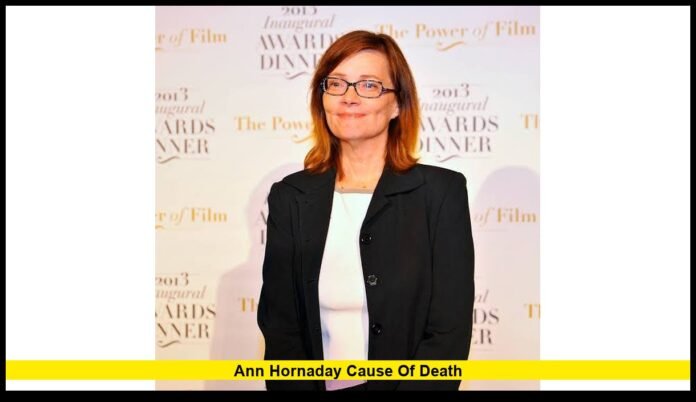

The Ann Hornaday cause of death has been confirmed as glioblastoma, an aggressive form of brain cancer. The longtime Washington Post film critic died at her home in Baltimore, Maryland, on October 18, 2026, at the age of 66. Her death was reported on October 19, bringing renewed attention to her distinguished career in American journalism and her lasting contributions to film criticism.
Hornaday spent more than two decades helping readers understand movies through thoughtful reviews, cultural analysis, and accessible commentary. Her writing examined not only whether a film succeeded but also how its storytelling, performances, direction, and artistic choices influenced audiences. She became known for treating cinema as a serious art form while making her criticism understandable to everyday moviegoers.
The confirmation of her cause of death provides clarity about the circumstances surrounding her passing. Glioblastoma is a serious neurological cancer that can be difficult to treat. Although her death has prompted questions about her illness, publicly confirmed information does not establish a complete timeline of her diagnosis or medical treatment.
Her passing represents a significant loss for American film journalism. Beyond the medical circumstances, Hornaday leaves behind decades of criticism, a respected book about understanding movies, and a body of work that encouraged readers to look more closely at the films they watched.
What Was Ann Hornaday’s Cause of Death?
Ann Hornaday died from glioblastoma, a type of aggressive brain cancer. Her husband, Dennis Greenia, provided the information cited in the obituary announcing her death.
She died on October 18, 2026, at her Baltimore home. She was 66.
The confirmed details establish the principal facts surrounding her passing:
- Name: Ann Hornaday.
- Age at death: 66.
- Date of death: October 18, 2026.
- Place of death: Baltimore, Maryland.
- Cause of death: Glioblastoma, an aggressive form of brain cancer.
- Profession: American film critic and journalist.
- Best-known publication: The Washington Post.
These details answer the central question surrounding her death without relying on unverified explanations.
The publicly available information does not provide a comprehensive account of when Hornaday received her diagnosis, how long she lived with the disease, or which treatments she may have undergone. Those details should not be assumed.
The distinction matters because information about a person’s illness can easily become distorted when online discussions repeat claims that lack confirmation. In Hornaday’s case, the reported medical cause is clear, while many personal medical details remain undisclosed.
Understanding Glioblastoma, the Disease That Caused Her Death
Glioblastoma is an aggressive cancer that develops in the brain. It belongs to a group of tumors known as gliomas, which originate from cells associated with the brain’s supporting tissue.
The disease can be particularly challenging because it grows within an organ responsible for essential functions, including memory, speech, movement, sensation, and decision-making.
Unlike some tumors that remain confined to a clearly defined area, glioblastoma can infiltrate surrounding brain tissue. This behavior can make complete surgical removal difficult, even when doctors can remove a substantial portion of the tumor.
Treatment focuses on controlling the disease, preserving neurological function, managing symptoms, and supporting the patient’s quality of life.
Common Symptoms of Glioblastoma
Symptoms vary according to the tumor’s location, size, and effects on surrounding brain structures. Some patients experience changes in neurological function, while others develop symptoms that initially appear less specific.
Possible symptoms include:
- Persistent or worsening headaches.
- Seizures.
- Difficulty speaking or understanding language.
- Changes in memory, concentration, or thinking.
- Weakness or reduced coordination.
- Changes in behavior or personality.
- Vision difficulties.
These symptoms do not automatically indicate brain cancer. Many other conditions can produce similar problems, and medical evaluation is necessary to determine their cause.
There is no confirmed public account establishing which symptoms Hornaday experienced before her death. It would therefore be inappropriate to attribute particular symptoms or complications to her individual medical history.
How Doctors Diagnose Glioblastoma
Doctors typically begin an evaluation with a medical history and neurological examination. Brain imaging, especially magnetic resonance imaging, can help identify an abnormal growth and assess its location and characteristics.
In many cases, doctors also examine tumor tissue obtained through surgery or biopsy. Laboratory analysis helps establish the diagnosis and identify characteristics that may influence treatment decisions.
The process depends on the patient’s condition and the nature of the suspected tumor. No single symptom or examination alone can establish every detail of a diagnosis.
Treatment and Prognosis
Treatment for glioblastoma often involves several approaches. Depending on the individual case, doctors may recommend surgery, radiation therapy, chemotherapy, or other treatments intended to control tumor growth.
Supportive care also plays an important role. Patients may need help managing symptoms, maintaining daily activities, and addressing the emotional challenges associated with a serious diagnosis.
Glioblastoma remains difficult to treat, and outcomes vary between patients. Factors such as age, overall health, tumor characteristics, and response to treatment can influence an individual’s course of illness.
These general medical facts explain the seriousness of the disease associated with Hornaday’s death. They do not establish the treatment decisions or clinical circumstances of her particular case.
When Did Ann Hornaday Die?
Hornaday died on October 18, 2026, at her home in Baltimore, Maryland. The announcement of her death appeared the following day.
She was 66 at the time of her passing. Her death came after a professional career that included work at several major American publications and more than 20 years at The Washington Post.
The timing of the announcement brought her career back into public discussion. Readers and colleagues revisited her writing, her approach to film criticism, and her influence on how audiences understood American cinema.
The confirmed report also identified glioblastoma as the cause of death. No additional medical explanation is necessary to establish the reported circumstances of her passing.
For readers searching for the latest update, the essential information remains her age, date and place of death, and confirmed medical cause.
Who Was Ann Hornaday?
Ann Hornaday was a prominent American film critic whose writing appeared in several newspapers before she became a leading voice at The Washington Post.
She was born on March 9, 1960, in Iowa City, Iowa, and grew up in Des Moines. She attended Smith College in Massachusetts, graduating in 1982 with a degree in government.
Her early career included work at Ms. magazine in New York. She later developed her journalism career through newspaper positions that allowed her to build experience in arts coverage and film criticism.
Hornaday became a film critic at the Austin American-Statesman in 1995. She subsequently worked at The Baltimore Sun before joining The Washington Post in 2002.
Her work at the Post established her as a familiar name among readers interested in movies, filmmaking, and cultural commentary.
She did not limit her reviews to plot summaries or recommendations. Instead, she explored how a movie’s creative decisions shaped its meaning and whether the filmmakers successfully communicated their ideas.
That approach helped her connect with readers who wanted more than a simple judgment about whether a movie was worth watching.
Her Career at The Washington Post
Hornaday joined The Washington Post in 2002 and spent more than two decades contributing reviews, essays, and features about cinema.
Her writing covered major Hollywood releases, independent productions, documentaries, and films that explored complicated historical or social subjects.
She examined acting, directing, screenwriting, editing, cinematography, and other aspects of filmmaking. Her reviews also considered the relationship between a movie and the culture in which audiences encountered it.
In 2008, she became a finalist for the Pulitzer Prize for Criticism. The recognition highlighted her perceptive reviews and essays, which combined research with clear, engaging analysis.
Her criticism was notable for its accessibility. She could discuss sophisticated filmmaking techniques without making readers feel that they needed specialized knowledge to understand her conclusions.
Hornaday also paid attention to the collaborative nature of cinema. A successful film depends on contributions from many people, and her writing regularly considered how those contributions worked together.
She left The Washington Post in 2025 after accepting a buyout. Her departure marked the end of a major chapter in her career, although her published work continued to offer insight into movies and the film industry.
Her death has renewed interest in the reviews and essays she produced during her years at the newspaper.
Ann Hornaday’s Book, Talking Pictures: How to Watch Movies
Hornaday published Talking Pictures: How to Watch Movies in 2017. The book offered readers a practical way to understand cinema through closer observation and more thoughtful analysis.
Rather than presenting film criticism as a skill reserved for professionals, she encouraged readers to recognize the decisions that shape a movie.
Her discussion covered essential filmmaking elements, including acting, direction, editing, production design, sound, and screenwriting. Each component can influence how audiences interpret a scene, understand a character, or respond emotionally to a story.
A performance, for example, involves more than dialogue. Facial expressions, pauses, movement, and interactions with other actors can reveal information that a script never states directly.
Similarly, editing influences rhythm and tension. The arrangement of shots can guide attention, create suspense, or change the meaning of an otherwise ordinary moment.
Hornaday’s approach encouraged audiences to notice these details rather than treating movies as passive entertainment.
The book also reflected her broader philosophy of criticism. She believed that understanding a film required curiosity, patience, and an appreciation of the creative work behind the finished product.
Its publication helped bring her critical methods to readers who wanted to develop a more informed relationship with cinema.
A Book About All the President’s Men Was Also in Development
Another significant part of Hornaday’s literary legacy concerns her work on a book about the making of All the President’s Men.
Released in 1976 and directed by Alan J. Pakula, the film dramatized the investigative reporting surrounding the Watergate scandal. Robert Redford and Dustin Hoffman starred as journalists Bob Woodward and Carl Bernstein.
The movie remains an important example of American political filmmaking and the depiction of investigative journalism on screen.
Hornaday completed work on a book examining the film’s production shortly before her death. Its publication was tentatively scheduled for 2028.
The project brought together several subjects that had long interested her: filmmaking, journalism, political history, and the relationship between movies and real events.
Its anticipated publication may provide another opportunity for readers to encounter her analysis and research.
However, the planned release should not be treated as a guarantee of a particular publication date. The reported schedule was tentative, and further details about its publication remain subject to confirmation.
Ann Hornaday’s Family and Personal Life
Hornaday was married to Dennis Greenia for 26 years. Her obituary identified him as the source of the information confirming her cause of death.
She is survived by her husband, their daughter, Victoria Greenia, her stepdaughter, Leila Greenia, and her brother, William Hornaday III.
Although Hornaday became widely known through her professional work, her life also included family relationships and community involvement.
She was associated with the Episcopal Cathedral of the Incarnation in Baltimore, where she served as a parishioner and Sunday school teacher.
Her personal life was not the primary subject of her public career. She earned recognition mainly through her writing, critical judgment, and ability to discuss cinema with intelligence and warmth.
The details shared in her obituary offer a limited but meaningful picture of her life outside the newsroom.
Further personal information should not be presented as fact unless it has been confirmed publicly.
Why Her Death Matters to Film Journalism
Hornaday’s death represents the loss of an experienced critic at a time when audiences encounter movies through an increasingly broad range of platforms.
Film criticism helps viewers understand more than whether a production receives positive reviews. It can explain how stories reflect social change, how directors use visual techniques, and why certain performances resonate with audiences.
Hornaday made those subjects accessible without reducing them to simple judgments.
Her work demonstrated that criticism can combine expertise with openness. Readers did not have to agree with every assessment to benefit from the questions she raised about a film’s artistic choices.
She also helped emphasize the importance of context. A movie’s meaning can change depending on the period in which it was made, the events it depicts, and the audience watching it.
Her writing recognized the labor involved in filmmaking and the many professionals whose work contributes to a production’s success.
That perspective remains valuable for readers who want to understand cinema as both an art form and a cultural industry.
Her reviews, essays, and books provide a lasting record of that approach.
What Readers Should Know About the Latest Update
The latest confirmed information about Hornaday’s death establishes a clear set of facts. She died at age 66 in Baltimore on October 18, 2026, and glioblastoma was identified as the cause.
Her husband supplied the information cited in the obituary reporting her death.
The available account does not establish the exact date of her diagnosis, the duration of her illness, or the details of her medical treatment. Those subjects remain outside the confirmed information presented publicly.
Readers should distinguish those unknown details from the established facts about her passing.
It is also important to separate general information about glioblastoma from claims about Hornaday’s personal experience. The disease can affect patients differently, and general medical descriptions cannot explain every individual case.
Her professional achievements, meanwhile, are well established. She worked at The Washington Post for more than two decades, became a Pulitzer Prize finalist in 2008, and published a book about understanding cinema.
Together, these facts provide a reliable account of her death and the career that made her an important figure in American film criticism.
Frequently Asked Questions About Ann Hornaday’s Death
What was Ann Hornaday’s cause of death?
Ann Hornaday died from glioblastoma, an aggressive form of brain cancer. Her husband, Dennis Greenia, provided the information cited in her published obituary.
How old was Ann Hornaday when she died?
She was 66 years old when she died on October 18, 2026.
Where did Ann Hornaday die?
She died at her home in Baltimore, Maryland, according to the published account of her death.
What is glioblastoma?
Glioblastoma is an aggressive brain cancer that can grow into surrounding brain tissue. Treatment may involve surgery, radiation, chemotherapy, and supportive care, depending on the individual patient’s circumstances.
Did Ann Hornaday work for The Washington Post?
Yes. She joined The Washington Post in 2002 and became one of its best-known film critics. She left the publication in 2025 after accepting a buyout.
Was Ann Hornaday nominated for a Pulitzer Prize?
She was a finalist for the Pulitzer Prize for Criticism in 2008. The recognition reflected the quality of her film reviews and critical essays.
What book did Ann Hornaday write?
She wrote Talking Pictures: How to Watch Movies, published in 2017. The book helps readers understand filmmaking through closer attention to acting, directing, editing, and other creative elements.
Was Ann Hornaday working on another book?
Yes. She completed a book about the making of All the President’s Men. Its publication was tentatively scheduled for 2028.
Who survived Ann Hornaday?
Her surviving family members include her husband, Dennis Greenia, their daughter, Victoria Greenia, her stepdaughter, Leila Greenia, and her brother, William Hornaday III.
Has the cause of death been confirmed?
Yes. Glioblastoma was identified as the cause of death in the published obituary. Additional details about her diagnosis and treatment have not been established in the publicly reported information discussed here.
Final Thoughts
The confirmed Ann Hornaday cause of death was glioblastoma, a serious form of brain cancer. Her death at 66 marks the end of a distinguished career that helped American readers appreciate the craft, meaning, and cultural importance of movies. Through her work at The Washington Post and her book Talking Pictures, she encouraged audiences to look beyond a film’s surface and recognize the creative decisions that shape the viewing experience. Her planned book about All the President’s Men also reflects the lasting connection she saw between cinema and journalism.
What will you remember most about Ann Hornaday’s contribution to film criticism? Share your thoughts in the comments and follow verified updates about her work and legacy.