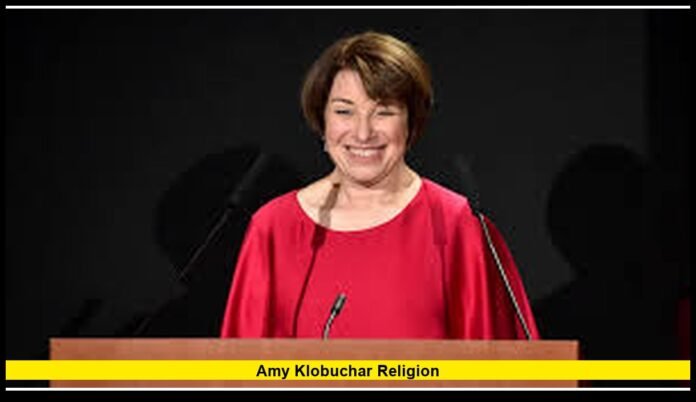

As U.S. Senator Amy Klobuchar steps into the 2026 Minnesota governor’s race, public interest has intensified around every aspect of her life and career, including the topic of amy klobuchar religion. For many voters, understanding a candidate’s personal values helps provide insight into leadership style, priorities, and long-term vision for public service. Klobuchar’s faith background, while not a dominant feature of her political messaging, remains an important part of her personal identity and public story.
With more than two decades in statewide office and a national profile built through four Senate terms and a presidential campaign, Klobuchar is now seeking to lead her home state from the governor’s office. As Minnesotans evaluate her record and character, her religious affiliation offers context about the moral framework that has shaped her approach to law, justice, and community.
Amy Klobuchar’s Religious Affiliation
Amy Klobuchar is a member of the United Church of Christ, a Protestant Christian denomination known for its emphasis on social justice, inclusion, and community service. The church is part of the mainline Protestant tradition in the United States and has long supported civil rights, equality under the law, and active engagement in social issues.
The United Church of Christ encourages freedom of conscience, interfaith cooperation, and a faith that translates into action in public life. While individual members may hold a wide range of theological views, the denomination is widely recognized for promoting dignity, compassion, and responsibility toward others. Klobuchar’s affiliation places her within this tradition of socially engaged Christianity.
Her faith is personal and practiced without theatrical display. She has never built campaigns around religious identity, but she has acknowledged that her upbringing and church community helped instill values of service, fairness, and respect for different viewpoints.
Family Roots and Faith Formation
Born in Plymouth, Minnesota, in 1960, Amy Klobuchar grew up in a family that valued education, civic engagement, and community involvement. Her father was a journalist and columnist, and her mother spent decades as an elementary school teacher. These professions, centered on public service and communication, shaped Klobuchar’s early understanding of responsibility and ethical leadership.
Her religious upbringing emphasized participation in community life and concern for the well-being of others. Rather than focusing on doctrine alone, the church environment she experienced stressed helping neighbors, standing up for fairness, and contributing to the common good. These principles later aligned naturally with her career in law and politics.
Faith and Her Approach to Public Service
Throughout her career as a county attorney, U.S. senator, and now gubernatorial candidate, Klobuchar has built a reputation for pragmatic problem-solving and a focus on consumer protection, public safety, and civil rights. While her policy positions are grounded in law and evidence, her moral framework reflects the values commonly associated with her faith tradition.
These include:
- Respect for human dignity
- Commitment to equal justice under the law
- Advocacy for vulnerable communities
- Emphasis on ethical government and accountability
Rather than citing scripture in speeches, Klobuchar expresses these values through action, legislative priorities, and bipartisan cooperation. Her religious identity functions more as an internal compass than a political banner.
The Role of Religion in Her Political Career
Religion has never been a central campaign theme for Klobuchar, but it has quietly informed her tone and leadership style. She is known for a civil, steady approach to debate, a willingness to work across party lines, and an emphasis on restoring trust in institutions.
In national politics, she has supported protections for religious freedom while also defending the constitutional separation of church and state. This balance reflects the United Church of Christ’s long-standing view that faith should inspire service and justice without dominating government policy.
Her respect for pluralism has also been evident in her outreach to diverse faith communities across Minnesota, including Jewish, Muslim, Catholic, Protestant, and non-religious constituents. She consistently frames governance as serving all residents, regardless of belief.
How Amy Klobuchar Religion Intersects With Key Policy Areas
Understanding amy klobuchar religion provides context for how she approaches several major policy areas that will be central to the 2026 governor’s race.
Civil Rights and Equality
The United Church of Christ has a strong history of supporting civil rights movements and equality under the law. Klobuchar’s long record of backing voting rights, anti-discrimination protections, and equal access to justice aligns closely with this tradition.
Healthcare and Human Dignity
Her advocacy for affordable healthcare and mental health services reflects a moral view that access to care is a basic human need, not a privilege. This perspective mirrors the church’s emphasis on compassion and social responsibility.
Immigration and Community Safety
Klobuchar has called for firm but humane immigration policies, balancing law enforcement with respect for human rights. The moral language she uses often centers on fairness, family unity, and due process.
Ethical Government and Accountability
In recent years, Minnesota has faced scrutiny over large-scale fraud cases involving public funds. Klobuchar has made integrity in government a central theme of her gubernatorial campaign, emphasizing transparency and stewardship of taxpayer resources—principles consistent with faith-based concepts of honesty and responsibility.
A Faith That Supports Unity, Not Division
One defining feature of Klobuchar’s religious approach is its non-sectarian nature. She does not frame political disagreements as moral battles between belief systems. Instead, she stresses shared values: safety, opportunity, fairness, and respect.
This approach resonates with many voters who value leaders whose personal faith informs character but does not polarize public life. Her messaging focuses on common ground, problem-solving, and bringing people together during periods of political and social tension.
The 2026 Governor’s Race and Personal Values
Klobuchar’s entry into the Minnesota governor’s race comes at a time of heightened concern over public safety, economic stability, healthcare access, and trust in government. Voters are not only evaluating policy proposals but also the character and principles of those seeking office.
Her faith background, combined with decades of legal and legislative experience, contributes to an image of steady leadership grounded in ethical consistency. For many Minnesotans, this combination of competence and values will be central to deciding whether she is the right choice to lead the state.
Public Perception and Voter Interest
Interest in amy klobuchar religion reflects a broader curiosity about how personal belief systems shape political leadership. In an era of intense polarization, many voters seek reassurance that candidates are guided by principles that promote empathy, fairness, and respect for democratic norms.
Klobuchar’s religious identity is not defined by dogma or ideological rigidity. Instead, it aligns with a tradition that emphasizes inclusion, service, and social responsibility—qualities that have marked her career from local prosecutor to national legislator and now statewide executive candidate.
Looking Ahead
As the campaign progresses, discussions will continue to focus on economic policy, public safety, education, healthcare, and government reform. While religion will not dominate the debate, Klobuchar’s values will inevitably be reflected in how she addresses these issues, builds coalitions, and defines her vision for Minnesota’s future.
Her story illustrates how faith can quietly shape leadership without overshadowing democratic principles or excluding those of different beliefs. In this way, her personal background complements her public role, offering voters insight into the character behind the policies.
What do you think about how personal faith influences political leadership today? Share your thoughts and stay connected for the latest developments.