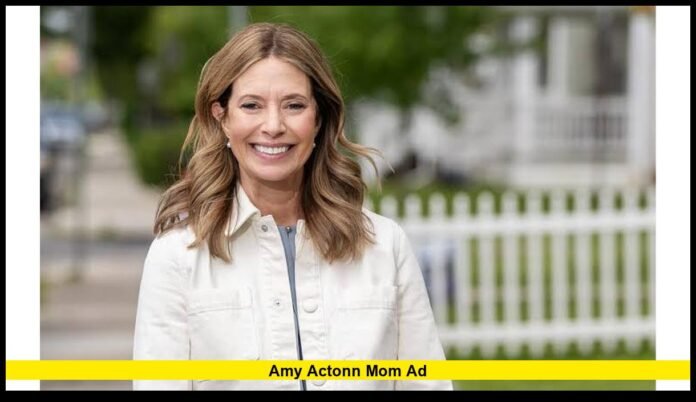

The Amy Acton mom ad has ignited a heated political controversy in Ohio after a video featuring Democratic gubernatorial candidate Dr. Amy Acton’s estranged mother, Donna Arthur, began circulating on social media. The advertisement challenges Acton’s account of her childhood and urges voters not to support her candidacy, bringing a deeply personal family dispute into one of the most closely watched gubernatorial contests of the 2026 midterm election cycle. The video has prompted a forceful response from Acton’s family, renewed criticism of negative campaign tactics, and questions about how far political advertising should go when candidates’ private lives become part of the public debate.
The controversy is particularly sensitive because Acton has previously spoken about experiencing childhood hardship, homelessness, and sexual abuse. Her mother disputes aspects of her public account, while Acton’s brother has defended her and criticized the use of their family history in the election. Meanwhile, Republican gubernatorial candidate Vivek Ramaswamy has continued to question Acton’s credibility, although the advertisement’s precise production and funding arrangements have not been conclusively established in available reporting.
Key Points Summary
╔════════════════════════════════════════════════════════════════════╗
║ – A political video featuring Donna Arthur, Amy Acton’s estranged  ║
║   mother, has intensified Ohio’s 2026 governor election campaign.  ║
║ – Arthur challenges Acton’s account of her childhood and urges     ║
║   voters not to elect her governor.                                ║
║ – Acton’s brother, Philip Stearns, has defended her and condemned ║
║   the use of their family’s painful history in political attacks. ║
║ – Republican candidate Vivek Ramaswamy continues to challenge     ║
║   Acton’s credibility amid the controversy.                        ║
║ – The advertisement has generated debate about campaign ethics,   ║
║   family disputes, and the use of personal allegations in politics.║
║ – The video’s precise funding and production arrangements remain  ║
║   important questions for voters and political observers.         ║
╚════════════════════════════════════════════════════════════════════╝
What Is the Controversy Surrounding Amy Acton’s Mother?
The controversy centers on a short political video in which Donna Arthur identifies herself as Acton’s mother and questions the Democratic candidate’s honesty. Arthur accuses her daughter of misrepresenting her childhood and disputes Acton’s account of having lived in a tent during a difficult period of her upbringing.
The video concludes with a direct appeal to Ohio voters not to elect Acton governor. Rather than concentrating on health care, taxes, education, or the economy, the advertisement focuses on personal credibility and the candidate’s family background.
Its message has attracted widespread attention because political advertisements rarely feature a candidate’s estranged parent delivering such pointed criticism. The emotional nature of the dispute has made the video a major topic of discussion across social media and political news coverage.
The controversy also comes at a particularly consequential point in the election calendar. With Election Day approaching on November 3, 2026, both campaigns have strong incentives to shape voters’ perceptions before ballots are cast.
However, the allegations in the video should not be confused with independently established findings. Arthur’s statements represent her account of the family’s history, while Acton and her supporters have presented a sharply different perspective.
Who Is Donna Arthur?
Donna Arthur is identified in news coverage as Amy Acton’s estranged birth mother. Arthur has now become an unexpected figure in the Ohio gubernatorial contest because of her appearance in the advertisement.
In the video, Arthur portrays herself as a mother concerned about her daughter’s honesty and judgment. She challenges Acton’s descriptions of her childhood and argues that voters should not trust the candidate to lead Ohio.
Arthur’s criticism is especially consequential because Acton has discussed her upbringing publicly for years. Her experiences have helped explain her interest in public health, vulnerable families, and the social circumstances that can affect children’s lives.
The competing accounts have turned a private family relationship into a public political dispute. Nevertheless, Arthur’s appearance does not independently establish whether every allegation she makes is accurate.
Understanding the controversy requires examining the claims separately, considering the responses from other family members, and recognizing that a campaign advertisement is designed to persuade an audience rather than provide a comprehensive account of a complicated family history.
Why Amy Acton’s Childhood Has Become a Political Issue
Acton has described a childhood marked by instability, poverty, and periods of homelessness while growing up in the Youngstown area of Ohio. She has also spoken about sexual abuse that she says she experienced when she was a child.
Her personal history became part of her political identity because she has connected those experiences with her commitment to improving conditions for Ohio families.
In July 2026, Acton’s gubernatorial campaign released an advertisement titled “Tent.” The video highlighted her account of living in a tent at age 12 and presented her childhood experiences as an influence on her determination to fight for working families.
The campaign connected that story with broader promises to lower living costs and create better opportunities for Ohio residents.
The new video featuring Arthur directly challenges this personal narrative. That conflict has made the advertisement more consequential than a conventional attack on a candidate’s policy positions.
For Acton’s supporters, the dispute concerns the use of painful childhood experiences as a political weapon. For critics, the competing accounts raise questions about how candidates present their backgrounds and how voters should evaluate personal claims.
A responsible assessment must distinguish between the existence of the competing statements and the evidence needed to establish disputed details.
How Has Amy Acton Responded?
Acton has criticized the political use of her estranged mother’s appearance in the video. In a public response, she characterized the dispute as part of a broader pattern of personal attacks during the governor’s race.
Her campaign has emphasized that Acton’s childhood experiences are deeply personal and should not be reduced to political messaging.
Acton previously served as director of the Ohio Department of Health and became widely known for her role during the early stages of the COVID-19 pandemic. Her gubernatorial campaign has focused on issues including affordability, health care, public education, and the cost pressures facing Ohio households.
The controversy threatens to shift attention away from those issues and toward competing claims about her family history.
At the same time, the dispute gives Acton an opportunity to challenge the methods used by her political opponents and argue that the election should focus on policies affecting residents rather than allegations involving her childhood.
Whether that response changes public opinion remains uncertain. Voters may react differently depending on their existing political preferences, their assessment of the claims, and the importance they place on campaign conduct.
What Did Amy Acton’s Brother Say About the Advertisement?
Acton’s brother, Philip Stearns, has strongly defended her following the video’s circulation.
Stearns condemned the use of their family’s history in political advertising and alleged that Acton experienced sexual abuse by their birth mother’s husband when she was 12 years old. He also stated that the abuse allegations led to the siblings being removed from their mother’s custody.
His response sharply challenged the narrative presented in the advertisement and criticized the political use of the family’s experiences.
Stearns’ statement has become a significant part of the controversy because it offers another family member’s account of events that Arthur disputes.
However, readers should distinguish between a public statement about personal experiences and a complete independent determination of every contested detail. Serious allegations require careful reporting, and neither a political video nor a rebuttal should automatically be treated as conclusive proof of all the claims involved.
The exchange has also raised concerns about the potential impact of exposing family members to renewed public scrutiny during a highly competitive election.
Is Vivek Ramaswamy Behind the Mom Advertisement?
Republican gubernatorial candidate Vivek Ramaswamy has become a central figure in the controversy because the advertisement targets his Democratic opponent.
Acton’s brother directly criticized Ramaswamy over the video, while Democratic political figures have also condemned the use of Acton’s family history in campaign messaging.
Ramaswamy’s campaign has continued to question Acton’s credibility, describing her as a habitual fabricator. The dispute therefore forms part of a broader conflict between the two candidates that has increasingly centered on character, public records, and negative advertising.
However, the precise responsibility for producing and financing the video remains an important distinction. The advertisement’s circulation and its political implications do not, by themselves, prove who commissioned it or whether the official Ramaswamy campaign authorized its creation.
Voters should look for reliable information establishing the sponsor, funding arrangements, and distribution process before drawing firm conclusions about responsibility.
This distinction matters because campaign advertisements can be produced by official campaigns, independent political organizations, advocacy groups, or other parties. Their messages may benefit a candidate without necessarily having been created under that candidate’s direct supervision.
How the Advertisement Could Influence Ohio’s Governor Election
The controversy arrives during an expensive and contentious campaign between Acton and Ramaswamy.
Acton, a physician and former Ohio health director, has emphasized affordability, public education, and health care. Ramaswamy, an entrepreneur and former presidential candidate, has promoted a conservative agenda that includes deregulation and changes to education policy.
The candidates have also clashed over Acton’s pandemic-era decisions and her professional record. Their campaigns have used advertising to challenge each other’s credibility and present competing visions for the state.
The latest controversy adds an unusually personal dimension to that competition.
Political attacks can influence how voters evaluate candidates, especially when the messages raise questions about honesty or character. However, a widely circulated video does not automatically translate into a measurable change in electoral support.
The advertisement could strengthen existing opinions among committed supporters while having little effect on voters who are more focused on economic conditions, public services, or policy proposals.
Its long-term significance will depend partly on how the campaigns respond, whether additional information emerges, and whether voters view the controversy as relevant to the responsibilities of the governor’s office.
What the Controversy Reveals About Modern Political Advertising
The dispute highlights how digital platforms have changed political campaigning.
A short video can spread quickly through social media, attract national media attention, and influence the public conversation before many viewers have established who created it or verified its claims.
Emotional content often receives attention because it presents a direct conflict involving recognizable people and personal accusations. Family disputes can be especially compelling, but they can also make it more difficult for audiences to distinguish evidence from persuasion.
The controversy illustrates several questions voters should consider when evaluating political videos:
Who created and funded the advertisement? Identifying the sponsor helps establish the political context and potential motivations behind the message.
Are the allegations independently supported? Claims made by people appearing in a video should be evaluated separately from the evidence available to substantiate them.
Has the other party responded? Reviewing relevant responses helps readers understand where the accounts differ, although neither side’s statements automatically settle every disputed question.
Does the message address the candidate’s ability to govern? Personal character can matter in an election, but voters should also examine qualifications, professional experience, public records, and policy proposals.
These questions are particularly important when an advertisement involves childhood abuse or other deeply personal experiences.
What Happens Next?
The immediate focus will remain on the response from Acton, her family, and the competing political campaigns. Additional reporting may clarify who produced the video, who paid for it, and whether a political organization was directly involved.
The controversy could also generate further discussion about the ethics of using relatives to challenge a candidate’s personal history.
For Acton, the challenge is to maintain attention on her campaign priorities while responding to allegations that have attracted significant public interest. For Ramaswamy, the dispute presents questions about campaign strategy and the political consequences of increasingly personal attacks.
Ohio voters will ultimately decide how much weight to give the controversy alongside the candidates’ positions on taxes, education, health care, employment, and the cost of living.
The video has already demonstrated how quickly a family dispute can become a central issue in a statewide election. Whether it produces a lasting shift in voter opinion remains to be seen.
Frequently Asked Questions
What is the Amy Acton mom ad about?
The video features Donna Arthur, identified as Acton’s estranged mother, challenging the Democratic candidate’s account of her childhood and urging Ohio voters not to elect her governor.
Who is Donna Arthur?
Donna Arthur is Amy Acton’s birth mother. Their estranged relationship has become a subject of public debate following the circulation of the political video.
Why is the advertisement controversial?
The advertisement challenges Acton’s personal history, including her descriptions of childhood hardship. Acton’s brother has defended her and condemned the use of the family’s painful experiences in political messaging.
Has Amy Acton’s brother responded?
Yes. Philip Stearns has publicly defended his sister, described the abuse she experienced, and criticized the use of their family history in the gubernatorial campaign.
Did Vivek Ramaswamy personally authorize the video?
The advertisement’s precise production and funding arrangements have not been conclusively established in available reporting. Allegations about responsibility should be distinguished from independently verified information.
When is Ohio’s gubernatorial election?
The general election is scheduled for November 3, 2026, as part of the U.S. midterm elections.
Conclusion
The controversy surrounding Amy Acton, her estranged mother, and the political video has brought a deeply personal family dispute into the center of Ohio’s gubernatorial race. The competing accounts have intensified debate about credibility, campaign ethics, and the responsibilities of political candidates and organizations when discussing sensitive personal experiences.
Although the advertisement has attracted widespread attention, questions about its production, funding, and ultimate influence on voters remain important. Ohio residents will have to assess the allegations carefully while considering the candidates’ records, policies, and plans for the state.
What is your view on personal attacks in political advertising? Share your thoughts in the comments and follow the latest Ohio election developments as Election Day approaches.