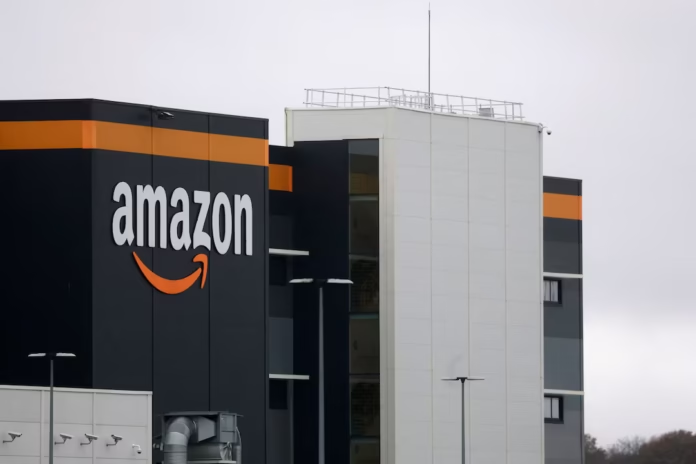

The phrase Amazon acquire Globalstar is no longer speculation—it is now a defining moment in the rapidly evolving satellite communications industry. In a deal valued at roughly $11.57 billion, Amazon has moved to acquire Globalstar, a key satellite operator, in a strategic push to accelerate its low Earth orbit (LEO) ambitions and expand the Amazon Leo satellite network.
This development signals more than just another tech acquisition. It reflects a deeper shift in how global connectivity will be delivered over the next decade—especially as competition intensifies in the race to dominate space-based internet services.
If you’re tracking where technology, telecom, and infrastructure are heading next, this deal deserves your attention.
After years of quiet development, Amazon is now stepping decisively into the spotlight of satellite communications. Keep reading to understand what this means for consumers, businesses, and the future of connectivity.
A High-Stakes Deal That Changes the Landscape
Amazon’s agreement to acquire Globalstar gives it immediate access to a functioning satellite network, licensed radio spectrum, and decades of operational expertise. The deal structure allows Globalstar shareholders to receive either $90 per share in cash or Amazon stock, reflecting a premium valuation and strong investor confidence.
The transaction is expected to close in 2027, pending regulatory approvals and operational milestones.
This acquisition significantly strengthens Amazon’s position in the satellite internet race. Globalstar currently operates a constellation of low Earth orbit satellites and provides services ranging from emergency communications to IoT connectivity. By bringing these assets in-house, Amazon eliminates years of development time and gains a critical infrastructure advantage.
Why Amazon Needed Globalstar
Amazon has been building its own satellite network—Amazon Leo—for years, aiming to deploy more than 3,000 satellites. However, compared to established competitors, it still lags in deployment scale.
Globalstar fills several strategic gaps:
- Spectrum ownership: One of the most valuable assets in satellite communications
- Operational satellites: Immediate network capability without waiting for new launches
- Direct-to-device expertise: Critical for connecting smartphones directly to satellites
Rather than building everything from scratch, Amazon is accelerating its roadmap through acquisition.
This is a classic case of “buy versus build”—and Amazon chose speed.
The Direct-to-Device Revolution
One of the most important aspects of this deal is the expansion of direct-to-device (D2D) connectivity.
Amazon plans to integrate Globalstar’s capabilities into its Leo network to deliver voice, text, and data services directly to smartphones—without requiring traditional cell towers.
This has massive implications:
- Rural and remote areas gain coverage
- Emergency communication becomes more reliable
- Travelers and outdoor users stay connected anywhere
Amazon has already announced plans to roll out advanced D2D services starting in 2028, with improved speed and efficiency compared to existing systems.
In simple terms, your future smartphone may connect directly to space—even when there’s no signal on Earth.
Apple’s Role: A Strategic Twist
One of the more interesting elements of this acquisition is Apple’s involvement.
Globalstar has been a key partner powering satellite features in iPhones and Apple Watches, including emergency messaging and location services. Apple also holds a significant stake in Globalstar and has invested heavily in its infrastructure.
Rather than disrupting this relationship, Amazon has chosen to extend it.
Under a new agreement:
- Amazon will continue supporting satellite features on Apple devices
- Both companies will collaborate on future satellite services
- Existing user experiences—like Emergency SOS—will remain intact
This creates an unusual but powerful alliance between two of the world’s biggest tech companies.
The Real Target: Competing With Starlink
To understand the full significance of this deal, you have to look at the competition.
SpaceX’s Starlink currently dominates the satellite internet market with:
- Over 10,000 satellites in orbit
- Millions of global users
- Active expansion into direct-to-cell services
Amazon, by comparison, has only a few hundred satellites deployed so far.
This gap explains the urgency behind the Globalstar acquisition.
By acquiring an established operator, Amazon can:
- Accelerate deployment timelines
- Gain immediate spectrum access
- Compete more effectively in the D2D market
This is not just expansion—it’s a strategic catch-up move in a high-stakes technological race.
Industry Ripple Effects
The impact of this acquisition extends beyond Amazon and Globalstar.
Other satellite and telecom players are already feeling the shift:
- Increased competition in direct-to-device services
- Rising value of spectrum assets
- New partnerships between tech and telecom firms
Companies like Iridium, AST SpaceMobile, and traditional telecom providers now face a more aggressive and well-funded competitor.
At the same time, investors are paying closer attention to satellite infrastructure as a long-term growth sector.
A Broader Vision: Closing the Connectivity Gap
Amazon’s long-term vision goes beyond competition.
The company has repeatedly emphasized its goal of connecting underserved regions around the world. Billions of people still lack reliable internet access, particularly in remote or developing areas.
Satellite networks offer a way to bridge that gap.
By combining Globalstar’s infrastructure with its own Leo system, Amazon aims to:
- Expand global internet coverage
- Support governments and emergency services
- Enable new business models in remote environments
This aligns with a broader industry trend where connectivity is seen as essential infrastructure—similar to electricity or transportation.
Opinion: A Bold Move With Calculated Risk
From an analytical standpoint, this acquisition is both bold and necessary.
Amazon is entering a market where the leader already has a significant head start. Catching up will require not just capital, but execution, partnerships, and regulatory navigation.
The Globalstar deal addresses several immediate challenges—but it doesn’t guarantee success.
There are still key risks:
- Regulatory approvals across multiple countries
- Technical integration of two different systems
- Ongoing competition from faster-moving rivals
However, the upside is substantial.
If Amazon successfully integrates Globalstar and scales its Leo network, it could emerge as a serious challenger in one of the most important technology sectors of the next decade.
In that context, this acquisition looks less like a gamble—and more like a strategic necessity.
What Happens Next
Looking ahead, several milestones will shape the outcome of this deal:
- Regulatory review and approval process
- Expansion of Globalstar’s satellite constellation
- Deployment of Amazon’s additional satellites
- Rollout of direct-to-device services by 2028
At the same time, partnerships with mobile network operators and device manufacturers will play a critical role in adoption.
The next two to three years will determine whether Amazon can translate this acquisition into real market impact.
Why This Matters for Everyday Users
While this may seem like a corporate deal, its effects will reach everyday consumers.
In the near future, you could experience:
- Fewer dead zones when traveling
- More reliable emergency communication
- Seamless connectivity across devices
The idea of being “offline” may gradually disappear.
And that shift will be powered, in part, by decisions like Amazon’s move to acquire Globalstar.
What do you think about Amazon’s push into satellite internet—can it truly challenge the current leader, or is the gap too wide? Share your thoughts and stay tuned for more updates.