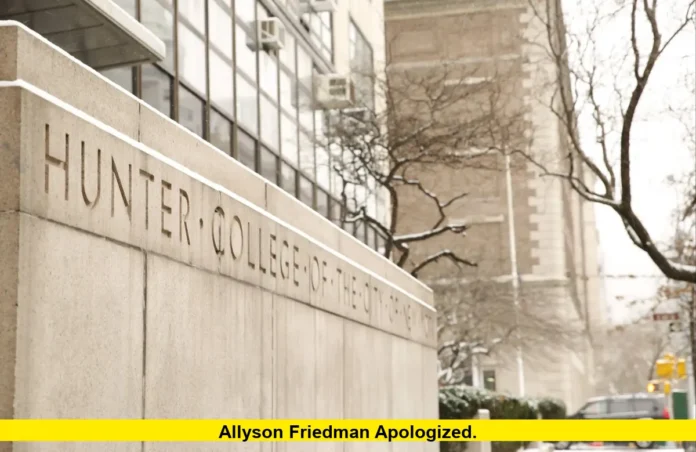

The phrase allyson friedman apologized quickly spread online after a school meeting incident involving a New York educator triggered intense public reaction and administrative review.
Allyson Friedman, an associate professor at Hunter College, issued an apology following a hot-mic moment during a Community Education Council meeting on February 10. The incident occurred while an eighth-grade student was speaking, and remarks captured on microphone drew criticism from parents, community members, and education officials.
Stay with us for clear updates and key developments as this story continues to unfold.
What Happened During the Meeting
The controversy began during a public Community Education Council meeting focused on local education issues. As an eighth-grade student addressed the council, comments attributed to Friedman were picked up on an open microphone.
Attendees and viewers later circulated clips of the moment on social media. The remarks were widely described as racially charged, prompting immediate reaction from parents and education advocates.
Community members expressed concern about the impact of such language in an educational setting, particularly during a forum intended to encourage student participation and civic engagement.
Allyson Friedman’s Apology
Shortly after the incident gained attention, Friedman released a public apology acknowledging the remarks.
In her statement, she said she regretted the comment and recognized the harm caused. She emphasized that the remark did not reflect her values as an educator and expressed remorse to the student, families, and the broader school community.
The apology became a central part of the developing story as school leaders and college administrators reviewed the situation.
Institutional Response
Hunter College acknowledged awareness of the incident and stated that it was reviewing the matter under its policies.
Education officials linked to the Community Education Council also addressed the situation, noting the importance of maintaining respectful dialogue, especially when students are speaking in public forums.
Local education leadership reiterated expectations for professionalism and respect from individuals participating in school governance meetings.
Community Reaction
Parents and advocacy groups reacted strongly after the video circulated.
Some families called for accountability measures and clearer standards for conduct at school meetings. Others emphasized the need for restorative approaches focused on dialogue, education, and student support.
Students’ participation in civic processes became a key part of the conversation, with community members highlighting that school meetings should remain safe spaces for youth voices.
Why the Incident Drew National Attention
Education controversies involving classroom climate, student voice, and professional conduct often attract broader attention. This case spread quickly online because the moment occurred while a student was speaking, which many observers viewed as especially significant.
The discussion expanded beyond the single comment to include wider debates about educator responsibility, bias awareness, and expectations for public conduct.
Experts in education policy frequently note that public meetings create permanent records, making hot-mic moments particularly consequential.
Follow this developing story for updates on policy decisions, school responses, and community conversations.
Hunter College and Professional Standards
Institutions typically evaluate incidents involving faculty under established conduct policies. These reviews can include internal assessment, conversations with leadership, and potential corrective steps.
Higher-education employers often stress that faculty members represent institutional values even when participating in external community roles.
The situation involving Friedman prompted renewed attention to how universities address conduct outside the classroom but within education-related public settings.
Student Voice at School Governance Meetings
Community Education Councils exist to allow families, students, and residents to weigh in on school policies and priorities.
When students speak, meetings are expected to model respectful engagement. Advocates argue that maintaining this environment is essential to encouraging youth participation in civic life.
The incident reignited discussion about how adults in leadership positions respond when students raise concerns or share experiences publicly.
Accountability vs. Restorative Approaches
Public response to the situation reflected two main viewpoints.
One group pushed for formal accountability measures, citing the importance of clear consequences when remarks are seen as inappropriate. Another group emphasized restorative dialogue, focusing on repairing harm and improving understanding.
Education systems across the United States increasingly balance these approaches, especially in situations involving language, bias awareness, and community trust.
Broader Context: Hot-Mic Incidents in Education
Hot-mic moments have become more common as school meetings are livestreamed and recorded.
Even brief remarks can spread widely online, shaping public perception and triggering institutional review. Education leaders frequently remind participants that microphones may capture side conversations.
This reality has led districts and universities to provide additional guidance about public meeting conduct.
Impact on School Community Climate
Incidents involving educator language can affect trust between families and school leadership.
Parents often look for transparency, clear communication, and visible steps that demonstrate commitment to respectful learning environments.
Community leaders involved in the meeting emphasized that supporting students remains the priority while the situation is addressed.
What Happens Next
Administrative review processes typically take time. Outcomes can range from internal conversations and professional development to formal disciplinary action, depending on institutional findings.
In the meantime, the apology remains a key element shaping how the situation is understood publicly.
The phrase allyson friedman apologized continues to frame discussion around responsibility, educator conduct, and community expectations.
Why This Story Matters
Education controversies resonate because they intersect with student experience, professional standards, and public trust.
Moments captured during school governance meetings can influence broader conversations about respect, bias awareness, and the role of educators in civic spaces.
For families and students, the case highlights how quickly a local meeting can become part of a national discussion about school culture.
Continuing Community Dialogue
Community meetings following high-profile incidents often include conversations about expectations, training, and communication.
Advocates stress that addressing concerns openly can help rebuild trust and ensure students feel comfortable speaking in public forums.
Education leaders frequently point to these discussions as opportunities to reinforce values and improve policies.
What are your thoughts on how schools should handle moments like this? Share your perspective and stay tuned for further updates.