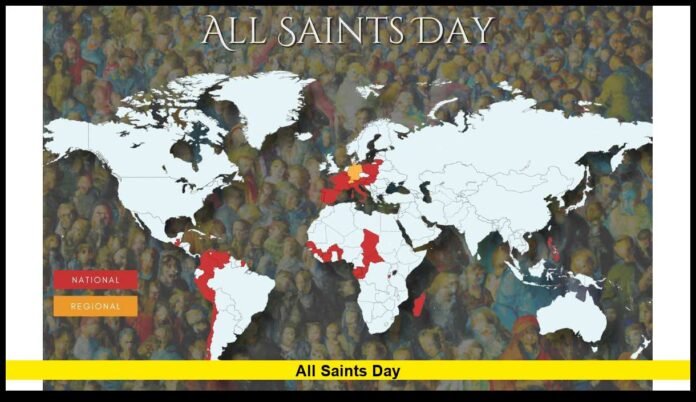

All Saints Day is one of Christianity’s oldest and most beloved feast days, observed every year on November 1. Across the United States and around the globe, millions of believers gather to honor the saints — both famous and unknown — who lived lives of deep faith and virtue.
In 2025, All Saints Day falls on a Saturday, giving families and communities more time to participate in Mass, visit cemeteries, and celebrate together. The day remains a powerful reminder of hope, faith, and the eternal connection between the living and the departed.
What Is All Saints Day?
All Saints Day, also called the Solemnity of All Saints, is a Christian celebration dedicated to honoring all saints — those who have entered heaven. This includes not only saints officially canonized by the Church but also countless others who lived holy, humble lives.
The day highlights the Christian belief in the Communion of Saints, which connects the faithful on earth with those who have reached eternal life.
While the Catholic Church recognizes All Saints Day as a holy day of obligation, many other Christian denominations, including Anglican, Lutheran, Methodist, and Orthodox churches, also celebrate it through prayer and remembrance services.
For many, the feast offers a moment to reflect on the lives of those who lived with courage, love, and faith — and to be inspired to follow their example in everyday life.
The Historical Roots of All Saints Day
The origins of All Saints Day go back more than 1,300 years. In the early centuries of Christianity, believers gathered to honor martyrs who died for their faith, especially during times of Roman persecution.
By the 4th century, Christians began setting aside specific days to commemorate groups of martyrs. Over time, these observances expanded to include all holy men and women who had lived and died in faith.
In 609 A.D., Pope Boniface IV consecrated the Pantheon in Rome to the Virgin Mary and all Christian martyrs, marking the first official recognition of such a feast. Later, in 835 A.D., Pope Gregory IV designated November 1 as the universal date for All Saints Day, uniting the Western Church in one celebration.
Today, this tradition continues across the world as one of the most meaningful and unifying days in the Christian calendar.
How All Saints Day and Halloween Are Connected
Many people are surprised to learn that Halloween and All Saints Day are historically linked.
The word “Halloween” originates from “All Hallows’ Eve” — the evening before All Hallows’ Day (another name for All Saints Day). In medieval Europe, people prepared for the feast by fasting, praying, and lighting candles to honor the dead.
Over the centuries, cultural customs such as wearing costumes, carving lanterns, and sharing food became associated with the evening before the holy day.
While Halloween has evolved into a largely secular celebration, its roots remain deeply tied to the Christian tradition of remembrance and preparation for All Saints Day. Together with All Souls Day on November 2, these observances form the Hallowtide Triduum, a three-day period focused on reflection, prayer, and remembrance.
The Meaning and Message of All Saints Day
At its heart, All Saints Day is a celebration of faith, perseverance, and the promise of eternal life. It reminds believers that sainthood is not reserved for a few famous figures. Instead, it is a calling that every person can live out through kindness, service, and devotion.
The day’s message is simple but profound — holiness can be found in everyday life. It is reflected in parents who raise their children with love, workers who act with honesty, and communities that serve those in need.
Through this celebration, Christians around the world renew their commitment to live with compassion and integrity, following the path of those who came before them.
How All Saints Day Is Celebrated in 2025
In 2025, All Saints Day will be marked with both solemnity and joy in communities across the United States. Churches will hold special Masses, prayer services, and community events.
Here are some common ways Americans celebrate this sacred day:
- Attending Mass or worship services: Many churches offer morning and evening services so more people can participate.
- Lighting candles: Believers light candles in honor of departed loved ones and saints.
- Visiting cemeteries: Families decorate graves with flowers and say prayers for the deceased.
- Reading the names of the departed: Many congregations hold memorial lists during Mass.
- Community gatherings: Choir concerts, saint parades, and reflection groups are popular in schools and parishes.
Because the day falls on a weekend in 2025, participation is expected to increase, especially in parishes that combine All Saints and All Souls observances into one extended weekend of reflection.
All Saints Day Around the World
Although All Saints Day is celebrated globally, each country observes it with unique traditions that reflect local culture and faith.
Philippines
The day is part of Undás, a major national tradition where families travel to cemeteries, clean graves, and hold picnics. It’s both a family reunion and a time for spiritual remembrance.
Mexico
All Saints Day coincides with the first day of Día de los Muertos (Day of the Dead). Families build colorful ofrendas (altars) adorned with candles, marigolds, and photos of loved ones.
France and Spain
Citizens bring fresh flowers, often chrysanthemums, to cemeteries. Many businesses close for the day, emphasizing its importance.
Italy
Families attend Mass, ring church bells, and visit cemeteries with candles and flowers to honor the deceased.
Poland
Cemeteries glow with thousands of candles as families gather for nighttime vigils and prayers.
Though customs vary by culture, the message is universal — remembrance, gratitude, and hope in eternal life.
All Saints Day in the United States
In the United States, All Saints Day continues to hold deep meaning for Christians of many denominations.
Catholic churches nationwide, from New York City to Los Angeles, will celebrate with special liturgies, choirs, and community meals. Protestant churches — especially Episcopal, Lutheran, and Methodist — will also hold remembrance services.
Many Catholic schools hold “Saint Fairs,” where children learn about different saints and even dress up as them. Families use the day to teach children about kindness, empathy, and the value of doing good for others.
Cemeteries across states like Louisiana, Texas, and New Mexico will also see visitors bringing flowers and lighting candles, keeping long-held traditions alive.
Modern Reflections: All Saints Day in a Changing World
While All Saints Day is ancient, its message remains timeless. In today’s world, filled with distractions and uncertainty, it calls people to look inward and live with purpose.
Modern technology has made it easier for people to participate in global celebrations. Many churches livestream services and offer online prayer groups for those who cannot attend in person. Social media platforms also host virtual candle-lighting events and reflections.
Younger generations, in particular, are rediscovering the relevance of this day. For many, it serves as a reminder that goodness and integrity still matter, and that everyday people can be “saints” in their communities by showing compassion and courage.
The Link Between All Saints Day and All Souls Day
While All Saints Day celebrates those already in heaven, All Souls Day (November 2) focuses on praying for those still on their spiritual journey. Together, these two days form one continuous period of remembrance.
In Catholic tradition, families often visit cemeteries on both days, light candles, and offer prayers for loved ones. The connection between the two feasts reflects the broader message of Christian unity — that life and death are both part of God’s eternal plan.
This shared observance comforts many, especially those grieving recent losses, reminding them that love transcends even death.
The Role of Art, Music, and Culture
Throughout history, All Saints Day has inspired beautiful expressions of art and music. Paintings, sculptures, and stained-glass windows depict the glory of heaven and the peace of eternal life.
Traditional hymns such as For All the Saints, Ye Watchers and Ye Holy Ones, and Holy God, We Praise Thy Name are performed in churches worldwide. Many choirs in the U.S. hold special concerts, combining ancient chants with modern compositions to celebrate the feast.
These artistic traditions help believers connect emotionally and spiritually to the meaning of the day.
Why All Saints Day Still Matters
In a world often focused on material success and fast-paced living, All Saints Day offers a much-needed pause. It encourages gratitude for the people who came before us — those who stood for faith, justice, and kindness.
The day also reminds believers that sainthood is attainable through everyday acts of love and service. Whether helping a neighbor, showing forgiveness, or volunteering for a cause, holiness is within reach for everyone.
All Saints Day bridges generations, linking the past, present, and future through faith and remembrance. Its message remains powerful: goodness never fades, and love never dies.
All Saints Day reminds us that holiness is found in daily life — in every act of love, service, and hope. How will you celebrate this year’s All Saints Day? Share your reflections below and stay connected for more stories of faith and tradition.