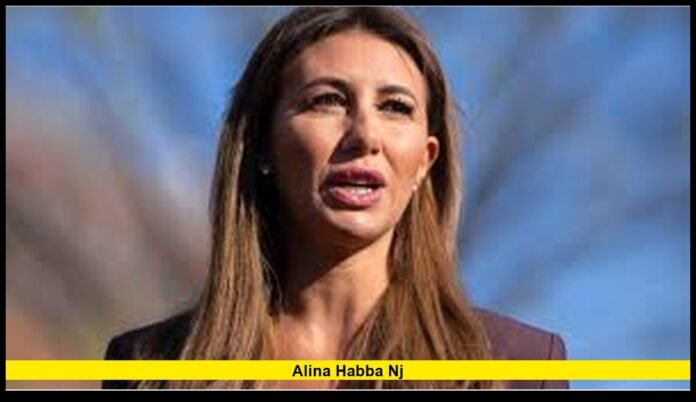

alina habba nj became the center of national legal attention after a federal appeals court ruled that she had been unlawfully serving as New Jersey’s acting U.S. attorney. The decision instantly removed her from the role and triggered a broad reassessment of cases she supervised. The ruling, delivered on December 1, 2025, marked one of the most significant legal leadership reversals in the state’s recent history.
This updated report provides deeper coverage of what happened, why the court intervened, and how the decision may influence New Jersey’s federal justice system moving forward.
A Unanimous Court Decision Ends Her Tenure
The appeals court determined that Habba’s interim appointment did not follow federal vacancy rules. Interim U.S. attorneys can only serve for a limited period unless properly extended through specific statutory methods. According to the court, her reinstatement relied on procedures that did not comply with those laws.
The ruling prevents Habba from continuing in the position and bars her from participating in active cases that were handled during the period when her appointment was deemed unlawful. This immediate disqualification places a spotlight on the process used to install federal prosecutors and the need to follow the rules governing these appointments.
How Her Appointment Began and Where It Went Wrong
Habba first stepped into the acting U.S. attorney role earlier in 2025 under an interim appointment. Interim roles come with clear time limits. When her authorized period ended, the district court followed long-standing procedures and appointed the office’s deputy to take over leadership.
Instead of allowing that transition to stand, federal officials took a series of steps that returned Habba to the office. These steps included dismissing the court-appointed deputy and appointing Habba through a different administrative pathway. The appeals court later reviewed those actions and found them inconsistent with statutes governing interim service.
The core of the issue was not performance-based. It centered entirely on whether the law permitted the method used to reinstall her. The judges concluded that it did not.
What the Decision Means for Federal Cases in New Jersey
The court’s ruling does not automatically void every case that passed through the U.S. Attorney’s Office during Habba’s tenure. But it does mean that defense attorneys may now challenge cases where she had a significant personal role or where her authorization directly affected key decisions.
Judges will now evaluate challenges individually. Some cases may continue without interruption. Others may face motions to reconsider filings, reassess authorizations, or request additional review. The exact number of affected cases remains unknown, but legal teams throughout the state are already preparing.
The ruling also reinforces that federal prosecutors must operate under legally valid authority at every stage of a case. When that authority is questioned, courts must confirm whether any procedural defects influenced the rights of defendants.
Federal Leadership Transition Already Underway
With Habba removed, the New Jersey U.S. Attorney’s Office must shift leadership immediately. The office will continue operating under an acting leader who meets all legal requirements while the Justice Department evaluates next steps.
The department can request a new interim appointment that fully complies with statutory rules or nominate a permanent U.S. attorney for Senate confirmation. Until then, the court-approved acting leader will oversee all pending matters.
This transition phase is critical because the office handles high-volume federal work, including organized crime cases, public corruption investigations, financial crimes, and civil enforcement actions.
Why This Case Carries National Significance
While the ruling directly affects New Jersey, it has broader implications for how federal interim appointments are made. Courts across the country have stressed that vacancy laws must be applied consistently and cannot be broadened through administrative maneuvers.
This decision adds to a growing pattern of judicial oversight focused on enforcing these rules. It signals that federal agencies must follow precise legal requirements, particularly when filling roles that carry significant prosecutorial power.
The case also highlights the separation of powers. Courts are responsible for ensuring that executive actions adhere to statutory limits. This ruling underscores that oversight.
Political and Public Response
The reaction to Habba’s removal has been swift. Supporters highlight her professional achievements, legal experience, and willingness to take on challenging roles. Critics, however, point to concerns about the appointment process and praise the court for enforcing procedural integrity.
Public discussion has centered more on the appointment process than on Habba personally. Many legal commentators note that the ruling emphasizes the need to maintain clear boundaries in federal appointments, regardless of who serves in the role.
Within New Jersey, political leaders have acknowledged the decision as a major development within the state’s justice system. Some lawmakers had previously raised questions about the process used to place Habba in the job. With the court’s ruling now final, those concerns gain renewed attention.
Impact on High-Profile Investigations
Federal prosecutions often span months or years. During that time, leadership decisions, approvals, and filings may involve the U.S. attorney directly. Because of this, defense attorneys may examine whether Habba’s involvement in certain cases requires adjustment.
Not every case will be affected. Some matters may not have involved her at all. Others may require only minor procedural corrections. More sensitive cases may face deeper review if her participation was substantial.
Cases related to public corruption, organized crime, financial fraud, and civil enforcement are likely to draw the most attention because leadership involvement in such matters is more common.
How the Justice Department Is Preparing to Move Forward
The Justice Department must now adjust both leadership structure and case management protocols. Steps likely include:
- Reassigning supervisory responsibilities
- Reviewing open cases for procedural compliance
- Ensuring all filings reflect authorized leadership
- Communicating changes to courts and defense teams
- Establishing guidelines to prevent similar appointment issues in future
These efforts are intended to stabilize the office and maintain confidence in federal prosecutions across the state.
What Defendants and Legal Teams Should Expect
For defendants with ongoing cases, the ruling creates new possible legal avenues. Defense teams may file motions identifying areas where Habba’s involvement could raise concerns. These motions could seek remedies ranging from additional hearings to reconsideration of specific actions.
Courts will evaluate these requests carefully. Judges typically require clear evidence that the disputed appointment had a meaningful impact on a defendant’s rights. In many cases, proceedings may continue normally. In others, courts may allow additional argument or request modification of filings.
Timeline of the Events That Led to the Court’s Decision
A chronological view shows how the situation developed:
Early 2025:
Habba is appointed interim U.S. attorney for New Jersey.
Mid-2025:
Her interim term reaches its statutory limit.
District Court Action:
Judges appoint the office’s deputy to lead the U.S. Attorney’s Office.
Administrative Maneuver:
The deputy is removed, and Habba is reinstated through an alternative appointment mechanism.
Legal Challenge:
The reinstatement faces judicial review.
December 1, 2025:
The appeals court rules that Habba’s appointment was unlawful and orders her removal.
This sequence demonstrates why the court intervened and why the ruling holds broad consequences.
Long-Term Implications for Federal Appointment Practices
The ruling reinforces several legal principles:
- Federal appointment laws must be followed exactly.
- Courts will strike down unauthorized interim appointments.
- Executive agencies cannot extend appointments through indirect means.
- Defendants are entitled to leadership that meets statutory requirements.
Moving forward, the Justice Department may rely more heavily on timely nominations and Senate confirmations to avoid appointment complications.
Short FAQ
Q: Does the ruling automatically dismiss cases she oversaw?
No. Cases remain active unless a court determines her involvement caused a specific legal problem.
Q: Can the Justice Department still appeal?
Yes, but the office must follow the ruling while any appeal is considered.
Q: Who is leading the office now?
A legally recognized acting U.S. attorney, appointed under statutory rules, oversees operations until a permanent nominee is selected.