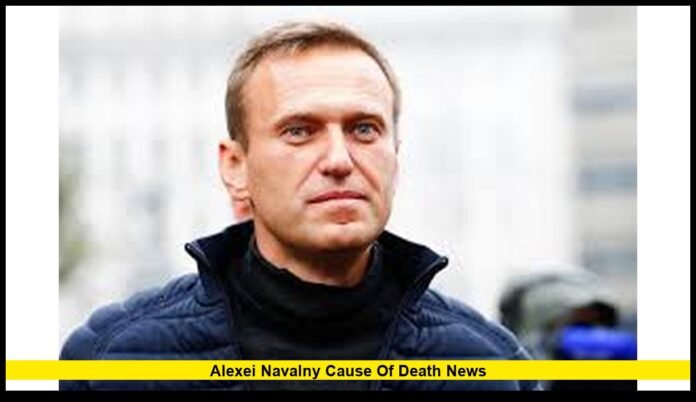

Alexei Navalny cause of death continues to draw global attention two years after the Russian opposition leader died on February 16, 2024, inside an Arctic penal colony. Russian authorities officially concluded that Navalny died from “sudden death syndrome,” a term commonly used in Russia to describe sudden cardiac arrest. His family, political allies, and several Western governments strongly rejected that determination, keeping the issue central to international political debate as of February 14, 2026.
Navalny’s death occurred while he was serving a 19-year sentence on extremism-related charges at IK-3, a high-security penal colony located in Kharp, in Russia’s Yamalo-Nenets region above the Arctic Circle. The circumstances surrounding his final hours, combined with his history as President Vladimir Putin’s most prominent domestic critic, immediately triggered international scrutiny.
What Happened on February 16, 2024
Russia’s Federal Penitentiary Service announced Navalny’s death on the afternoon of February 16, 2024. Officials stated that he felt unwell after a routine walk in the prison yard. Authorities reported that he lost consciousness shortly afterward.
Medical personnel at the facility attempted emergency resuscitation efforts. Prison officials said paramedics were called and continued lifesaving procedures. Navalny could not be revived.
The prison service released a statement confirming his death the same day. Russian investigators opened a formal inquiry immediately after the announcement.
Key confirmed details include:
- Location: IK-3 “Polar Wolf” penal colony
- Region: Yamalo-Nenets Autonomous Okrug
- Date: February 16, 2024
- Official explanation: sudden health event
The penal colony sits in a remote Arctic region known for harsh winter conditions and limited outside access.
Official Russian Medical Conclusion
After conducting an investigation, Russian authorities determined that Navalny died from “sudden death syndrome.” The term generally refers to abrupt cardiac arrest or fatal heart rhythm disruption without prior warning.
Investigators stated:
- No signs of violent trauma were identified.
- Toxicology testing did not detect poison.
- No criminal act was established in the death.
Russian officials closed the investigation with the conclusion that natural causes led to his death.
Navalny’s body was released to his mother on February 24, 2024, following public demands and diplomatic pressure. His funeral took place in Moscow on March 1, 2024.
As of February 2026, Russian authorities have not revised or supplemented their official cause-of-death determination.
Navalny’s Health History and Prior Poisoning
Navalny’s medical history remains central to public skepticism. In August 2020, he fell gravely ill during a flight within Russia. He was later transported to Germany, where medical experts identified exposure to a Novichok nerve agent.
Western governments attributed the poisoning to Russian operatives. The Kremlin denied involvement.
Navalny recovered in Germany before returning voluntarily to Russia in January 2021. Authorities arrested him immediately upon arrival in Moscow.
His survival of a nerve agent attack heightened international attention when news of his prison death broke in 2024.
Imprisonment and Conditions at IK-3
Navalny was transferred to IK-3 in late 2023. The facility is located in Kharp, a remote Arctic settlement.
IK-3 is classified as a “special regime” penal colony, reserved for inmates serving long sentences. The region experiences extreme winter temperatures and geographic isolation.
Before his death, Navalny spent extended periods in solitary confinement. His legal team frequently reported disciplinary penalties and restricted communication.
The environment and disciplinary conditions became part of the broader debate following his death.
Family Response and Public Statements
Navalny’s widow, Yulia Navalnaya, publicly blamed Russian leadership for her husband’s death. She vowed to continue his political mission.
Supporters of Navalny rejected the official explanation and demanded an independent investigation. They argued that the absence of international oversight prevented transparency.
Navalny’s Anti-Corruption Foundation maintained that Russian authorities failed to conduct a fully impartial review.
Despite international calls, no external forensic team conducted an independent autopsy within Russia.
United States and International Reaction
The U.S. government responded swiftly after Navalny’s death in February 2024. President Joe Biden publicly stated that Russia bore responsibility. The United States announced new sanctions targeting Russian officials and institutions.
The European Union introduced additional sanctions as well. NATO leaders described Navalny’s death as alarming and demanded accountability.
Sanctions measures included:
- Restrictions on Russian officials linked to the penal system
- Financial sanctions on designated individuals
- Expanded export controls
Diplomatic tensions between Moscow and Western capitals intensified further.
Public Mourning and Funeral in Moscow
Navalny’s funeral took place on March 1, 2024, at the Borisovskoye Cemetery in Moscow. Thousands of mourners attended despite heavy police presence.
Large crowds lined the streets, chanting slogans associated with Navalny’s political message. Authorities monitored the gathering closely.
The funeral demonstrated Navalny’s continued influence within segments of Russian society.
Legal Status in 2026
As of February 14, 2026, no new official findings have emerged from Russian authorities. The conclusion of sudden death syndrome remains unchanged.
Western governments continue to cite Navalny’s death when addressing Russia’s human rights record. The case remains diplomatically sensitive.
There has been no internationally sanctioned investigation conducted within Russian jurisdiction.
The absence of a mutually accepted inquiry outcome keeps the issue alive in global political discussions.
Key Facts Summary
| Category | Confirmed Information |
|---|---|
| Date of Death | February 16, 2024 |
| Location | IK-3 Penal Colony, Kharp |
| Official Cause | Sudden death syndrome |
| Prior Poisoning | 2020 Novichok nerve agent |
| Funeral | March 1, 2024 |
| U.S. Action | Sanctions imposed in 2024 |
These details reflect the current official record as of early 2026.
Ongoing Public Interest
Search interest in alexei navalny cause of death remains high in the United States and internationally. The issue intersects with broader concerns about political dissent, international law, and diplomatic relations.
Navalny’s political legacy continues through his supporters and public advocacy campaigns. His widow remains an outspoken critic of the Russian government.
The debate over accountability has not subsided.
Why the Case Still Resonates
Navalny’s prominence as an anti-corruption activist made him one of Russia’s most recognizable opposition figures. His imprisonment, prior poisoning, and eventual death formed a sequence of events that shaped international perceptions.
For U.S. audiences, the story connects to broader foreign policy discussions. It also underscores the role of political dissent in global affairs.
The official conclusion inside Russia contrasts sharply with international skepticism. That divide continues defining diplomatic dialogue.
Two years after his death, the official determination remains unchanged, while public debate continues worldwide.
Do you believe the full story has been uncovered, or should further investigation take place? Share your perspective and stay informed as developments unfold.