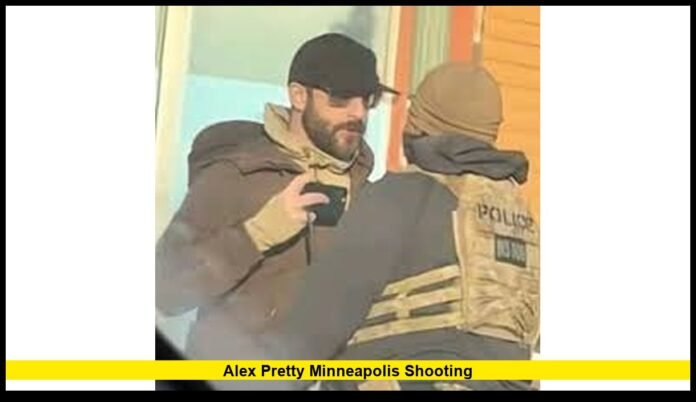

The city of Minneapolis was shaken by the deadly confrontation now known as the alex pretty minneapolis shooting, an incident that unfolded during a federal immigration enforcement operation and left a well-known healthcare worker dead, igniting public anger, grief, and urgent calls for accountability across Minnesota and beyond.
Alex Jeffrey Pretty, 37, was a lifelong Midwesterner, a U.S. citizen, and an intensive care unit nurse who spent his career caring for critically ill patients, many of them military veterans. Colleagues described him as calm under pressure, deeply compassionate, and unwavering in his commitment to saving lives. Outside the hospital, he was known as an outdoors enthusiast, a devoted dog owner, and someone who cared strongly about civil rights and community safety.
His death has become a flashpoint in a broader national conversation about federal law enforcement tactics, public trust, and the boundaries of force during immigration operations in major American cities.
What Happened in South Minneapolis
The shooting occurred in south Minneapolis during a morning federal operation carried out by Border Patrol agents working alongside other federal personnel. The operation was part of an intensified immigration enforcement effort taking place across the region.
According to confirmed official statements, agents encountered Alex Pretty in a public area near the operation. A confrontation followed, and an agent discharged a firearm, striking Pretty multiple times. He was pronounced dead at the scene.
Federal authorities initially stated that the agent believed Pretty posed a threat and that the use of lethal force was a defensive response. They said a firearm was present on Pretty at the time of the encounter.
However, video recordings from bystanders and accounts from witnesses quickly raised serious questions about how the events unfolded and whether the level of force used was justified.
Video and Witness Accounts
Multiple videos captured from nearby sidewalks and vehicles show Pretty standing near the scene moments before he was shot. In the footage, he appears unarmed in his hands and is seen holding a mobile phone. He does not appear to be charging or threatening agents in the moments visible on camera.
Witnesses reported that Pretty had been helping others who were knocked to the ground during the chaotic moments of the operation. Several people said he was attempting to calm the situation and assist a woman who had fallen.
Footage also shows agents deploying pepper spray and physically restraining individuals in the area. At one point, an officer is seen reaching toward Pretty’s waistband. Shortly afterward, gunfire erupts.
The visual evidence has fueled widespread concern and demands for a full, independent investigation into whether the shooting met the legal standards for use of deadly force.
Who Alex Pretty Was
Alex Pretty worked as an ICU nurse at a Veterans Affairs medical center in Minneapolis, caring for patients with severe injuries, life-threatening illnesses, and post-surgical complications. Coworkers described him as a steady presence during crises, someone patients trusted and families leaned on during their most difficult moments.
Friends said he was politically aware but not confrontational, motivated by a strong sense of fairness and concern for human dignity. In the weeks leading up to his death, he had attended peaceful demonstrations related to earlier law-enforcement incidents in the city, driven by a belief that communities deserved transparency and accountability.
He legally owned a firearm and held a valid permit, according to confirmed law-enforcement records. There was no history of violent crime associated with him.
Immediate Community Reaction
Within hours of the shooting, a memorial formed near the location where Pretty was killed. Flowers, candles, handwritten notes, and photos appeared, many honoring him not only as a victim but as a caregiver who dedicated his life to protecting others.
Crowds gathered throughout the day and into the evening, holding vigils and protests. Demonstrators called for justice, transparency, and an end to what they described as overly aggressive federal enforcement tactics in residential neighborhoods.
While most gatherings were peaceful, tensions ran high. The presence of heavily armed federal officers and the use of crowd-control measures such as pepper spray intensified public anger and fear.
City leaders urged calm while also demanding answers.
State and Local Government Response
Minnesota’s governor publicly condemned the shooting and questioned the federal account of events. He called for a thorough investigation and emphasized that any use of lethal force must be examined with the highest level of scrutiny, especially when it involves a civilian with no known violent intent at the scene.
The state moved to secure all available evidence, including body-camera footage, surveillance video, radio communications, and witness statements. Legal action was initiated to ensure that no material related to the incident could be destroyed or withheld during the investigative process.
Minneapolis city officials echoed the call for transparency and pledged full cooperation with state and federal inquiries. The police chief confirmed that local authorities were not the ones who fired the fatal shots but would assist in the investigation.
Federal Position and Ongoing Review
Federal agencies involved stated that the shooting is under internal review and that the agent has been placed on administrative duty pending the outcome. Officials reiterated that their personnel are trained to respond to perceived threats and that the decision to use force is made in rapidly evolving situations.
At the same time, they acknowledged the existence of video evidence and said it would be evaluated as part of the formal investigative process.
The case is also expected to undergo review by federal prosecutors and independent oversight bodies to determine whether the use of force complied with constitutional standards and agency policy.
Broader Impact on Immigration Enforcement Debate
The alex pretty minneapolis shooting has intensified national debate over how immigration enforcement is conducted in urban areas, particularly when operations take place near residential streets, workplaces, and public gatherings.
Civil rights advocates argue that the presence of heavily armed federal agents in civilian spaces increases the risk of deadly misunderstandings and undermines public trust. Law-enforcement supporters counter that officers face unpredictable threats and must make split-second decisions to protect themselves and others.
The incident has become a central reference point in discussions about:
• Use-of-force standards
• Transparency and body-camera access
• Federal-state jurisdiction conflicts
• Community safety during enforcement actions
• Protection of constitutional rights
Legal Path Forward
Multiple investigations are now underway. These include:
• A state-level criminal investigation into the shooting
• A federal internal affairs review
• A civil rights inquiry examining potential violations
• Possible civil litigation from the Pretty family
Attorneys representing the family have stated that they are seeking a full accounting of what happened, including release of all video, forensic evidence, and officer statements.
They have emphasized that Alex Pretty’s role as a healthcare worker who spent his life saving others makes the circumstances of his death especially painful and unacceptable to those who knew him.
Remembering a Life of Service
At the hospital where Pretty worked, colleagues held a moment of silence and established a remembrance area for staff and patients. Many shared stories of his kindness, his steady voice during emergencies, and his willingness to take extra shifts to help short-staffed units.
Veterans who had been treated by him sent messages of condolence to his family, describing him as someone who listened, reassured, and treated them with dignity.
For many in Minneapolis, he has come to symbolize both the best of the community and the deep fear that anyone can become a casualty when force is used too quickly and questions are answered too slowly.
A City Waiting for Answers
As investigations continue, Minneapolis remains in a state of uneasy reflection. Residents are demanding clear, verified facts, accountability where wrongdoing is found, and meaningful changes to prevent similar tragedies.
The shooting has already reshaped conversations about law enforcement, immigration policy, and the relationship between federal power and local communities.
The final conclusions of the investigations will carry significant legal, political, and social consequences — not only for the officers involved, but for how such operations are conducted nationwide.
The story of Alex Pretty is no longer just about one moment of violence; it is about truth, accountability, and the urgent need for trust between those who enforce the law and the communities they serve.