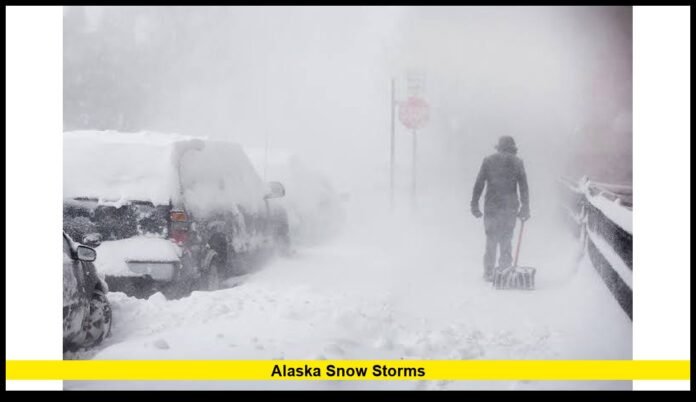

An alaska snow storm brought an unusual taste of winter to northern parts of the state during the final days of July 2026, producing accumulating snowfall, icy conditions, and travel concerns across the Brooks Range. The weather system was especially notable because it arrived during the heart of summer, when much of the United States was experiencing typical late-July warmth. In Alaska’s northern mountains, however, a surge of Arctic air allowed temperatures to fall enough for rain to transition to snow across higher elevations.
The most significant effects were concentrated in northern Alaska rather than across the entire state. Higher terrain in the Central Brooks Range, including areas around Atigun Pass and portions of the Dalton Highway, faced the greatest potential for accumulating snow and slippery roads.
The National Weather Service issued a Winter Weather Advisory for the Central Brooks Range as the colder air and precipitation moved through. Forecast totals generally ranged from a couple of inches to locally higher amounts approaching 6 inches in favored elevated locations.
Although the advisory expired after the main period of winter weather moved through, the late-July event demonstrated how quickly conditions can shift in Alaska’s Arctic and mountainous regions.
Key Points Summary
╔════════════════════════════════════════════════════════════════════╗
║ – Late-July snow developed across parts of northern Alaska. ║
║ – The Central Brooks Range was under a Winter Weather Advisory. ║
║ – Accumulations generally ranged from about 2 to 6 inches. ║
║ – Atigun Pass was among the areas facing winter travel conditions. ║
║ – Parts of the Dalton Highway were vulnerable to snow and ice. ║
║ – Arctic air helped change rain into snow at higher elevations. ║
║ – The main winter weather advisory expired early on July 27. ║
╚════════════════════════════════════════════════════════════════════╝
Arctic Cold Front Sets the Stage for July Snow
Moisture accompanying the system initially supported rain in some locations. As colder Arctic air became established, temperatures dropped sufficiently for precipitation to transition toward snow, particularly across elevated terrain.
The Brooks Range was particularly vulnerable because of its combination of latitude and elevation. Even during summer, temperatures at mountain passes can be dramatically colder than those experienced at lower elevations.
This was not a massive statewide winter storm. Instead, it was a geographically focused weather event capable of producing meaningful impacts in remote northern areas.
That distinction is important because Alaska’s enormous size means weather conditions can vary dramatically from one region to another.
While travelers in the Brooks Range encountered winter-like conditions, communities hundreds of miles away could experience completely different weather.
Several Inches of Snow Possible in Higher Terrain
Snowfall amounts associated with the system were modest compared with major Alaska winter storms, but they were significant for late July.
Forecast information for the Central Brooks Range indicated that around 2 inches of accumulation could occur across affected locations, while higher elevations could receive totals approaching 6 inches.
The potential for accumulating snow was greatest at elevations above roughly 1,000 feet.
At higher mountain passes, temperatures were cold enough to allow snow to accumulate more efficiently.
A snowfall total of several inches might seem minor in Alaska during January or February. During July, however, the same amount can present different challenges.
Motorists traveling in summer may not expect snow-covered roads, and sudden changes from wet pavement to slush or ice can increase the likelihood of difficult driving conditions.
Atigun Pass Becomes a Major Area of Concern
Atigun Pass was one of the most closely watched locations during the event.
Located along the Dalton Highway in the Brooks Range, the pass reaches an elevation of approximately 4,700 feet. Its combination of altitude and northern latitude makes it susceptible to abrupt weather changes throughout the year.
The road through Atigun Pass includes steep terrain and long stretches far from major population centers.
When snow or ice develops, conditions can become considerably more challenging.
Visibility may also deteriorate as precipitation combines with low clouds or fog. Even relatively small accumulations can affect traction on steep grades.
The late-July snowfall therefore represented more than a weather curiosity. For motorists and commercial drivers using the corridor, it created a legitimate transportation concern.
Dalton Highway Travel Can Change Quickly
The Dalton Highway is one of the most remote major roads in the United States.
Running north from the Interior toward Alaska’s North Slope, the highway crosses vast stretches of wilderness and the Brooks Range before continuing toward the Arctic region.
It is an important commercial transportation route, particularly for trucks serving North Slope operations. It has also become an adventurous destination for travelers seeking to experience remote Alaska.
Weather is one of the defining challenges of driving the Dalton.
During this latest alaska snow storm, portions of the highway around the Brooks Range were vulnerable to accumulating snow, slush, freezing precipitation, and slick pavement.
Travelers encountering these conditions have fewer nearby services than they would on highways around major metropolitan areas.
That makes preparation particularly important.
Freezing Drizzle Complicates the Weather Picture
Snow was only part of the concern.
As temperatures moved through the freezing point, the weather pattern also created the possibility of mixed precipitation and freezing drizzle.
Freezing drizzle can be especially troublesome because it may leave only a thin coating of ice.
A road can appear wet while actually being extremely slippery.
Bridges, shaded stretches, elevated roadways, and mountain passes are often among the first surfaces to develop ice when temperatures fall below freezing.
Snow that partially melts during warmer periods can create another problem. If temperatures subsequently fall, the resulting water or slush can refreeze.
That means hazardous conditions may persist even after active snowfall ends.
How Unusual Is Snow in Alaska During July?
Snow in Alaska during July is unusual, but the degree of rarity depends heavily on the location.
Alaska stretches across an enormous area and contains several distinct climate zones.
A July snowfall in a low-elevation community would be far more remarkable than snow across high terrain in the Brooks Range.
Northern mountain locations can experience freezing temperatures during summer when sufficiently cold Arctic air moves into the region.
Atigun Pass is especially prone to colder conditions because of its elevation.
This does not make several inches of July snow an everyday event. The timing remains unusual enough to attract attention, particularly when conditions require an official winter weather advisory.
However, it is important to distinguish mountain snowfall from a widespread summer snowstorm affecting Alaska’s largest cities.
Anchorage and Other Major Cities Were Not Buried in July Snow
The event did not represent a statewide return to winter.
Anchorage, Juneau, and many other population centers were not experiencing the same accumulating snowfall affecting the Central Brooks Range.
Alaska is so large that describing weather statewide can sometimes be misleading.
From north to south, the state extends across a vast distance. Coastal regions, interior valleys, Arctic communities, and mountain ranges can experience completely different conditions simultaneously.
The late-July snowfall was primarily a northern and high-elevation event.
That geographic context is essential for understanding why winter weather could occur in Alaska without most residents suddenly finding themselves surrounded by snow.
Does July Snow Signal an Early Winter?
A summer snowfall does not necessarily mean Alaska’s winter season is arriving unusually early.
Weather and climate operate on different timescales.
A temporary surge of cold Arctic air can produce snow for a short period before temperatures recover. Persistent winter conditions require a more sustained seasonal transition.
Northern Alaska does move toward colder weather relatively quickly as summer progresses. Daylight begins decreasing rapidly after the summer solstice, and the region eventually enters its long cold season.
But one late-July snowfall cannot determine how early winter will arrive or how severe the upcoming winter will become.
Snow at higher elevations may also melt when warmer temperatures return.
The event is better understood as a temporary intrusion of winter-like weather during Alaska’s summer.
Alaska’s Geography Creates Dramatic Weather Differences
Few states experience the geographic and climatic contrasts found in Alaska.
The state covers more than 660,000 square miles and stretches from temperate maritime areas in the southeast to Arctic territory in the north.
Mountain ranges further complicate the weather.
Elevation can dramatically influence temperatures and precipitation type. Rain falling at lower elevations can become snow just a short distance away at higher terrain.
The Brooks Range acts as an important geographic divide between Alaska’s Interior and Arctic regions.
When cold air interacts with the mountains and available moisture, conditions can change rapidly.
That combination helped create the late-July winter weather.
A Sharp Contrast With Summer Elsewhere in the U.S.
The timing of the snowfall made the story particularly striking.
Late July is typically associated with some of the hottest weather of the year across much of the Lower 48.
Air conditioners, heat advisories, thunderstorms, beaches, and summer vacations dominate seasonal life in many states.
Northern Alaska presented a dramatically different scene.
Mountain roads faced snow and ice while cold Arctic air pushed through the region.
The contrast illustrates just how broad the range of American weather can be at the same moment.
From extreme summer heat in southern regions to freezing conditions in Alaska’s mountains, geography allows radically different weather patterns to coexist.
Alaska Has Already Seen Much Bigger Snow Events in 2026
The late-July event stands out because of its timing, not because it ranks among Alaska’s largest snowstorms.
Earlier in 2026, portions of the state experienced much more substantial snowfall.
Juneau, in Southeast Alaska, dealt with extraordinary snow accumulation around the beginning of the year following repeated winter storms.
The heavy snow created challenges involving transportation, snow removal, buildings, and daily activities.
Compared with those winter events, several inches of snow in the Brooks Range is relatively limited.
But snowfall does not need to reach several feet to become significant.
In July, even modest accumulation can catch travelers’ attention and create hazards on remote roads.
What Drivers Should Watch for After the Snow
With the primary advisory no longer in effect, the focus shifts toward residual road conditions and subsequent temperature changes.
Snow may melt during periods when temperatures rise above freezing. That melting can leave roads wet or slushy.
Should temperatures drop again, refreezing becomes possible.
Motorists traveling through northern mountain terrain should therefore remain aware that road conditions can change over short distances.
Lower elevations may be clear while mountain passes remain slippery.
Visibility can also change quickly because of fog, clouds, rain, or additional precipitation.
Anyone traveling remote stretches of the Dalton Highway should check the latest official weather and road information before departure and carry supplies appropriate for rapidly changing conditions.
What Comes Next for Northern Alaska?
The main burst of winter weather associated with this particular system has passed, reducing the immediate threat from the late-July snowfall.
Conditions will continue to depend on temperatures and any additional weather systems moving through northern Alaska.
Summer is not over simply because snow appeared in the mountains.
Periods of warmer weather can still occur, and fresh accumulation at higher elevations may disappear relatively quickly.
At the same time, the calendar is gradually moving toward the season when cold outbreaks become increasingly common across the Arctic.
Each passing week brings shorter daylight and an increasing possibility of colder conditions.
For travelers, that makes the late-July snowfall a useful reminder that northern Alaska requires preparation for weather that may seem out of season elsewhere.
Late-July Snow Shows Alaska’s Weather at Its Most Dramatic
The Brooks Range snowfall offered another example of Alaska’s ability to produce dramatic weather at almost any point on the calendar.
A push of Arctic air transformed rain into snow across elevated northern terrain, creating several inches of accumulation and enough concern for a Winter Weather Advisory.
Atigun Pass and sections of the Dalton Highway became the primary focus because their elevation and remote setting increase the consequences of snow, ice, and poor visibility.
The event was neither a statewide blizzard nor evidence that permanent winter conditions have arrived across Alaska. Instead, it was a localized but noteworthy summer weather event driven by the state’s Arctic geography and mountainous landscape.
For residents and travelers, the biggest lesson is straightforward: the calendar may say July, but Alaska’s northern mountains can still deliver conditions that look and feel unmistakably like winter.
Have you ever encountered snow during an Alaska summer? Share your experience in the comments and stay updated as northern Alaska moves closer to its next seasonal transition.
Meta Description: Late-July snow hits Alaska’s Brooks Range, bringing icy roads and unusual summer winter weather to northern mountain areas.
Tags: Alaska weather, Brooks Range snow, Alaska snowfall, Atigun Pass, Dalton Highway, July snow, Arctic weather, Alaska storm, winter weather, Alaska news,