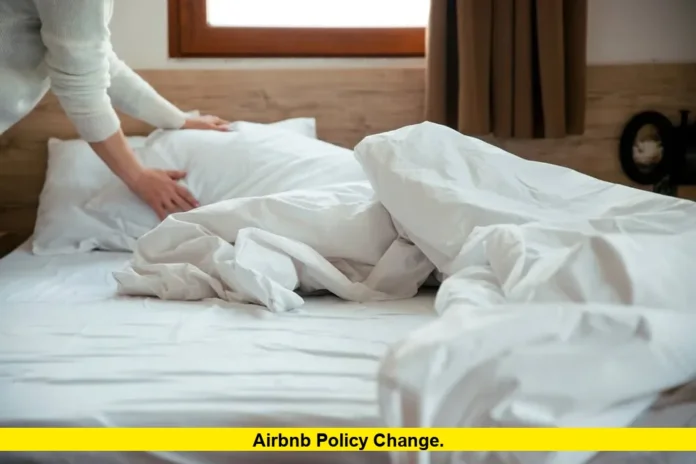

The latest Airbnb policy change introduces important updates to how hosts organize house rules, communicate checkout expectations, and manage cleaning requests. Airbnb announced changes to its house rules system on October 20, 2026, with a new policy on reasonable house rules and requests scheduled to take effect for reservations booked on or after November 20, 2026. The changes aim to make expectations clearer before guests book and prevent hosts from requiring excessive checkout chores.
For U.S. travelers and property owners, these updates are particularly important because they clarify the difference between reasonable requests and cleaning tasks that hosts or professional cleaners should handle. Guests must still respect a property, follow disclosed house rules, and avoid leaving a home excessively dirty. However, hosts cannot treat a standard cleaning fee as permission to impose additional penalties when guests skip specific cleaning or checkout tasks.
What Is the Latest Airbnb Policy Change?
Airbnb’s latest policy update focuses on making house rules easier to find, understand, and follow. Hosts can now manage seven standard house-rule categories and reasonable guest requests in one place through the listing editor. Checkout instructions no longer appear in a separate tab.
The updated system helps hosts communicate expectations before a reservation begins. It also makes it easier to identify requests that may conflict with Airbnb’s requirements.
The new policy on reasonable house rules and requests applies to reservations booked on or after November 20, 2026. As of October 23, 2026, that effective date is still in the future. Hosts should therefore review their listings now and prepare for the policy’s application to eligible bookings.
The central principle is straightforward: hosts can establish reasonable rules to protect their homes, but they cannot require guests to perform substantial cleaning work that would normally fall to a cleaner.
Airbnb New Reasonable Cleaning Rules
The new reasonable cleaning rules address a common source of disagreement between hosts and travelers: lengthy checkout lists that require guests to clean a property before leaving.
Airbnb distinguishes between leaving a home in a reasonable condition and completing a professional turnover cleaning. Guests should respect the property, dispose of ordinary waste appropriately, and avoid leaving excessive messes. They should not be expected to perform extensive housekeeping as a condition of completing their stay.
Under the updated policy, hosts generally cannot require guests to complete tasks that demand significant time or effort or would typically be handled by a cleaner.
Examples of tasks that generally should not be mandatory include:
- Stripping beds and removing used bedding.
- Taking trash off the property to an off-site disposal location.
- Washing and putting away dishes.
- Performing other substantial cleaning tasks that normally belong to the cleaning team.
These examples help clarify what Airbnb considers an unreasonable request. They do not mean guests can leave a property in any condition they choose.
Guests remain responsible for treating the accommodation respectfully. Excessive mess, significant stains, pet-related soiling, property damage, or other problems beyond ordinary use may lead to a separate dispute.
The policy also distinguishes between ordinary cleaning costs and unexpected expenses caused by a guest. A standard cleaning fee covers routine turnover work, while a claim involving damage or exceptional cleaning costs depends on the circumstances and applicable Airbnb procedures.
What Does Airbnb Stand For?
Airbnb originally stood for Airbed & Breakfast, the name used when its founders began hosting guests in 2007. The business officially launched in 2008 and changed its name to Airbnb in March 2009 as it expanded beyond airbeds and shared rooms to include apartments, entire homes, and other vacation rentals. The name’s history reflects the company’s evolution from a small accommodation concept into a platform offering a broad range of places to stay. The latest Airbnb policy change continues to address the practical relationship between hosts and guests as the platform’s accommodation options and hosting practices evolve.
New Airbnb Rules for Hosts: What Owners Need to Know
The updated rules require hosts to pay closer attention to the way they communicate expectations. A house rule should be reasonable, consistent with the listing, and disclosed in the designated section before a guest books.
Hosts should review their current listings and checkout instructions rather than assuming that a rule is acceptable simply because they have used it for years.
The following areas deserve particular attention.
1. Disclose House Rules Before Booking
Hosts must place their house rules and requests in the appropriate section of the listing. They cannot introduce new requirements after booking through private messages, signs inside the property, or verbal instructions.
This requirement helps guests understand the conditions before paying for a reservation. It also reduces the risk of disputes over expectations that were never disclosed during the booking process.
Hosts should make sure the rules displayed on the listing match the instructions provided for the stay.
2. Keep Checkout Instructions Reasonable
Checkout instructions should help guests leave safely and protect the property without turning the final morning into a cleaning shift.
Hosts can communicate applicable checkout times and reasonable requests. For example, they may ask guests to lock the door when leaving if the requirement is properly disclosed.
However, hosts generally cannot require guests to strip beds, transport trash off-site, or wash and put away dishes under the new reasonable-requests policy.
Property owners should reconsider lengthy checkout checklists and remove tasks that would normally be completed by their cleaning staff.
3. Use the Standard House-Rule Categories
Airbnb’s updated listing editor brings standard house rules and reasonable requests together in one place. The available categories include:
- Maximum overnight guests: Set the permitted number of overnight occupants.
- Quiet hours: Explain when guests must keep noise to a minimum.
- Events: State whether gatherings and events are permitted.
- Utilities: Explain reasonable expectations, such as turning off air conditioning when leaving.
Hosts can also use applicable rule settings to communicate requirements such as locking up at checkout.
These options make house rules easier to understand and help hosts avoid burying important requirements in lengthy messages.
4. Avoid Fines and Penalties for Skipped Chores
The updated policy prohibits hosts from imposing fines or other penalties for failure to comply with house rules or requests in circumstances covered by the policy.
Hosts should not use a cleaning fee as a reason to demand extra payment merely because a guest did not complete a prohibited cleaning task.
This does not remove a host’s ability to seek appropriate reimbursement for actual damage, missing property, or unexpected cleaning expenses when Airbnb’s applicable policies permit it. The circumstances and evidence matter.
Hosts should distinguish between a guest leaving dishes unwashed and a guest causing damage that requires exceptional cleaning or repairs.
5. Understand Exceptions for Local Conditions
Reasonableness depends partly on the property, type of stay, and local circumstances. Airbnb recognizes that some locations may require special precautions.
For example, a host in bear country may reasonably ask guests to place trash in an animal-proof container. In a drought-affected area, a host may ask guests to limit shower time when local water restrictions make that request appropriate.
Such examples do not create a blanket exemption for every unusual request. Hosts should consider the actual local conditions and make sure their rules remain consistent with applicable law and Airbnb policy.
How the Policy Affects Airbnb Guests
The policy change gives guests clearer information about what hosts can reasonably expect at checkout. Travelers can review the rules before booking and make more informed decisions about whether a property suits their needs.
Guests should still read the complete listing, confirm the checkout time, and follow reasonable instructions. They should also take care of the accommodation and report damage or problems promptly.
Before leaving, guests can check their reservation details for the applicable checkout time, house rules, and requests. If a host’s instructions conflict with the requirements shown in the reservation or Airbnb’s policy, guests should keep communications on the platform and seek clarification.
Guests should not assume that the new rules eliminate every checkout responsibility. Instead, the policy separates reasonable conduct from substantial housekeeping duties.
What Happens If a Host’s Cleaning Rules Violate Airbnb Policy?
Airbnb’s updated listing system is designed to flag requests that may not meet the reasonable-house-rules policy. When a potential issue is identified, the platform may highlight the request in the listing editor, notify the host by email, and provide guidance on correcting it.
Hosts may also have an opportunity to appeal an issue. If a problem remains unresolved, guests may see a notice on the listing indicating that it includes cleaning requests.
These measures are intended to make expectations clearer before guests commit to a reservation. They also encourage hosts to correct problematic instructions rather than relying on disputes after checkout.
Guests who encounter an unreasonable request should preserve relevant messages and review the rules shown in their reservation. They can contact Airbnb for help when a disagreement cannot be resolved directly with the host.
Does the Airbnb Policy Change Eliminate Cleaning Fees?
No. The policy change does not eliminate cleaning fees.
Airbnb continues to allow hosts to set a cleaning fee to cover standard housekeeping between reservations. The fee can account for work such as laundering linens, vacuuming, wiping surfaces, and preparing the accommodation for the next guest.
The important distinction is that a cleaning fee does not authorize hosts to require substantial cleaning chores from guests or impose penalties simply because guests fail to complete those tasks.
Hosts remain responsible for setting appropriate prices and arranging cleaning between stays. Guests should review the total reservation price, including applicable fees and taxes, before confirming a booking.
A host may also seek reimbursement for qualifying unexpected cleaning costs or damage when the applicable rules permit it. Such claims are different from charging a penalty for skipping an unreasonable checkout chore.
How Airbnb Hosts Should Prepare for the New Rules
Hosts can prepare for the policy’s November 20, 2026, effective date by reviewing their current listings and simplifying their checkout instructions.
A practical review should include these steps:
- Review every listing: Check the house rules, checkout instructions, and guest requests.
- Remove excessive chores: Eliminate mandatory tasks that normally belong to a cleaner.
- Move rules into the correct section: Make sure applicable requirements appear in the designated house-rules area before booking.
- Check consistency: Ensure messages, printed instructions, and listing information do not contradict one another.
- Review local requirements: Keep reasonable safety instructions that address genuine local conditions.
- Clarify cleaning fees: Explain the pricing accurately and do not use the fee to justify prohibited penalties.
- Monitor Airbnb notifications: Respond to policy alerts and correct flagged requests when necessary.
These steps can help hosts reduce misunderstandings, protect guest satisfaction, and maintain clearer operating procedures.
Airbnb Policy Change: Key Dates and Differences
The latest update has two important stages: the changes to the listing editor and the effective date of the new policy.
- October 20, 2026: Airbnb announced the updated house-rules system and new policy.
- October 23, 2026: The new reasonable-house-rules policy has not yet reached its stated effective date.
- November 20, 2026: The new policy applies to reservations booked on or after this date.
The distinction matters because the policy’s stated application is tied to when a reservation is booked. Travelers and hosts should check the rules that apply to their specific booking instead of assuming that every reservation is governed by identical timing.
The update does not mean that guests can disregard existing reasonable house rules or leave a property excessively dirty. It reinforces the difference between caring for a rental and performing substantial professional cleaning duties.
Frequently Asked Questions About Airbnb Policy Change
When do the new Airbnb cleaning rules take effect?
The new reasonable-house-rules policy applies to reservations booked on or after November 20, 2026. Airbnb announced the update on October 20, 2026.
Can Airbnb hosts require guests to strip the beds?
Under the new policy, hosts generally cannot require guests to strip beds because this is a task typically performed by a cleaner.
Can a host require guests to wash dishes?
Hosts generally cannot require guests to wash and put away dishes as a mandatory checkout task under the new policy.
Can hosts still charge cleaning fees?
Yes. Hosts can continue charging cleaning fees to cover standard housekeeping between stays. They cannot use those fees to impose prohibited penalties for failing to complete specific cleaning tasks.
Can Airbnb hosts ask guests to take out the trash?
Hosts generally cannot require guests to transport trash off-site. Reasonable requests may depend on local conditions, such as the need to use animal-proof containers in bear country.
Can guests leave an Airbnb dirty under the new policy?
No. Guests must still treat the property respectfully and avoid leaving excessive messes or conditions requiring deep cleaning. Damage and exceptional cleaning costs may be handled separately under applicable policies.
Can hosts add new cleaning rules after a guest books?
The new policy requires house rules and requests to be disclosed in the designated listing section at the time of booking. Hosts generally cannot introduce new rules after booking through messages, signs, or verbal instructions.
What should guests do if a host demands unreasonable cleaning?
Guests should review the reservation details, keep communications on Airbnb, and contact the platform if the issue cannot be resolved. They should retain relevant evidence of the request.
Conclusion
The latest Airbnb policy change puts greater emphasis on transparent house rules, reasonable checkout expectations, and a clear division of responsibilities between guests and hosts. Guests must still respect rental properties, but hosts should not expect them to perform substantial cleaning tasks that belong to a professional turnover process. With the November 20, 2026, effective date approaching, reviewing listing rules and checkout instructions is an important step for anyone using the platform.
Have you encountered excessive Airbnb checkout chores or confusing host rules? Share your experience in the comments and stay informed about the latest Airbnb policy updates.