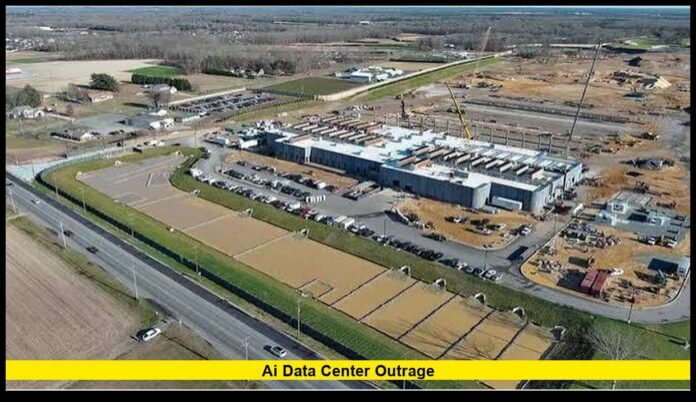

AI data center outrage is becoming a major issue across the United States as concerns over electricity demand, water use, local impacts and the rapid growth of artificial intelligence facilities move from community meetings into political campaigns and advertising. The debate has grown beyond technology policy, with candidates, governors and companies responding to increasing public attention surrounding large-scale AI infrastructure projects.
The rapid rise of artificial intelligence has created demand for massive data centers that provide the computing power needed to train and operate advanced AI systems. While supporters highlight economic investment, construction jobs and technological leadership, many residents are questioning how these facilities will affect their communities.
The discussion is now influencing elections, state regulations and corporate messaging. Data centers that were once viewed mainly as economic development opportunities have become a subject of public debate across multiple states.
Why AI Data Centers Have Become a National Debate
AI data centers are essential facilities that house thousands of specialized computers, servers and networking systems. They allow companies to develop AI models, provide cloud services and handle growing digital workloads.
However, the scale of new projects has created concerns among residents living near proposed locations.
Communities are raising questions about:
- Higher electricity demand and possible effects on utility costs
- Water consumption for cooling systems
- Noise from large industrial facilities
- Environmental concerns
- The long-term benefits for local economies
The debate is not simply about whether artificial intelligence should continue developing. Many critics support innovation but want stronger protections before large facilities are approved.
The political challenge comes from balancing two competing priorities. The U.S. wants to maintain leadership in artificial intelligence, while communities want assurance that expansion will not create unexpected costs.
That tension has pushed AI infrastructure into the center of public conversations.
From Local Opposition to Election Issue
The debate over data centers has quickly entered the political arena.
As the 2026 midterm elections approach, candidates in several states are addressing voter concerns about large AI facilities. The issue has gained attention because opposition does not follow traditional party divisions. Both Democratic and Republican voters have expressed concerns about energy costs, environmental effects and community impact.
For many voters, the issue is connected to everyday concerns.
Electric bills, local development decisions and environmental changes are easier to understand than technical discussions about AI chips or computing infrastructure.
That has made data centers a powerful campaign topic.
Candidates are now facing pressure to explain whether they support rapid AI expansion, stricter regulations or new requirements for technology companies.
Florida Brings Data Centers Into the Political Spotlight
Florida has become one of the states where data center policy has gained political attention.
During the Republican gubernatorial primary, data center development became a significant issue. Rep. Byron Donalds supported policies aimed at protecting consumers from potential costs connected to large infrastructure projects while still recognizing the importance of technology investment.
The debate reflected a broader political challenge.
Many officials want the economic benefits associated with AI development but also want private companies to carry more responsibility for infrastructure expenses.
The Florida discussion showed how data centers are becoming part of election messaging rather than remaining a local planning issue.
Pennsylvania Creates New Rules for Data Center Development
Pennsylvania has taken a more aggressive regulatory approach toward data center growth.
Gov. Josh Shapiro introduced stricter standards designed to address concerns about energy use, community involvement and environmental responsibility.
The state’s approach focuses on making developers responsible for the infrastructure needed to support their projects.
Supporters of stronger rules argue that communities should not face additional costs because of private technology developments.
The policy debate in Pennsylvania highlights a growing national question: how should states encourage innovation while protecting residents?
Other states are watching these decisions closely as they consider their own approaches to future projects.
Electricity Demand Becomes One of the Biggest Concerns
One of the strongest arguments behind public opposition involves electricity.
Large AI facilities require significant amounts of power to operate advanced computing equipment. As companies build larger campuses, local officials are examining whether existing electrical systems can handle the additional demand.
Residents worry that new infrastructure requirements could affect utility costs.
Supporters argue that data centers bring economic activity and investment. Critics respond that the financial benefits should not come at the expense of household electricity customers.
This disagreement has become one of the central points in the national conversation.
Energy experts and policymakers are increasingly focused on how future AI growth can happen without placing unnecessary pressure on power systems.
Water Use Becomes a Symbol of Public Concern
Water consumption has also become a major part of the discussion.
Many data centers rely on cooling systems to maintain equipment temperatures. In areas facing water challenges, residents have questioned whether large technology facilities should receive access to valuable resources.
The issue gained national attention after Liquid Death and Garage Beer launched a humorous advertising campaign featuring Jason Kelce.
The satirical campaign focused on the amount of water associated with AI infrastructure and used exaggerated humor to criticize concerns surrounding data center cooling needs.
The advertisement demonstrated how the topic has moved into popular culture.
Data center debates are no longer limited to government meetings or technology conferences. Brands are now using the controversy as a way to connect with consumers who are increasingly aware of AI’s physical footprint.
Ohio Becomes Another Major Testing Ground
Ohio has emerged as another important state in the data center debate.
Large AI infrastructure projects have attracted attention because of their size and potential electricity requirements.
The state has become part of the larger political conversation about whether major technology investments should move forward without additional restrictions.
Candidates are using voter concerns about data centers as part of broader economic and infrastructure discussions.
The situation demonstrates how local development decisions can become statewide and national political issues.
A project built in one community can influence conversations about energy policy, economic growth and technology regulation far beyond that location.
Technology Companies Face Pressure to Improve Community Relations
The growing backlash has forced major technology companies to rethink how they communicate with communities.
Companies developing AI infrastructure are increasingly emphasizing job creation, investment, environmental improvements and local partnerships.
However, critics argue that public relations campaigns alone will not solve concerns.
Residents want clear information about how projects will affect their communities.
They are asking questions about:
- Who pays for new infrastructure?
- How many permanent jobs will be created?
- How will water resources be protected?
- What steps will reduce environmental impacts?
These questions are becoming central to whether projects receive public support.
Why the Debate Has Become Bipartisan
One reason the controversy has grown quickly is that concerns come from different political perspectives.
Some Democrats focus on environmental protections and consumer costs.
Some Republicans focus on protecting taxpayers, limiting government incentives and ensuring private companies cover development expenses.
Although the political arguments may differ, many concerns overlap.
Residents from different backgrounds often share similar questions about affordability, transparency and local control.
That has made AI infrastructure one of the few technology issues attracting attention across the political spectrum.
The Future of AI Infrastructure in America
The future of data center development will likely depend on how companies, communities and governments address public concerns.
Supporters believe AI infrastructure is necessary for economic competitiveness and technological leadership.
Opponents want stronger safeguards before additional projects move forward.
The challenge for policymakers is creating rules that encourage innovation while protecting communities.
The current debate suggests that future data center projects will face more public review than previous technology developments.
Companies may need to provide clearer plans for energy use, environmental responsibility and community benefits before gaining approval.
A Changing Conversation Around Artificial Intelligence
The growth of AI has created excitement about new opportunities, but it has also raised questions about the physical infrastructure required to support the technology.
AI data centers represent the connection between digital innovation and real-world resources.
As these facilities continue expanding, communities and leaders will continue debating how much growth is acceptable and what responsibilities companies should have.
The discussion is likely to remain an important part of U.S. politics, business and technology policy as the country decides how to build the next generation of AI infrastructure.
What do you think about the growing debate around AI data centers? Share your views and stay informed as this major technology issue continues to develop.