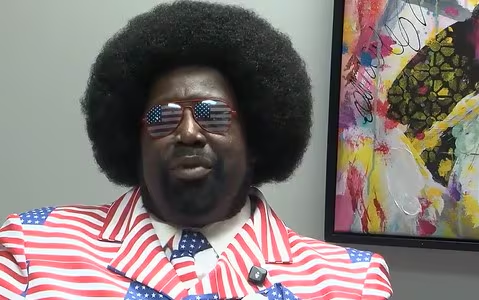

A rapper turned his own police raid into a viral hit — and now a jury is deciding whether that was art or a crime.
The case pitting the Adams County Sheriff against Afroman has exploded back into the national spotlight as a real Ohio jury weighs one of the most fascinating First Amendment battles in recent memory. Grammy-nominated rapper Joseph Foreman, known worldwide as Afroman, sat in a courtroom facing seven sheriff’s deputies who claim his music destroyed their lives — all because he filmed them raiding his own house.
This is a story about music, power, privacy, and who gets to tell the truth. Keep following this case, because the verdict could change how every American — creator or not — is allowed to respond to law enforcement actions.
How the Story Started
In August 2022, the Adams County Sheriff’s Office executed a search warrant at Afroman’s home in Winchester, Ohio. The warrant targeted drug trafficking and kidnapping allegations, reportedly based on a tip from a confidential informant who claimed large amounts of marijuana and money were on the property.
Deputies arrived in tactical gear, broke down his door, and combed through his rooms and belongings. No charges were ever filed against Afroman. He wasn’t even home during the raid — he watched it unfold remotely through his own surveillance system.
The Song That Started a Legal War
Rather than staying silent, Afroman did what he does best — he made music. He created multiple music videos, including the now-famous “Lemon Pound Cake,” using surveillance footage and video captured during the raid. He also posted images and clips of the officers across his social media platforms.
The videos went viral almost immediately. Afroman said he hadn’t received that level of attention since his early 2000s hits. The story even earned a parody segment on Saturday Night Live, thrusting the small-town Ohio raid into the national conversation.
The attention, however, came at a serious cost.
The Lawsuit That Followed
In March 2023, seven members of the Adams County Sheriff’s Office filed a civil lawsuit against Afroman in Adams County Court of Common Pleas. The deputies claimed he used surveillance footage of the raid for commercial purposes without authorization, effectively destroying their public image.
The officers argued they suffered humiliation, mental distress, embarrassment, and loss of reputation. They also alleged receiving death threats as a direct result of Afroman’s videos. The plaintiffs sought to block Afroman from using their likenesses in future commercial projects and demanded damages exceeding $25,000, representing what they described as profits made from their images.
What Fans Noticed
Fans and civil liberties advocates immediately pointed out the glaring irony: law enforcement officers, acting in their official capacity inside someone else’s home, were suing that homeowner for recording them. The ACLU stepped in, filing a brief arguing the lawsuit was a classic “SLAPP” suit — a Strategic Lawsuit Against Public Participation — essentially designed to silence a citizen’s criticism of public officials.
Free speech organizations noted the officers faced an uphill battle, arguing that Afroman’s use of their images was rooted in artistic expression, parody, and social commentary — all protected under the First Amendment.
Many observers viewed the lawsuit itself as the real story: a government agency attempting to punish a private citizen for speaking out.
Social Media Reaction
The internet overwhelmingly sided with Afroman. When the trial began, supporters gathered outside the Adams County courthouse to show solidarity. Afroman greeted fans personally, taking pictures with the crowd gathered outside.
Across social media, commentary flooded in on police accountability, First Amendment rights, and the broader implications for everyday creators who document government actions. The hashtag #LemonPoundCake trended across multiple platforms, and clips from the original music video recirculated widely, racking up millions of new views and introducing the story to an entirely new audience.
What Afroman Actually Said
Afroman took the stand and held nothing back. “All of this is their fault,” he told the court. “If they hadn’t wrongly raided my house, there would be no lawsuit, I would not know their names, they wouldn’t be on my home surveillance system, and there would be no songs.”
“They’re suing me for their mistake,” he continued. “I have the right to my freedom of speech. After they left, I had the right to do what I had to do to repair the damage they brought to my house.”
He also testified that the raid caused significant physical damage to his property and that belongings were disturbed or taken during the search — claims that added emotional weight to his defense.
Why the Story Keeps Trending
This case has grown far beyond a dispute between one rapper and seven deputies. Legal experts, free speech advocates, and content creators across the country are watching closely because the outcome carries major implications. A verdict in favor of the deputies could signal to courts and platforms that creators face real legal exposure when using footage of on-duty officers for commentary or income.
A retired judge already struck several of the officers’ initial claims, ruling that as public servants they must expect scrutiny and that citizens hold a First Amendment right to comment on an official’s conduct. The remaining claims — defamation and invasion of privacy — are what the jury is now deciding.
What Happens Next
Closing arguments are now underway, and a jury verdict is expected imminently. Legal observers nationwide will scrutinize every word of that decision.
If the deputies win, content creators and journalists everywhere may face new obstacles when documenting law enforcement. If Afroman wins, it sends a powerful message that Americans retain the right to speak truth to power — even through a catchy song and a viral music video.
Either way, the Adams County Sheriff vs. Afroman case has already made history as a cultural flashpoint where music, law, and civil liberties collide head-on.
Share your thoughts — did Afroman have every right to release those videos, or did the deputies deserve privacy protections? Drop your opinion and stay updated as the verdict comes in.