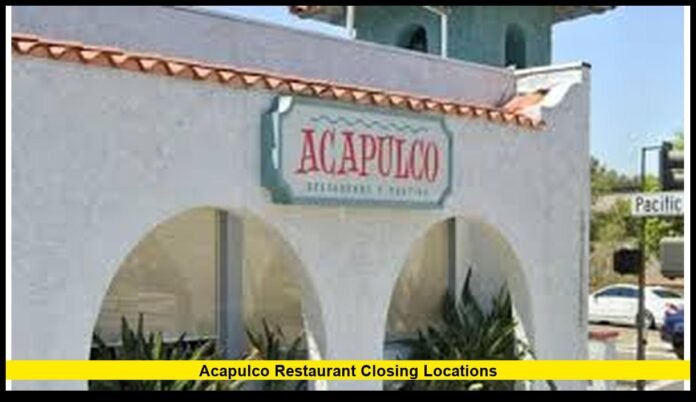

The conversation around acapulco restaurant closing locations has intensified after another wave of shutdowns placed the longtime Mexican dining chain on the verge of disappearing entirely. Once a major name in California’s casual dining scene, Acapulco Restaurant & Cantina has now been reduced to only a handful of remaining restaurants after decades of expansion, financial struggles, and changing consumer habits transformed the business.
For many Southern California families, Acapulco was more than a restaurant. It served as a gathering place for birthday dinners, graduation celebrations, weekend brunches, and late-night margarita outings. The chain became part of the region’s dining identity during the 1980s and 1990s, when sit-down Mexican restaurant brands dominated suburban shopping districts and entertainment corridors across California.
Now, customers are watching longtime locations shut their doors one after another as the company faces mounting pressure from rising operating expenses, reduced dine-in traffic, and an increasingly competitive restaurant industry.
The latest developments surrounding the chain have triggered emotional reactions online, especially among longtime customers who grew up visiting Acapulco restaurants throughout Southern California.
Restaurant fans across California continue following updates closely as more legacy dining chains struggle to survive in a rapidly changing market where operating costs continue climbing and consumer habits keep shifting toward convenience-focused dining.
A Historic California Restaurant Chain Nears Its Final Chapter
Acapulco Restaurant & Cantina first opened in Pasadena in 1960 and eventually expanded into one of the best-known Mexican restaurant chains in the western United States. Over the decades, the company built dozens of locations throughout Southern California and neighboring markets.
At its peak, the chain operated nearly 40 restaurants.
The brand became famous for oversized dining rooms, festive interiors, colorful decor, combination platters, seafood specialties, and large margarita menus. Many locations developed loyal customer bases that lasted for generations.
Families often treated Acapulco as a dependable destination for celebrations and casual gatherings. The restaurants appealed to large groups, office parties, and customers looking for a full-service dining experience with a lively atmosphere.
For years, Acapulco competed directly with other major Mexican restaurant chains across California. However, the casual dining industry changed dramatically during the past two decades.
Fast-casual concepts gained popularity, delivery services transformed dining habits, and inflation increased operational expenses throughout the restaurant business. Older chains operating large standalone buildings suddenly faced rising financial pressure while traffic patterns shifted away from traditional dine-in experiences.
Acapulco never fully recovered from the financial damage tied to the Great Recession and earlier bankruptcy restructurings involving its former ownership group.
The company steadily reduced its footprint over time, and recent closures accelerated concerns about the future of the remaining restaurants.
Glendale Acapulco Closure Plans Spark Community Backlash
One of the biggest developments involves the longtime Acapulco restaurant in Glendale, California.
The restaurant had announced plans to close after more than five decades serving the local community. Reports indicated the property could eventually be demolished and replaced with a self-service car wash development, a proposal that immediately sparked backlash from residents and longtime customers.
The Glendale restaurant carried deep emotional value for many local families.
Customers flooded social media with memories tied to anniversaries, family dinners, graduation parties, holiday celebrations, and decades of traditions at the location. Many residents expressed frustration over the possibility of losing a historic neighborhood restaurant to redevelopment.
Following the public reaction, the restaurant later announced it would remain open temporarily while company leaders reconsidered the closure timeline.
The emotional response appeared to influence the company’s decision to delay the shutdown.
Many supporters argued that the restaurant represented a meaningful part of Glendale’s local identity and dining culture. Some residents also questioned whether another commercial redevelopment project would offer the same community value as a restaurant that had operated in the city for nearly six decades.
Although the restaurant remains open for now, uncertainty continues surrounding its long-term future.
Downey and Costa Mesa Locations Already Shut Down
While the Glendale location received temporary relief, other Acapulco restaurants were not spared.
The Downey restaurant recently closed, ending years of operation in the area. Local residents reacted with disappointment after learning the restaurant would no longer serve customers.
The Costa Mesa location also ceased operations recently, further shrinking the chain’s footprint across Southern California.
Those closures dramatically reduced the number of surviving Acapulco restaurants and reinforced growing concerns that the company may be nearing the end of its run as a major regional dining brand.
For longtime customers, each closure represents more than the loss of another restaurant.
Many people associate Acapulco with specific moments from their personal lives. As locations disappear, customers increasingly describe the closures as the loss of community landmarks connected to decades of family memories.
Why Casual Dining Chains Continue Struggling
The story behind acapulco restaurant closing locations reflects broader challenges impacting restaurant chains throughout the United States.
The casual dining industry has faced years of pressure from multiple directions:
- Higher labor costs
- Inflation affecting food prices
- Rising rent expenses
- Increased utility bills
- Delivery app competition
- Declining dine-in traffic
- Changing customer spending habits
Restaurant operators nationwide continue reporting that consumers have become more cautious with discretionary spending. Many families now dine out less frequently than they did before inflation surged across the economy.
Meanwhile, restaurant businesses continue paying more for ingredients, transportation, insurance, and staffing.
Large dine-in chains often struggle the most because they operate bigger buildings with higher maintenance costs and larger employee requirements.
Older restaurants also face expensive renovation needs as dining spaces age.
Industry analysts say chains built around large-format dining experiences have experienced especially difficult conditions as customers increasingly favor convenience-focused options like pickup orders, delivery services, and smaller fast-casual concepts.
Acapulco’s Financial Troubles Stretch Back Years
Acapulco’s decline did not begin recently.
The chain experienced major financial setbacks following the economic collapse tied to the 2008 recession. At the time, its parent organization faced bankruptcy restructuring that affected multiple restaurant brands under the same corporate umbrella.
The company later underwent additional restructuring and ownership changes as it attempted to stabilize operations.
Despite those efforts, the chain never returned to its earlier size.
Many former Acapulco locations closed gradually throughout the last decade as the company focused on maintaining only select restaurants.
Industry observers say legacy restaurant chains often face difficulty adapting to modern dining expectations because of older business models built around larger dining rooms and more labor-intensive operations.
As younger consumers shifted toward delivery-focused dining and faster meal service, many traditional casual dining chains lost market share.
Acapulco’s shrinking footprint became one example of that larger industry transformation.
The Last Remaining Locations Draw Attention
With more restaurants shutting down, the remaining Acapulco locations have started attracting increased customer attention from nostalgic diners hoping to revisit the chain while they still can.
Many customers have shared stories online about intentionally visiting surviving restaurants for one final meal.
Others posted photos of favorite dishes and memories from locations that already closed.
The Long Beach restaurant on Pacific Coast Highway is now widely viewed as the chain’s primary surviving location should additional closures proceed in the coming months.
For longtime fans of the brand, the possibility of Acapulco disappearing entirely feels especially emotional because the chain represented a familiar part of Southern California’s suburban culture for generations.
The restaurant’s festive atmosphere, oversized menu offerings, and classic interior style became recognizable features across many California communities.
A Different Restaurant Industry Than the One Acapulco Entered
When Acapulco opened in 1960, the restaurant industry looked dramatically different from today’s market.
Sit-down dining experiences dominated American suburbs, and chain restaurants expanded rapidly during the second half of the twentieth century.
By the 1980s and 1990s, casual dining chains became social gathering destinations for families and groups.
Restaurants like Acapulco benefited from large dining rooms, group-friendly menus, and strong suburban growth throughout California.
But modern restaurant economics shifted significantly.
Consumers increasingly embraced:
- Mobile ordering
- Delivery apps
- Quick-service dining
- Smaller restaurant concepts
- Lower-priced meal options
- Pickup-focused business models
Many older restaurant brands struggled to adapt quickly enough to those changes.
Large standalone buildings that once represented expansion opportunities eventually became expensive liabilities for some chains.
At the same time, commercial real estate values in California continued rising, creating additional redevelopment pressure on older restaurant properties occupying valuable land.
That redevelopment trend appears to be influencing several former restaurant sites throughout Southern California.
Community Nostalgia Continues Growing Online
As closure news spreads, online discussions surrounding Acapulco continue growing.
Customers frequently describe the restaurant as part of their childhood memories. Many say they celebrated birthdays there for years or visited after school events, church gatherings, or family outings.
Former employees have also shared stories about working at Acapulco locations during the chain’s busiest years.
Some customers remember waiting for tables during peak dinner hours when restaurants were packed with families and large groups.
Others specifically recalled signature menu items, festive drink specials, Sunday brunches, and the chain’s recognizable atmosphere.
Restaurant nostalgia has become increasingly common across the United States as longtime regional chains disappear due to economic changes and shifting consumer behavior.
For many diners, the closures symbolize larger cultural changes affecting American suburban life and traditional restaurant experiences.
The Future of the Acapulco Brand Remains Uncertain
At this point, the long-term future of the Acapulco brand remains unclear.
The company overseeing the chain still operates several restaurant concepts under a larger hospitality organization, but Acapulco itself has become dramatically smaller than it once was.
No major expansion plans have been announced, and recent developments have focused primarily on closures and operational reductions.
Restaurant industry experts say surviving legacy chains must now balance nostalgia with profitability while competing in a much different market than the one they originally entered decades ago.
Whether Acapulco eventually stabilizes with a limited number of restaurants or continues disappearing remains uncertain.
For many Californians, however, the chain’s shrinking presence already marks the end of an important chapter in Southern California dining history.
The emotional public response surrounding recent closure announcements also demonstrates how deeply certain restaurants become woven into local communities over time.
Even as dining trends evolve, longtime customers still maintain strong connections to restaurants associated with family traditions and personal memories spanning generations.