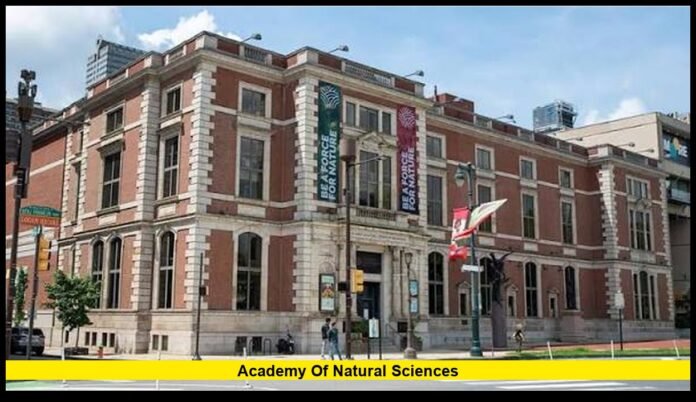

The Academy of Natural Sciences is entering a major new chapter in Philadelphia, with its public museum scheduled to close at the end of September 2026 while its scientific research and collections work continues.
The announcement has drawn attention because the institution has played a central role in American natural history for more than two centuries. Founded in Philadelphia in 1812, the Academy has developed one of the world’s significant natural history collections and has supported scientific research across generations.
The current change does not mean the institution’s scientific work is ending. Instead, the public museum operation is being discontinued as the Academy and Drexel University reconsider how to preserve the institution’s collections, research programs and educational mission for the future.
The final regular public day is scheduled for September 27, with museum operations ending September 30.
Why the Academy of Natural Sciences Is Closing Its Museum
The decision follows a period of financial and operational challenges.
The Academy reduced its public hours in 2025 as it dealt with lower visitor numbers and financial pressures. The museum moved to a Friday-through-Sunday public schedule, while some weekday periods remained available for school programming and other activities.
That reduction was an earlier sign of the difficulties facing the museum operation.
The latest decision goes considerably further. Rather than continuing the reduced schedule indefinitely, the institution will close the museum to regular public operations.
The change reflects a broader effort to protect the Academy’s scientific mission while addressing the costs associated with maintaining a major public museum.
The museum has required staffing, building operations, exhibitions, visitor services and other resources. Those expenses exist alongside the substantial costs involved in preserving millions of scientific specimens.
For Academy and Drexel leaders, the long-term priority is protecting the research and collections infrastructure that forms the foundation of the institution.
The Museum’s Final September Schedule
Visitors still have a limited opportunity to experience the museum before its closure.
The final regular public day is September 27. Museum operations are scheduled to end three days later, on September 30.
Several programs remain on the September calendar during the final weeks.
September activities include:
- Dinos After Dark on September 18
- CollegeFest programming on September 19 and 20
- Nature At Noon programming on September 24
- The final public period leading into September 27
The remaining schedule gives visitors an opportunity to see galleries and exhibitions before regular museum access ends.
The Academy’s Dinosaur Hall has been one of its most recognizable attractions. Visitors have also traditionally explored historic dioramas, fossils, natural history specimens and interactive educational areas.
For families and longtime Philadelphia residents, the final weeks represent an important moment in the history of the Parkway institution.
A Scientific Institution That Goes Far Beyond Its Exhibits
The public museum is only one part of the Academy.
Behind its galleries is a large scientific organization devoted to biodiversity, environmental science, collections and research.
The Academy’s collections contain more than 19 million specimens. They document life across continents, ecosystems and centuries.
Those holdings include animals, plants, fossils and other scientific materials. The collection also contains approximately 73,000 type specimens, which have special importance for taxonomy and biological classification.
Researchers use natural history specimens to study species and ecosystems across time.
A specimen collected decades or even centuries ago can provide information that cannot be recreated today. Historical collections can help researchers compare past environments with present conditions and investigate changes in biodiversity.
This makes the Academy’s scientific resources important well beyond Philadelphia.
Why the Collections Matter
Natural history collections are increasingly important to modern science.
Scientists can use specimens to investigate species distribution, environmental change and biodiversity. Modern laboratory techniques can also extract new information from older materials.
The Academy’s holdings provide an enormous historical record.
Researchers can examine when and where specimens were collected and compare those records with contemporary observations. This creates opportunities to study changes that may not have been visible when the original specimens entered the collection.
The institution’s collections also support taxonomic research.
Accurately identifying and classifying species remains fundamental to conservation biology. Scientists need reliable reference material when determining whether organisms represent known species or require further study.
The Academy’s type specimens are especially valuable in this work.
Protecting those collections therefore remains one of the most important responsibilities facing the institution after the museum closes.
The Academy’s Research Mission Will Continue
The museum closure does not eliminate the Academy’s research activities.
Scientists connected with the institution conduct work in areas including biodiversity, environmental science and systematic biology.
The Academy has also maintained environmental research programs that examine ecosystems and environmental conditions.
Its scientific mission has historically involved field research as well as collection-based research. Scientists have traveled to different regions to document organisms, study ecosystems and investigate environmental conditions.
That work gives the Academy a role that extends beyond traditional museum exhibits.
The institution’s researchers can combine field observations with historical specimens. Together, those resources can provide a more detailed picture of how ecosystems change.
This scientific role is one reason the future of the collections has become such a major issue in discussions surrounding the museum’s closure.
A New Priority for Public Engagement
Although the current museum will close, the Academy’s broader mission still includes education and public engagement.
The challenge is determining how those activities can continue under a different operating model.
The existing museum model has relied heavily on visitors coming to the Benjamin Franklin Parkway building. Exhibitions provided a direct way for the public to encounter specimens and learn about scientific research.
The next model could take a different approach.
Future public engagement may involve partnerships, educational programs, digital access, research-related programming and other forms of interaction. However, no final replacement model has been announced.
That means it is too early to describe exactly what public access will look like after September.
What is clear is that the Academy intends to protect its scientific work while exploring sustainable ways to maintain a public connection to natural history.
The Institution’s Historic Philadelphia Role
The Academy’s history makes the closure especially significant.
The institution was established in 1812, when Philadelphia was already an important center for science and scholarship.
Over the following generations, the Academy developed into a major center for natural history research and education.
Its public museum opened in the 19th century and became a destination for people interested in dinosaurs, fossils, animals, plants and the natural world.
The institution’s history is also connected with major periods in American scientific development.
Its collections grew through expeditions, donations, scientific exchanges and field research.
That accumulated material is now one of the Academy’s defining assets.
The September closure therefore represents the end of a long-running public museum model rather than the disappearance of the institution’s historical and scientific legacy.
Dinosaur Hall and Other Popular Attractions
For many Americans, the Academy is most familiar because of its dinosaur exhibits.
Dinosaur Hall has long been a major attraction. Its displays bring together dinosaur skeletons and other prehistoric material in a setting designed to introduce visitors to paleontology.
The Academy has also displayed specimens through historic dioramas representing different habitats and ecosystems.
Interactive educational spaces have helped younger visitors explore natural history through hands-on experiences.
These attractions have allowed the public to encounter scientific collections in a way that traditional research facilities normally cannot provide.
Their closure will therefore affect more than casual tourism. Teachers, families, students and museum members have used the facility as an informal learning environment.
The remaining September operating period will be the final opportunity to experience those galleries under the current model.
Botany of Nations and the Final Exhibition Period
Another major feature of the Academy’s recent public programming has been Botany of Nations.
The exhibition examines plants connected with the Lewis and Clark Corps of Discovery and presents Indigenous ecological knowledge alongside historical scientific material.
The exhibition was developed with Indigenous cultural perspectives and highlights the relationship between plants, people and knowledge.
Its planned exhibition period extends beyond the museum’s September closure. However, the closure means the public will no longer have access to the exhibition at the Parkway museum after operations end.
The situation illustrates the broader impact of the decision.
Exhibitions that were designed for a continuing museum season now face the end of their public presentation at the current site.
Leadership Change Adds to the Transition
The museum closure also comes with a leadership transition.
Scott Cooper, who served as president and CEO, is stepping down from the position. He will remain involved in an advisory role during the transition.
Cooper previously worked in museum leadership and collections management before taking the Academy’s top position.
His departure comes at a critical moment.
The institution now needs to manage the museum closure, protect its scientific collections, maintain research programs and determine its future organizational structure.
Leadership will also be important as discussions continue involving Drexel University and government officials.
The next phase will require decisions about governance, finances, research priorities and public engagement.
The Relationship Between Drexel and the Academy
The Academy has been affiliated with Drexel University since 2011.
That relationship created opportunities for collaboration between the university’s academic programs and the Academy’s research resources.
The affiliation also strengthened connections involving biodiversity, environmental science and education.
Questions about the future relationship between the two institutions emerged earlier in 2026.
Those discussions now take place alongside the museum closure.
The Academy owns its historic Parkway building, and the scientific collections and research functions housed there are expected to remain part of the institution’s continuing work.
The future organizational structure remains an important issue as Drexel and Academy leaders plan the next stage.
Government Officials Become Involved
The future of the Academy has also attracted attention from Pennsylvania and Philadelphia officials.
Pennsylvania Gov. Josh Shapiro’s administration and Philadelphia Mayor Cherelle Parker’s administration have become involved in discussions surrounding the institution.
Former Comcast executive and former U.S. ambassador to Canada David L. Cohen has been designated as a third-party facilitator in those discussions.
The involvement of public officials reflects the Academy’s importance to Philadelphia and Pennsylvania.
The institution is not simply a tourist attraction. It holds a major scientific collection and contributes to research, education and environmental understanding.
The discussions are focused on finding a sustainable path forward while protecting the Academy’s scientific resources.
What Happens to the Collections After September?
The collections will remain a central part of the Academy’s work.
There has been no announcement that the millions of specimens will simply disappear from scientific use because the museum closes.
Instead, collection stewardship and research remain key priorities.
That distinction is critical.
A natural history museum can close its public galleries while its scientific collections continue to support research. Museums and research institutions around the world maintain collections that scientists access for purposes beyond public exhibition.
Digitization is also becoming increasingly important.
The Academy has been developing ways to make its collections more accessible through digital resources. Online collection information can allow researchers and members of the public to discover specimens without physically visiting a museum gallery.
Digital access cannot replace the physical collections, but it can broaden their reach.
What the Closure Means for Philadelphia
Philadelphia will lose one of its most distinctive science-focused public attractions.
The Academy has served generations of children and adults who came to see dinosaurs, fossils, animals and scientific specimens.
Its location on Benjamin Franklin Parkway placed it within one of the city’s most prominent cultural areas.
The closure changes that landscape.
At the same time, the Academy’s scientific presence will continue. Research, collection care and scientific activity remain central to the institution.
The result is a complicated transition rather than a simple ending.
The public museum is closing, but the scientific legacy behind it remains.
The Future Remains Uncertain
The biggest unanswered question is what public access will look like in the years ahead.
No replacement museum plan has been finalized.
There is also no confirmed reopening date for the existing public museum.
Leaders have made clear that any future model must be financially sustainable. That requirement will shape decisions about exhibitions, education and visitor access.
The coming months are therefore likely to focus on planning rather than immediate replacement of the current museum.
For now, the September 30 closure is the confirmed milestone.
A Historic Institution Enters a Different Era
The Academy’s museum closure marks an extraordinary change for an institution founded more than 200 years ago.
The public will soon lose regular access to the Parkway galleries, but the Academy’s scientific work will continue.
Its millions of specimens remain an important record of life on Earth. Its researchers continue to contribute to biodiversity and environmental science. Its history remains deeply connected to Philadelphia’s scientific identity.
The immediate challenge is protecting those strengths while developing a sustainable future.
The Academy’s next chapter will ultimately be measured not simply by whether another museum opens, but by how effectively its collections, research and public mission remain accessible and useful.
The story of this historic Philadelphia institution is still unfolding—share your thoughts below and stay informed as its future takes shape.