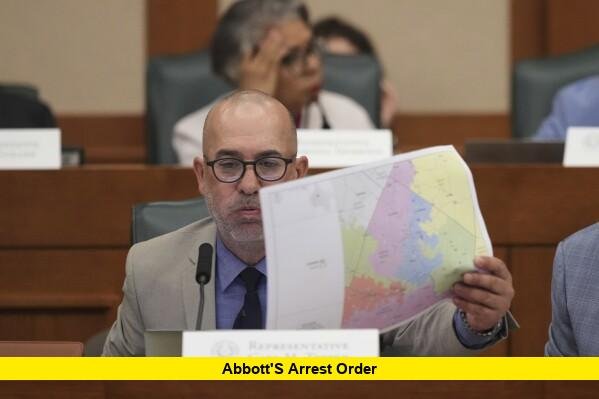

Political tensions in Texas escalated dramatically this week as Governor Greg Abbott ordered the civil arrest of Democratic lawmakers who fled the state to block a highly contested GOP-drawn congressional map. The developments mark an intensification of the standoff over redistricting, with major implications for the balance of power in the U.S. House of Representatives heading into the 2026 midterm elections.
Historic Walkout Halts Legislative Process
On Sunday, over 50 Democratic representatives from the Texas House left the state in a coordinated effort to deny Republicans the quorum needed to move forward with the new congressional map. Many Democrats traveled to Illinois, with others heading to cities like New York and Boston, choosing locations where state authorities are unlikely to enforce any Texas-issued warrants.
- The controversial GOP map could convert up to five Democratic districts to Republican control.
- The walkout mirrored, but surpassed, previous quorum-busting efforts in Texas history.
- Republican leaders argued the action derailed critical bills on flood relief and property tax cuts.
Abbott’s Arrest Order and Legal Challenges
Governor Abbott quickly reacted by announcing civil arrest warrants for the absent Democrats, citing dereliction of duty. The Texas House voted 85-6 to authorize the civil detainment, empowering sergeants-at-arms and state police to compel lawmakers’ attendance.
- The warrants are only valid within Texas. Law and constitutional scholars say there is little legal ground to forcibly remove lawmakers from other states.
- Illinois Governor J.B. Pritzker and other Democratic leaders have publicly stated they will not cooperate with Texas authorities in arresting fleeing lawmakers.
- Texas Attorney General Ken Paxton and prominent Republicans have threatened expulsion, but actual removal from office would require a lengthy court process, not an executive order.
What’s at Stake with the Congressional Map?
The proposed map, pushed by Governor Abbott and supported by former President Donald Trump, aims to strengthen Republican Congressional control by:
- Targeting five Democratic-held districts for GOP takeover.
- Reducing the Black voting-age population in key Democratic districts, which critics say undermines minority representation.
- Designed explicitly to shore up GOP prospects as Trump seeks to regain influence in midterm contests.
In defense of their walkout, Democratic lawmakers highlight what they describe as racially driven gerrymandering, citing demographic changes in cities like Houston and Fort Worth. “This is about representation, about fairness, and about the integrity of our elections,” said State Rep. Jolanda Jones, speaking from New York.
Wider Reactions and National Ripples
The showdown in Texas has prompted national reactions:
- Democratic governors in other states are considering countermeasures, such as redrawing their own districts to respond to the Texas move.
- Legal experts debate the broader constitutionality of such partisan redistricting and possible violations of the Voting Rights Act.
- The White House and civil rights organizations have called for closer scrutiny of the process.
Timeline of Key Events
| Date | Event |
|---|---|
| August 3 | Texas House Democrats leave the state en masse. |
| August 4 | Gov. Abbott orders civil arrests for missing lawmakers. |
| August 5 | House GOP vows session will reconvene regardless of the boycott. |
The Path Forward
Despite the high drama, it remains uncertain whether the Democrats’ action will result in lasting changes. Historically, such walkouts have only delayed, not derailed, Republican legislative goals in Texas. The GOP may attempt to pursue new maps once a quorum is reached, but the current political chess match is reshaping both the national conversation on voting rights and the boundaries of partisan power in Texas.
This story is still developing, with Democrats resolved not to return for upcoming sessions and Republicans escalating their attempts to enforce attendance. Whether these tactics will break the deadlock or trigger further legal battles remains to be seen.
What’s your take on Texas’ latest political standoff? Share your thoughts below and join the conversation as events continue to unfold.