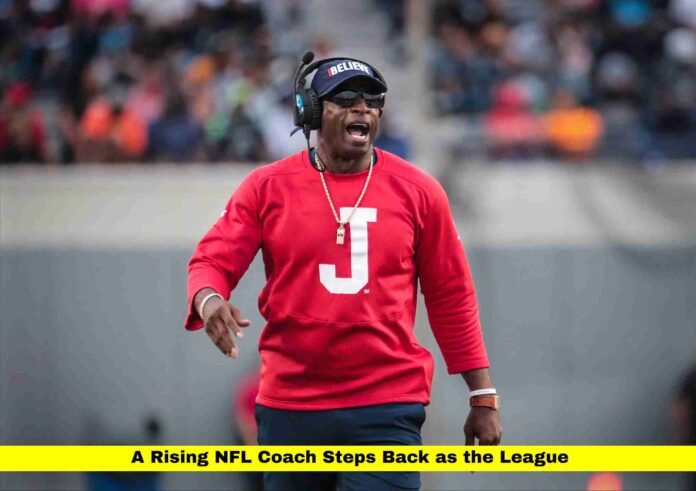

The NFL coaching carousel never slows, but some decisions stand out more than others. One such moment arrived when a young offensive coordinator chose to step away from a high-profile head coaching search while keeping his options open elsewhere. The move immediately shifted conversations across front offices, fan bases, and league insiders, all eager to understand what it means for both the coach and the teams involved.
At a time when franchises are increasingly drawn to innovation, adaptability, and leadership potential, the choice to withdraw from a major opportunity can be just as telling as accepting one. This decision reflects a careful evaluation of timing, fit, and long-term vision rather than hesitation or uncertainty.
A Rapid Rise in a Results-Driven League
Few coaches climb the NFL ranks quickly without drawing attention. This particular offensive coordinator has done exactly that, moving through roles that demanded discipline, preparation, and strategic clarity. His rise reflects a broader league trend that values fresh thinking and strong communication as much as experience.
Early in his career, he built credibility by mastering the details that often go unnoticed. Film study, player communication, and situational planning became defining traits of his approach. As responsibilities grew, so did trust from players and fellow coaches, setting the stage for a leap into one of the league’s most visible coordinator roles.
That leap proved decisive. Success at the coordinator level placed him squarely on the radar of teams searching for their next head coach.
Why Teams Took Notice So Quickly
NFL front offices are constantly searching for leaders who can balance tactical intelligence with locker-room presence. What made this coach appealing was not just offensive output, but the way he approached preparation and collaboration. Players responded to clarity. Coaches respected his adaptability. Executives saw long-term upside.
Rather than relying on a rigid system, he demonstrated flexibility, adjusting schemes to match personnel strengths. This approach resonated in a league where roster turnover and injury challenges demand weekly recalibration.
As a result, his name surfaced quickly when coaching vacancies opened.
Cleveland’s Search and a Shift in Direction
Cleveland entered the offseason with urgency. The organization sought stability, leadership, and a clear identity after parting ways with its previous head coach. Interviews extended to a wide pool of candidates, blending experience with emerging talent.
Among those considered, this offensive coordinator represented a forward-looking option. His interviews reportedly focused on culture-building, staff development, and long-term competitiveness. The discussions suggested genuine interest from both sides, making his eventual withdrawal all the more notable.
The decision forced the organization to recalibrate its shortlist and reassess priorities as the offseason clock continued to tick.
Understanding the Decision to Step Away
Walking away from a head coaching opportunity is never simple. For a young coach, the weight of that decision is amplified by public scrutiny and professional expectations. In this case, timing played a crucial role.
Head coaching positions come with immense responsibility. Roster management, staff construction, media obligations, and performance pressure all converge at once. Choosing the right situation matters, especially for someone early in a head coaching trajectory.
Remaining in a coordinator role allows continued growth without sacrificing momentum. It also preserves flexibility for future openings that may better align with personal philosophy and organizational structure.
Why Another Opportunity Still Holds Appeal
While one door closed, another remained open. Interest from another franchise signaled that league confidence in his leadership had not wavered. The opportunity to interview elsewhere underscored that his value extended beyond a single search.
Different organizations offer different challenges. Roster makeup, front-office alignment, and competitive timelines all factor into whether a role represents the right next step. Exploring those options without rushing a commitment reflects a strategic mindset.
This balance between ambition and patience often defines long-term coaching success.
Continuity Matters for His Current Team
For the team he continues to serve, the decision brought stability during a volatile period across the league. Retaining a respected coordinator ensures continuity in offensive philosophy and player development, both critical to sustained success.
Quarterbacks, in particular, benefit from consistency in coaching voice and system. Offensive players thrive when expectations remain clear and preparation remains structured. His continued presence supports that environment while reinforcing trust within the locker room.
This stability also strengthens his leadership profile, further enhancing future head coaching prospects.
The Broader Coaching Landscape Is Changing
This moment reflects a larger shift in how NFL coaches navigate career advancement. Gone are the days when any head coaching offer was automatically accepted. Today’s candidates weigh organizational alignment, ownership stability, and long-term vision just as heavily as title and salary.
Teams, in turn, must present compelling cases for why their environment supports growth. Culture, collaboration, and patience have become selling points alongside competitive ambition.
This evolution has reshaped the hiring process across the league.
Youth, Innovation, and the Modern NFL
Younger coaches now reach prominence faster than ever before. Advances in analytics, communication tools, and training methods have shortened learning curves. Coaches who can synthesize information quickly and connect with players gain traction rapidly.
However, youth also brings heightened expectations. Every decision is scrutinized, every outcome magnified. Navigating that pressure requires maturity and perspective, traits increasingly valued by decision-makers.
Choosing when to step forward — and when to wait — can define a coaching legacy.
Fan Reactions and League-Wide Conversation
Reactions to the withdrawal varied widely. Some fans praised the restraint, viewing it as a sign of confidence rather than caution. Others questioned whether opportunities like this come often enough to pass up.
Across social media and sports talk, the discussion centered on readiness, opportunity, and the evolving nature of leadership in professional football. Regardless of viewpoint, the decision sparked meaningful debate about how success is defined off the field.
That conversation will likely continue as future openings arise.
What Comes Next Remains Open
The next chapter has not yet been written. Whether the next move comes this offseason or further down the road, the foundation is firmly in place. Experience continues to accumulate. Relationships deepen. Reputation strengthens.
NFL coaching careers rarely follow straight lines. They are shaped by timing, trust, and the ability to adapt. This moment represents not a pause, but a recalibration — one that may ultimately lead to a stronger, more sustainable path forward.
A Decision That Signals Confidence, Not Retreat
Stepping back from a major opportunity often requires more confidence than stepping into it. This decision sends a clear message: advancement matters, but alignment matters more. In a league defined by pressure and urgency, patience can be a powerful asset.
As teams continue to search for leaders who can guide them through change, this coach’s name will remain part of that conversation.
How do you see this decision shaping the next phase of his career, and what qualities matter most when choosing the right head coach? Share your thoughts and stay informed as the offseason unfolds.