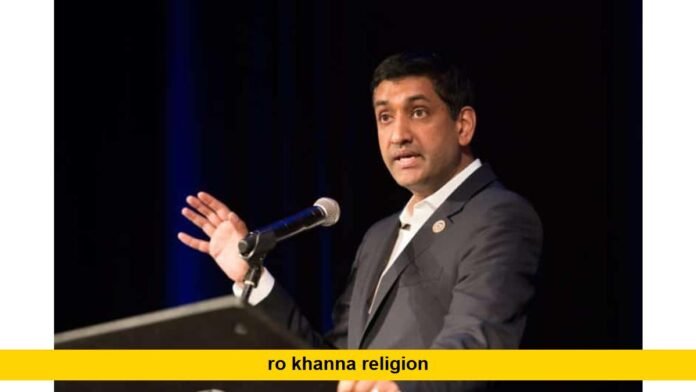

Ro Khanna religion is a subject of public interest because the California congressman has openly discussed his Hindu identity, Indian American background, and the philosophical values that influence his outlook. Ro Khanna identifies as Hindu and has described his religious perspective as influenced by Mahatma Gandhi, particularly the principles of nonviolence, duty, justice, peace, and respect for people from different backgrounds.
Khanna’s religious identity is an important part of his personal background, but it is not the only element defining his public life. As a Democratic member of the U.S. House of Representatives, he has developed a political career focused on economic opportunity, technology, manufacturing, workers, foreign policy, and other national issues. His comments about religion offer insight into how he connects personal beliefs with broader ideas about public service and civic responsibility.
His identification as a Hindu American has also attracted attention because he has discussed religious pluralism and criticized political movements that he believes conflict with inclusive values. Understanding his faith requires distinguishing Hinduism as a religious tradition from political ideologies that may use Hindu identity in their messaging.
Ro Khanna’s Religious Background and Indian American Identity
Ro Khanna was born in Philadelphia, Pennsylvania, in 1976, and grew up in Bucks County. His parents immigrated from India, and his upbringing included both American experiences and connections to Indian culture, family traditions, and heritage.
His Indian American identity has remained an important part of his public story. Khanna has discussed his family’s experiences, the influence of his parents, and the lessons he learned from his grandfather. These experiences helped shape his views about opportunity, civic engagement, political participation, and the importance of standing up for one’s principles.
Khanna’s grandfather, Amarnath Vidyalanker, was involved in India’s independence movement and spent time in jail during the struggle against British colonial rule. The family’s connection to Gandhi’s independence movement is particularly meaningful when considering Khanna’s description of himself as a Gandhian Hindu.
This family history offers context for why Gandhi’s ideas have appeared repeatedly in Khanna’s discussions of his faith. His religious identity is connected not only to Hindu traditions but also to the history of political activism and independence that influenced his family.
The Influence of His Grandfather
Khanna has spoken about the influence of his grandfather and the political history of India’s independence movement. His grandfather’s participation in the struggle against colonial rule introduced the family to ideas involving political freedom, justice, sacrifice, and resistance.
That history appears to have influenced Khanna’s interest in Gandhi’s philosophy. Gandhi’s approach to political activism emphasized nonviolent resistance, moral courage, truth, and peaceful action. These principles became important parts of his legacy and influenced political movements in several countries.
Khanna has referenced this historical connection when discussing his own beliefs and political values. The relationship between his family’s history and his religious outlook helps explain why he frequently emphasizes pluralism and nonviolence.
What Gandhian Hinduism Means to Ro Khanna
The term Gandhian Hinduism is central to understanding how Khanna describes his faith. Gandhi was deeply influenced by Hindu philosophical traditions, although his outlook also incorporated ideas from other religious and philosophical sources.
Gandhi emphasized the importance of truth, nonviolence, compassion, discipline, and service. He believed that individuals should seek to act ethically and that political and social change could be pursued through peaceful methods.
Khanna has described his Hindu faith as providing a moral framework that emphasizes responsibility and doing one’s duty. His public explanations have connected these ideas with the way he approaches political work and difficult public issues.
The Importance of Duty
The idea of duty is an important concept in Hindu philosophy. It is often associated with dharma, a term that can refer to moral responsibility, ethical conduct, duty, and the principles that guide a person’s actions.
Khanna has spoken about the importance of doing one’s duty without becoming overly concerned about the outcome. This idea is associated with teachings found in the Bhagavad Gita, one of the most influential texts in Hindu philosophy.
The Bhagavad Gita explores questions about action, duty, moral responsibility, self-discipline, and spiritual understanding. Its teachings are interpreted in different ways across Hindu traditions, but the idea of performing one’s responsibilities with discipline and appropriate intentions is a significant theme.
For Khanna, this concept may be relevant to the responsibilities of public office. A member of Congress faces political pressure, disagreements, criticism, and competing interests. The principle of focusing on one’s duty can provide a personal framework for navigating those challenges.
It would be inaccurate, however, to assume that every political decision Khanna makes is directly based on a particular religious teaching. His own comments explain that faith provides a moral influence, while his political decisions also involve policy considerations, constituent concerns, and his broader political beliefs.
Nonviolence and Peaceful Action
Nonviolence is another major principle Khanna has associated with his religious outlook.
Gandhi’s philosophy of nonviolence, commonly associated with ahimsa, became a defining part of his political movement. Gandhi believed that peaceful resistance could challenge injustice and create political change without relying on violence.
Khanna has discussed the connection between Hindu philosophy, Gandhi, and the American civil rights movement. Gandhi’s methods influenced leaders such as Martin Luther King Jr., who adopted principles of nonviolent protest in the struggle for racial equality in the United States.
The connection between these movements is part of the broader historical influence of Gandhian philosophy. It also helps explain why Khanna has referenced nonviolence when discussing his own religious values.
Ro Khanna’s Religion and His Political Views on Pluralism
Khanna has repeatedly emphasized the importance of pluralism, particularly when discussing religion, cultural identity, and political debates involving India.
Pluralism means recognizing that people from different religious, cultural, ethnic, and philosophical backgrounds can coexist within a society. It does not require individuals to abandon their own traditions. Instead, it emphasizes the importance of respecting the rights and dignity of others.
Khanna’s public comments about Gandhi and Nehru reflect his support for a pluralistic approach to society. He has argued that people should be able to maintain their religious identities while also participating in a political system that protects individuals from different communities.
This perspective is particularly relevant in the United States, where elected officials represent constituents with a wide range of religious beliefs and cultural backgrounds.
Khanna’s comments suggest that he views religious diversity as compatible with American civic life and that political leaders have a responsibility to support equal rights regardless of religion.
Hinduism and Hindu Nationalism: Why Khanna Distinguishes Them
A major reason Khanna’s religious identity has attracted attention is his criticism of Hindu nationalism. His position illustrates why Hinduism and Hindu nationalism should not be treated as interchangeable terms.
Hinduism is a religious tradition with a broad range of philosophical schools, spiritual practices, customs, and beliefs. It includes different approaches to worship, spirituality, religious texts, and ethical teachings.
Hindu nationalism, by contrast, is a political ideology that connects national identity with Hindu cultural or religious identity. It is associated with political debates in India and can be interpreted differently by supporters and critics.
Khanna has publicly criticized Hindu nationalism while identifying himself as Hindu. He has expressed support for pluralism and the political ideals associated with Gandhi and Nehru.
This distinction is important because religious affiliation does not automatically determine a person’s political ideology. Hindu Americans may support different political parties, disagree about Indian politics, and hold varying views about religion’s role in government.
Khanna’s own public position has emphasized that he believes his faith is compatible with pluralism and equal rights for people of different religious communities.
His Recent Comments About Hindu Nationalism
In November 2026, Khanna publicly responded to questions about his position on Hindu nationalism and related political debates. He said he had unequivocally condemned Hindu nationalism and expressed support for students protesting corruption and advocating inclusion.
He also referenced his grandfather’s participation in Gandhi’s independence movement and stated that he believes in Gandhi’s and Nehru’s vision of pluralism.
These comments drew attention because they came amid renewed discussion of Khanna’s political identity, Indian American heritage, and potential future national political ambitions.
The remarks also reinforced a distinction he has previously made between his Hindu religious identity and political movements he believes do not align with pluralistic principles.
His position, as publicly expressed, is that his faith is connected to peaceful coexistence, inclusion, and respect for people from different backgrounds.
How Religion Fits Into Ro Khanna’s Congressional Career
Khanna’s religious background is one part of a larger personal and professional story. He has worked as an attorney, educator, government official, and member of Congress.
He earned an undergraduate degree in economics from the University of Chicago and later graduated from Yale Law School. Before entering Congress, he worked in the legal field and served in the Obama administration as a deputy assistant secretary at the U.S. Department of Commerce.
He has also worked in education and has been associated with universities in California, including Stanford University and Santa Clara University.
Khanna was elected to represent California’s 17th Congressional District in 2016 and took office in January 2017. His district includes communities in Silicon Valley, an area known for technology companies, innovation, universities, and a diverse population.
As a congressman, he has focused on economic issues, manufacturing, technology, workers’ rights, education, foreign policy, and government oversight.
His religious background may inform some of the values he discusses publicly, but it is not the sole explanation for his political agenda. His legislative work is influenced by his policy positions, constituents, professional experiences, and political priorities.
Does Ro Khanna Practice Hinduism?
Khanna has publicly identified as Hindu and has discussed his religious background in interviews and other public conversations. He has described his faith as spiritually and philosophically meaningful rather than presenting it only as a cultural label.
In discussions about his religious identity, he has talked about growing up with Hindu traditions and attending temples when he was younger. He has also explained that his faith has influenced how he thinks about duty, peace, justice, and moral responsibility.
His public descriptions indicate that his religious outlook includes philosophical reflection and ethical principles. However, information about the precise details of his current personal worship routine is limited.
It is therefore important not to assume specific daily religious practices, temple attendance schedules, or private rituals unless he has directly discussed them publicly.
Ro Khanna’s Family, Cultural Traditions and Religious Identity
Khanna’s family background is an important part of understanding his identity. His parents immigrated to the United States from India, and he has spoken about the experiences and values that shaped his upbringing.
His family history includes an emphasis on education, hard work, and opportunity. His father’s professional career and his mother’s work in education helped shape his early experiences.
Khanna has also discussed the importance of family traditions and cultural connections. His Indian heritage has remained a part of his public identity throughout his political career.
The combination of American upbringing and Indian heritage is common among Indian American families, although individual experiences vary significantly. People may maintain religious traditions, celebrate cultural events, visit relatives overseas, or participate in community activities while also identifying strongly with American civic and cultural life.
Khanna’s background reflects that combination of identities. He is an American politician with Indian heritage and a Hindu religious identity, and he has spoken about how these elements have influenced his personal values.
Why People Search for Ro Khanna’s Religious Beliefs
Search interest in politicians’ religions often comes from a desire to understand their backgrounds, personal values, and cultural connections. For Khanna, that interest is particularly strong because he is a prominent Indian American member of Congress who has discussed his Hindu faith openly.
People may also search for his religion because of his statements involving Gandhi, Hindu nationalism, pluralism, religious discrimination, and international politics.
His religious identity has become part of the broader conversation about representation in American politics. Indian Americans have increasingly participated in elected office, public service, business, education, and other areas of national life.
Khanna’s career has also generated interest because he represents Silicon Valley, an economically influential and culturally diverse region.
For readers researching ro khanna religion, the most important point is that he identifies as Hindu and has publicly described his personal religious outlook as Gandhian Hinduism. His statements emphasize values such as nonviolence, duty, peace, justice, and pluralism.
Latest Updates on Ro Khanna’s Religion and Public Statements
Khanna’s religious identity continues to be relevant to discussions of his public statements, particularly those involving religious pluralism and Indian political debates.
His November 2026 comments condemning Hindu nationalism and expressing support for inclusion brought renewed attention to his religious and philosophical outlook. He also referenced his grandfather’s role in Gandhi’s independence movement, connecting his family history with his support for pluralistic values.
These statements are consistent with his previous public descriptions of his faith and his emphasis on nonviolence, justice, and respect for religious diversity.
There is no publicly confirmed indication that Khanna has changed his religious affiliation. His publicly identified faith remains Hinduism.
Final Thoughts
Ro Khanna’s religious identity is an important part of his personal background and public story. He identifies as Hindu and has described his outlook as influenced by Gandhi’s philosophy, particularly nonviolence, duty, justice, peace, and pluralism.
His family history, including his grandfather’s involvement in India’s independence movement, helps explain why Gandhi’s teachings hold particular significance for him. His public comments also demonstrate that he distinguishes Hindu religious identity from Hindu nationalist political ideology.
Khanna’s faith offers context for some of the principles he discusses publicly, but his congressional career is shaped by many factors, including his political beliefs, policy priorities, professional background, and responsibilities to constituents.
Ultimately, his religious identity is best understood through his own public statements: Ro Khanna is Hindu, and he has described his faith as a Gandhian-influenced spiritual and moral outlook that emphasizes peaceful action, responsibility, and religious pluralism.
Share your thoughts in the comments and stay tuned for the latest updates on Ro Khanna, his public statements, and his political career.