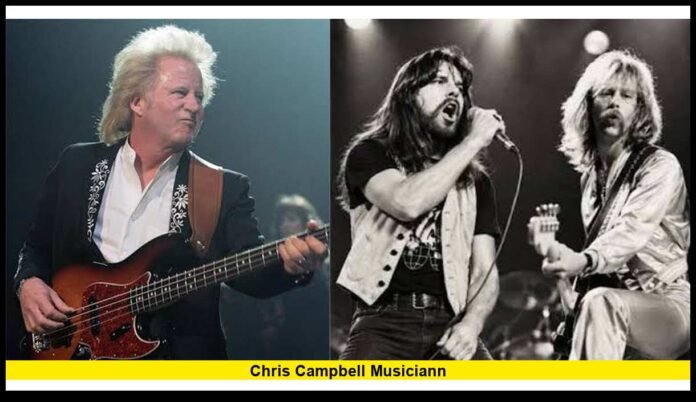

The music world is mourning the loss of Chris Campbell musician, the longtime bass guitarist whose career became closely associated with Bob Seger and the Silver Bullet Band. Campbell died on November 22, 2026, at the age of 78, leaving behind a musical legacy shaped by decades of recording sessions, touring, and performances with one of America’s most celebrated rock acts. His wife, Courtney Campbell, confirmed that he died of natural causes, while former bandmates shared emotional tributes honoring his talent and friendship.
Campbell was more than a supporting musician behind a famous frontman. He was a foundational member of the Silver Bullet Band whose bass playing helped create the rhythm and sound that audiences came to recognize throughout Bob Seger’s career. His journey began in Michigan’s vibrant music scene and eventually took him across the country and around the world as part of a band that helped define American heartland rock.
His death has brought renewed attention to his decades-long musical partnership with Seger, his contributions to classic albums, and the friendships he built along the way.
Key Points Summary
╔════════════════════════════════════════════════════════════════════╗
║ – Chris Campbell, longtime bassist for Bob Seger and the Silver ║
║ Bullet Band, died on November 22, 2026, at age 78. ║
║ – His wife, Courtney Campbell, confirmed that he died from ║
║ natural causes. ║
║ – Campbell’s connection with Bob Seger began in 1969 when he ║
║ temporarily replaced bassist Dan Honaker. ║
║ – He became a foundational member of the Silver Bullet Band and ║
║ contributed to several major Seger albums. ║
║ – His musical career included decades of touring and recording, ║
║ ending with the band’s farewell performances in 2019. ║
║ – Fellow musicians remembered him for his talent, friendship, ║
║ humor, and influence on their musical journeys. ║
╚════════════════════════════════════════════════════════════════════╝
Who Was Chris Campbell?
Chris Campbell was an American bass guitarist best known for his work with Bob Seger and the Silver Bullet Band. Born and raised in Michigan, he developed his musical career in the Detroit area, a region that played a significant role in the development of American rock music.
Detroit’s music scene during the late 1960s and early 1970s was energetic, competitive, and influential. Local clubs provided opportunities for musicians to perform regularly, develop their skills, and connect with other artists. Campbell became part of this environment, building experience as a working musician before his career became closely tied to Seger.
His role as bassist was essential to the band’s sound. Bass guitar provides the musical bridge between drums and harmony instruments, supporting the rhythm while adding depth and movement to songs. Campbell’s playing helped give the Silver Bullet Band the strong foundation needed for its energetic live performances and studio recordings.
Although he was not always in the spotlight, his contribution was heard throughout the band’s music. His career is an example of how a musician can become an essential part of a major artist’s legacy through consistency, skill, and dedication.
Chris Campbell’s Musical Beginnings in Michigan
Campbell grew up in Plymouth, Michigan, near Detroit. The area was connected to a thriving musical culture that produced and supported influential groups, including the MC5, the Stooges, and the Amboy Dukes.
For aspiring musicians, Detroit offered opportunities to play in clubs, work with local bands, and develop a reputation among audiences and other performers. Campbell became a regular presence within the regional music scene, gaining the practical experience that would eventually help him join Bob Seger’s musical circle.
His early years were shaped by the realities of working as a musician. Performers often had to learn material quickly, travel frequently, and adapt to changing lineups and schedules. These experiences helped Campbell develop the reliability and musical flexibility that became important throughout his career.
The Detroit scene also encouraged a direct, energetic style of rock music. That environment would later complement the sound of Bob Seger, whose songs combined rock-and-roll intensity with emotional storytelling, blues influences, and themes of everyday American life.
How Chris Campbell First Joined Bob Seger
Campbell’s professional connection with Bob Seger began in 1969. At that time, Seger was performing with the Bob Seger System, and the group was preparing for a tour when its regular bassist, Dan Honaker, suffered a wrist injury in a motorcycle accident.
Campbell was brought in to fill the vacant position. He initially believed the opportunity would be temporary, but the situation became a turning point in his professional life.
He reportedly had approximately one week to prepare for the performances and learn the material associated with the band’s album Mongrel. The short preparation period required concentration, musical discipline, and the ability to perform confidently under pressure.
The experience gave Campbell an opportunity to demonstrate his abilities to Seger and the other musicians. Although he entered the group as a replacement, his connection with Seger would eventually last for more than five decades.
The early experience also established a pattern that would define much of his career: being prepared, delivering dependable performances, and becoming a musician others could trust onstage.
Becoming a Member of the Silver Bullet Band
After the Bob Seger System eventually ended, Campbell remained connected to Seger’s musical world. Seger later brought him back for recording and performing work as the Silver Bullet Band began taking shape in the early 1970s.
The Silver Bullet Band became a defining part of Seger’s career. Its musicians helped create the sound that carried him from regional popularity to nationwide recognition. Campbell became one of the band’s foundational bass players, joining musicians whose contributions shaped the group’s live and recorded identity.
The band developed a reputation for powerful performances, strong musicianship, and an ability to deliver songs with both emotional intensity and rock energy. The rhythm section played a particularly important role because Seger’s music often relied on driving arrangements, steady grooves, and dynamic changes.
Campbell’s bass work supported those arrangements, helping the band maintain the energy needed for concerts and recordings. His long tenure also allowed him to develop a deep musical understanding with the other members, making performances increasingly cohesive over time.
The Breakthrough Era of Live Bullet
One of the defining moments in Bob Seger’s career was the release of Live Bullet in 1976. The album was recorded during performances at Detroit’s Cobo Arena in September 1975 and captured the intensity of Seger and the Silver Bullet Band performing in front of a hometown audience.
The recording helped bring Seger’s music to a wider national audience. It showcased the band’s powerful stage presence and demonstrated the chemistry that had developed through years of live performances.
For Campbell, the album represented an important part of his musical legacy. His bass playing helped support the live arrangements, providing a strong foundation for the guitars, drums, keyboards, saxophone, and Seger’s vocals.
Live Bullet became one of the most significant albums in Seger’s career and remains an important release in American rock history. Its success helped establish the Silver Bullet Band as more than a regional group and introduced their live sound to listeners throughout the country.
Night Moves and Bob Seger’s Rise to National Fame
Following the success of Live Bullet, Bob Seger released Night Moves, which became another major milestone in his career. The album helped establish Seger as one of the most prominent rock artists of the 1970s.
The title track, “Night Moves,” became one of his signature songs. Its nostalgic storytelling and emotional atmosphere helped demonstrate Seger’s ability to connect with listeners through memories, relationships, and the experiences of growing up.
The album also included other important tracks that contributed to Seger’s reputation as a songwriter and performer. Campbell continued playing bass during this period, contributing to the musical foundation behind the band’s recordings and live performances.
As Seger’s popularity increased, the Silver Bullet Band faced greater demands. Concerts became larger, touring schedules became more extensive, and the musicians were expected to maintain a consistently high level of performance.
Campbell remained part of the group as it entered one of the most successful periods of Seger’s career.
Albums That Helped Define His Career
Campbell’s career with Seger covered several important recording periods. His bass work was associated with albums that helped define classic rock and introduced Seger’s music to generations of listeners.
Some of the major releases connected with his career include:
- Live Bullet (1976): The landmark live album that helped Seger reach a national audience.
- Night Moves (1976): A major studio release featuring one of Seger’s best-known songs.
- Stranger in Town (1978): An album that further established Seger’s commercial success.
- Against the Wind (1980): A successful release that blended rock energy with reflective songwriting.
- Nine Tonight (1981): A live album capturing the band’s performance style during its peak years.
- The Distance (1982): A studio album that continued Seger’s musical evolution.
- Like a Rock (1986): A release featuring music that became widely recognized across American radio.
- The Fire Inside (1991): An album representing another stage in Seger’s recording career.
- It’s a Mystery (1995): A later studio release from the long-running musical partnership.
- I Knew You When (2017): A later Seger album that included Campbell’s continued involvement in the band’s musical history.
These albums represent more than individual recordings. Together, they reflect decades of changing musical styles, touring experiences, and the development of a sound that connected rock music with stories about life, work, love, memories, and personal struggles.
The Songs That Connected With Generations of Fans
Bob Seger’s music became popular because of its emotional storytelling and recognizable musical style. Many of his songs explored subjects that listeners could relate to, including growing older, relationships, ambition, nostalgia, and the challenges of everyday life.
Campbell was part of the band behind songs that became familiar to audiences across the United States. Tracks such as “Night Moves,” “Against the Wind,” “Hollywood Nights,” “Still the Same,” “Turn the Page,” and “Rock and Roll Never Forgets” became enduring favorites.
The songs were often built around strong arrangements, memorable melodies, and a combination of rock and blues influences. Bass guitar played a central role in creating the rhythmic foundation that allowed the other instruments to work together.
For fans attending concerts, the music was not simply about hearing Seger’s voice. The Silver Bullet Band’s performance helped create the atmosphere, energy, and emotional connection that made the shows memorable.
Why Touring Was Central to Campbell’s Career
Touring was one of the most important parts of Campbell’s musical life. The Silver Bullet Band performed extensively during its early years, building a reputation through concerts and repeated performances.
Playing hundreds of shows required more than technical ability. Musicians needed stamina, discipline, adaptability, and the ability to maintain their performance quality despite demanding travel schedules.
Campbell later reflected on the band’s extensive early touring, describing how the musicians played so frequently that their musical chemistry became extremely tight. Repeated performances helped the band develop a sound that could feel instinctive rather than rehearsed.
The experience also helped establish relationships among the musicians. Years of traveling, performing, rehearsing, and sharing professional experiences created a close-knit environment that became part of the band’s identity.
Campbell’s ability to remain with Seger for decades demonstrates the importance of those relationships and his commitment to the work.
The Final Touring Chapter
Bob Seger announced his farewell touring plans in 2018, giving fans an opportunity to see him and the Silver Bullet Band perform before the end of his touring career.
The Roll Me Away Tour continued through 2018 and 2019, eventually bringing the band’s live performances to a conclusion. Campbell remained part of the group during this final period, allowing him to participate in the closing chapter of a musical partnership that had begun in the late 1960s.
The final touring years were particularly meaningful for longtime fans. Many had followed Seger for decades and viewed the farewell concerts as an opportunity to celebrate the music and musicians who had played an important role in their lives.
For Campbell, the tour represented the conclusion of an extraordinary professional journey. He had gone from being a temporary substitute bassist to one of the musicians most closely associated with Seger’s long-running band.
The partnership ended onstage in 2019, but the music continued to reach audiences through recordings, radio, streaming platforms, and the memories of fans who attended the concerts.
Tributes From Bandmates and Fellow Musicians
Following Campbell’s death, musicians who worked with him shared memories of their time together. Their tributes reflected the personal side of his career, describing him as a talented musician, friend, and valued bandmate.
Jim “Moose” Brown, who joined the Silver Bullet Band in 2006, expressed sadness over the loss. Brown noted that Campbell had already been with Bob Seger for more than 35 years when he became part of the group.
Brown remembered the opportunity to share the stage with Campbell and highlighted the many laughs and musical moments they experienced together. He also praised Campbell’s musicianship, describing his contribution as deeply embedded in the band’s recordings.
Longtime Silver Bullet Band vocalist Shaun Murphy also paid tribute to Campbell. She remembered him as a longtime friend and bandmate and expressed condolences to his wife and daughters.
These tributes emphasized that Campbell’s importance extended beyond his technical abilities. He was part of a musical family whose members shared years of professional experiences and personal memories.
His Personal Life and Family
Campbell maintained a relatively private personal life compared with the major recording artists he performed alongside. While much of the public information about him focuses on his musical career, reports following his death identified his wife, Courtney Campbell, and their three daughters.
His family was mentioned prominently in tributes from fellow musicians, who expressed sympathy and support following his passing.
Campbell’s personal comments in earlier interviews also reflected appreciation for his life and career. He spoke positively about his family, his friendships with fellow musicians, and his experience working with Bob Seger.
His long career allowed him to remain connected to music while building a life outside the demands of touring and recording.
The Royalty Dispute and Later Years
Campbell’s professional relationship with Bob Seger also experienced a legal dispute after the band’s touring era.
In 2021, Campbell filed a lawsuit involving Seger and business entities connected with the singer. The case involved allegations concerning unpaid royalties and other compensation related to recordings and performances.
The dispute became a public issue because Campbell and Seger had worked together for such a long time. Their professional partnership had lasted through major albums, extensive tours, and decades of musical success.
Campbell ultimately did not prevail on his recording-royalty claims. The legal matter was a separate chapter of his professional history, but it did not change the significance of his musical contributions or the length of his association with Seger.
What Made Chris Campbell an Important Musician?
The role of a bassist is sometimes overlooked because the instrument is not always as prominent as lead vocals or guitar solos. However, bass guitar is fundamental to the sound of a band.
Campbell helped establish the rhythm and groove that supported the Silver Bullet Band’s music. His playing connected the drums with the harmonic instruments, creating a foundation for the band’s powerful rock arrangements.
The Silver Bullet Band relied on musicians who could perform consistently during both studio recordings and demanding live shows. Campbell’s long tenure suggests that he possessed the technical ability, adaptability, and reliability required for that role.
He was also part of the musical chemistry that developed through decades of working with the same performers. Such chemistry can be difficult to recreate, particularly in a band whose music depends on timing, dynamics, and the interaction between instruments.
His career illustrates how a musician can become an important part of rock history without being the central public figure.
Chris Campbell’s Lasting Legacy in Rock Music
The legacy of Campbell is closely connected to the history of Bob Seger and the Silver Bullet Band, but it also represents the contribution of musicians who help create the sound behind legendary songs.
His career began in the Detroit-area music scene and developed into a partnership that lasted more than five decades. He was part of the musicianship behind albums that became staples of American rock and remained onstage with Seger until the farewell tour ended in 2019.
For longtime listeners, Campbell’s bass playing is part of the sound they remember from classic Seger recordings. For younger generations discovering the music, his contribution remains present through albums and performances that continue to be enjoyed decades after their original release.
His death at 78 marks the end of a remarkable chapter in the Silver Bullet Band’s history. Yet the recordings, performances, and memories created throughout his career remain.
Campbell’s story is a reminder that musical legacies are built through teamwork. Behind every iconic song is a group of musicians whose contributions help transform an idea into something that lasts. His dedication to his craft and his decades of work with Bob Seger ensure that his place in American rock history will not be forgotten.
Chris Campbell will be remembered not only for the music he helped create, but also for the friendships, performances, and lasting memories he shared with fellow musicians and fans.