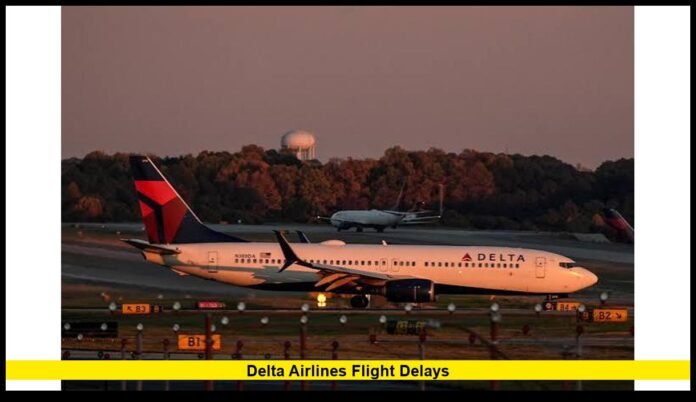

Delta Airlines flight delays disrupted travel across the United States as a technical malfunction affecting the airline’s aircraft weight-and-balance automation system slowed departures during the lead-up to Thanksgiving. The problem created a significant operational challenge for Delta on November 22, 2026, affecting passengers at major airports, including Atlanta, Minneapolis, Boston, and other destinations across the airline’s network.
The disruption occurred during a period when millions of Americans were preparing to travel for the Thanksgiving holiday. Delta’s system problem forced airline personnel to use manual procedures for important pre-departure calculations, reducing the speed at which flights could be prepared and released. Although the airline later confirmed that the automation had been restored, the resulting delays and schedule disruptions affected passengers throughout the day.
The situation became particularly concerning for travelers with connecting flights, time-sensitive holiday plans, and limited alternative travel options. The technical issue also renewed attention on the reliability of airline technology during periods of exceptionally high passenger demand.
Key Points Summary
╔════════════════════════════════════════════════════════════════════╗
║ – A technical problem involving Delta’s automated aircraft weight-and-balance system disrupted flights nationwide. ║
║ – More than 1,000 flights were delayed, with flight-tracking data reporting nearly 2,000 delays at the height of the disruption. ║
║ – Atlanta, Delta’s largest hub, experienced some of the most significant operational problems. ║
║ – Flight crews and airline personnel used manual procedures while the automated system was being restored. ║
║ – Delta said the automation was restored, but passengers could still face recovery-related schedule changes. ║
║ – The disruption occurred just days before Thanksgiving, increasing concerns about holiday travel reliability. ║
╚════════════════════════════════════════════════════════════════════╝
What Happened to Delta Airlines on November 22?
Delta experienced a technical malfunction involving a system used to calculate aircraft weight and balance before flights depart. The system helps airline personnel determine the aircraft’s total weight and how that weight is distributed throughout the plane.
These calculations are essential for safe flight operations. Airlines must account for passengers, baggage, cargo, fuel, and other load-related information before an aircraft can be cleared for departure.
When Delta’s automated system became unavailable, airline teams had to use manual workarounds. Although these procedures allowed flights to continue operating, the process required additional time and created a bottleneck across the airline’s departure operations.
The disruption spread beyond Atlanta because Delta operates a large network of connecting flights. Aircraft arriving late at one airport can affect the next scheduled departure, while crews may face changes to their operating schedules. As a result, a technical issue at one location can create problems at airports far from where the original malfunction occurred.
The airline worked to restore the automated system while attempting to minimize cancellations and manage passenger disruptions.
Why the Weight-and-Balance System Is Important
Aircraft weight and balance calculations are among the essential preparations required before a flight can take off. Airlines must know how much weight an aircraft is carrying and how that weight is distributed.
An aircraft’s balance affects its performance, stability, handling, and ability to operate safely. The calculations help determine whether the aircraft is within the required operational limits and support other flight-planning decisions.
The information generally includes:
- Passenger totals and seating distribution
- Checked baggage and cargo
- Fuel quantities
- Aircraft operating weight
- Weight distribution across the aircraft
- Other operational information required for departure planning
Normally, automated systems process this information quickly and help airline teams prepare flight documentation efficiently. When automation becomes unavailable, employees may need to complete additional calculations and verification steps manually.
The manual process is not necessarily unsafe. It is designed to provide an alternative when automated systems are unavailable. However, it can be significantly slower, particularly when thousands of flights are scheduled within a short period.
Atlanta Airport Was at the Center of the Disruption
Atlanta’s Hartsfield-Jackson International Airport experienced a major impact because it is Delta’s largest hub and one of the most important airports in the airline’s domestic and international network.
A large percentage of Delta flights connect through Atlanta. Passengers traveling between different regions of the United States, as well as international destinations, frequently use the airport as a transfer point.
The technical problem therefore affected more than flights departing directly from Atlanta. Flights arriving at the airport were also affected, and travelers connecting through Atlanta faced the possibility of missing their next departure.
The Federal Aviation Administration temporarily implemented flight restrictions and ground-delay measures to manage the situation and reduce airport congestion. These measures were later lifted as the airline’s operations improved.
The disruption demonstrated how a problem affecting one airline’s operational technology can create a substantial impact at a major airport.
How the Technical Problem Spread Across the United States
The operational impact was not confined to Delta’s Atlanta hub. The airline’s network includes hundreds of daily routes, and many aircraft operate multiple flights throughout a single day. A delayed departure can affect several later services if the same plane is scheduled to continue flying.
For example, an aircraft scheduled to fly from Atlanta to another city may arrive late because of the original technical disruption. That aircraft might then be scheduled to depart for a different destination shortly afterward. If the first flight arrives behind schedule, the next departure may also be delayed.
Crew schedules can create another complication. Pilots and flight attendants must comply with duty-time requirements, and a delay that continues for several hours may affect whether a crew remains available for its assigned flight.
Passengers at airports outside Atlanta therefore experienced delays even when their own airports were operating normally. Some travelers faced longer waits, missed connections, and uncertainty about whether their flights would depart at their originally scheduled times.
Minneapolis, Boston, and Other Airports Also Experienced Disruptions
Atlanta received the most attention because of its importance to Delta’s network, but passengers at other major airports also encountered delays.
Minneapolis-St. Paul International Airport, one of Delta’s significant hubs, experienced disruption involving Delta departures and arrivals. Travelers connecting through Minneapolis faced changes to their itineraries, while airport operations were affected by the broader network problem.
Boston Logan International Airport also experienced delays connected to the technical outage. Travelers in the Northeast were particularly vulnerable to additional disruptions because weather and air traffic restrictions can influence flights operating in the region.
Other airports serving Delta passengers experienced schedule changes as the airline worked to manage aircraft availability and restore normal operations.
The impact varied from airport to airport. Some passengers experienced relatively short delays, while others faced extended waits or missed connections. The situation depended on the individual flight, aircraft availability, crew scheduling, airport congestion, and the time the passenger was scheduled to travel.
Delta Restored the Automated System
Delta later announced that its automated system for calculating aircraft weight and balance had returned to operation. This was an important development because restoring automation allowed airline personnel to return to the normal process for preparing flights.
However, system restoration does not instantly eliminate delays already built into the airline’s schedule.
A flight delayed earlier in the day may still be waiting for an aircraft, crew, gate, or connecting passengers. Some aircraft may need to be repositioned, and passengers whose original flights were canceled or significantly delayed may need to be accommodated on later departures.
The airline also needed to manage the remaining schedule while working to reduce the backlog. This type of recovery can take several hours or longer, depending on the scale of the disruption and the airline’s available resources.
Passengers should therefore pay attention to their individual flight information rather than assuming that the system’s restoration guarantees an immediate return to normal schedules.
Why Travelers Could Still Face Delays After the System Was Fixed
The technical problem was the initial cause of the disruption, but several secondary factors can continue affecting airline operations after the original issue is resolved.
Aircraft Availability
Aircraft may be out of position after delayed flights. An airplane scheduled to depart from one airport may still be arriving from another location, making it unavailable for the next scheduled service.
Crew Scheduling
Flight crews may be delayed along with their aircraft. If a delay becomes prolonged, the crew may be unable to continue operating the flight because of duty-time limitations or scheduling requirements.
Connecting Passengers
Airlines often hold or adjust flights to accommodate connecting travelers when operationally possible. However, accommodating passengers can create additional scheduling pressure, particularly when several flights are disrupted simultaneously.
Airport Congestion
When many flights are delayed at once, aircraft can occupy gates longer than planned. This may affect incoming flights, departure sequencing, and airport ground operations.
Weather and Air Traffic Control
Weather conditions and air traffic restrictions can add delays even when an airline’s internal systems are operating normally. Delta said some of the disruption was also associated with weather and air traffic control programs affecting parts of the Northeast.
These factors explain why passengers may continue experiencing schedule changes after the original technology issue has been corrected.
How Delta Is Assisting Affected Passengers
Delta said it was working to rebook passengers affected by the disruption and provide assistance where necessary. Depending on individual circumstances, travelers may receive alternative itineraries, meals, or hotel accommodations when overnight arrangements are required.
Passengers whose flights are canceled should review the options offered by the airline carefully. Rebooking availability can change as seats become available on other flights.
Travelers who are unable to continue their trips should also review applicable refund options. Passengers should keep documentation related to cancellations, rebooking, additional expenses, and communications with the airline.
It is important to understand that assistance and reimbursement eligibility can vary depending on the circumstances of the disruption and the applicable airline policies.
What Passengers Should Do Before Traveling
Travelers flying with Delta during the Thanksgiving period should take a proactive approach to monitoring their itineraries.
1. Confirm Flight Status Before Leaving Home
Passengers should check their flight’s current departure time, arrival time, and status before heading to the airport. A flight that was previously listed as on time may be updated as operational conditions change.
2. Enable Mobile Notifications
The Delta mobile app can provide alerts about gate changes, boarding updates, delays, cancellations, and rebooking information. Travelers should make sure notifications are enabled and that their contact details are current.
3. Allow Extra Time at the Airport
Holiday travel can create long lines at check-in counters, security checkpoints, baggage areas, and customer-service desks. Passengers should allow sufficient time to complete airport procedures, especially if their flight has already been affected by schedule changes.
4. Pay Attention to Connecting Flights
Travelers connecting through Atlanta, Minneapolis, or another major Delta hub should monitor both their first flight and their connecting service. A delay on the initial leg can make a previously comfortable connection difficult or impossible.
5. Keep Essential Items in Carry-On Bags
Passengers should keep medications, identification, chargers, essential documents, valuables, and items needed during an unexpected delay in their carry-on luggage.
6. Review Alternative Travel Options
Passengers with important holiday commitments may want to understand alternative flight options before they encounter a disruption. Knowing which later flights operate to their destination can make it easier to respond quickly if their itinerary changes.
What to Do If Your Flight Is Delayed or Canceled
If a passenger receives a delay or cancellation notification, the first step is to confirm the latest information through the airline.
Travelers should avoid relying solely on an earlier departure time displayed on a booking confirmation. Flight schedules can change several times during operational recovery.
Passengers who need assistance should contact Delta through the airline’s available customer-service channels. At the airport, travelers can also speak with airline representatives about rebooking and available alternatives.
If a flight is canceled, passengers should review the proposed replacement itinerary and determine whether it meets their travel needs. Travelers who choose not to continue their journey should ask about refund eligibility and the appropriate process.
Keeping receipts for expenses and saving important travel notifications may also be useful if passengers later need to document their experience.
Are Travelers Entitled to Refunds After a Delta Delay?
Flight delays and cancellations do not all result in the same passenger rights or refund options. The circumstances surrounding the disruption matter.
Passengers may be entitled to a refund when a flight is canceled or significantly changed and they decide not to accept the alternative travel arrangement offered. In qualifying cases, passengers may request a refund instead of continuing with the replacement itinerary.
A passenger who accepts a new flight generally should not assume that the original ticket can also be refunded. Travelers should carefully consider their options before confirming a rebooking.
Passengers should review the airline’s applicable policies and federal passenger-protection rules to understand what options are available for their particular situation.
Delta Airlines Flight Delays Raise Concerns Ahead of Thanksgiving
The latest disruption is especially significant because it happened shortly before one of the busiest travel periods of the year. Thanksgiving travel places additional pressure on airlines because large numbers of passengers are attempting to reach their destinations within a relatively short period.
Many travelers have fixed plans involving family gatherings, holiday meals, hotel reservations, rental cars, and other arrangements. A delayed or canceled flight can therefore affect more than the time spent waiting at an airport.
Delta operates a large network of domestic and international flights, and its major hubs are important connection points for passengers traveling throughout the United States. When operations are disrupted at a hub, the effects can extend to multiple cities and regions.
The airline’s system restoration was a positive development, but passengers should remain prepared for possible schedule adjustments as the network returns to normal.
Could More Delays Occur During the Holiday Travel Period?
The technical issue has been resolved, but holiday travel remains a period when delays can occur for several reasons.
Weather conditions can affect airports across the country, while heavy passenger traffic can increase pressure on airport facilities and airline operations. Aircraft and crew availability may also become more difficult to manage when schedules are operating at high capacity.
Passengers should not automatically expect their flights to be delayed. However, travelers can reduce uncertainty by checking their itineraries frequently and remaining flexible when possible.
Those traveling for important family events may want to consider arriving at their destination earlier than absolutely necessary when their schedules permit.
What This Disruption Means for Delta Passengers
The incident highlighted how airlines depend on technology to manage complex operations. Automated systems help airlines process large amounts of information quickly, but a technical failure can create a substantial slowdown when the airline must temporarily rely on manual procedures.
Delta’s ability to restore its system was an important step toward normal operations. The remaining challenge was managing the schedule and helping passengers whose travel plans had already been affected.
For passengers, the most important takeaway is to stay informed, remain flexible, and check their flight status before traveling. The situation may improve as the airline completes its recovery, but individual flight schedules can still change.
Thanksgiving travelers should continue monitoring official airline updates and allow additional time for their journeys, particularly when traveling through major Delta hubs.
Are you traveling with Delta this Thanksgiving, or have you experienced a delay recently? Share your travel experience in the comments and follow the latest airline updates as holiday travel continues.