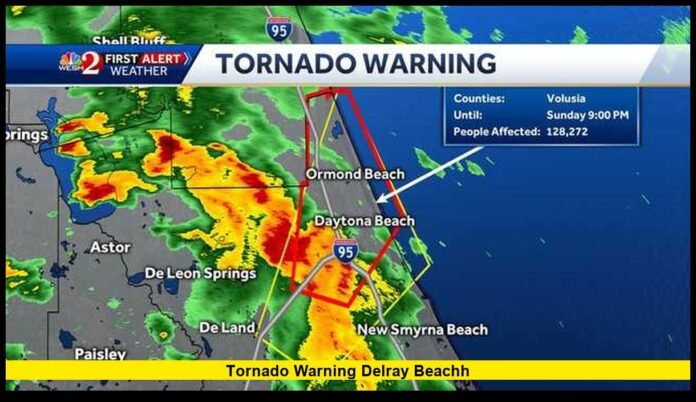

A tornado warning Delray Beach weather emergency brought heightened concern across southeastern Palm Beach County as powerful thunderstorms moved through South Florida, producing dangerous weather conditions, strong winds, heavy rain, and the possibility of tornado activity. Residents were urged to remain alert as weather warnings covered Delray Beach and surrounding communities during the evening storm system.
The severe weather event affected areas across Palm Beach County, with emergency alerts warning residents about the potential for damaging winds, flying debris, hail, and possible tornadoes. Local reports also described a tornado touchdown in western Delray Beach, while storm-related damage, including a fallen tree, was reported in a residential community.
The weather situation developed quickly, making it important for residents to understand what happened, how the warnings unfolded, what areas were affected, and what safety precautions should be taken following severe thunderstorms.
Severe Thunderstorms Put Delray Beach Under a Serious Weather Threat
The storm system that moved through southeastern Palm Beach County created conditions that required close attention from residents, motorists, property owners, and local emergency officials. Thunderstorms developed with enough intensity to raise concerns about tornado formation and damaging wind gusts.
South Florida can experience severe thunderstorms throughout the year, but weather conditions become particularly concerning when storms produce strong rotation. A thunderstorm with rotation can potentially develop into a tornado, and meteorologists use radar observations, storm movement, and atmospheric conditions to determine whether warnings are necessary.
During the evening storm event, residents in Delray Beach and nearby communities were placed under a tornado warning as thunderstorms moved across the region. The warning indicated that dangerous weather conditions were possible and that people should immediately take protective action rather than wait for additional information.
The threat included more than heavy rainfall. Severe thunderstorms can produce wind gusts capable of breaking tree branches, damaging roofs, overturning unsecured outdoor objects, and causing power outages. When tornadoes develop, the danger can increase significantly because winds may be concentrated in a narrow area and can cause sudden, localized destruction.
For people living in mobile homes, apartments, houses with large windows, or buildings with limited interior protection, the warning was particularly important. Residents were encouraged to move away from windows and seek shelter in a safer location inside a sturdy building.
Tornado Warning Issued for Southeastern Palm Beach County
The National Weather Service issued a tornado warning for southeastern Palm Beach County during the evening as a dangerous thunderstorm moved through the area. Delray Beach was among the communities included in the warning.
The alert identified the possibility of tornado activity associated with a storm that was moving northeast. Radar observations indicated rotation within the thunderstorm, creating concern that a tornado could form or already be developing.
A tornado warning is one of the most urgent weather alerts issued by meteorologists. Unlike a tornado watch, which indicates that conditions are favorable for tornadoes over a broader area, a warning means that a tornado has been detected or that weather conditions strongly indicate an immediate tornado threat.
Residents in the warned area were advised to take shelter immediately. The safest response during a tornado warning is to move to a small interior room on the lowest floor of a sturdy building, away from exterior walls and windows.
People should not remain outside to observe the storm, attempt to photograph tornado activity, or wait until visible signs of a tornado appear. Tornadoes can develop rapidly, and dangerous winds or flying debris may arrive before residents have time to react.
Storm Activity Near Boca Raton and Delray Beach
The severe thunderstorm activity affected several communities in southeastern Palm Beach County, including areas near Boca Raton and Delray Beach.
Weather alerts described thunderstorms capable of producing tornadoes and damaging winds. Radar-indicated rotation was among the factors that prompted warnings for portions of the county.
The storm movement was important because thunderstorms can change direction, intensify, or weaken as they travel. Communities located along the storm’s projected path may experience different weather conditions within a short period.
Residents in Boca Raton, Delray Beach, Boynton Beach, Highland Beach, Ocean Ridge, and nearby communities were among those who needed to monitor official weather updates.
The warning area was not limited to a single neighborhood. Severe thunderstorms can affect several cities simultaneously, particularly when storm cells travel through a densely populated region.
People living near the coast, west of the coastal communities, and farther inland were encouraged to pay attention to changing alerts because the exact path of severe weather can shift.
** Tornado Reported in Western Delray Beach**
Local reporting described a tornado touchdown in western Delray Beach during the severe weather event. The report raised concerns about possible damage in residential areas as thunderstorms moved through Palm Beach County.
A reported tornado touchdown does not automatically mean that an official tornado rating has been assigned. Weather authorities may need to conduct additional assessments to determine whether a tornado occurred, the path it followed, and the extent of damage.
Tornado damage assessments typically examine structures, trees, power lines, vehicles, and other objects affected by the storm. Investigators may use damage patterns and evidence from the area to determine the strength of the tornado and whether a formal rating can be established.
Residents who experienced damage were encouraged to document the conditions safely. Photographs of damaged property, fallen trees, broken fences, roof damage, and other visible impacts may be useful for insurance claims and local recovery efforts.
However, safety should always come first. Residents should not approach damaged electrical equipment, downed power lines, unstable trees, or structures that may have been weakened by the storm.
Tree Falls in The Bridges Community
Storm-related damage was also reported in The Bridges community in western Delray Beach, where a tree fell during the severe weather.
Fallen trees are among the common consequences of strong thunderstorms and tornado-related winds. Even when a tornado does not directly pass through a neighborhood, powerful wind gusts can uproot trees, break large branches, and damage structures.
Palm Beach County contains many residential communities with mature trees, landscaped streets, and outdoor structures. These features can become vulnerable when storms produce strong winds or saturated ground conditions.
Heavy rain can weaken the soil around tree roots, making it easier for trees to fall when wind gusts increase. A tree that appears healthy may still be vulnerable if its roots are compromised or if it has structural weaknesses.
Residents should carefully inspect their surroundings after a storm but avoid standing beneath damaged branches or trees that appear unstable. A tree that remains standing after the initial storm may still collapse later if its roots or trunk have been damaged.
How the Tornado Alerts Developed
Weather warnings during the event were issued as thunderstorms moved across southeastern Palm Beach County and meteorologists monitored conditions that could support tornado activity.
An earlier weather statement described a storm near the Boca Raton area that was capable of producing funnel clouds, strong wind gusts, and small hail. The alert warned that winds could blow around unsecured objects and break tree limbs.
As storm conditions became more concerning, a tornado warning was issued for portions of southeastern Palm Beach County, including Delray Beach. The warning identified radar-indicated rotation and the possibility of tornado activity.
A later warning covered additional areas of east-central Palm Beach County as the storm system continued moving northeast. The changing warning areas reflected the movement and development of thunderstorms across the region.
This sequence illustrates why residents should not rely on a single alert or assume that a warning affecting one location will remain unchanged. Storm paths can shift, and additional warnings may be issued for communities farther along the storm’s route.
Weather alerts are designed to provide information as conditions evolve. Residents should keep a reliable source of weather information available and take action when warnings are issued for their location.
Tornado Warning vs. Tornado Watch: Understanding the Difference
The terms tornado watch and tornado warning are often used during severe weather, but they describe different levels of risk. Understanding the difference can help residents respond appropriately when weather alerts are issued.
A tornado watch means that atmospheric conditions are favorable for tornadoes to develop. A watch generally covers a larger geographic area and may remain in effect for several hours. Residents should prepare for the possibility of severe weather, monitor forecasts, and identify a safe shelter location.
A tornado warning is more urgent. It means that a tornado has been detected or that radar and weather observations indicate a tornado may be occurring. People in the warning area should immediately seek shelter.
During the Palm Beach County storm event, a tornado watch covered the broader region while individual tornado warnings were issued for areas where thunderstorms presented a more immediate threat.
Residents should never wait for a tornado to become visible before taking shelter during a warning. Tornadoes may be hidden by rain, darkness, or low clouds. In some cases, people may hear strong winds or debris before seeing anything that resembles a tornado.
The distinction between a watch and a warning is especially important in South Florida, where thunderstorms can develop quickly and move across communities within a short period.
What Residents Were Told to Expect
The storm alerts identified several hazards that could affect Palm Beach County communities. These included tornadoes, strong wind gusts, hail, flying debris, and damage to trees and structures.
Some thunderstorms can produce wind gusts strong enough to cause damage even without tornado formation. Wind may break branches, damage fences, move outdoor furniture, and affect power lines.
Hail was also included among the possible storm hazards. Although hailstones may be relatively small during some South Florida storms, they can still damage vehicles, outdoor equipment, windows, and roofs.
The threat of flying debris was particularly concerning during tornado warnings. Objects that are normally harmless when secured can become dangerous when lifted or pushed by powerful winds.
Residents were encouraged to move indoors, close windows and doors, and remain in a protected area until the threat had passed.
Why South Florida Can Experience Tornadoes
South Florida is commonly associated with tropical weather, hurricanes, sunshine, and coastal storms, but tornadoes are also possible in the region.
Tornadoes can develop from thunderstorms when atmospheric conditions support rotation. Differences in wind speed and direction at different levels of the atmosphere can contribute to the development of rotating storms.
Severe thunderstorms may develop during periods of unsettled weather, particularly when moisture, instability, and wind conditions combine to create favorable conditions.
Tornadoes in Florida can vary significantly in strength and duration. Some may remain relatively brief and cause limited damage, while others can produce more substantial destruction.
The state’s flat terrain and warm, humid atmosphere can support thunderstorm development. Residents should therefore treat tornado warnings seriously regardless of whether tornadoes are common in their particular neighborhood.
A tornado warning in Delray Beach does not necessarily mean every part of the city will experience tornado damage. Tornadoes can follow narrow paths, and damage may occur in one neighborhood while nearby areas experience only heavy rain or strong winds.
The Importance of Taking Shelter Immediately
When a tornado warning is issued, residents should move to a safe location as quickly as possible. The best shelter is generally a sturdy building with a protected interior space.
A small room on the lowest floor, such as a bathroom, closet, hallway, or interior storage area, may offer better protection than rooms with exterior windows.
Residents should avoid windows, glass doors, exterior walls, and large open spaces. If possible, they should use a mattress, thick blanket, helmet, or other protective item to reduce the risk of injury from debris.
People living in mobile homes should seek a more substantial shelter when a tornado warning is issued. Mobile homes can be especially vulnerable to tornado winds, even when they are properly secured.
Apartment residents should identify a safe interior location in advance. The safest area may be a hallway or interior room on the lowest accessible floor, depending on the building’s design.
Those who are driving should avoid attempting to outrun a tornado. If a safe building is nearby, reaching shelter may be the best option. If no suitable shelter is available, drivers should follow official safety guidance and avoid stopping beneath bridges or overpasses, which can expose them to dangerous wind and debris.
Dangerous Winds Can Cause Damage Without a Tornado
One of the most important lessons from severe weather events is that damaging winds can occur even when a tornado does not touch down.
Thunderstorms can produce strong straight-line winds that affect a wide area. These winds may cause tree damage, roof problems, power interruptions, and damage to outdoor structures.
In residential neighborhoods, wind can affect items such as patio furniture, umbrellas, grills, decorations, garbage bins, and temporary structures.
Before storms arrive, residents should secure outdoor objects whenever possible. During an active tornado warning, however, people should not go outside to move furniture or secure belongings. Personal safety is more important than preventing property damage.
Wind damage may also affect roofs and building components. Residents should watch for missing shingles, damaged gutters, broken windows, and signs of water intrusion after storms.
If a roof appears damaged, homeowners should avoid climbing onto it immediately after severe weather. Wet surfaces, hidden structural damage, and unstable materials can create serious hazards.
Heavy Rain and Flooding Can Follow Severe Storms
Tornado warnings often occur during thunderstorms that also produce heavy rainfall. Although the primary concern may be tornado activity, flooding can create additional problems for residents and motorists.
South Florida’s drainage systems can become overwhelmed when rainfall is intense or continues for an extended period. Water may accumulate on roads, in parking areas, and in low-lying neighborhoods.
Drivers should avoid flooded streets whenever possible. Water depth can be difficult to judge, and vehicles may become trapped even when the roadway appears passable.
Flooding can also affect homes, garages, businesses, and outdoor areas. Residents should check for water accumulation around their properties and avoid entering flooded spaces where electrical hazards may exist.
If water enters a home, residents should be cautious around electrical equipment and appliances. Damaged electrical systems should be inspected by qualified professionals before being used again.
Power Outages and Electrical Hazards
Severe thunderstorms and tornado-related winds can damage electrical infrastructure, leading to power outages across affected communities.
Fallen trees and branches may bring down power lines. Residents should assume that downed electrical wires are energized and stay far away from them.
Anyone who sees a fallen power line should avoid touching it or attempting to move nearby objects. Reporting the hazard to the appropriate utility or emergency agency is the safest approach.
Power outages may affect traffic signals, street lighting, household appliances, and communication systems. Residents should keep flashlights and batteries available rather than relying entirely on candles.
Candles can create fire hazards, particularly when homes have been damaged or when residents are dealing with wet conditions and electrical problems.
People who use medical equipment requiring electricity should have an emergency plan that includes backup power or access to a location where their equipment can operate safely.
What Residents Should Check After the Storm
Once tornado warnings and severe thunderstorm threats have expired, residents should still remain cautious. The end of an official warning does not automatically mean every location is safe.
People returning outside should look for obvious hazards, including broken branches, fallen trees, damaged roofs, loose building materials, damaged fences, and power lines.
Residents should inspect their homes from a safe distance before entering areas that may have sustained structural damage. If a building appears unstable, it is better to wait for qualified personnel to assess it.
The following precautions may help after severe weather:
- Stay away from downed power lines.
- Avoid damaged trees and hanging branches.
- Do not enter buildings that appear structurally unsafe.
- Check for roof damage without climbing onto the roof.
- Watch for broken glass and sharp debris.
- Avoid flooded roads and standing water.
- Report dangerous conditions to the appropriate authorities.
- Document property damage safely for insurance purposes.
Residents should also check on elderly neighbors, people with disabilities, and anyone who may have difficulty responding to severe weather alerts or recovering from storm damage.
Community members can help one another by sharing accurate information and avoiding the spread of unverified reports about tornado activity or damage.
Why Official Weather Updates Matter
During rapidly changing weather conditions, official alerts can provide important information about the location, movement, and expected impacts of storms.
Residents should monitor the National Weather Service, local emergency management agencies, and reliable local news outlets for updated information.
Weather alerts may change as thunderstorms move. A warning issued for one area may expire while another warning is issued for a nearby community.
The exact timing of a storm can also change. A thunderstorm that initially appears to be moving in one direction may shift its path or strengthen unexpectedly.
Residents should therefore use multiple reliable sources of information rather than relying exclusively on social media posts or messages from friends.
Social media can be useful for sharing local observations, but unverified claims may spread quickly during emergencies. Reports of tornadoes, damage, or injuries should be treated cautiously until they are confirmed by reliable authorities or credible reporting.
Delray Beach Residents Should Prepare for Future Severe Weather
Although the immediate storm threat has passed, the event serves as a reminder that residents should prepare for future severe weather.
Florida’s weather can change rapidly, and thunderstorms may develop with little time for preparation. A household emergency plan can make a major difference when warnings are issued.
Residents should consider preparing an emergency kit containing:
- Drinking water
- Nonperishable food
- Flashlights
- Extra batteries
- A battery-powered weather radio
- First-aid supplies
- Necessary medications
- Phone chargers and power banks
- Important documents
- Basic hygiene supplies
- Protective clothing
- A flashlight for each household member
Families should also decide where everyone will go during a tornado warning. Choosing a shelter location ahead of time can reduce confusion when an emergency alert arrives.
Residents should know how to receive weather alerts on their phones and make sure emergency notifications are not disabled.
A battery-powered weather radio can be especially useful during power outages, when television, internet access, or mobile phone service may be limited.
Protecting Pets During Tornado Warnings
Pets should be included in household emergency planning. During severe weather, animals may become frightened by thunder, wind, sirens, and sudden changes in the environment.
Pet owners should identify a shelter location where animals can remain safely during tornado warnings.
Small pets should be placed in carriers when possible, while dogs should be kept on leashes to prevent them from running away during stressful conditions.
Residents should keep pet food, water, medications, and identification information available as part of their emergency supplies.
If the household must evacuate or move to another location, having a pet carrier and basic supplies ready can make the process easier.
Pets should not be left outside during tornado warnings or severe thunderstorms. Animals may be injured by debris, falling branches, flooding, or strong winds.
How Property Owners Can Reduce Future Storm Damage
Property owners can take several steps before the next severe weather event to reduce the risk of damage.
Trees should be inspected periodically, particularly those located near homes, garages, sidewalks, and power lines. Dead branches and visibly damaged trees may require professional attention.
Outdoor items should be secured before severe weather arrives. Furniture, grills, umbrellas, decorations, and other objects can become dangerous when strong winds move them.
Homeowners should also review their insurance policies and understand what types of storm damage are covered.
After a storm, photographs and written records can help document damage. Residents should preserve receipts for emergency repairs and keep records of communications with contractors or insurance representatives.
However, property owners should not begin major repairs before determining whether the structure is safe. Roofs, walls, electrical systems, and other building components may have hidden damage.
Storm Warnings and Community Safety
Severe weather events can affect entire communities, even when damage is concentrated in a small area.
Residents may experience temporary power outages, blocked roads, damaged landscaping, water intrusion, or interruptions to services.
Community safety depends on people following emergency instructions and avoiding unnecessary risks. During a tornado warning, residents should shelter rather than attempt to travel through the storm.
After warnings expire, people should remain alert for additional weather statements, particularly when thunderstorms continue to develop nearby.
Neighborhoods may also need to coordinate cleanup efforts. Residents should avoid placing debris in roadways or blocking emergency access routes.
Fallen trees and damaged structures should be handled carefully. Large debris may require professional equipment, while damaged electrical systems should only be addressed by qualified personnel.
The Weather Outlook After the Storm
Following the severe weather event, the forecast indicated a return to more settled conditions across the Delray Beach and Palm Beach County area.
The outlook included sunshine and warmer daytime temperatures, with a slight possibility of an afternoon shower. Overnight temperatures were expected to become more comfortable compared with the daytime heat.
Even when the immediate severe weather threat has ended, residents should continue monitoring local forecasts. South Florida’s weather can remain unpredictable, particularly during periods when moisture and atmospheric instability are present.
A sunny forecast does not mean that residents should forget the importance of emergency preparation. Severe thunderstorms and tornadoes can develop during different weather patterns, and preparedness remains valuable throughout the year.
What the Delray Beach Tornado Warning Event Means for Residents
The severe weather event highlighted how quickly thunderstorms can create dangerous conditions across southeastern Palm Beach County. Tornado warnings, strong winds, hail, and the possibility of flying debris placed residents under a serious weather threat during the evening.
Local reports described a tornado touchdown in western Delray Beach, while storm-related damage included a fallen tree in The Bridges community. The reported activity demonstrated that severe weather can affect residential neighborhoods and create hazards even after the most intense storm conditions have passed.
For residents, the most important lesson is to take tornado warnings seriously, identify safe shelter locations before storms arrive, and avoid waiting until the last moment to respond.
A tornado warning Delray Beach alert should always be treated as an immediate safety warning. Residents should move indoors, stay away from windows, protect themselves from debris, and follow official instructions until the danger has passed.
As the community moves beyond the storm, property inspections, cautious cleanup, accurate information, and preparation for future weather events remain important. Severe storms may not affect every neighborhood equally, but having a plan can help protect families, pets, homes, and the wider community when the next warning is issued.
Why Tornadoes Can Be Difficult to See in South Florida
One of the challenges associated with tornado activity in South Florida is that storms may develop in conditions where visibility is limited. Rain, darkness, low cloud ceilings, and rapidly changing weather can make it difficult for people to recognize a tornado approaching.
Some tornadoes are visible as rotating funnels, but others may be obscured by heavy rain. Residents should not depend on visual confirmation before taking shelter. If an official tornado warning is issued for their location, they should immediately move to a protected area.
Storms may also produce sudden changes in wind direction and intensity. A neighborhood experiencing heavy rain may quickly begin experiencing damaging winds or flying debris.
Because of these conditions, weather alerts are particularly important during evening and nighttime storms. Residents who are asleep or inside buildings may not notice changing weather until conditions become dangerous.
Keeping emergency alerts enabled on mobile phones can help provide advance notice. A weather radio can also provide information if cellular service or internet access becomes unavailable.
Residents Should Avoid Unnecessary Travel During Severe Weather
Driving during tornado warnings and severe thunderstorms can create additional risks. Roads may become slippery, visibility may decrease, and trees or debris may block streets.
Motorists should avoid traveling unless necessary during an active severe weather warning. If driving conditions become dangerous, drivers should not attempt to continue through flooded roads, areas with fallen trees, or locations where power lines are down.
Traffic signals may also stop working during power outages. Drivers should treat intersections with malfunctioning signals cautiously and follow applicable traffic rules.
After severe weather, motorists should watch for debris and damaged roads. Floodwater may hide potholes, damaged pavement, or other hazards.
Residents should also avoid driving through areas where emergency responders are working. Keeping roads clear can help emergency crews reach people who need assistance.
Final Update on the Delray Beach Severe Weather Event
The tornado warnings associated with the Saturday evening storm system have expired, and the immediate threat from the warned thunderstorms has passed. Nevertheless, residents should continue to use caution when checking their properties and moving around affected neighborhoods.
The storm event brought tornado-related alerts to southeastern Palm Beach County, with Delray Beach included in the warning area. Local reports described a tornado touchdown in western Delray Beach, and storm-related damage was reported in the community.
The event is a reminder that severe thunderstorms in South Florida can create dangerous conditions with little warning. Residents should continue to monitor local weather information, maintain emergency supplies, and make sure everyone in their household understands where to shelter during tornado warnings.
Staying informed, preparing ahead of time, and responding immediately to emergency alerts are among the most important ways Delray Beach residents can protect themselves during future severe weather.