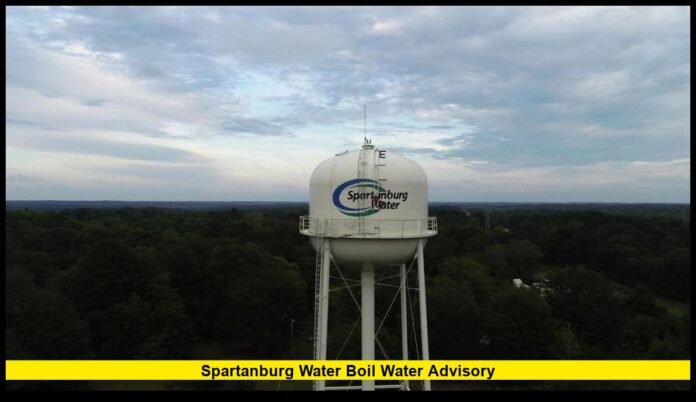

The Spartanburg water boil water advisory remains a major concern for residents and businesses across the Spartanburg area following widespread water service disruptions caused by damage to the water distribution system. Spartanburg Water issued the advisory on November 18, 2026, after a significant loss of water pressure and service affected its main water system. Customers have been advised to boil water for at least one full minute before drinking or cooking, while the utility continues working to repair damaged infrastructure.
The emergency has affected more than ordinary household water access. The disruption has created challenges for schools, hospitals, businesses, public facilities and residents who depend on a reliable supply of drinking water. Although officials have reported no confirmed contamination of the water system, the precautionary advisory remains important because pressure loss can create conditions in which the safety of water cannot immediately be guaranteed.
The situation is developing, and customers should continue following official instructions until Spartanburg Water announces that the advisory has been lifted. Here is what residents need to know about the cause of the disruption, the affected service areas, repair efforts, water safety precautions and the latest available information.
Latest Update on the Spartanburg Water Boil Water Advisory
Spartanburg Water issued a systemwide boil water advisory on Wednesday, November 18, after a significant disruption to the water distribution network. The advisory covers customers served by the main Spartanburg Water system, with Landrum specifically excluded from the current notice.
The utility said customers experienced a substantial loss of water pressure and interruptions to water service throughout the distribution system. In response, residents were instructed to boil tap water vigorously for at least one full minute before using it for drinking or cooking.
The utility also warned customers against using ice made from water that had not been boiled. The advisory was issued as a precaution, and officials said there had been no confirmed contamination of the system when the notice was released.
The latest available official update indicates that repair crews were working on both the main water distribution line and the redundant distribution line. Spartanburg Water reported progress in its repair operations, but the information available does not confirm that the entire system has returned to normal service.
As of the latest verified information available for November 19, there is no confirmed official announcement lifting the systemwide boil water advisory. Customers should therefore continue treating the advisory as active unless Spartanburg Water issues a formal notice stating otherwise.
What Caused the Spartanburg Water System Disruption?
The water service emergency began following a brief power interruption early Wednesday morning at the water treatment facility. According to information released by Spartanburg Water, the interruption caused a significant surge of water through the distribution system.
That surge resulted in substantial damage to two important components of the network: the primary water distribution line and the redundant line designed to provide additional system capacity.
The damage created a serious operational challenge because both the main line and the backup distribution line were affected. The system consequently experienced widespread service interruptions and reduced water pressure in multiple areas.
A brief power interruption triggered a larger infrastructure problem
Reports from utility officials indicated that the power interruption lasted only a very short time. However, the resulting water surge caused significant damage to the distribution infrastructure.
The incident illustrates how a brief disruption at a critical water facility can create consequences across a large network. Water distribution systems depend on pumps, pressure controls, pipelines, valves and other infrastructure working together. When pressure changes suddenly, water can move through pipes in ways that place stress on the network.
The utility has described the damage to the main and redundant lines as substantial. Repairing both systems has required crews to work on infrastructure that is essential to restoring normal water delivery.
The exact underlying cause remains under investigation
Although officials identified a brief power interruption and the resulting water surge as part of the incident, the broader cause of the interruption has not been fully established in the latest verified information.
There has been discussion about the role of the electrical system, but no verified final investigation finding has established responsibility for the incident. Customers should be cautious about treating online claims or unofficial explanations as confirmed facts.
The utility and other involved parties may provide additional information as the investigation and repair work continue.
Which Areas Are Affected by the Boil Water Advisory?
The advisory applies to customers on the main Spartanburg Water system, with Landrum excluded from the current systemwide notice.
Spartanburg Water serves customers across Spartanburg County and also provides service to portions of neighboring Greenville, Union and Cherokee counties. Because its service area extends beyond the city of Spartanburg, the disruption may affect residents who live outside the immediate city limits.
Customers should not determine whether they are affected solely by their mailing address, municipality or county. The most important factor is the water utility that supplies their property.
Customers served by Spartanburg Water
Residents and businesses connected to the main Spartanburg Water system should follow the advisory unless the utility provides a specific updated instruction for their service area.
The affected system may include customers experiencing:
- Complete loss of water service
- Very low water pressure
- Intermittent water availability
- Water service that returns temporarily but remains affected by the advisory
- Changes in normal water delivery while repairs are underway
Even if water begins flowing normally from a faucet, customers should not automatically assume the boil water advisory has ended.
Landrum customers
Landrum is excluded from the current systemwide advisory according to the utility’s notice.
However, residents should verify their specific water provider and monitor any separate notices that may be issued by their utility. Service boundaries can differ from city or county boundaries, and customers should rely on information from the water system that supplies their property.
Other water districts in the region
Several neighboring water systems have indicated that they are not affected by the Spartanburg Water emergency. These include water providers operating independent treatment and distribution systems.
Customers served by other utilities should continue following notices issued by their own water providers. A boil water advisory affecting Spartanburg Water does not automatically mean every water system in Spartanburg County or the surrounding region is under the same advisory.
Why Is a Boil Water Advisory Issued When No Contamination Is Confirmed?
Many residents may wonder why they are being asked to boil water when officials have not confirmed contamination.
The answer is related to the loss of water pressure.
Water distribution systems normally maintain pressure to help prevent outside substances from entering pipes. When pressure drops significantly or water service is interrupted, the system may become vulnerable to potential contamination through damaged infrastructure, openings, leaks or other pressure-related conditions.
A boil water advisory is a precautionary public-health measure. It allows residents to protect themselves while the water utility repairs the problem, restores pressure, flushes the system and conducts the necessary testing.
The absence of confirmed contamination is reassuring, but it does not mean customers should ignore the advisory.
Officials must determine that the system has returned to safe operating conditions and that required water-quality testing meets applicable standards before the advisory can be lifted.
What Residents Should Do During the Advisory
Residents served by the affected Spartanburg Water system should follow the utility’s instructions carefully. The primary recommendation is to boil water intended for drinking or cooking for at least one full minute.
Because some customers may experience little or no water service, bottled water may be the most practical option in areas experiencing outages.
Boil water before drinking
Tap water should be brought to a vigorous boil for at least one full minute before it is used for drinking.
This precaution applies to water consumed directly, including water used to prepare beverages. Customers should allow boiled water to cool before drinking and store it in clean, covered containers if they need to keep a supply available.
Use boiled or bottled water for cooking
Water used in food preparation should be boiled for the recommended period or replaced with bottled water.
This includes water used for:
- Cooking pasta, rice and other foods
- Preparing soups and beverages
- Washing ingredients when water may be consumed
- Preparing food for children
- Mixing powdered drinks or other products that require water
If a recipe requires water, residents should use water that has been boiled appropriately or bottled water.
Do not use ice made from untreated tap water
The utility specifically warned customers not to use ice made from water that had not been boiled.
Residents should avoid using ice stored in household ice makers or trays if it was produced using potentially affected tap water during the advisory. Ice should not be considered safe simply because it has been frozen.
If the household has ice made from unboiled tap water, it should not be used for drinking or beverages during the advisory.
Consider bottled water if service is interrupted
Residents experiencing complete water outages may find it difficult or impossible to boil tap water.
In those circumstances, bottled water can provide a practical alternative for drinking, cooking and other activities where safe water is required.
Families should prioritize drinking water and essential household needs. Residents should avoid unnecessary stockpiling because excessive purchasing can make it harder for other households, older residents and people with medical needs to obtain supplies.
Keep a supply of safe water available
Households should consider preparing a limited supply of safe water for immediate needs.
Clean containers with secure lids can be used to store boiled and cooled water. Containers should be kept in a clean location and handled carefully to prevent contamination.
Residents should also consider the needs of children, older adults, people with disabilities and individuals who require water for medical or caregiving purposes.
What Should Residents Do If Their Water Pressure Returns?
The return of water pressure does not automatically mean the boil water advisory has ended.
Some customers may see water service restored before the entire distribution system is fully repaired. The system may still require additional work, flushing and water-quality testing.
Residents should continue boiling water even if their faucets begin working normally.
The advisory should remain in effect until the utility officially announces that customers can safely return to normal water use. An informal observation of improved pressure is not a substitute for a formal advisory cancellation.
Customers may also notice temporary changes in water appearance, including discoloration or air in the pipes, when service begins returning. If water appears unusual, residents should follow instructions from the utility and avoid using it for consumption until they receive appropriate guidance.
Repair Efforts: What Spartanburg Water Is Doing
Spartanburg Water has reported that crews are working on repairs to both the main distribution line and the redundant line.
The utility’s latest verified repair update indicated that work was progressing and that crews were continuing to address the damage. However, the available official information does not establish a confirmed full-restoration time.
Repairs to the main distribution line
The primary water distribution line is a major part of the system responsible for delivering water to customers.
Damage to this infrastructure can affect service across a broad area. Repair work may require specialized materials, equipment, excavation, pressure management and coordination among different crews.
The utility has indicated that repairs are underway, but a final completion time has not been confirmed in the latest verified update.
Repairs to the redundant distribution line
The redundant line is intended to provide additional capacity or operational flexibility when the main system requires maintenance or experiences problems.
Because the redundant line was also damaged during the incident, restoring it is an important part of the recovery process.
The utility has been working on both lines as part of its efforts to return water service to affected customers.
Why restoration may take time
Water-system repairs involve more than physically fixing a damaged pipe.
After repair work is completed, operators may need to inspect the infrastructure, restore system pressure gradually, flush affected lines and collect water samples. Testing is necessary to confirm that water quality meets safety requirements.
These steps are particularly important following a widespread pressure loss because the disruption affected the distribution system rather than a single isolated household connection.
For that reason, customers should avoid relying on unofficial predictions about when the advisory will end.
Hospitals and Medical Facilities Face Water Challenges
The water emergency has also affected healthcare facilities in the region.
Reports released during the initial disruption indicated that water supply problems affected several facilities within Spartanburg Regional Healthcare System, including Spartanburg Medical Center, Spartanburg Medical Center–Mary Black Campus, Spartanburg Hospital for Restorative Care and certain Medical Group of the Carolinas locations.
Healthcare facilities depend on water for a wide range of essential activities, including patient care, sanitation, cleaning, food preparation and certain medical operations.
Hospitals have emergency plans designed to address disruptions to essential services. During the water outage, healthcare officials reported activating response measures and asked members of the public to postpone visits to affected facilities while teams worked to address the situation.
Residents with medical appointments should contact their healthcare provider directly to verify whether their appointment is proceeding as scheduled.
Patients should not assume that every medical facility in the region is affected in the same way. Different providers may have separate water systems, contingency plans and operational arrangements.
Impact on Schools, Colleges and Students
The water disruption also affected educational institutions across Spartanburg.
Several school districts announced operational changes during the initial emergency, including early dismissals and adjustments to school activities. Some schools and districts moved toward remote learning arrangements as the water service situation developed.
Colleges and universities also announced changes to campus operations.
USC Upstate, for example, announced virtual instruction for certain days following the water-system disruption. The university also adjusted campus operations and made changes to an athletic event because the water outage affected its normal facilities and arrangements.
School decisions can change as water service and infrastructure repairs progress.
Parents and students should check announcements from their individual school districts, colleges and universities rather than relying on general countywide information. Schools that receive water from a different utility may not be affected by the same advisory.
How the Water Emergency Is Affecting Businesses
Businesses throughout the affected service area may experience interruptions depending on their water requirements and whether service is available at their locations.
Restaurants, grocery stores, healthcare providers, salons, manufacturing facilities, hotels and other businesses may need to make temporary operational adjustments.
Water is necessary for many commercial activities, including food preparation, cleaning, sanitation, manufacturing and customer services. Businesses that cannot access adequate water may have to reduce operations, temporarily close certain facilities or modify their services.
The impact may vary significantly from one business to another.
Some businesses may have access to stored water or alternative supplies, while others may be unable to operate normally until service returns. Business owners should follow the guidance issued by their water provider and relevant public-health authorities.
Customers should also check directly with businesses before traveling if they are uncertain whether a location is open or operating normally.
Fire Safety Concerns During the Water Outage
The water disruption has also raised concerns about fire protection in affected areas.
Fire hydrants depend on water infrastructure and adequate pressure to function properly. During a widespread water outage, some hydrants may not be able to provide the expected water flow.
Officials have urged residents in affected areas to take fire-safety precautions, including avoiding outdoor burning while the water system is experiencing problems.
Residents should also be cautious with activities that could create a fire risk, particularly if emergency water resources may be limited.
This is especially important for outdoor burning, fire pits, debris burning and other activities that could create a fire requiring emergency response.
Are Other Water Systems in Spartanburg County Affected?
The current advisory does not automatically apply to every water district in Spartanburg County.
Several neighboring utilities have reported that their systems are not affected by the Spartanburg Water disruption. These independent providers operate separate water sources, treatment facilities or distribution networks.
Customers served by other districts should continue to monitor notices from their own utility.
The distinction is important because residents may live in Spartanburg County but receive water from a provider that is not part of the affected system.
The safest way to determine whether the advisory applies to a property is to confirm the water provider listed on the household’s bill or contact the utility directly.
How Long Will the Spartanburg Water Boil Water Advisory Last?
There is no confirmed end time in the latest verified official information available.
The duration of the advisory depends on several factors, including:
- Completion of repairs to damaged distribution lines
- Restoration of adequate system pressure
- Inspection and operational checks
- Flushing of affected infrastructure
- Water-quality testing
- Confirmation that the system meets safety requirements
A repair being completed does not necessarily mean the advisory will be lifted immediately.
Water utilities generally need to complete required testing and review the results before announcing that the water is safe for normal consumption. Customers should therefore continue following the boil-water instructions until an official cancellation notice is issued.
How Residents Can Receive Updates
During an emergency affecting water service, reliable communication is particularly important.
Residents should monitor official Spartanburg Water announcements and other relevant local emergency updates. Customers may also contact the utility for service-related questions.
Spartanburg Water’s main customer service number is 864-582-6375. The utility also lists an after-hours emergency service number of 864-585-8296 for emergency service matters.
Customers should ensure that their contact information is up to date with the utility so they can receive service notifications when available.
Residents should be careful when sharing information on social media. Posts may contain outdated repair estimates, inaccurate descriptions of affected areas or unconfirmed explanations for the incident.
The most reliable information comes from official updates issued by the utility and relevant emergency agencies.
What Residents Should Know Before the Advisory Is Lifted
The water emergency may continue to change as repairs progress. Residents should keep several important points in mind while waiting for the next official update.
- No confirmed contamination has been reported in the utility’s initial advisory. The boil-water instruction is precautionary because of the loss of pressure and service.
- The advisory applies to the main Spartanburg Water system, excluding Landrum, according to the current notice.
- Water service may remain interrupted or inconsistent. Customers may experience low pressure, no water or temporary changes as repairs continue.
- Boiling water for one full minute remains the key precaution for drinking and cooking.
- Unboiled ice should not be used for drinking.
- Normal water pressure does not mean the advisory has ended.
- An official announcement is required before residents should resume normal consumption of tap water.
These precautions are particularly important for households with young children, older adults, people with weakened immune systems and individuals who depend on regular access to safe drinking water.
Frequently Asked Questions
Q1. Is the Spartanburg water boil water advisory still in effect?
The latest verified official information available indicates that the advisory has not been formally lifted. Customers on the main Spartanburg Water system, except Landrum, should continue following boil-water instructions until the utility announces that the advisory has ended.
Q2. Why did Spartanburg issue the boil water advisory?
The advisory was issued following a significant loss of water pressure and service across the distribution system. A brief power interruption caused a water surge that reportedly damaged both the main distribution line and the redundant line.
Q3. Has contamination been confirmed in Spartanburg’s water?
No confirmed contamination was reported in the utility’s initial advisory. The boil-water notice was issued as a precaution because the significant loss of pressure could affect the integrity of the distribution system.
Q4. How long should I boil tap water?
Spartanburg Water advises customers to boil water vigorously for at least one full minute before drinking or cooking with it.
Q5. Can I drink tap water if my water pressure has returned?
Not automatically. Water pressure returning to a home does not mean the advisory has been lifted. Continue boiling water or using bottled water until an official cancellation notice is issued.
Final Thoughts
The Spartanburg water boil water advisory is an important public-safety issue as the utility works to address damage to its main and redundant water distribution lines. The disruption began after a brief power interruption caused a water surge that damaged critical infrastructure, leading to widespread service interruptions and a significant loss of pressure.
Although officials have reported no confirmed contamination, residents on the affected system should continue taking precautions. Boiling tap water for at least one full minute before drinking or cooking, avoiding unboiled ice and monitoring official notices remain essential steps while the system is being repaired.
The restoration process may require additional time because the utility must address infrastructure damage and ensure that the distribution system is operating safely. Residents should not stop boiling their water until Spartanburg Water officially announces that the advisory has been lifted.
Have you been affected by the Spartanburg water outage? Share your experience in the comments and stay updated as officials release new information about repairs and the boil water advisory.