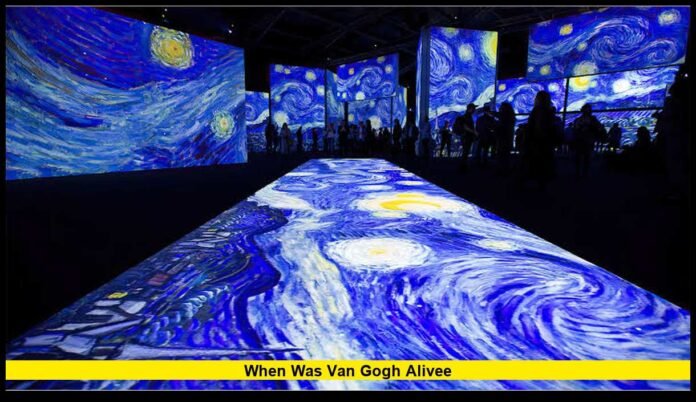

The question when was Van Gogh alive introduces the remarkable story of Vincent van Gogh, a Dutch painter whose artistic achievements transformed the world of modern art. Born on March 30, 1853, and dying on July 29, 1890, Van Gogh lived for only 37 years. Despite his relatively short life and a painting career that lasted approximately a decade, he produced an extraordinary collection of artworks that continue to attract worldwide attention.
Van Gogh lived during the 19th century, a period of significant cultural, technological, social, and artistic change. His experiences across the Netherlands, Belgium, and France influenced his creative development, while his paintings reflected his fascination with landscapes, ordinary people, nature, color, and emotional expression. Today, his name is associated with some of the most recognizable paintings in art history, including The Starry Night, Sunflowers, and The Bedroom.
His life was not defined by artistic success alone. Van Gogh experienced financial difficulties, personal disappointment, emotional struggles, and periods of isolation. Yet he continued creating art with extraordinary determination. His story remains compelling because it combines artistic innovation, personal resilience, and a legacy that grew dramatically after his death.
Key Points Summary
╔════════════════════════════════════════════════════════════════════╗
║ – Vincent van Gogh was born on March 30, 1853, in the Netherlands.║
║ – He died on July 29, 1890, in France, at the age of 37. ║
║ – His serious artistic career began around 1880 and lasted about ║
║ 10 years. ║
║ – He created approximately 900 paintings and more than 1,000 ║
║ drawings and other works on paper. ║
║ – His paintings became much more widely recognized after his death.║
║ – His expressive brushwork and bold colors helped influence modern ║
║ art and continue to inspire artists worldwide. ║
╚════════════════════════════════════════════════════════════════════╝
Vincent van Gogh’s Birth and Early Life
Vincent van Gogh was born on March 30, 1853, in Groot-Zundert, a village in the southern Netherlands. His father, Theodorus van Gogh, was a Protestant minister, while his mother, Anna Cornelia Carbentus, came from a family with artistic interests. Vincent grew up in a household that valued religion, education, and responsibility.
His childhood was relatively quiet, although his personality and interests developed in ways that would later distinguish him from many of his contemporaries. He enjoyed observing the natural world, walking through countryside environments, and paying attention to the people and landscapes around him.
Van Gogh did not initially imagine himself becoming a professional painter. His early career involved several occupations and experiences that exposed him to different aspects of European life. These years were important because they helped shape his understanding of people, society, and the world that he would eventually represent through art.
His family also played an important role in his life. His younger brother Theo became particularly close to him and remained one of his strongest supporters. Their relationship would become central to Vincent’s artistic journey, especially during years when he struggled financially and emotionally.
Van Gogh’s Early Career Before Painting
Before committing himself to painting, Van Gogh explored several different professions. At a young age, he began working for an art dealership, where he gained exposure to paintings, artists, buyers, and the business side of the art world.
He worked in locations including The Hague, London, and Paris. His employment introduced him to different artistic environments and gave him an opportunity to develop an understanding of the European art market.
However, his career in the art trade did not continue successfully. He eventually left the profession and attempted other paths, including teaching and religious work.
Van Gogh became interested in helping people and developing a meaningful connection with communities. At one point, he worked among poor mining communities in Belgium, where he became deeply concerned about the living and working conditions of ordinary people.
These experiences influenced his artistic outlook. Rather than focusing exclusively on wealthy individuals or idealized subjects, Van Gogh became interested in portraying workers, farmers, laborers, and people living difficult lives.
His early professional experiences also taught him that his interests were not easily satisfied by conventional career paths. Over time, he increasingly turned toward drawing and painting as a means of expressing his observations and personal beliefs.
When Van Gogh Began His Artistic Career
Van Gogh decided to pursue art seriously around 1880, when he was approximately 27 years old. Unlike artists who began formal training at a very young age, he entered the profession later and had to work intensively to develop his technical abilities.
He studied drawing, practiced different techniques, and learned how to represent people, buildings, landscapes, and everyday objects. His early artistic development involved considerable experimentation. He was particularly interested in creating realistic depictions of rural life and the experiences of people who worked hard to earn a living.
His first paintings often used dark, muted colors, including browns, grays, and earthy shades. These tones reflected the subjects he was painting, such as farmers, cottages, and laborers. Van Gogh believed that art should communicate something meaningful about human life rather than simply create attractive images.
One of his most important early works was The Potato Eaters, completed in 1885. The painting depicts a peasant family sitting around a table and eating potatoes. The figures appear tired and hardworking, while the dim lighting creates a serious atmosphere.
The painting demonstrates Van Gogh’s interest in portraying the realities of rural existence. It also shows how his artistic approach was developing before he became known for bright colors and dramatic brushstrokes.
The Netherlands and the Development of His Style
During his early years as an artist, Van Gogh spent considerable time in the Netherlands. He painted rural landscapes, agricultural workers, homes, gardens, and scenes from everyday life.
The Dutch environment provided him with subjects that suited his interests. He often focused on people who lived outside major cities, particularly individuals whose work involved farming, manual labor, or other demanding occupations.
His early paintings were influenced by artists who emphasized realistic subjects and strong compositions. He worked to improve his understanding of perspective, proportions, lighting, and the human figure.
Although his early works may appear very different from the colorful paintings that later made him famous, they were an important foundation for his development. They allowed him to experiment with composition and learn how to communicate emotion through visual details.
His interest in working people remained a significant part of his artistic identity throughout his career, even as his painting style changed dramatically.
Paris Changed Van Gogh’s Approach to Color
In 1886, Van Gogh moved to Paris, where he encountered a more dynamic artistic community. The city was a center of artistic experimentation, and painters were exploring new approaches to light, color, composition, and subject matter.
During his time in Paris, Van Gogh became familiar with the work of Impressionist artists and other painters who were challenging traditional artistic conventions. Their paintings encouraged him to experiment with brighter colors and more expressive techniques.
His palette gradually became more colorful. Instead of relying mainly on dark shades, he began incorporating stronger blues, yellows, reds, and greens. He also experimented with shorter brushstrokes and different ways of applying paint to create movement and texture.
Paris was an important turning point because it helped Van Gogh move away from the darker appearance of his early work. His paintings increasingly reflected his personal interpretation of the world rather than simply attempting to reproduce reality.
The artistic influences he encountered in Paris continued to shape his work after he left the city.
Arles and the Period of His Most Recognizable Paintings
In February 1888, Van Gogh moved to Arles in southern France. The region’s sunlight, landscape, and vibrant atmosphere inspired him to develop an even more distinctive artistic style.
Arles offered a different environment from Paris. Van Gogh became interested in the countryside, local buildings, gardens, flowers, and the changing colors of the landscape. He hoped to establish an artistic community where painters could live and work together.
During this period, he created some of his most recognizable paintings. His Sunflowers series became particularly famous for its vivid yellow tones and expressive treatment of flowers. The paintings demonstrated his ability to transform a familiar subject into something visually powerful.
He also painted scenes of his home, including The Bedroom, which features simple furniture, strong colors, and an unusual perspective. The painting provides a glimpse into his personal surroundings while demonstrating his interest in using color and composition to create a sense of emotional atmosphere.
Van Gogh’s time in Arles was artistically productive, but it was also marked by personal difficulties. His relationships with others could become strained, and his health was affected by periods of emotional distress.
Despite these challenges, he continued to work at an extraordinary pace, creating paintings and drawings that would later become central to his reputation.
Saint-Rémy and The Starry Night
In 1889, Van Gogh spent time at Saint-Paul-de-Mausole in Saint-Rémy-de-Provence. During this period, he continued painting while dealing with serious personal and health difficulties.
The surrounding landscape provided him with new subjects. He painted gardens, trees, fields, mountain views, and scenes inspired by the environment around the institution where he was staying.
One of his most celebrated works, The Starry Night, was painted in 1889. The artwork features a dramatic night sky filled with swirling forms, glowing stars, and a luminous moon above a village.
The painting is widely admired for its unusual composition, powerful movement, and emotional atmosphere. Its sweeping brushstrokes and intense colors create a visual experience that differs significantly from traditional landscape painting.
The work has become one of the most recognizable paintings in the world and is frequently associated with Van Gogh’s artistic legacy.
His period in Saint-Rémy demonstrated that personal difficulties did not prevent him from continuing to explore new artistic ideas. He remained deeply committed to painting and produced numerous works during his stay.
Van Gogh’s Final Months in Auvers-sur-Oise
In May 1890, Van Gogh moved to Auvers-sur-Oise, a village near Paris. The area offered countryside scenery, gardens, fields, and buildings that became subjects for his paintings. He was under the care of physician Paul Gachet, who was interested in art and had connections with artists.
Van Gogh continued painting frequently during his final weeks. His works from Auvers often feature expansive landscapes, village streets, houses, gardens, and fields. Many display powerful brushwork and a strong sense of movement.
Although his artistic output remained impressive, his personal circumstances continued to be difficult. He experienced emotional struggles and uncertainty about his future.
Van Gogh died on July 29, 1890, at the age of 37. His death marked the end of a short but remarkably productive artistic career. He left behind a large collection of paintings, drawings, and letters that would become essential to understanding his work and life.
How Many Years Was Van Gogh Alive?
The answer to when was Van Gogh alive can be understood through his birth and death dates: he lived from 1853 to 1890, a period covering the second half of the 19th century.
He was alive for 37 years, although the exact calculation between his birth and death dates is slightly more than 37 years and four months. His artistic career was considerably shorter, beginning around 1880 and ending with his death in 1890.
This relatively short period makes his achievements particularly remarkable. In approximately 10 years, he developed a distinctive style, produced hundreds of paintings, and explored a wide range of subjects and artistic techniques.
His career also demonstrates how quickly an artist’s creative direction can evolve. His early paintings were often dark and realistic, while his later works became brighter, more expressive, and more experimental.
The Most Famous Paintings by Vincent van Gogh
【美術解説】後期印象派「印象派と前衛の架け橋となった芸術運動」 – Artpedia アートペディア/ 近現代美術の百科事典・データベース
4
Van Gogh’s paintings are recognized for their distinctive style, but each work reflects a different period of his life and artistic development.
The Starry Night: Painted in 1889, this artwork features a swirling sky, glowing stars, a moon, and a village landscape. It is widely regarded as one of his most important paintings.
The Potato Eaters: Completed in 1885, this early work depicts a peasant family sharing a meal. It reflects his interest in rural communities and the difficult lives of working people.
Sunflowers: Van Gogh’s sunflower paintings are celebrated for their strong yellow tones, expressive brushwork, and simple yet powerful compositions.
Irises: Created during his stay at Saint-Rémy, this painting demonstrates his ability to use color and natural forms to create a striking visual effect.
Wheatfield with Crows: This late painting is known for its dramatic landscape, intense colors, and expressive atmosphere. It is frequently discussed in connection with the final period of his artistic career.
These paintings continue to attract museum visitors, collectors, researchers, and art enthusiasts because they reveal different aspects of Van Gogh’s creative vision.
Why Van Gogh Was Not Famous During His Lifetime
Van Gogh’s modern reputation is difficult to compare with the level of recognition he received while alive. He experienced financial hardship and struggled to sell his paintings consistently.
His artistic style was different from the traditional approaches that many audiences expected. His use of strong colors, visible brushstrokes, expressive compositions, and emotional intensity did not always appeal to buyers or critics during his lifetime.
He depended heavily on financial and emotional support from his brother Theo. Their correspondence reveals Vincent’s concerns about money, artistic progress, personal relationships, and his desire to continue painting.
Although Van Gogh began receiving some attention toward the end of his life, his international reputation developed mainly after his death. His paintings became increasingly appreciated as artists, critics, collectors, and exhibitions introduced his work to wider audiences.
The growth of his reputation helped establish him as a major figure in modern art, and his influence extended to later artistic movements that emphasized expressive color and personal interpretation.
How Many Paintings and Drawings Did Van Gogh Create?
Van Gogh produced an impressive number of artworks during his relatively short career. Estimates generally place his output at approximately 900 paintings and more than 1,000 drawings and works on paper.
His productivity was supported by his dedication to studying artistic techniques and his willingness to work consistently. He frequently painted landscapes, portraits, flowers, buildings, and everyday scenes.
Rather than limiting himself to one subject, he explored many forms of artistic expression. His work included portraits of individuals, still-life paintings, countryside views, and scenes inspired by his living environments.
His paintings also reveal how his techniques evolved over time. He experimented with different colors, brushstrokes, compositions, and textures, gradually developing a visual style that became unmistakably his own.
The Importance of Theo van Gogh in Vincent’s Life
Theo van Gogh was Vincent’s younger brother and one of the most important people in his life. Their relationship was built on affection, communication, and mutual support.
Theo worked in the art business and provided Vincent with financial assistance during many years of his artistic career. This support helped Vincent afford supplies, accommodation, and the time needed to continue painting.
The brothers exchanged numerous letters, which offer a detailed record of Vincent’s experiences and thoughts. These letters are important historical documents because they reveal his artistic ambitions, concerns, daily activities, and relationships.
Theo’s support was particularly significant because Vincent struggled to achieve financial independence through his paintings. Their relationship helped him continue working despite repeated difficulties.
Van Gogh’s Influence on Modern Art
Van Gogh’s artistic legacy extends far beyond the paintings he created during his lifetime. His expressive approach to color, movement, and brushwork helped influence the development of modern art.
He demonstrated that paintings could communicate emotion through more than realistic representation. Color could express feelings, brushstrokes could create movement, and a landscape could reflect an artist’s personal interpretation of the world.
His work influenced later painters who explored expressive techniques and bold visual styles. His artistic approach became particularly important to discussions of modern painting and the development of movements that emphasized emotional and individual expression.
Today, Van Gogh’s paintings are displayed in major museums and art institutions, where millions of people encounter his work. His life story also continues to inspire books, exhibitions, films, educational programs, and cultural events.
Frequently Asked Questions About Vincent van Gogh
What were Vincent van Gogh’s birth and death dates?
Vincent van Gogh was born on March 30, 1853, and died on July 29, 1890.
How old was Van Gogh when he died?
He was 37 years old when he died in France.
When did Van Gogh start painting professionally?
Van Gogh began seriously pursuing art around 1880, when he was approximately 27 years old.
What was Van Gogh’s most famous painting?
The Starry Night is widely considered one of his most recognizable and celebrated paintings.
Did Van Gogh become famous while he was alive?
He received limited recognition during his lifetime, but his international reputation grew substantially after his death.
Where did Van Gogh live during his life?
He lived in several locations across the Netherlands, Belgium, and France, including Paris, Arles, Saint-Rémy-de-Provence, and Auvers-sur-Oise.
A Life That Continues to Inspire
Vincent van Gogh’s life was brief, but his artistic achievements continue to shape the way people understand creativity and emotional expression. From his early paintings of rural workers to his colorful landscapes and dramatic skies, he developed a style that remains instantly recognizable.
His journey from an uncertain young man exploring different professions to an artist whose paintings are celebrated worldwide demonstrates the power of dedication and imagination. Although he faced financial difficulties and personal challenges, he continued creating work that reflected his unique perspective.
Van Gogh’s paintings remain popular because they connect artistic beauty with human emotion. His use of color, movement, and texture continues to inspire new generations of painters, students, and art enthusiasts.
Which Vincent van Gogh painting do you admire most? Share your favorite artwork or thoughts about his remarkable life in the comments, and stay tuned for more stories about the world’s most influential artists.