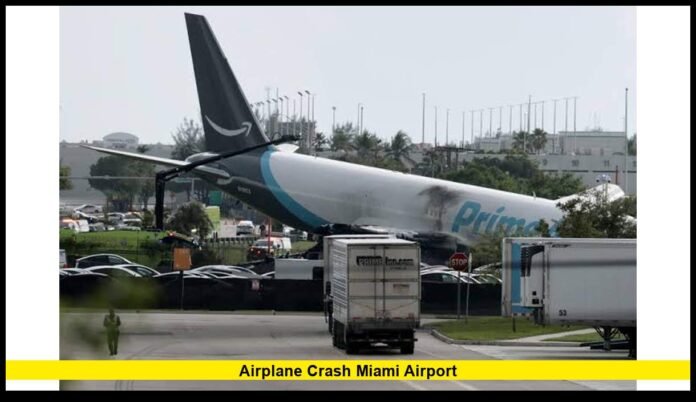

The Airplane crash Miami Airport incident has attracted nationwide attention after a UPS cargo aircraft and a Copa Airlines passenger jet collided while moving along the taxiways at Miami International Airport. The incident occurred on Saturday night, November 14, 2026, leaving two people with minor injuries and raising new concerns about aircraft movement and ground safety at one of the busiest airports in the United States.
The collision involved a UPS Boeing 767 cargo aircraft and a Copa Airlines Boeing 737 passenger plane. Both aircraft were taxiing when their structures made contact near an intersection of two taxiways. Emergency personnel responded, assessed the injured passengers, and confirmed that hospital transportation was not necessary.
The Federal Aviation Administration (FAA) confirmed the incident and began investigating the circumstances. The National Transportation Safety Board (NTSB) is also expected to examine the available evidence. The collision has attracted additional attention because Miami International Airport experienced another serious cargo aircraft accident in September 2026, when a Boeing 767 overran a runway after landing, killing five people on the ground.
Miami International Airport Plane Collision: What Happened on November 14?
The latest incident happened at approximately 9:15 p.m. local time on November 14 at Miami International Airport in Florida.
According to the FAA’s initial account, a Copa Airlines Boeing 737 was taxiing toward its gate after arriving from Panama City, Panama. At the same time, a UPS Boeing 767 was moving through the airport as it prepared for a scheduled departure to Bogotá, Colombia.
The aircraft approached an intersection involving two taxiways. During the movement, the wingtip of the Copa Airlines aircraft struck the nose of the UPS cargo plane.
The contact caused visible damage to the aircraft involved and prompted an emergency response at the airport.
This was a ground collision rather than an accident involving an aircraft falling from the sky or crashing during takeoff or landing. Both airplanes were moving on the airport surface when the incident occurred.
Miami-Dade Fire Rescue personnel responded to assess the situation. Airport officials arranged for aircraft to use alternative taxiways while the affected area was addressed.
The initial response indicated that the incident would not significantly interrupt airport operations.
UPS Boeing 767 and Copa Airlines Boeing 737 Were Involved
The two aircraft involved serve different purposes in commercial aviation.
The UPS Boeing 767 is a wide-body cargo aircraft designed to transport freight over domestic and international routes. UPS operates Boeing 767 aircraft as part of its extensive air logistics network, connecting major distribution centers and international destinations.
The Copa Airlines Boeing 737 is a passenger aircraft used for regional and international services. Copa operates an extensive network connecting Panama City with destinations throughout the Americas.
The aircraft were performing different operations when the collision happened.
The Copa flight had arrived from Panama City and was moving toward the terminal. The UPS aircraft was preparing for a departure to Bogotá.
The difference between their operations is important because the collision occurred during a busy period of airport ground movement. Arriving aircraft must travel from the runway to their assigned gates, while departing aircraft must move from their parking positions toward designated departure routes.
Both activities require coordination between flight crews and air traffic controllers.
The FAA’s preliminary description identified the contact between the Copa aircraft’s wingtip and the UPS aircraft’s nose. Investigators will need to examine the aircraft positions and available operational records to establish the complete sequence of events.
Two People Treated for Minor Injuries After the Collision
The reported injuries were limited, although emergency personnel still assessed people following the incident.
Miami-Dade Fire Rescue responded after receiving information about the aircraft collision. Two people were treated at the scene for minor injuries. Neither required transportation to a hospital.
Copa Airlines reported that its Boeing 737-800 was carrying 166 passengers and six crew members.
The airline said the passengers and crew were in good condition, apart from the two people who received medical attention.
UPS separately confirmed that its aircraft was involved in a ground incident and stated that its crew members were safe.
The reported outcome was significantly less severe than the September cargo aircraft accident at the same airport.
There were no officially reported fatalities associated with the November taxiway collision.
The airlines also faced the responsibility of assisting passengers and coordinating the next steps after the aircraft were involved in the incident. Passengers may have needed alternative travel arrangements while the affected aircraft underwent inspection.
Air Traffic Control Instructions Become an Important Part of the Investigation
Air traffic control communications are among the important elements that investigators may examine.
The FAA stated that controllers had instructed the UPS crew to give way to the Copa Airlines aircraft.
This detail has drawn attention because aircraft moving through busy airports must follow specific taxi instructions and maintain appropriate separation from other traffic.
Air traffic control audio also became part of the public discussion following the collision. A pilot reported that another aircraft had made contact with the plane.
The available information indicates that investigators will need to determine how both aircraft approached the intersection and what happened immediately before impact.
Several questions remain relevant to the investigation:
- What taxi instructions did the two flight crews receive?
- Where were the aircraft positioned before making contact?
- Did both aircraft follow their assigned taxi routes?
- What information was available to the controllers at the time?
- Were any airport ground movement procedures relevant to the collision?
These are investigative considerations, not established findings about responsibility.
The FAA and NTSB must review the available evidence before reaching conclusions. The initial announcement does not establish whether pilot actions, communication, airport procedures, or another factor contributed to the incident.
UPS and Copa Airlines Respond to the Miami Airport Incident
Both airlines have acknowledged the collision involving their aircraft.
UPS confirmed that one of its planes experienced a ground incident at Miami International Airport. The company stated that its crew was safe and that it would cooperate with the authorities investigating what happened.
The company also emphasized the importance of employee and public safety.
Copa Airlines confirmed that its aircraft was involved in the incident while taxiing after arriving in Miami.
The airline reported that the aircraft had been carrying passengers and crew members who were generally in good condition. It also addressed the minor injuries reported at the scene.
For both companies, the immediate priorities included passenger safety, crew welfare, cooperation with investigators, and an assessment of the aircraft involved.
Aircraft that experience physical contact with another plane generally require appropriate technical inspections before returning to normal operations. The extent of damage and the required maintenance work depend on the findings of those inspections.
No final public determination about the full extent of the aircraft damage or the cause of the collision had been established in the initial reports.
September 2026 Miami Airport Cargo Plane Accident Raised Earlier Safety Concerns
The November collision has received additional attention because of a separate accident that occurred at Miami International Airport on September 6, 2026.
That earlier event involved a 21 Air Boeing 767 cargo aircraft operating Flight 7598 on behalf of Amazon.com Services LLC.
The aircraft had departed from Luis Muñoz Marín International Airport in San Juan, Puerto Rico, and was arriving at Miami International Airport.
After landing on Runway 30, the aircraft continued beyond the runway’s end rather than stopping within the available paved area.
It subsequently struck two ground passenger vehicles, resulting in a devastating loss of life.
According to the NTSB’s investigative information:
- Five people on the ground died.
- Three people on the ground sustained serious injuries.
- The two pilots aboard the cargo aircraft sustained minor injuries.
- The aircraft suffered substantial damage.
- A fire developed around the aircraft’s right wing after the accident.
The September accident was a runway overrun, not a taxiway collision. The two events involved different aircraft operators and different circumstances.
Nevertheless, the earlier disaster had already placed Miami airport operations and aviation safety under significant public scrutiny.
NTSB Findings Provide More Information About the September Runway Overrun
The National Transportation Safety Board recovered the cockpit voice recorder and flight data recorder from the September aircraft.
These devices provide investigators with important information about flight crew communications and aircraft performance.
The preliminary information released by the NTSB included details about the aircraft’s approach, touchdown, braking activity, and movements after landing.
The aircraft crossed the runway threshold at a recorded groundspeed of approximately 177 knots. It touched down approximately 3,750 feet beyond the runway threshold at about 160 knots.
The airplane continued along the runway and eventually passed its departure end.
Investigators also documented the aircraft’s subsequent movement beyond the runway, including impacts involving ground vehicles and airport infrastructure.
The cockpit voice recorder contained more than two hours of recorded audio, while the flight data recorder contained approximately 54 hours of information.
The NTSB’s investigative work includes reviewing these records alongside physical evidence, airport information, and other available material.
The preliminary findings provide useful details about the accident sequence, but they should not be treated as a final explanation of why the runway overrun occurred.
The September investigation remains separate from the November collision investigation.
Why Miami International Airport Is Important to U.S. Aviation
Miami International Airport is a major transportation hub serving South Florida and connecting the United States with destinations across Latin America and the Caribbean.
The airport handles extensive passenger and cargo traffic. Its location makes it particularly important for international travel, commercial freight, and connections between North and South America.
Major airlines operate scheduled passenger services through Miami, while cargo companies use the airport to move goods across domestic and international routes.
This combination creates a complex operating environment.
At a large airport, several aircraft may be moving simultaneously between runways, terminals, cargo facilities, and maintenance areas.
Taxiways play a central role in these movements. They provide the designated routes that aircraft use after landing and before departure.
Even when aircraft travel at comparatively low speeds, a collision on a taxiway can cause structural damage and create risks for passengers, flight crews, and airport employees.
The November incident demonstrates why ground movement procedures remain an important part of commercial aviation safety.
How Aircraft Collisions on Airport Taxiways Can Happen
Airport taxiways are designed to provide organized movement for aircraft, but their operation requires constant coordination.
Pilots must follow assigned routes and instructions while maintaining awareness of nearby aircraft. Controllers coordinate traffic and issue clearances to help aircraft move safely around the airport.
Several operational elements can be relevant when a ground collision occurs.
Taxiway intersections: Aircraft may approach intersections from different directions. Proper coordination and separation are essential to prevent conflicting movements.
Communication between pilots and controllers: Clear instructions and accurate readbacks help ensure that flight crews understand their assigned routes and responsibilities.
Aircraft visibility: Pilots must maintain awareness of nearby traffic, although the size and positioning of aircraft can create challenges during ground operations.
Airport traffic management: Busy airports must coordinate arriving and departing aircraft while managing available taxiways and ground routes.
Operational procedures: Airlines and airport authorities use established safety procedures to reduce the risk of aircraft coming into contact with other vehicles or aircraft.
Investigators examine these factors according to the specific circumstances of each incident.
It would be premature to identify any one of these elements as the cause of the November collision without an official investigative determination.
Will the November Collision Affect Miami Airport Flights?
The immediate airport response indicated that flight operations could continue following the collision.
Miami airport officials said aircraft were being directed to alternative taxiways to avoid the affected area.
This approach helped prevent the incident from automatically becoming a complete airport shutdown.
However, the operational impact of an aircraft collision can depend on the location of the incident, the extent of the damage, and the time required to inspect and move the affected aircraft.
Passengers should distinguish between a localized ground incident and a broader disruption to airport operations.
Travelers departing from or arriving at Miami International Airport should check their flight status through their airline before heading to the airport.
Passengers with international connections should also allow sufficient time for possible gate changes or schedule adjustments.
The November incident occurred during a period when airlines were already dealing with travel disruptions following a nationwide FAA ground stop on November 13.
That separate disruption added to the challenges facing the U.S. aviation system during the same weekend.
However, the taxiway collision itself was not reported as the cause of a nationwide aviation disruption.
FAA and NTSB Investigation: What Happens Next?
The FAA confirmed that it would investigate the November collision. The NTSB’s involvement will help establish the sequence of events and identify any relevant safety issues.
Investigators may examine several categories of evidence.
Air traffic control recordings: These can help establish the instructions issued to the flight crews and the communications exchanged before and after the collision.
Aircraft data: Available onboard information may help clarify aircraft movements and other relevant operational details.
Airport surveillance footage: Video recordings may help investigators reconstruct the positions and movements of both aircraft.
Physical aircraft inspections: Damage to the Copa and UPS aircraft may provide information about the direction and nature of the impact.
Operational records: Investigators may review relevant flight crew, airline, and airport information.
The investigation may also consider whether changes to airport ground movement procedures or other safety measures are appropriate.
At present, the public information does not establish a final cause or assign responsibility to either airline.
The FAA and NTSB will need to complete their examination before definitive conclusions can be drawn.
Latest Developments in the Miami Airport Aviation Incidents
As of November 15, 2026, the November 14 UPS and Copa Airlines collision remains the latest major aircraft ground incident drawing attention at Miami International Airport.
The confirmed developments include the following:
- A UPS Boeing 767 and a Copa Airlines Boeing 737 made contact while taxiing.
- The collision occurred at approximately 9:15 p.m. local time.
- The Copa aircraft’s wingtip struck the nose of the UPS aircraft, according to the FAA.
- Two people received treatment for minor injuries.
- Copa reported that its aircraft was carrying 166 passengers and six crew members.
- UPS confirmed that its crew was safe.
- Airport officials directed aircraft to alternative taxiways.
- The FAA confirmed an investigation.
- The final cause of the collision has not been officially established.
The September 6 runway overrun investigation is another important part of the airport’s recent aviation safety record. The NTSB has released preliminary investigative information, but its investigation remains ongoing.
Further updates may clarify the November collision’s circumstances and provide information about the inspections and investigative findings.
Final Thoughts
The November 14 collision between a UPS Boeing 767 and a Copa Airlines Boeing 737 has brought renewed attention to aircraft ground safety at Miami International Airport.
Although the incident resulted in two minor injuries rather than fatalities, contact between two commercial aircraft is a serious operational event that requires careful investigation.
The FAA’s initial account identified the contact between the Copa aircraft’s wingtip and the UPS plane’s nose. Investigators will examine the aircraft movements, air traffic control instructions, and other available evidence to establish what happened.
The incident also comes after the tragic September runway overrun involving a 21 Air cargo aircraft, which killed five people on the ground. However, the two events must remain clearly distinguished because they involved different accident circumstances.
For passengers, the immediate reported outcome of the November collision was relatively reassuring. The injured individuals did not require hospital transportation, and airport officials initially indicated that operations could continue using alternative taxiways.
The investigation will be important in determining whether additional safety measures are needed to prevent similar incidents at busy airports.
Stay connected for the latest verified Miami airport aviation news, and share your thoughts about the importance of aircraft ground safety in the comments.