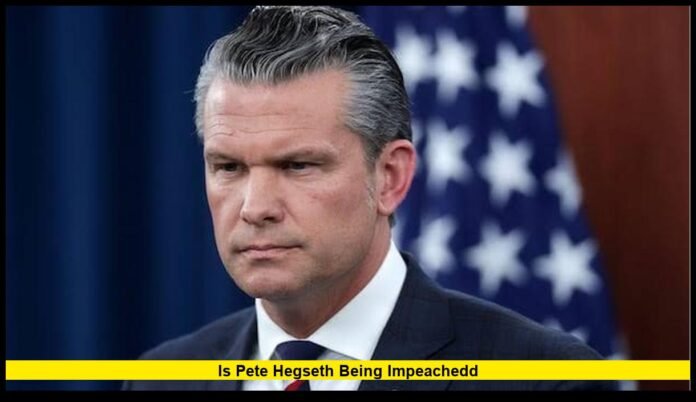

The question is pete hegseth being impeached has taken center stage in Washington after the House of Representatives blocked an effort to impeach Defense Secretary Pete Hegseth on November 10, 2026. The resolution, introduced by Republican Representative Thomas Massie of Kentucky, accused Hegseth of misconduct involving the Iran war, military operations, civilian protection, and the use of executive power. The House voted 211–204 to refer the measure to the Judiciary Committee, effectively ending the immediate effort to bring the charges to a full impeachment vote. Although the decision gave Hegseth a political reprieve, it left the underlying disputes over his leadership and military decisions unresolved.
House Vote Stops the Immediate Impeachment Effort
The House vote on November 10 marked a critical moment in the effort to hold Hegseth accountable for decisions made during his tenure as defense secretary. Instead of considering whether to approve the proposed articles of impeachment, lawmakers supported a motion to refer the resolution to the House Judiciary Committee.
The motion passed by 211 votes to 204. Massie was the only Republican to vote against the procedural move, joining Democrats who opposed sending the resolution to committee.
The result effectively shelved the impeachment proposal for the remainder of the current congressional session. It prevented the resolution from advancing toward a formal House impeachment vote and spared Hegseth an immediate constitutional confrontation.
The decision did not amount to a Senate acquittal. The House had not approved articles of impeachment, so the process never reached the Senate stage.
Republican lawmakers argued that the allegations did not justify impeachment. They maintained that disagreements over military strategy, national security decisions, and the administration’s interpretation of presidential authority should not automatically trigger the removal process.
For Hegseth, the vote represented a significant political victory. It also demonstrated that Republican lawmakers were unwilling to support the impeachment effort despite concerns surrounding the administration’s military operations.
Who Introduced the Impeachment Resolution Against Pete Hegseth?
Representative Thomas Massie introduced the resolution outlining eight articles of impeachment against Hegseth. Massie, a Republican from Kentucky, has frequently challenged the Trump administration on issues involving government spending, executive authority, and congressional oversight.
His decision to pursue impeachment placed him at odds with much of his party’s congressional leadership.
Massie argued that the defense secretary’s conduct raised questions extending beyond ordinary political disagreements. His resolution focused on the legal authority for military operations, the treatment of civilians during conflict, and the administration’s handling of other national security matters.
The proposal also challenged the Pentagon’s response to a sitting senator who publicly addressed the military’s obligation to refuse unlawful orders.
Massie wanted lawmakers to consider whether Hegseth’s decisions amounted to serious misconduct warranting impeachment. He presented the measure as an effort to defend congressional authority and enforce constitutional limits on executive power.
Republican leaders rejected that approach. They argued that the resolution would turn national security disagreements into a partisan impeachment battle.
The House’s November 10 vote settled the immediate procedural question in the leadership’s favor. It did not establish whether every allegation in Massie’s resolution was correct or incorrect.
Why Is Hegseth Facing Impeachment Allegations?
The allegations against Hegseth concern several military and constitutional disputes. Massie’s resolution argued that the defense secretary had exceeded his authority and failed to respect legal restrictions governing military operations.
The most prominent issue was the U.S. military campaign against Iran. The resolution challenged the administration’s authority to initiate and continue hostilities without the congressional approval Massie believed was necessary.
Other allegations involved civilian casualties, military strikes against suspected drug-trafficking vessels, operations connected to Venezuela, and the Pentagon’s response to Senator Mark Kelly.
The resolution contained eight articles, each addressing alleged misconduct or violations of constitutional and legal obligations.
The principal areas of concern included:
- War powers and congressional authority: Whether the administration conducted military operations without the authorization required by law.
- The Iran conflict: Whether the continuation of hostilities complied with the War Powers Resolution and constitutional limits.
- Civilian protection: Whether military operations followed applicable safeguards and legal obligations intended to reduce civilian harm.
- Strikes against suspected drug-trafficking vessels: Whether certain lethal operations complied with domestic and international law.
- Venezuela operations: Whether the military operation that resulted in the capture of President Nicolás Maduro had an adequate legal basis.
- Senator Mark Kelly: Whether the Pentagon’s actions against Kelly improperly infringed on protected speech.
- Other military campaigns: Whether operations in Yemen and other locations exceeded lawful executive authority.
- Abuse of office: Whether the combined conduct described in the resolution justified impeachment under the Constitution.
These accusations remain allegations advanced in a political resolution. They are not equivalent to criminal convictions or judicial findings.
Hegseth has rejected the charges and defended the administration’s decisions. The House’s procedural action did not resolve the legal disagreements underlying the allegations.
The Iran War Is Central to the Dispute
The administration’s military campaign against Iran was the most prominent issue in Massie’s impeachment effort.
The dispute concerns the division of war powers between Congress and the president. The Constitution gives Congress the authority to declare war, while the president serves as commander in chief of the armed forces.
Federal law also establishes requirements governing certain military engagements undertaken without congressional authorization. The War Powers Resolution of 1973 addresses presidential reporting obligations and restrictions associated with introducing U.S. forces into hostilities.
Massie argued that the administration’s actions against Iran violated these limits. His resolution questioned the legal justification for initiating military operations and continuing the campaign without the congressional authorization he considered necessary.
The administration defended its authority to direct military operations. Its position was that the president possesses constitutional powers to protect national security and that the allegations against Hegseth did not meet the standard for impeachment.
The disagreement reflects a broader constitutional debate over how far presidential military authority extends when Congress has not formally declared war.
The defense secretary’s role is especially significant because he oversees the department responsible for carrying out military policy. Critics argue that the secretary must ensure that military operations comply with applicable laws and congressional restrictions.
Supporters counter that military leaders must be able to execute lawful orders from the commander in chief without facing impeachment over every disputed strategic decision.
The House vote did not resolve this constitutional disagreement. It prevented the specific impeachment resolution from moving forward during the current session.
Civilian Casualties and the Laws of War
The resolution also raised concerns about civilian protection during military operations.
Military forces must comply with applicable laws of armed conflict, including rules governing the distinction between military targets and civilians. These obligations are separate from the political question of whether Congress has authorized a particular campaign.
Massie argued that Hegseth’s leadership and the Pentagon’s conduct warranted scrutiny over civilian harm and compliance with legal safeguards.
The allegations drew attention to the responsibility of senior defense officials to oversee military operations and ensure that applicable legal requirements receive appropriate consideration.
However, civilian casualties alone do not automatically establish that a military operation was unlawful. Assessing a particular incident requires examining its circumstances, the intended target, the information available to decision-makers, and the precautions taken.
Likewise, allegations of unlawful conduct require evidence and appropriate legal analysis. They should not be treated as established findings simply because they appear in impeachment articles.
Hegseth defended the military’s operations and rejected the suggestion that the allegations justified his removal.
The House did not conduct a full impeachment trial or reach a formal determination on these claims before referring the resolution to committee.
Disputes Over Military Strikes and Venezuela
Massie’s resolution extended beyond the Iran conflict.
It challenged the legality of strikes against suspected drug-trafficking vessels in the Caribbean and the eastern Pacific. The allegations raised questions about the circumstances under which the government may use lethal force against individuals suspected of criminal activity.
The legal analysis of such operations can depend on several factors, including the location of the incident, the status of the individuals targeted, the threat involved, and the legal authority claimed by the administration.
The resolution also addressed the U.S. operation that resulted in the capture of Venezuelan President Nicolás Maduro.
Massie questioned whether the administration had adequate legal authority for the operation and whether it respected Congress’s constitutional responsibilities.
The administration defended its military actions as necessary for national security and law enforcement objectives. Hegseth likewise maintained that he had carried out lawful operations under presidential direction.
The impeachment resolution placed these disputes within a broader argument about the limits of executive power. Massie’s position was that the defense secretary should face accountability if military operations violated constitutional or statutory restrictions.
The House’s vote did not determine the legality of the strikes or the Venezuela operation. It addressed whether the impeachment proposal would advance, not whether the underlying actions violated the law.
Why Senator Mark Kelly Appeared in the Impeachment Charges
Another component of the resolution concerned the Pentagon’s response to Senator Mark Kelly, a Democrat from Arizona and retired Navy captain.
Kelly participated in a video addressing members of the military about their obligation to follow lawful orders and refuse unlawful ones. The video became the subject of a dispute involving the administration and the Pentagon.
Massie argued that the department’s response raised concerns about the treatment of a sitting senator and the protection of speech.
The dispute touches on two important principles: the military’s obligation to follow lawful orders and the constitutional protections afforded to elected officials and other Americans.
Military personnel must follow lawful orders, but they are not required to carry out orders that are unlawful. Determining whether a specific order meets that standard depends on its circumstances and applicable law.
The impeachment resolution questioned whether the Pentagon’s actions against Kelly improperly interfered with protected speech or congressional responsibilities.
Hegseth and the administration rejected the broader accusations against the defense secretary. The House did not reach a final impeachment judgment on this issue.
How Did Trump and Hegseth Respond to the House Action?
President Donald Trump strongly defended Hegseth and welcomed the House’s decision to block the impeachment effort.
The administration characterized Massie’s proposal as politically motivated and argued that it would undermine national security by turning disputes over military operations into an impeachment campaign.
Vice President JD Vance also rejected the allegations, arguing that disagreements over administration policy did not amount to impeachable crimes.
Hegseth used a Pentagon news conference on November 10 to challenge the resolution. He described the effort as a political spectacle and maintained that his decisions were lawful.
He also defended the military operations conducted under his leadership and criticized lawmakers who questioned the legality of those actions.
The administration’s position was that Hegseth had executed presidential policy and that the resolution sought to punish him for controversial decisions rather than established impeachable misconduct.
Democrats and Massie offered a different interpretation. They argued that congressional oversight must apply even when the disputed decisions involve national security or military operations.
The House vote showed that Republican lawmakers were unwilling to advance the resolution at that time. It did not eliminate the possibility of additional investigations or political disputes involving Hegseth.
Could Hegseth Face Another Impeachment Attempt?
The defeat of Massie’s resolution does not permanently prevent another impeachment effort.
Congress can consider new impeachment articles if lawmakers believe further action is justified. A future proposal would still need to follow the constitutional process and obtain the necessary support in the House.
Democratic leaders have indicated that they intend to scrutinize Hegseth and the Pentagon’s leadership when the next Congress convenes in January.
Their options include requesting documents, holding hearings, investigating military operations, and examining the legal basis for disputed decisions. Lawmakers could also consider another impeachment resolution if they conclude that the available evidence warrants it.
Massie has said he will not bring forward another resolution himself. Other members of Congress could pursue their own efforts.
The political landscape may also affect the next steps. The incoming congressional majorities are expected to increase scrutiny of the Trump administration, potentially giving Democratic lawmakers greater control over committee investigations and legislative priorities.
However, investigations do not automatically lead to impeachment. Lawmakers would need to decide whether the evidence supports formal charges and whether those charges could secure enough votes to pass the House.
Even if the House eventually impeaches Hegseth, removal from office would require a separate Senate process and a two-thirds vote of senators present to convict.
How the Impeachment Process Works for Cabinet Officials
The Constitution permits the House to impeach federal civil officers, including Cabinet secretaries, for treason, bribery, or other high crimes and misdemeanors.
Impeachment begins when the House considers articles setting out allegations against an official. A simple majority can approve the articles, formally impeaching that person.
The Senate then conducts a trial. Senators consider the charges and vote on whether to convict. A two-thirds majority of senators present is required for conviction, which results in removal from office.
This process means that impeachment and removal are separate stages. An official can be impeached by the House without being convicted by the Senate.
Cabinet-level impeachment is rare in American history. Secretary of War William Belknap was impeached in 1876 amid a corruption scandal. Homeland Security Secretary Alejandro Mayorkas was impeached by the House in 2024 over disputes involving his handling of the southern border, but the Senate dismissed the charges.
Hegseth has not reached the impeachment stage through Massie’s latest initiative. The House voted to refer the resolution to committee rather than approve the articles.
That distinction is essential when assessing his current status.
What the Latest Development Means for the Pentagon
The House decision provides Hegseth with political breathing room, but it does not settle the wider debate over military oversight.
The defense secretary remains responsible for overseeing the Pentagon, implementing lawful presidential directives, and ensuring that the department operates within applicable legal limits.
Congress retains several oversight tools even when impeachment does not advance. Lawmakers can investigate department policies, request information, question officials, and use legislation and appropriations to influence the department’s activities.
Those mechanisms may become increasingly important as lawmakers examine the Iran conflict and other operations cited in the resolution.
The controversy also illustrates the difficulty of separating disagreements over military strategy from allegations of legal misconduct. Critics argue that the administration must answer questions about its use of force. Supporters argue that political opposition should not be treated as proof of impeachable conduct.
Any future determination must rest on evidence, applicable law, and the constitutional responsibilities of the executive and legislative branches.
For now, the House’s November 10 vote has stopped the immediate impeachment effort without resolving the underlying disputes.
Frequently Asked Questions About Pete Hegseth’s Impeachment
Is Pete Hegseth being impeached as of November 11, 2026?
No. The House voted 211–204 on November 10 to refer the impeachment resolution to the Judiciary Committee, effectively stopping the immediate effort. The House did not approve articles of impeachment against Hegseth.
Who tried to impeach Pete Hegseth?
Representative Thomas Massie, a Republican from Kentucky, introduced a resolution containing eight articles of impeachment. The proposal focused on military operations, congressional war powers, civilian protection, and other alleged abuses of authority.
Why did the House block the impeachment resolution?
Republican lawmakers argued that the allegations did not justify impeachment and that the proposal was politically motivated. The House approved a motion to refer the resolution to committee, preventing it from advancing toward a full impeachment vote during the current session.
What were the main allegations against Hegseth?
The resolution accused Hegseth of exceeding his authority in military operations, including the Iran campaign, and raised concerns about civilian casualties, strikes against suspected drug-trafficking vessels, the Venezuela operation, and the Pentagon’s treatment of Senator Mark Kelly. These were allegations, not findings established by a court.
Did Trump defend Pete Hegseth?
Yes. Trump publicly supported Hegseth and welcomed the House’s decision. Hegseth also rejected the impeachment allegations and defended the military operations carried out under his leadership.
Can Democrats try to impeach Hegseth in January?
Yes. Lawmakers could introduce another resolution or pursue additional investigations when the new Congress convenes. However, another impeachment attempt is not guaranteed, and any resolution would need sufficient support to pass the House.
Would impeachment automatically remove Hegseth from office?
No. The House must approve articles of impeachment before the Senate can conduct a trial. Removal requires a two-thirds vote of senators present to convict the official.
Final Outlook
The November 10 House vote has ended the immediate push to impeach Pete Hegseth, but it has not eliminated questions about his leadership or the legal authority behind the administration’s military operations. Hegseth remains in office, while lawmakers retain the ability to investigate the allegations and consider further action. The next significant developments will depend on congressional priorities, the evidence produced through oversight, and whether lawmakers decide to pursue another formal effort.
What is your view of Congress’s decision on Pete Hegseth? Share your opinion in the comments and follow the latest verified developments in this continuing political dispute.