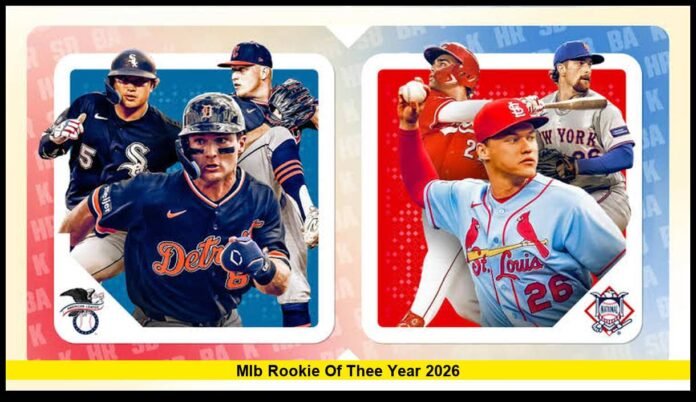

The MLB Rookie of the Year 2026 awards recognize two young players who made remarkable impressions during their first major league campaigns. Detroit Tigers infielder Kevin McGonigle earned the American League honor, while Cincinnati Reds first baseman Sal Stewart captured the National League award. Their achievements highlight the growing influence of young talent across Major League Baseball and demonstrate how emerging players can quickly become important pieces of established franchises.
The annual awards celebrate outstanding rookie performances and provide recognition to players who successfully adapt to the challenges of major league competition. This year’s winners followed different routes to recognition. McGonigle established himself through his balanced offensive approach, ability to reach base, and defensive flexibility. Stewart, meanwhile, became one of Cincinnati’s most productive hitters, combining home run power with impressive run production.
Beyond the individual recognition, their accomplishments offer an encouraging outlook for the Detroit Tigers and Cincinnati Reds. Both organizations have invested in developing young players, and the performances of their award-winning rookies represent an important step in their longer-term plans.
Kevin McGonigle Captures the American League Rookie of the Year Award
Kevin McGonigle’s emergence with the Detroit Tigers was one of the major developments of the 2026 baseball season. Entering the campaign with a reputation as an outstanding prospect, he faced the difficult challenge of translating minor league success into consistent major league production.
The transition can be demanding for young hitters. Major league pitchers have greater command, more advanced secondary pitches, and extensive scouting information. Rookies must learn to recognize different pitching patterns while adjusting to the physical and mental demands of a long professional season.
McGonigle handled those challenges impressively. His ability to combine contact skills, patience, and occasional power made him an important contributor to Detroit’s offensive plans.
He finished the season with 18 home runs, 72 runs batted in, 12 stolen bases, and a .278 batting average. His .376 on-base percentage also reflected his ability to work counts and avoid giving away at-bats.
One particularly impressive element of his performance was his plate discipline. He recorded 95 walks against 100 strikeouts, demonstrating an advanced understanding of the strike zone for a young major league player.
What Made McGonigle’s Rookie Season Special?
McGonigle’s success was not based on one statistical category. Instead, his overall contribution helped distinguish him from the other American League candidates.
His offensive approach allowed him to contribute in different situations. When facing difficult pitchers, he demonstrated the patience necessary to draw walks. When opportunities appeared, he showed the ability to produce extra-base hits and drive runners home.
His 12 stolen bases added another dimension to his offensive value. Speed can create scoring opportunities even when a hitter is not producing home runs, and McGonigle demonstrated that he could influence games through his movement on the bases.
Defensive flexibility also strengthened his case. His ability to handle multiple infield positions gave Detroit additional lineup options and allowed the coaching staff to adjust defensive arrangements.
For a young player, becoming valuable in several areas is particularly important. A rookie who contributes only through one offensive skill may become easier for opponents to challenge. McGonigle’s balanced approach gives him several ways to remain productive.
His recognition also reflects the Tigers’ willingness to trust their young talent. Giving a highly regarded prospect meaningful major league responsibility can accelerate development, provided the player receives consistent opportunities to learn and improve.
American League Rookie of the Year Voting Results
McGonigle finished comfortably ahead of the competition in the American League voting.
He received 28 first-place votes and accumulated 204 total points. Cleveland Guardians pitcher Parker Messick finished second with 122 points, while Boston Red Sox pitcher Payton Tolle placed third with 54 points.
Messick presented a strong alternative because of his starting-pitching performance. His ability to work deep into games and limit opposing offenses made him one of the league’s most impressive young pitchers.
Tolle also delivered a productive season, demonstrating that the American League rookie competition included outstanding contributions from the pitching position.
Nevertheless, McGonigle’s combination of offensive production, defensive flexibility, and consistent availability gave him a convincing advantage.
The victory also added another achievement to Detroit’s baseball history and strengthened expectations surrounding the organization’s developing core.
Sal Stewart Wins the National League Rookie of the Year Award
Sal Stewart delivered one of the most impressive offensive rookie campaigns in the National League during 2026. The Cincinnati Reds first baseman established himself as a dependable run producer and demonstrated the type of power that can transform an everyday lineup.
At just 22 years old, Stewart handled the demands of a full major league schedule while maintaining consistent offensive production.
He appeared in all 162 regular-season games, making 161 starts. That durability was a major part of his success because it allowed him to contribute throughout the season rather than relying on a limited number of appearances.
Stewart finished with 32 home runs, 112 RBIs, a .263 batting average, and a .787 OPS.
His home run production immediately attracted attention, but his run production was equally important. Driving in 112 runs demonstrated his ability to deliver when teammates reached scoring positions.
For Cincinnati, Stewart provided a powerful presence in the middle of the batting order and became one of the most important offensive contributors on the roster.
How Sal Stewart Established Himself as a Major League Power Hitter
Power hitting is one of the most recognizable skills in professional baseball, but producing home runs consistently requires much more than physical strength.
Young hitters must understand pitch selection, recognize velocity differences, and make adjustments when pitchers change their approach. They also need to maintain their mechanics throughout a long season.
Stewart demonstrated an ability to handle these challenges.
His 32 home runs placed him among the most productive rookie power hitters of the campaign. Reaching the 30-home-run mark is a significant achievement for any first-year player, particularly when combined with more than 100 RBIs.
His 112 RBIs also established a Cincinnati rookie franchise record, making his season especially significant for the organization.
Stewart’s offensive production provided Cincinnati with a reliable source of runs. His presence forced opposing pitchers to approach the Reds’ lineup carefully, particularly when runners were already on base.
Another important factor was his durability. Playing almost every game allowed Stewart to develop consistency and gain valuable experience against different pitching staffs.
Sal Stewart’s Impact on the Cincinnati Reds
The Reds benefited from having a young hitter who could provide consistent power throughout the season.
Stewart’s production helped strengthen the middle of the lineup and gave Cincinnati another offensive threat capable of changing a game with one swing.
His versatility also made him useful beyond first base. He received opportunities at third base, second base, and designated hitter, giving the coaching staff additional flexibility.
For Cincinnati, developing a young player with this combination of offensive ability and positional options is valuable when planning future rosters.
Stewart’s award-winning season also provides an encouraging foundation for the years ahead. Although pitchers will inevitably study his weaknesses and make adjustments, his first full campaign demonstrated that he possesses the offensive tools necessary to compete against experienced major league players.
Maintaining his production will require continued development, particularly in pitch recognition and consistency against different pitching styles.
National League Rookie of the Year Voting Results
Stewart earned the National League award with 20 first-place votes and 170 total points.
New York Mets outfielder Carson Benge finished second with 107 points, while St. Louis Cardinals infielder JJ Wetherholt placed third with 99 points.
Benge offered an interesting alternative because of his combination of power and speed. His 20 home runs and 22 stolen bases demonstrated an ability to influence games in several different ways.
Wetherholt also attracted attention through his offensive contributions and defensive performance at second base. His ability to contribute across multiple areas made him a competitive finalist.
However, Stewart’s combination of home runs, RBIs, and availability ultimately helped him secure the award.
The results showed that National League voters placed considerable value on his sustained offensive production.
Other Players Who Made the 2026 Rookie of the Year Race Competitive
Although McGonigle and Stewart received the biggest recognition, the other finalists also delivered performances worthy of attention.
In the American League, Parker Messick demonstrated that young starting pitchers can make an immediate impact. His 2.56 ERA over 186⅓ innings and 193 strikeouts reflected an impressive ability to handle major league hitters.
Payton Tolle also performed well for Boston, recording a 3.03 ERA and 171 strikeouts across 148⅔ innings.
The National League featured two particularly interesting competitors.
Carson Benge offered a balanced offensive profile, producing both home runs and stolen bases for the Mets. His ability to create scoring opportunities through power and speed made him one of the league’s most promising young outfielders.
JJ Wetherholt demonstrated the importance of defensive reliability alongside offensive production. His contributions at second base helped establish him as another young player worth following.
The presence of these finalists made the 2026 competition more interesting and demonstrated the depth of emerging talent across MLB.
Understanding the MLB Rookie of the Year Selection Process
The Rookie of the Year Awards are presented annually by the Baseball Writers’ Association of America.
Writers from each league’s markets participate in the voting process, evaluating eligible players based on their regular-season performances.
The ballot uses a points-based system:
- First place receives seven points.
- Second place receives four points.
- Third place receives three points.
- Fourth place receives two points.
- Fifth place receives one point.
The candidate with the highest total wins the award.
This approach allows voters to recognize multiple players and account for the different ways rookies contribute to their teams.
A starting pitcher may build a strong case through innings pitched, strikeouts, and run prevention. A position player may earn recognition through batting average, on-base percentage, home runs, defensive performance, and baserunning.
The process does not simply reward the player with the largest number in one statistical category. Voters consider the overall quality of a player’s contribution during the regular season.
The awards are also part of baseball’s wider recognition of emerging talent, alongside honors such as the Most Valuable Player, Cy Young, and Manager of the Year awards.
What the 2026 Winners Mean for the Future of Detroit and Cincinnati
McGonigle’s success gives Detroit another reason to believe in its developing roster.
The Tigers have benefited from developing young players who can contribute at the major league level. McGonigle’s performance provides an additional building block and gives the organization flexibility in its infield plans.
His next challenge will be maintaining his offensive consistency. Opposing teams will have more information about his tendencies, and pitchers will attempt to exploit any weaknesses identified during his rookie campaign.
For Stewart, the priority will be sustaining his power production while improving other aspects of his offensive game.
The Reds will want him to remain an important part of their lineup and continue producing runs against strong pitching staffs.
The long-term potential of both players is significant, but continued improvement will be essential. Their first seasons have established promising foundations, not guarantees of future success.
Why the MLB Rookie of the Year 2026 Awards Matter to Baseball Fans
The MLB Rookie of the Year 2026 results represent more than individual achievements. They provide an opportunity to recognize the players who could become important figures in baseball over the next several seasons.
For fans, following rookie development adds another dimension to the sport. A young player who begins his career with an outstanding season can become a franchise cornerstone, an All-Star, or even an MVP candidate in the future.
The awards also highlight the importance of scouting, player development, and organizational planning. Teams that successfully identify and develop young talent can build competitive rosters while creating opportunities for future success.
McGonigle and Stewart have already demonstrated that they can handle the pressure of major league baseball. Their performances will create considerable interest heading into their next seasons.
Frequently Asked Questions
Who won the American League Rookie of the Year in 2026?
Kevin McGonigle of the Detroit Tigers won the 2026 American League Rookie of the Year Award after an impressive all-around season.
Who won the National League Rookie of the Year in 2026?
Sal Stewart of the Cincinnati Reds received the National League award after recording 32 home runs and 112 RBIs.
How many home runs did Kevin McGonigle hit?
McGonigle hit 18 home runs during the 2026 regular season, along with 72 RBIs and 12 stolen bases.
How many RBIs did Sal Stewart record?
Stewart finished the season with 112 RBIs, establishing a Cincinnati rookie franchise record.
Who finished second in the American League voting?
Cleveland Guardians pitcher Parker Messick finished second with 122 points.
Who finished second in the National League voting?
New York Mets outfielder Carson Benge finished second with 107 points.
What organization presents the Rookie of the Year Awards?
The Baseball Writers’ Association of America selects the winners through voting conducted by its members.
Can Rookie of the Year winners become MVP candidates?
Yes. Previous Rookie of the Year winners have gone on to receive MVP recognition, earn All-Star selections, and establish themselves as some of baseball’s biggest stars.
Final Thoughts
Kevin McGonigle and Sal Stewart delivered memorable performances that made the 2026 baseball season particularly exciting for fans of young talent. McGonigle’s balanced contributions helped him stand out in the American League, while Stewart’s remarkable home run and RBI totals made him the National League’s leading rookie.
Both players now have the opportunity to build on their achievements and become even more influential members of their respective organizations. Their future performances will be closely watched as Detroit and Cincinnati continue developing their rosters.
Which rookie had the more impressive season in your opinion? Share your choice in the comments and follow the latest baseball news for more MLB updates.