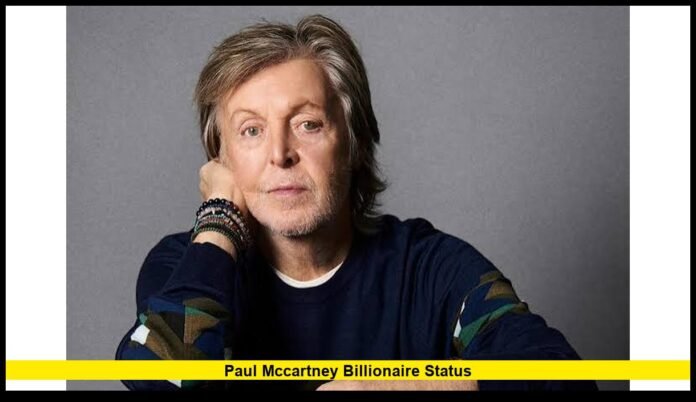

Paul McCartney billionaire status has become a major talking point following the latest financial estimates placing the legendary musician’s fortune at approximately $1.4 billion. The former Beatles star has established himself as one of the wealthiest musicians in the world, with a financial empire built through songwriting royalties, music publishing, international tours, recording income, property investments, and valuable business interests. His success demonstrates how a remarkable musical career can develop into a long-lasting commercial enterprise.
At 84, McCartney remains one of the most influential figures in entertainment. His journey from a young musician in Liverpool to an internationally recognized billionaire is closely connected to his ability to create timeless songs and understand the business opportunities behind them.
Unlike entertainers whose fortunes depend primarily on acting contracts, endorsement agreements, or short periods of commercial popularity, McCartney benefits from a catalog of music that has remained relevant for generations. His compositions continue to attract listeners, generate royalties, and create opportunities for licensing and commercial distribution.
The latest Forbes estimate places his personal fortune at approximately $1.4 billion, positioning him among the three wealthiest musicians worldwide. His financial achievements are particularly remarkable because they reflect more than six decades of work in the entertainment industry.
Paul McCartney’s Net Worth in 2026: Latest Financial Update
Paul McCartney’s estimated net worth has reached approximately $1.4 billion, according to Forbes’ latest November 2026 assessment. This valuation places him in an exclusive group of musicians whose financial success extends well beyond traditional recording and performance income.
His fortune has developed through several interconnected business activities. These include ownership interests in music publishing, songwriting royalties, Beatles-related income, solo recordings, touring, property, and artwork.
One of the most important factors behind his wealth is the continued commercial value of his musical catalog. Songs originally recorded decades ago remain popular on streaming services and radio stations. They also appear in films, television productions, advertisements, and other licensed projects.
Such ongoing demand gives McCartney access to revenue opportunities that do not depend entirely on releasing new albums or performing concerts.
It is important to understand that published net-worth figures are financial estimates rather than confirmed personal bank balances. Private business valuations, property prices, investment performance, liabilities, and contractual arrangements can influence the final calculation.
Nevertheless, the latest valuation confirms McCartney’s position as one of the most financially successful musicians in modern history.
How Paul McCartney Built His Billion-Dollar Music Empire
McCartney’s financial journey began with the extraordinary success of The Beatles. Alongside John Lennon, George Harrison, and Ringo Starr, he helped create a musical phenomenon that transformed the international entertainment industry.
The Beatles became one of the most commercially successful groups of all time. Their albums, singles, concerts, and worldwide popularity established a foundation for McCartney’s future financial opportunities.
However, his success was not limited to the band’s original recording years.
After The Beatles separated, McCartney continued creating music, developed a successful solo career, formed Wings, and established business interests that helped him maintain control over important parts of his professional activities.
His wealth can be understood through several major categories:
- Music publishing and songwriting rights.
- Beatles-related royalties and commercial interests.
- Solo recordings and Wings music.
- International concert tours.
- Music licensing and distribution.
- Real estate investments.
- Valuable artwork and other personal assets.
The combination of these sources has helped McCartney build a financial position that continues to benefit from the popularity of his earlier work.
MPL Communications: The Publishing Business Behind His Wealth
MPL Communications is among the most important businesses associated with McCartney’s fortune.
Established in 1969, the music publishing company gave him a platform to manage and develop interests in musical compositions. Publishing rights can be valuable because they allow rights holders to receive income when songs are used in qualifying commercial activities.
These activities may include streaming, radio broadcasts, public performances, film and television licensing, and theatrical productions.
McCartney’s publishing interests are not restricted to songs he personally wrote. MPL has also acquired rights connected to other songwriters and musical works, helping create a broader portfolio.
The company has interests associated with compositions by Buddy Holly and music connected to well-known theatrical productions.
This diversification is important because it creates opportunities beyond the success of McCartney’s own recordings.
Forbes estimates that MPL’s publishing business is worth at least $250 million. Its value reflects the commercial potential of its catalog and the ability of musical compositions to generate income over extended periods.
Publishing businesses can be particularly attractive because successful songs may continue producing royalties long after their original release. A composition that becomes part of popular culture can remain commercially relevant for generations.
McCartney’s decision to establish a publishing operation therefore represents one of the most consequential business developments in his career.
Beatles Songwriting Royalties Remain a Valuable Asset
The Beatles’ music continues to play a significant role in McCartney’s financial success.
The band’s catalog includes some of the most recognizable songs in popular music. Their recordings continue attracting listeners across different age groups, countries, and generations.
McCartney and Lennon created an extraordinary collection of compositions, many of which remain popular decades after their initial release.
The commercial value of these songs comes from several sources. Streaming platforms provide continuing digital distribution, while radio stations and public venues generate performance-related royalties. Film studios, television producers, and advertisers may also seek licensing agreements for particular uses.
An important distinction exists between songwriting copyrights and sound recording ownership. These are separate forms of intellectual property, and the individuals or companies entitled to receive income can differ.
Forbes estimates that McCartney’s share of Beatles songwriting copyrights is worth at least $200 million and generates at least $10 million annually.
The continuing popularity of the Beatles catalog helps explain why his financial position remains strong even when he is not actively touring or releasing new music.
His experience also demonstrates why songwriting ownership can be just as important as an artist’s recording career when evaluating long-term financial success.
Apple Corps and the Commercial Value of The Beatles Brand
Apple Corps is another important part of the Beatles business structure.
The company is associated with the group’s commercial activities and helps preserve the financial value of its music and related intellectual property.
The Beatles brand remains recognizable around the world. Its commercial presence includes music releases, merchandise, licensing opportunities, and other activities connected to the group’s legacy.
Forbes estimates that Apple Corps generates more than $50 million annually from music and merchandise-related activities.
McCartney shares in the company’s financial benefits alongside Ringo Starr and the estates of John Lennon and George Harrison.
His interest in Apple Corps provides another connection between his historic success and present-day earnings.
The continued commercial demand for Beatles music is particularly important because the group’s popularity has survived significant changes in the entertainment industry.
Physical albums once dominated music sales. Today, streaming services and digital distribution play a much larger role. Despite these changes, the Beatles’ recordings continue to attract audiences.
This lasting demand helps maintain the value of the group’s commercial assets.
Solo Music and Wings Strengthened His Financial Position
McCartney’s financial achievements cannot be explained by The Beatles alone.
Following the band’s separation, he continued working as a musician and developed an independent career that included successful albums, singles, collaborations, and live performances.
His formation of Wings provided another important chapter in his musical journey. The group became commercially successful and helped establish McCartney as a major performer outside the Beatles partnership.
His solo catalog also created additional revenue opportunities.
Every successful recording added to a growing collection of musical assets that could generate income through distribution, streaming, and licensing.
This strategy allowed McCartney to maintain a strong presence in the music industry while exploring different musical styles and creative directions.
His continued work has also helped introduce his catalog to younger listeners who may have discovered his music through streaming services rather than original album releases.
Touring Income and International Concert Success
Live performances have remained an important source of income throughout McCartney’s career.
His concerts attract audiences interested in hearing songs from The Beatles, Wings, and his solo recordings. The combination of classic hits and later material makes his performances appealing to multiple generations.
According to Forbes, McCartney performed 79 shows during his Got Back tour between 2022 and 2025.
International touring can generate substantial revenue through ticket sales and associated commercial activities. However, the gross revenue from a concert is not the same as the amount received personally by an artist.
Touring involves expenses that include venue arrangements, production equipment, transportation, musicians, technical staff, insurance, and management.
Even after accounting for these costs, a successful international tour can contribute significantly to an established artist’s overall earnings.
For McCartney, live performances also help maintain public interest in his music. Concertgoers often return to streaming platforms and recordings after attending shows, creating additional opportunities for his catalog.
Real Estate and Art Investments Add to His Assets
McCartney’s financial portfolio extends beyond music-related businesses.
His reported property holdings include residences in the United Kingdom and the Hamptons in New York. These properties represent another category of assets contributing to his overall wealth.
Real estate can increase in value over time, depending on location, market conditions, property improvements, and broader economic factors.
However, ownership also involves expenses such as maintenance, insurance, property taxes, and other obligations.
McCartney is also associated with an art collection featuring works by internationally recognized artists, including Pablo Picasso and René Magritte.
Fine art can represent a valuable asset, particularly when the works have established provenance and strong demand among collectors.
The exact value of individual properties and artworks is not fully available publicly. Nevertheless, these holdings demonstrate that his wealth is not limited to the entertainment industry.
Diversification across different asset categories can help wealthy individuals maintain financial stability even when one particular market experiences changes.
How Paul McCartney Compares With the World’s Richest Musicians
McCartney’s estimated $1.4 billion fortune places him among the wealthiest musicians in the world.
Forbes’ latest November 2026 ranking places him behind Jay-Z, estimated at approximately $2.8 billion, and Taylor Swift, estimated at approximately $2 billion.
The comparison highlights how musicians can build enormous fortunes through different business models.
Jay-Z has developed significant interests in businesses and investments beyond his recording career. Swift’s financial success reflects her music catalog, touring activities, and commercial achievements.
McCartney’s wealth is particularly connected to songwriting, publishing, and the continuing value of music created throughout his career.
Although their financial paths differ, all three demonstrate that the modern music business offers opportunities that extend far beyond album sales.
McCartney’s position is especially significant because much of his wealth has developed through a catalog that began generating commercial attention during the 1960s.
Why Music Publishing Is So Important to McCartney’s Fortune
Music publishing is one of the clearest explanations for McCartney’s long-term financial success.
A successful song is not simply a recording that generates income when an album is purchased. The underlying composition can have commercial value across many different platforms and uses.
For example, a song may generate qualifying royalties when it is streamed, performed publicly, broadcast, or licensed for a film or television production.
The duration of this income opportunity can make successful compositions extremely valuable.
For an artist with hundreds of well-known songs, the combined potential can become substantial.
McCartney’s catalog includes music that continues to be played internationally. This creates a financial foundation that does not depend entirely on his ability to perform live.
His experience also offers an important lesson for younger musicians: creative success and ownership arrangements can have a lasting effect on financial outcomes.
Artists who understand publishing agreements and intellectual property may be better positioned to benefit from the long-term commercial value of their work.
Paul McCartney’s Latest Career Developments in 2026
McCartney’s influence continues to extend beyond his historic achievements with The Beatles.
His album The Boys of Dungeon Lane, released in May 2026, represents another chapter in his creative career.
The release reinforces his continuing connection to music and his ability to remain part of the entertainment conversation decades after his international breakthrough.
His career is also an example of how established artists can maintain relevance while the music business undergoes major changes.
Streaming, digital distribution, licensing, and changing listening habits have transformed the industry. Yet McCartney’s extensive catalog continues to provide commercial opportunities across these platforms.
His financial position is therefore connected to both the historical importance of his music and its continuing ability to attract audiences.
What Makes Paul McCartney’s Billionaire Achievement Remarkable?
McCartney’s achievement is significant because it combines extraordinary creative success with decades of business development.
He did not become wealthy through a single album, one successful tour, or a short-lived entertainment trend.
Instead, his financial position developed through a combination of musical creativity, publishing interests, commercial ownership, live performances, and investments.
His journey also highlights the importance of understanding the financial structure behind the entertainment business.
A successful musician may earn substantial money from performances and recordings, but ownership of compositions and other intellectual property can create additional long-term value.
McCartney’s experience illustrates how a successful catalog can become an enduring business asset.
His estimated $1.4 billion fortune is therefore more than a celebrity wealth milestone. It represents the financial impact of a musical career that has continued to generate commercial value across generations.
Frequently Asked Questions
What is Paul McCartney’s net worth in 2026?
Forbes estimates Paul McCartney’s net worth at approximately $1.4 billion in its latest November 2026 assessment.
How did Paul McCartney become a billionaire?
He accumulated wealth through Beatles songwriting royalties, MPL Communications, solo music, Wings, touring, Apple Corps interests, property, and artwork.
Does Paul McCartney still earn money from The Beatles?
Yes. His songwriting copyrights and related business interests continue to generate income through applicable royalties, licensing, and commercial activities.
What is MPL Communications worth?
Forbes estimates the value of MPL Communications’ publishing business at at least $250 million.
Is Paul McCartney richer than Jay-Z?
No. The latest Forbes estimates place Jay-Z at approximately $2.8 billion, compared with McCartney’s estimated $1.4 billion.
Does Paul McCartney still make music?
Yes. McCartney continues to maintain his musical legacy, and his 2026 album release demonstrates his ongoing involvement in music.
Why are Beatles songs still valuable?
Their continued popularity across streaming platforms, radio, film, television, and commercial licensing helps preserve their financial value.
Final Thoughts
Paul McCartney’s journey from a Liverpool musician to one of the world’s wealthiest entertainers is an extraordinary example of how artistic achievement can create lasting financial success. His estimated $1.4 billion fortune reflects decades of songwriting, publishing ownership, recording royalties, international performances, and investments.
His legacy is not measured only by the number of albums sold or concerts performed. The continuing commercial value of his compositions has helped transform his musical achievements into a substantial business empire. As new generations discover The Beatles and his solo recordings, his influence and financial legacy remain firmly connected to the history of popular music.
What do you think has contributed most to Paul McCartney’s incredible financial success: his Beatles catalog, songwriting rights, or business decisions? Share your thoughts in the comments and follow us for more celebrity wealth updates.