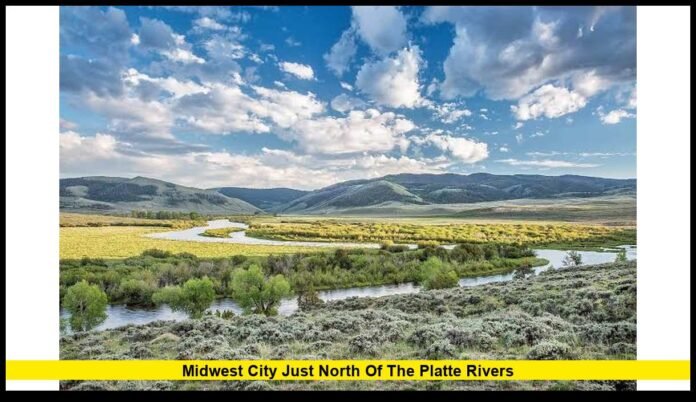

The midwest city just north of the platte river is a geographic crossword clue associated with Omaha, Nebraska. The five-letter city is one of the most recognizable urban centers in the Great Plains and occupies an important position near the Missouri River and the Platte River’s eastern endpoint. Its location, historical development, and regional influence make Omaha a notable answer for people exploring American geography.
Omaha is Nebraska’s largest city and a major center for business, transportation, education, health care, and culture. Its development reflects the importance of rivers and railroads in shaping communities across the central United States. Although the Missouri River is the waterway most directly associated with Omaha, the nearby Platte River forms an important part of the region’s geography.
The answer to the crossword clue is OMAHA. However, the geographic relationship deserves a closer look. Omaha is primarily situated east of the Platte River’s main channel, near the point where the Platte enters the Missouri River. Understanding this distinction helps explain why the clue connects the city with Nebraska’s river system.
Omaha: The Five-Letter City Behind the Clue
Omaha is located in eastern Nebraska, in Douglas County. It occupies the western bank of the Missouri River, directly opposite Council Bluffs, Iowa.
This location gives Omaha an important position within the central United States. The city connects Nebraska’s agricultural interior with transportation routes extending east, west, and south.
The Platte River is another significant geographic feature nearby. It crosses Nebraska from west to east and eventually meets the Missouri River south of Omaha.
The city’s name satisfies the five-letter requirement commonly used in crossword puzzles. Its prominence as Nebraska’s largest city also makes it a recognizable answer for a clue referring to a Midwestern location.
Geographic crossword clues do not always describe precise distances or riverbank positions. Sometimes they use a nearby natural landmark to identify a broader area. That appears to be the approach behind this particular clue.
Understanding the Relationship Between Omaha and the Platte River
The Platte River is one of Nebraska’s most important waterways. It travels across the state, creating a broad valley that has influenced agriculture, transportation, settlement, and wildlife habitats.
The river originates near the meeting point of the North Platte and South Platte rivers. These two branches begin in the Rocky Mountain region before carrying water eastward into Nebraska.
After joining near North Platte, the combined river continues across the Great Plains. Its course passes through several agricultural and urban areas before reaching the Missouri River.
The Platte’s confluence with the Missouri creates an important connection between Nebraska’s interior waterways and the larger river system of the central United States.
Omaha developed along the Missouri River rather than directly beside the Platte’s main channel. This difference is important when interpreting the directional wording of the crossword clue.
The city is associated with the river system because of its proximity to the Platte-Missouri junction, but the two waterways should not be confused.
Where Omaha Sits Within the American Midwest
Nebraska is commonly classified as a Midwestern state. It also forms part of the Great Plains, a vast geographic region extending across the central United States and into Canada.
Omaha sits in the eastern portion of Nebraska, where the Great Plains meet the Missouri River corridor. Its location places it near Iowa and within convenient reach of other important Midwestern transportation centers.
The city’s regional position has helped it develop connections with agricultural communities throughout Nebraska, as well as commercial markets in neighboring states.
Omaha is approximately 50 miles north of Lincoln, the state capital. The two cities form an important population and economic corridor in eastern Nebraska.
The Missouri River also provides a natural state boundary. Council Bluffs, Iowa, sits across the river, creating a metropolitan connection that crosses state lines.
The Platte River’s Journey Across Nebraska
The Platte River is particularly important because of its long eastward journey through Nebraska.
Its two principal branches, the North Platte and South Platte, originate in the Rocky Mountains. Their waters travel through Colorado, Wyoming, and Nebraska before meeting near North Platte.
From that point, the river moves east through central Nebraska. It passes through a landscape containing farms, grasslands, wetlands, towns, and transportation routes.
The Platte is known for its relatively shallow channels and shifting sandbars. Rather than following one consistently deep channel, the river often divides into several smaller channels.
This physical structure gives the river a distinctive appearance. It also creates habitats that support migratory birds and other wildlife.
The river eventually reaches the Missouri River, contributing water to one of North America’s major drainage systems.
Its course makes it an essential geographic feature for understanding Nebraska’s landscape.
Why the Missouri River Matters More Directly to Omaha
Although the Platte River provides the geographic reference in the crossword clue, the Missouri River has a more immediate relationship with Omaha.
The Missouri forms much of the eastern boundary of Nebraska. It also separates Omaha from Council Bluffs and connects the city with a major north-south waterway.
Historically, the Missouri River offered an important transportation route. Boats carried people, supplies, and commercial goods between settlements before railroads and highways became dominant.
Omaha’s early development benefited from its position near this river corridor. Traders and settlers could use the river to connect with other communities throughout the central United States.
Today, bridges and riverfront infrastructure maintain the connection between Omaha and Iowa. The Missouri remains a defining part of the city’s landscape and regional identity.
The relationship between these two rivers helps explain the geographic context of the crossword answer.
Omaha’s Founding and Early Development
Omaha’s modern history began in 1854, when the settlement was established during a period of rapid westward expansion in the United States.
Its location near the Missouri River attracted settlers, merchants, and entrepreneurs. The river provided access to transportation routes that connected communities across the central part of the country.
The region had a much longer history before the modern city appeared. Indigenous nations maintained communities, cultural traditions, trade networks, and relationships with the surrounding landscape for generations.
The Omaha people have deep historical connections to the region. The city’s name reflects this Indigenous heritage.
During the nineteenth century, Nebraska became increasingly important as migration and commercial development moved westward. Omaha benefited from its position near the Missouri River and its access to routes leading toward the Great Plains.
As more people arrived, the settlement developed into a growing commercial community. Businesses emerged to serve travelers, farmers, traders, and residents throughout the surrounding territory.
Its early growth established the foundations for Omaha’s later importance as a regional economic center.
The Railroad That Transformed Omaha
One of the most important developments in Omaha’s history was the arrival of the transcontinental railroad era.
The Union Pacific Railroad began constructing its western route from Omaha in 1863. The Central Pacific Railroad built eastward from California, and the two railroads eventually connected at Promontory Summit, Utah, in 1869.
The completion of the first transcontinental railroad transformed transportation across the United States.
Omaha became an important eastern gateway for rail travel and freight movement toward the western territories. Its position helped businesses reach new markets and allowed agricultural products to move more efficiently.
Railroad construction also encouraged population growth and commercial investment. Industries associated with transportation, livestock, food processing, and manufacturing became increasingly important.
The railroad helped turn Omaha into a major Midwestern commercial center. Its influence remains visible in the city’s historical identity and continuing transportation infrastructure.
Omaha’s Economic Importance in Modern Nebraska
Omaha’s economy has developed considerably since its early dependence on river transportation and railroad commerce.
Today, the city supports businesses in numerous industries, including:
- Banking and financial services.
- Insurance and professional services.
- Health care and medical research.
- Education and higher learning.
- Transportation and logistics.
- Telecommunications and technology.
- Agriculture-related businesses and food production.
- Retail, hospitality, and tourism.
This economic diversity makes Omaha an important employment center for eastern Nebraska and western Iowa.
The city also supports businesses that serve agricultural communities throughout the Great Plains. Its location provides access to transportation networks connecting farms, manufacturers, distributors, and commercial markets.
Large employers and regional institutions contribute to the city’s economic activity. Omaha’s business environment also benefits from its position near Interstate 80 and other major transportation corridors.
The city’s development demonstrates how a community originally shaped by river and railroad connections can evolve into a diversified metropolitan economy.
Omaha’s Population and Metropolitan Growth
Omaha is Nebraska’s largest incorporated city. Its population makes it one of the most significant urban centers in the Great Plains.
The U.S. Census Bureau’s July 2025 population estimate placed Omaha at 488,797 residents.
That figure represents the population within the city’s municipal boundaries. The wider metropolitan area includes additional communities in Nebraska and Iowa.
The metropolitan region has a shared economy. Many residents travel between communities for employment, education, shopping, health care, and entertainment.
Population growth also creates continuing demands for housing, roads, schools, public transportation, utilities, and other services.
Omaha’s residential landscape includes historic neighborhoods, established suburban communities, and newer developments. Its commercial districts reflect the city’s changing economy and growing regional influence.
The population figure also helps explain why Omaha is frequently selected as a recognizable answer in American geography questions.
The Platte River and Nebraska’s Agricultural Economy
The Platte River has a close relationship with Nebraska’s agricultural development.
Its water resources, along with connected groundwater systems, support farms and communities throughout the state.
Nebraska is one of the country’s important agricultural states. Corn, soybeans, cattle, and other agricultural products contribute significantly to its economy.
Irrigation is particularly important in areas where rainfall alone cannot provide sufficient water for crop production.
The Platte River basin supports agricultural activity through surface water and groundwater connections. These resources require careful management to balance farming needs, municipal consumption, industrial use, and environmental protection.
Water availability can change with weather patterns, drought conditions, and seasonal river flows. As a result, managing the Platte River system remains an important issue for Nebraska.
Omaha benefits from this agricultural economy through businesses involved in finance, transportation, food production, distribution, and commercial services.
The river is therefore important to the city’s wider regional economy, even though Omaha itself sits along the Missouri River.
Wildlife and Natural Habitats Along the Platte
The Platte River is internationally recognized for its importance to migratory wildlife.
Its shallow channels and exposed sandbars provide valuable resting and feeding areas for birds traveling between northern breeding grounds and southern wintering areas.
One of the most famous natural events in Nebraska is the annual sandhill crane migration.
Large numbers of cranes gather along the Platte River during their spring migration. The birds use the river valley as a temporary resting place before continuing north.
This seasonal movement attracts birdwatchers, photographers, researchers, and nature enthusiasts.
The Platte River also provides habitat for other migratory birds, fish, and wildlife species. Wetlands and grasslands surrounding the waterway contribute to the region’s ecological diversity.
Protecting these habitats requires cooperation among conservation organizations, landowners, government agencies, and local communities.
The river’s ecological importance demonstrates that its value extends beyond transportation and agriculture.
Omaha’s Cultural Attractions and Regional Identity
Omaha has developed a cultural identity that extends beyond its role as a transportation and business center.
The Old Market district is among the city’s most recognizable historic areas. Its renovated buildings, restaurants, galleries, and shops create a popular destination for residents and visitors.
The Henry Doorly Zoo and Aquarium is another major attraction. It draws visitors interested in wildlife, conservation, and educational experiences.
Omaha also supports museums, theaters, music venues, sporting events, and community festivals.
The city’s cultural institutions contribute to tourism and provide opportunities for residents to participate in arts and entertainment.
Its educational institutions also play an important role. Colleges and universities support research, professional development, and the regional workforce.
These attractions help distinguish Omaha from smaller communities throughout Nebraska.
Transportation Routes Connecting Omaha With the Midwest
Transportation remains central to Omaha’s regional importance.
Interstate 80 crosses Nebraska from east to west and provides a major connection between Omaha, Lincoln, western Nebraska, and destinations farther west.
Interstate 29 serves as another important route, connecting the Omaha region with communities to the north and south.
Rail transportation continues to support freight movement across the central United States. Omaha’s historical relationship with the Union Pacific Railroad remains an important part of its commercial identity.
Eppley Airfield provides commercial air service for the metropolitan region, connecting passengers with destinations across the country.
The city’s bridges across the Missouri River also provide essential connections with Iowa.
These transportation systems help Omaha maintain its position as a regional center for commerce, employment, and travel.
Omaha and Its Connection With Council Bluffs, Iowa
Omaha’s location across the Missouri River from Council Bluffs creates one of the most recognizable cross-state urban connections in the Midwest.
The two cities operate as part of a shared metropolitan region. Residents regularly travel between Nebraska and Iowa for employment, education, business, shopping, and entertainment.
Several bridges connect the communities. These crossings are important for daily transportation and regional commerce.
Council Bluffs also has its own historical significance. Like Omaha, it developed during the period of westward expansion and railroad construction.
The relationship between the two cities illustrates how rivers can separate state boundaries while also encouraging economic cooperation.
For Omaha, proximity to Iowa provides access to a larger regional market and strengthens its position as a transportation center.
How Nebraska’s Geography Influenced Settlement
Nebraska’s geography played a major role in determining where communities developed.
The eastern portion of the state contains river valleys, agricultural land, and transportation corridors that encouraged settlement.
The Platte River provided a natural east-west route across the state. Its valley became especially important during the nineteenth century, when travelers moved toward western territories.
The Missouri River offered another major transportation corridor. Its location helped communities such as Omaha develop connections with settlements farther south and east.
Railroads eventually changed how people traveled and transported goods. However, the state’s rivers continued to influence settlement patterns, agriculture, and infrastructure.
Omaha’s development reflects the combined influence of these geographic features.
The city’s location near the Missouri River, together with its connections to the Platte River region, helped establish its importance within Nebraska.
The Difference Between Omaha and Cities Directly Along the Platte River
One reason the crossword clue deserves careful interpretation is that several Nebraska cities have more direct connections with the Platte River.
North Platte, Kearney, Grand Island, and other communities developed along or near different sections of the river system.
Their geographic positions differ from Omaha’s.
North Platte is located in western Nebraska near the meeting of the North Platte and South Platte rivers. Kearney and Grand Island are further east along the Platte River corridor.
Omaha, meanwhile, is located near the Missouri River in eastern Nebraska.
These differences matter when identifying locations through geographic clues. A city described as being near a river is not necessarily situated directly on its banks.
The intended crossword answer is Omaha, but a precise geographic description should recognize that the city is east of the Platte’s main channel and near its confluence with the Missouri.
Why Omaha Remains Important to the Great Plains
The Great Plains contain a combination of agricultural communities, growing metropolitan areas, transportation corridors, and natural landscapes.
Omaha plays an important role in connecting these different parts of the region.
Its financial institutions support businesses across Nebraska and neighboring states. Its transportation networks help move goods between agricultural producers, manufacturers, distributors, and consumers.
Health care and education also contribute to the city’s regional influence.
Omaha’s commercial importance extends beyond Nebraska because its metropolitan economy includes communities across the Iowa border.
The city demonstrates how geography and infrastructure can support long-term urban development.
Its position along the Missouri River and its proximity to the Platte River system remain relevant to understanding its place in the central United States.
Frequently Asked Questions
1. What is the Midwest city just north of the Platte River?
The intended answer is Omaha, Nebraska. It is a five-letter city in the eastern part of the state, near the Missouri River and the Platte River’s confluence with that waterway.
2. Why is Omaha associated with the Platte River?
Omaha is associated with the Platte River because the river flows east across Nebraska and eventually joins the Missouri River near the Omaha region. The city itself is primarily situated along the Missouri River.
3. Is Omaha the largest city in Nebraska?
Yes. Omaha is Nebraska’s largest incorporated city and a major center for employment, commerce, education, and transportation.
4. Which state is Omaha located in?
Omaha is located in Nebraska, a Midwestern state in the central United States.
5. What river runs through Omaha?
The Missouri River runs along Omaha’s eastern side. It separates Nebraska from Iowa in this area.
6. Where does the Platte River meet the Missouri River?
The Platte River flows east through Nebraska before joining the Missouri River near the Omaha region, south of Omaha’s urban center.
7. How many letters does the crossword answer contain?
The answer is OMAHA, which contains five letters.
8. When was Omaha established?
Omaha was founded in 1854. Its development accelerated during the nineteenth century as transportation, migration, and commercial activity expanded across Nebraska.
9. What is Omaha’s population?
The U.S. Census Bureau estimated Omaha’s population at 488,797 on July 1, 2025.
10. What is the Platte River famous for?
The Platte River is known for its shallow channels, agricultural importance, historic westward travel routes, and seasonal sandhill crane migration.
11. Which city is across the Missouri River from Omaha?
Council Bluffs, Iowa, is located directly across the Missouri River from Omaha. Both cities form part of a shared metropolitan region.
12. Why did Omaha become an important transportation center?
Omaha benefited from its Missouri River location and its role as the eastern starting point for Union Pacific Railroad construction in the 1860s. Highway, rail, and air connections continue to support its transportation importance.
13. Is Omaha part of the Great Plains?
Yes. Omaha is located in eastern Nebraska, within the broader Great Plains region of the central United States.
14. What are some other Nebraska cities near the Platte River?
North Platte, Kearney, Grand Island, Columbus, and Schuyler are among the Nebraska communities associated with the Platte River region. Their exact geographic relationships with the river vary.
15. Why is the Platte River important to wildlife?
The river provides shallow-water habitats, sandbars, wetlands, and feeding areas for migratory birds. Its spring sandhill crane migration is particularly well known.
Conclusion
Omaha, Nebraska, is the intended five-letter answer to the Midwestern city crossword clue associated with the Platte River. Its location near the Missouri River and the Platte’s confluence provides the geographic connection behind the description.
The city’s importance extends far beyond its crossword connection. Omaha has a rich history shaped by Indigenous heritage, westward migration, river transportation, and railroad development. Today, it remains Nebraska’s largest city and a major economic center for the Great Plains.
The Platte River continues to influence Nebraska through agriculture, wildlife conservation, water resources, and historic transportation routes. Together, the Platte and Missouri rivers help explain the geography that shaped Omaha and the surrounding region.
Did you know Omaha was the answer? Share your thoughts in the comments and stay connected for more interesting American geography facts and crossword solutions.