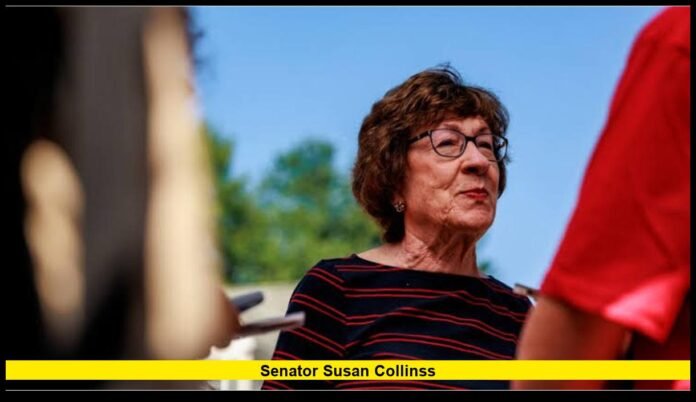

The political career of Senator Susan Collins has entered a significant new chapter following the 2026 U.S. Senate election. After representing Maine in Washington for nearly 30 years, the longtime Republican senator faced a difficult reelection contest against Democratic challenger Troy Jackson. The result marked a major turning point for Maine politics and brought renewed attention to Collins’ record, legislative achievements, leadership responsibilities, and long-standing influence in Congress.
Collins built her reputation through years of public service, bipartisan negotiations, and involvement in major federal policy decisions. Her work on government spending, healthcare, national security, intelligence, and economic development made her one of the most recognizable political figures from Maine. She also became known for occasionally breaking with Republican leadership on controversial legislative questions.
Her political journey reflects the changing relationship between Maine voters and national politics. While her experience and independent voting record helped her win several difficult reelection campaigns, the 2026 contest demonstrated that even established political figures can face significant challenges when voter priorities change.
With her Senate tenure approaching its conclusion, attention is turning toward her political legacy, the incoming representation for Maine, and the impact of her departure on congressional leadership.
Key Points Summary
╔════════════════════════════════════════════════════════════════════╗
║ – Susan Collins represented Maine in the U.S. Senate beginning in January 1997. ║
║ – She was born on December 7, 1952, in Caribou, Maine. ║
║ – Collins built a national reputation through bipartisan negotiations and committee leadership. ║
║ – She served as chair of the powerful Senate Appropriations Committee. ║
║ – Her legislative priorities included healthcare, national security, federal spending, and economic development. ║
║ – Democrat Troy Jackson defeated Collins in the November 2026 Senate election. ║
║ – Her departure marks the end of nearly three decades of representation in Washington. ║
╚════════════════════════════════════════════════════════════════════╝
Early Life and Education in Maine
Susan Margaret Collins was born on December 7, 1952, in Caribou, a community in northern Maine. Growing up in a family with strong connections to local business and public service gave her an early understanding of the economic challenges facing smaller communities.
Her family operated a lumber business, an industry closely associated with Maine’s economy. This background later influenced her interest in employment, manufacturing, rural development, and policies affecting local businesses.
Collins attended Caribou High School before enrolling at St. Lawrence University in Canton, New York. She graduated in 1975 with a degree in government.
Her academic background helped prepare her for work in public administration and legislative affairs. Rather than entering politics immediately through an elected position, she first developed professional experience working with established policymakers.
These early experiences became important foundations for a career that would eventually place her among the most senior members of the U.S. Senate.
From Congressional Staffer to U.S. Senator
Collins began her Washington career working for Republican Senator William Cohen of Maine. The position provided valuable exposure to congressional operations, legislative negotiations, and the responsibilities of representing a state at the federal level.
She later served in Maine’s state government, including as commissioner of the Department of Professional and Financial Regulation. The position involved overseeing regulatory responsibilities affecting financial and professional services.
In 1994, Collins sought the Republican nomination for governor of Maine but did not win the primary. Although the campaign did not lead to elected office, it increased her public profile and provided experience in statewide campaigning.
Her next major opportunity came in 1996, when she ran for the U.S. Senate seat being vacated by Cohen. Collins won the election and began serving in January 1997.
She subsequently won four additional terms, building a record of electoral success in a state that increasingly favored Democratic presidential candidates. Her 2026 defeat ended that uninterrupted run of Senate election victories.
Leadership of the Senate Appropriations Committee
A major part of her influence came from her leadership of the Senate Appropriations Committee, one of Congress’s most consequential committees.
The committee oversees legislation that provides discretionary funding to federal departments, agencies, and programs. Its decisions can affect everything from military readiness and scientific research to transportation infrastructure and public health.
Collins’ position gave her a central role in negotiations over government funding and federal spending priorities. She could advocate for Maine’s interests while participating in decisions affecting the entire country.
For Maine, federal appropriations are important to shipbuilding, rural infrastructure, research institutions, military installations, and healthcare services. Collins regularly emphasized the importance of directing federal resources toward projects that support jobs and economic stability.
Her leadership also placed her at the center of difficult budget negotiations. Congress must frequently reconcile competing demands from lawmakers who disagree over the appropriate level of government spending.
Following the 2026 election, her committee leadership is expected to change as the new Congress organizes under a different Senate majority. Nevertheless, her experience managing federal spending negotiations will remain an important element of her legislative record.
Healthcare, Social Security, and Domestic Policy
Healthcare policy has remained a significant issue throughout Collins’ career. Her work has included support for medical research, efforts to address prescription drug costs, and initiatives affecting patients with chronic illnesses.
She has also participated in congressional debates about insurance coverage, healthcare funding, and the availability of medical services in rural communities.
These issues are particularly important in Maine, where residents in some areas must travel considerable distances to access specialists and hospitals. Healthcare costs can also place pressure on older residents, working families, and people living on fixed incomes.
Another notable accomplishment was her support for the Social Security Fairness Act, which became law in January 2025. The legislation repealed the Windfall Elimination Provision and Government Pension Offset, rules that had reduced Social Security benefits for certain people receiving public pensions.
The law affected eligible retirees, including some teachers, firefighters, and other public employees. Its implementation represented a significant change for people whose benefits had previously been reduced under those provisions.
Her involvement in such legislation demonstrated how long-term congressional negotiations can produce changes that directly affect household finances and retirement planning.
National Security and Intelligence Responsibilities
National security was another important dimension of her Senate service. Collins served on the Senate Intelligence Committee and participated in congressional oversight involving intelligence agencies and national security policy.
These responsibilities required consideration of classified information, international developments, intelligence capabilities, and the balance between national security and government accountability.
She also supported defense investments relevant to Maine’s shipbuilding industry and military infrastructure. Shipyards and defense-related employers contribute jobs and economic activity to several communities in the state.
Her work in this area reflected the broader responsibilities of a senator, whose decisions can influence military preparedness and federal responses to international challenges.
Why the 2026 Senate Election Changed Maine Politics
The 2026 election became a major test of Collins’ reputation for political independence.
Democrat Troy Jackson, a former president of the Maine Senate and a fifth-generation logger, campaigned on economic affordability, healthcare access, workers’ interests, and opposition to the Trump administration’s policies.
Jackson argued that Collins had not done enough to challenge the president and highlighted her votes on judicial nominations and major Republican legislative initiatives.
Collins countered by emphasizing her experience, her work on appropriations, and her record of securing federal support for Maine. She also pointed to instances in which she had disagreed with Republican leadership.
However, her established political reputation could not overcome the challenges she faced in the election. Jackson defeated her on November 3, 2026, and Collins conceded the race.
The result was particularly significant because she had repeatedly won reelection in a state where Democratic presidential candidates had enjoyed considerable success.
Her defeat illustrated the influence of national political sentiment on Senate races, even when an incumbent has cultivated a distinct statewide identity.
The Future of Maine’s Senate Representation
Jackson’s victory opens a new chapter for Maine’s representation in Washington. His political background and policy priorities differ from those of the departing Republican senator, particularly regarding universal healthcare, labor issues, and economic inequality.
His transition into the Senate will be closely watched by Maine residents, businesses, advocacy groups, and congressional colleagues.
Collins, meanwhile, is expected to remain in office until her current term ends in January 2027. Her concession statement emphasized her commitment to a smooth transition.
During the remaining weeks of her term, she can continue participating in Senate business and fulfilling her responsibilities as an elected representative.
Her departure will also create changes in committee assignments and leadership. Because seniority can provide considerable influence over congressional proceedings, replacing a long-serving senator can affect how a state advocates for its interests in Washington.
For Maine, the central question will be whether the incoming senator can maintain effective relationships with federal agencies and congressional colleagues while advancing the state’s economic and social priorities.
Personal Life and Public Image
Despite her long career in national politics, Collins has generally kept her personal life private. She is married to Thomas A. Daffron, a political and government affairs professional.
Her public identity has largely centered on her work in Washington, her connection to Maine, and her reputation for participating in bipartisan negotiations.
Supporters have often described her as pragmatic and experienced, arguing that her seniority helped Maine obtain federal funding and maintain a strong voice in congressional decisions.
Critics, however, have questioned some of her votes and argued that her willingness to compromise did not always translate into the policy outcomes they wanted.
Those differing views help explain her unusual political position: she remained influential for decades while facing criticism from both sides of the political spectrum.
Political Legacy After Nearly 30 Years in the Senate
The end of Collins’ reelection campaign marks a consequential moment in Maine’s political history. Her Senate career began in an era when congressional politics operated under different political and media conditions. Over time, she navigated increasing polarization, difficult confirmation votes, budget disputes, and changing expectations among voters.
Her legacy will likely be assessed through several competing considerations: her leadership of the Appropriations Committee, her work on federal spending, her contributions to healthcare and retirement legislation, and her decisions on major national political questions.
Supporters will emphasize her experience and ability to negotiate. Critics will focus on votes they believe contributed to policies that harmed their interests.
Her defeat also highlights a broader reality of American politics: long service and a reputation for independence do not guarantee reelection when voters believe the direction of national government needs to change.
As Maine prepares for new Senate representation, her career will remain a significant reference point in discussions about bipartisanship, political accountability, and the relationship between state interests and national party politics.
Conclusion
Susan Collins’ political journey reflects nearly three decades of change in American government. From her early work in congressional offices and Maine state government to her leadership of a powerful Senate committee, she established a substantial record of legislative involvement.
Her 2026 defeat by Troy Jackson brings that chapter of her career toward its close and gives Maine voters a new representative whose priorities differ from hers. The transition will affect congressional leadership, state-level advocacy, and the political direction of Maine in the years ahead.
What is your assessment of her Senate career and the 2026 election result? Share your opinion in the comments and follow the latest developments in American politics.