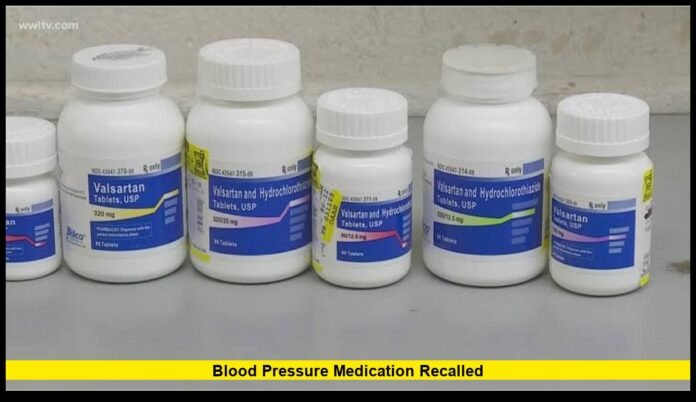

A blood pressure medication recalled announcement can raise serious concerns for people who depend on prescription drugs to manage hypertension, reduce their risk of heart disease, and protect their long-term health. When a medication recall occurs, patients naturally want to know which products are affected, why the manufacturer or regulators issued the recall, whether their prescriptions are included, and what steps they should take to remain safe.
A medication recall does not automatically mean that every product containing the same active ingredient is dangerous. Recalls generally apply to specific products, manufacturers, strengths, dosage forms, or production lots. The distinction is particularly important for blood pressure medications because several manufacturers may produce the same generic drug.
Patients should also understand that stopping prescribed blood pressure medication without medical guidance can be dangerous. An interruption in treatment may allow blood pressure to rise, and suddenly discontinuing certain medications can cause additional complications.
The most important step is to identify the exact medication and determine whether its manufacturer, lot number, and expiration date match an official recall notice. The latest available recall information should be checked before making decisions about a prescription.
Blood Pressure Medication Recall: Which Drug Is Affected?
The latest widely reported blood pressure medication recall involves certain lots of a three-drug combination tablet manufactured by Macleods Pharma USA. The product contains olmesartan medoxomil, amlodipine, and hydrochlorothiazide, medicines that work together to control high blood pressure.
The recall covers 3,744 bottles across two production lots. The reported quality concern is that the tablets failed dissolution specifications, meaning they did not meet the required standards for how the medicine releases from the tablet during testing.
The distinction matters because a tablet must dissolve appropriately for its active ingredients to become available for absorption in the body. When a product fails dissolution testing, its ability to deliver the intended dose may be affected. However, the test failure alone does not establish that every patient who took a tablet experienced reduced blood pressure control or another adverse effect.
The affected product is a generic combination treatment used to manage hypertension. It is not a recall of every blood pressure medication, every olmesartan prescription, or all products containing amlodipine.
Patients should compare the details on their prescription bottle with the identifying information associated with the recall.
Which bottles are included in the recall?
The reported affected products are:
- Medication: Olmesartan medoxomil, amlodipine, and hydrochlorothiazide tablets.
- Strength: 40 mg/10 mg/12.5 mg.
- Manufacturer: Macleods Pharma USA.
- 30-count bottles: Lot number 12251163A, National Drug Code (NDC) 33342-246-07.
- 90-count bottles: Lot number 12251163B, NDC 33342-246-10.
- Expiration date: May 31, 2027, for both listed lots.
The reported recall includes 3,528 bottles containing 30 tablets and 216 bottles containing 90 tablets, for a total of 3,744 bottles.
The recall was initiated in October, and the U.S. Food and Drug Administration subsequently classified it as a Class II recall. This classification indicates that exposure to the affected product may cause temporary or medically reversible health consequences, while the probability of serious adverse health consequences is considered remote.
A Class II classification should not be interpreted as a guarantee that the product is harmless. It indicates the regulator’s assessment of the potential risk associated with the identified issue.
Patients should not assume that their medicine is included simply because the label lists one or more of the same active ingredients. The manufacturer, strength, lot number, and product identification must be checked.
Why Was the Blood Pressure Medication Recalled?
The reported reason for the recall is a failure to meet dissolution specifications.
Dissolution testing measures how a drug releases its active ingredient from a dosage form under controlled laboratory conditions. For a tablet, the test helps establish whether the medicine dissolves according to the required quality standards.
This process is important because the body generally must absorb a medicine’s active ingredients before they can produce their intended effects.
When a tablet fails dissolution testing, several questions may arise about its performance. The product may not release its ingredients at the expected rate or in the expected amount under the test conditions. That creates a quality concern even when the tablet appears normal.
What does a dissolution failure mean for patients?
A dissolution failure does not necessarily mean that the medicine contains no active ingredient. Nor does it establish that every tablet in the affected lot behaves identically.
Instead, it means the product failed a required quality specification. Depending on the nature and extent of the failure, the medicine may not perform as intended.
For a person taking medication for hypertension, inconsistent drug release could potentially interfere with effective blood pressure management. However, the exact clinical consequences for individual patients cannot be determined from the recall classification alone.
The reported recall information does not establish that every person who used the affected lots experienced a health problem. It also does not establish that a patient’s blood pressure necessarily increased because of the product.
The appropriate response is to verify whether the prescription is affected and obtain individualized instructions from a pharmacist or prescribing clinician.
Does this mean the medication is toxic?
Not necessarily. A dissolution failure is a different type of quality problem from contamination with a potentially harmful substance.
Some medication recalls involve impurities, incorrect ingredients, labeling errors, manufacturing defects, or concerns about product strength. Other recalls involve problems with how a tablet performs during testing.
The current recall discussed here concerns dissolution specifications. It should not automatically be described as a contamination event or a finding that the medicine contains a toxic substance.
Patients should rely on the stated reason for the specific recall rather than assume that every medication recall involves the same hazard.
What Are the Three Medicines in the Recalled Combination Tablet?
The recalled product combines three medicines that lower blood pressure through different mechanisms. Using them together can help control hypertension when a healthcare professional determines that a combination treatment is appropriate.
Olmesartan medoxomil
Olmesartan medoxomil belongs to a class of medicines known as angiotensin II receptor blockers, or ARBs.
It works by blocking the action of angiotensin II, a substance that causes blood vessels to narrow. By reducing this effect, olmesartan helps blood vessels relax, making it easier for blood to flow.
Olmesartan is prescribed to help manage high blood pressure. Controlling hypertension can reduce the long-term risk of complications such as stroke, heart disease, and kidney damage.
Amlodipine
Amlodipine is a calcium channel blocker. It relaxes blood vessels by affecting the movement of calcium into certain cells in the vessel walls.
When blood vessels relax, resistance to blood flow decreases, helping lower blood pressure. Amlodipine is also used in the treatment of certain forms of angina, or chest pain, when prescribed for that purpose.
Possible side effects can include swelling in the ankles or feet, dizziness, flushing, and headache. The presence of these possible side effects does not mean a patient will experience them.
Hydrochlorothiazide
Hydrochlorothiazide is a thiazide diuretic, sometimes called a water pill.
It helps the body eliminate sodium and water through urine. This can reduce fluid volume and contribute to lower blood pressure.
Depending on the patient and treatment plan, healthcare professionals may monitor kidney function and electrolyte levels, including sodium and potassium, during treatment.
Why combine all three medicines?
The three ingredients act in different ways, allowing a single tablet to provide several blood pressure-lowering effects.
A combination medication can simplify treatment for patients who need multiple medicines. Taking fewer separate tablets may also make a prescribed regimen easier to follow.
However, the effectiveness of a combination product depends on its quality, appropriate dosing, and the patient’s individual medical circumstances. That is why a manufacturing or dissolution problem requires attention, even when the ingredients themselves are established treatments for hypertension.
Patients should not try to recreate the combination by changing the doses of separate medicines without guidance from a qualified healthcare professional.
What Should You Do If You Take the Recalled Blood Pressure Medication?
If you take a blood pressure medication that may be included in the recall, the first step is to verify the product rather than make assumptions based on the drug name alone.
Medication bottles often contain several identifying details, including the active ingredients, strength, manufacturer or labeler, NDC, lot number, and expiration date. These details can help a pharmacist determine whether the prescription matches an affected product.
Step 1: Check the prescription bottle
Look for the medication name and strength, then compare the lot number and NDC with the recalled product information.
For the reported Macleods Pharma USA recall, the two listed lot numbers are 12251163A and 12251163B. The associated products are the 30-count and 90-count bottles of the 40 mg/10 mg/12.5 mg combination tablet.
Do not rely exclusively on the product name. Different manufacturers may supply medicines containing the same active ingredients, and not every manufacturer or lot is necessarily affected.
If you transferred your prescription to another container or cannot find the original packaging, contact the pharmacy that filled it. The pharmacy may be able to retrieve the dispensing records and identify the product supplied.
Step 2: Contact your pharmacist or prescribing clinician
If your bottle matches an affected lot, contact your pharmacist or prescribing healthcare professional promptly.
Explain that you are checking a possible blood pressure medication recall and provide the available information from the label. Ask whether the product is affected and what you should do about your next dose.
Your pharmacist may be able to arrange an unaffected supply or help coordinate a replacement prescription. If another treatment is needed, your prescriber can determine the most appropriate option based on your blood pressure, medical history, other medications, and treatment goals.
If you cannot establish whether your medication is affected, seek professional advice rather than relying on online discussions or assumptions about the manufacturer.
Step 3: Do not stop treatment without medical advice
One of the most important precautions is to avoid abruptly stopping prescribed blood pressure treatment without obtaining appropriate medical guidance.
Hypertension often produces no noticeable symptoms, even when blood pressure is dangerously high. A person may feel normal while their blood pressure remains elevated.
Stopping treatment can allow blood pressure to rise again. For some medicines, sudden discontinuation can also cause specific withdrawal or rebound effects.
Because this recall concerns particular lots of a combination tablet, patients should receive instructions tailored to their own medication. Do not assume that every person should continue taking an affected product indefinitely, and do not assume that everyone should stop immediately. Contact a pharmacist or prescriber for prompt, individualized directions.
If a healthcare professional cannot be reached and you are concerned about an imminent dose, seek advice from an available pharmacist, urgent care service, or other appropriate medical service.
Step 4: Keep the packaging and document the details
Retain the bottle, packaging, prescription label, and any available lot information until you receive instructions about returning or disposing of the product.
These details can help the pharmacy identify the recalled supply and determine whether a replacement is necessary.
Do not transfer tablets into another bottle and discard the original packaging before the product has been identified. Doing so may make verification more difficult.
Step 5: Ask about replacement medication
If the medication is confirmed to be affected, ask the pharmacist or prescriber about an appropriate replacement.
Depending on availability and your medical needs, the replacement may involve an unaffected supply of the same product or a different prescription.
Do not substitute a different strength, take extra tablets, combine separate blood pressure drugs, or change the dosing schedule on your own. Although the active ingredients may be familiar, the correct treatment depends on the exact formulation and prescribed dose.
If you have already taken tablets from an affected lot, tell your healthcare professional how long you have been taking the medication and whether you have experienced any changes in your health.
What Is a Class II Drug Recall?
The FDA uses recall classifications to communicate the potential health consequences associated with recalled products.
A Class II recall applies when using or being exposed to a product may cause temporary or medically reversible adverse health consequences, or when the likelihood of serious adverse health consequences is remote.
This category differs from a Class I recall, which involves a reasonable probability that using or being exposed to the product could cause serious adverse health consequences or death.
A Class III recall generally involves a product that is not likely to cause adverse health consequences.
These categories help patients, healthcare professionals, manufacturers, and distributors understand the assessed level of risk. They do not predict precisely what will happen to an individual patient.
For the current blood pressure medication recall, the Class II designation is consistent with a quality concern that warrants corrective action and product verification.
Does Class II mean patients do not need to worry?
No. The classification should be taken seriously, but it should also be interpreted accurately.
The fact that a recall is classified as Class II does not mean every person exposed to the product will experience harm. At the same time, it does not mean that an affected medicine should be ignored.
The correct response is to identify the product, follow professional guidance, and arrange a suitable replacement when needed.
Patients should also avoid interpreting the classification as evidence that the medicine caused a particular symptom. A healthcare professional can help assess whether a symptom may be related to treatment, blood pressure changes, another medication, or an unrelated condition.
Could the Recall Affect Blood Pressure Control?
A medicine that fails dissolution testing may not perform as expected. For patients who depend on a combination tablet to manage hypertension, this creates a legitimate concern about treatment consistency.
However, the recall announcement alone does not establish how much the product’s performance may differ from specifications or whether any particular patient’s blood pressure was affected.
Several factors influence blood pressure control, including the prescribed dose, other medications, adherence to treatment, kidney function, dietary sodium intake, physical activity, and underlying medical conditions.
If you use a product included in the recall, your clinician may recommend monitoring your blood pressure more closely while a replacement plan is arranged.
What symptoms should patients watch for?
High blood pressure frequently has no obvious symptoms. Therefore, feeling well is not proof that blood pressure is adequately controlled.
If you have a home blood pressure monitor, use it according to your healthcare professional’s instructions. Record readings with their dates and times so your clinician can review any changes.
Seek urgent medical attention if you develop symptoms that could indicate a serious medical problem, particularly chest pain, severe shortness of breath, sudden weakness or numbness, difficulty speaking, sudden vision changes, or a sudden severe headache.
If your blood pressure is above 180/120 mm Hg, wait at least one minute and measure it again. If it remains that high and you have symptoms such as chest pain, shortness of breath, weakness, numbness, vision changes, or difficulty speaking, call 911 in the United States. Do not wait for the blood pressure medication recall issue to be resolved before seeking emergency care.
If the reading remains above 180/120 mm Hg without those symptoms, contact a healthcare professional immediately for advice about what to do next.
These precautions apply regardless of whether your medication is part of a recall.
Are Other Blood Pressure Medications Being Recalled?
Medication recalls can affect different products for different reasons. A recall involving one combination tablet does not mean all medicines used to treat hypertension are unsafe.
Blood pressure treatments include several drug classes, such as:
- Angiotensin II receptor blockers, including olmesartan and losartan.
- ACE inhibitors, including lisinopril and ramipril.
- Calcium channel blockers, including amlodipine.
- Diuretics, including hydrochlorothiazide and chlorthalidone.
- Beta blockers, including metoprolol and atenolol.
The presence of a medicine in one of these classes does not establish that it is affected by the current recall. Each recall has its own product identification details and stated reason.
Some past recalls involving blood pressure drugs have concerned impurities in certain manufacturing batches. Others have involved product quality, potency, packaging, or dissolution failures.
Patients should not assume that an earlier recall involving one generic manufacturer automatically applies to a different manufacturer producing the same active ingredient.
What about olmesartan, amlodipine, or hydrochlorothiazide taken separately?
The reported Macleods recall concerns a specific combination product and two identified lots.
A patient taking olmesartan alone, amlodipine alone, hydrochlorothiazide alone, or a different combination product should not assume that their prescription is affected by this particular recall.
However, the absence of a match with this recall does not guarantee that a product is covered by every possible recall status. Patients who have a separate concern should check the exact medication and lot against current official recall information.
The distinction between an active ingredient and a finished drug product is especially important for generic medications. Products with the same ingredients can be manufactured, packaged, and distributed by different companies.
The appropriate question is not simply whether a drug name appears in a recall headline. It is whether the specific product in the patient’s possession is included.
Latest Updates on the Blood Pressure Medication Recall
The latest reported developments center on the Macleods Pharma USA combination tablet and its failure to meet dissolution specifications.
The recall was initiated on October 7, 2026, and the FDA assigned it a Class II classification on October 26, 2026. The affected products are the two identified lots of olmesartan medoxomil, amlodipine, and hydrochlorothiazide tablets, with an expiration date of May 31, 2027.
The reported recall covers 3,744 bottles distributed nationwide. The central concern is product quality and whether the tablets meet the required standards for dissolving appropriately.
Patients should understand that the recall’s classification and lot information are more useful for determining whether a prescription is affected than the general headline that a blood pressure drug has been recalled.
Recall information can change as manufacturers and regulators assess products, update records, or take additional corrective action. Patients should therefore verify their medication against the latest available official information rather than rely exclusively on an older article or social media post.
There is no basis to conclude that every blood pressure medication made by Macleods Pharma USA is affected, or that every product containing the three active ingredients has been recalled. The reported notice identifies particular lots and product configurations.
For patients who have the affected product, the immediate priority is to obtain instructions from a pharmacist or prescriber and arrange appropriate treatment without unnecessarily interrupting blood pressure management.
Why Blood Pressure Medication Recalls Matter to the Public
High blood pressure, also known as hypertension, is a major risk factor for cardiovascular disease. When it remains uncontrolled, it can contribute to heart attacks, strokes, heart failure, kidney disease, and other serious complications.
Many people take prescription medication every day to reduce these risks. A recall can therefore create uncertainty about both medication safety and continuity of care.
The situation also illustrates why pharmaceutical quality controls are important. Medicines must meet standards for identity, strength, purity, and performance. A tablet that does not dissolve according to its specifications may raise concerns even if its appearance is normal.
For patients, the most practical lesson is to retain prescription packaging and understand how to identify a product. Lot numbers and NDCs help distinguish a specific recalled supply from other medicines with similar names.
For pharmacies and healthcare professionals, recalls require careful communication and coordination. Patients may need a replacement prescription, a different manufacturer, or a review of their treatment plan.
Clear communication is especially important for older adults, people taking several medications, and patients who have limited access to pharmacies or healthcare services. A recall should not leave patients uncertain about how to obtain their next dose.
Patients who have difficulty contacting their usual provider should seek assistance from another qualified healthcare professional rather than independently changing their medication.
How to Reduce Risks When Taking Prescription Blood Pressure Medicine
Although patients cannot control every aspect of pharmaceutical manufacturing, they can take practical steps to manage their prescriptions safely.
Keep an up-to-date medication list. Record the names, strengths, and dosing instructions for all prescription and over-the-counter medicines you take. Include the name of the pharmacy that supplies your prescriptions.
Check labels when prescriptions are refilled. Generic medications can sometimes come from different manufacturers. If the appearance or packaging changes, ask the pharmacist to confirm the product and explain any differences.
Keep prescription bottles until you have confirmed the contents. The original label may contain information needed to identify a recalled product.
Use one pharmacy when practical. A pharmacy with access to your medication history may be better positioned to help identify a product and coordinate a replacement.
Monitor blood pressure as directed. Home readings can help your healthcare professional assess whether your treatment is working as intended. Do not change medication doses solely because of an isolated reading unless you have been given specific instructions.
Ask questions when recall notices appear. If a news report mentions a medication you take, verify the manufacturer, lot number, strength, and other identifying information before deciding what to do.
Report suspected adverse reactions. In the United States, patients and healthcare professionals can report suspected medication problems through the FDA’s MedWatch program. A report does not by itself establish that a medicine caused the problem, but it can help regulators identify safety signals.
These habits are useful beyond the current recall. They can help patients respond more effectively whenever a medication quality issue arises.
Final Thoughts
The latest reported blood pressure medication recalled notice involves 3,744 bottles of a specific olmesartan medoxomil, amlodipine, and hydrochlorothiazide combination product manufactured by Macleods Pharma USA.
The reported concern is that two identified lots failed dissolution specifications. The FDA classified the recall as Class II, a category associated with possible temporary or medically reversible health consequences and a remote probability of serious adverse health consequences.
The most important step for patients is to determine whether their prescription matches the recalled product. The drug name alone is not enough; the manufacturer, strength, lot number, and NDC all help establish whether a bottle is affected.
Patients should contact their pharmacist or prescribing clinician if their medication matches the recall or if they cannot verify its status. They should not independently stop treatment, change the dose, or substitute another medicine without appropriate guidance.
The recall does not mean that all blood pressure medications or all products containing the same active ingredients are unsafe. A careful review of the specific product is essential.
Above all, patients should prioritize both medication safety and continued control of their blood pressure. Prompt verification and professional advice can help them respond appropriately without creating avoidable gaps in treatment.
FAQs
Q1. Which blood pressure medication has been recalled?
A:The latest widely reported recall involves certain lots of olmesartan medoxomil, amlodipine, and hydrochlorothiazide tablets manufactured by Macleods Pharma USA. The reported affected strength is 40 mg/10 mg/12.5 mg.
Q2. How many bottles are included in the recall?
The reported recall covers 3,744 bottles: 3,528 bottles containing 30 tablets and 216 bottles containing 90 tablets.
Q3. What are the recalled lot numbers?
The reported lot numbers are 12251163A for the 30-count bottles and 12251163B for the 90-count bottles. Both listed lots have an expiration date of May 31, 2027.
Q4. Why was the blood pressure medication recalled?
The tablets failed dissolution specifications. This means they did not meet the required standards for how the medicine dissolves during testing, potentially affecting its expected performance.
Q5. Is the recall classified as serious?
The FDA classified the recall as Class II. This means exposure may cause temporary or medically reversible health consequences, while the probability of serious adverse health consequences is considered remote.
Share your questions or experiences in the comments, and stay updated on the latest verified medication safety developments to help protect your health.