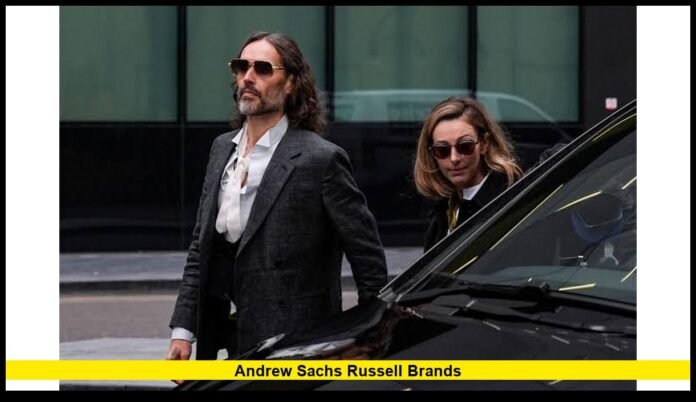

The andrew sachs russell brand controversy remains a landmark case in British media history, nearly two decades after a BBC Radio 2 broadcast triggered public outrage. In October 2008, comedian Russell Brand and presenter Jonathan Ross left offensive messages for veteran actor Andrew Sachs, turning an attempted interview into a national scandal. The incident damaged careers, prompted regulatory action and raised lasting questions about privacy, celebrity behavior and editorial responsibility. Brand’s conviction on four sexual offenses on November 5, 2026, has also brought renewed attention to his public history, although the criminal case is separate from the radio controversy.
Andrew Sachs: The Actor Behind the Headlines
Andrew Sachs was a respected British actor whose career extended across television, film, radio and theater. Born in Berlin in 1930, he moved to Britain with his family as a child.
American audiences may be less familiar with his name than British viewers, but his most famous performance became an enduring part of television comedy. Sachs played Manuel, the nervous Spanish waiter in Fawlty Towers, opposite John Cleese.
The character’s confusion, expressive reactions and comic timing made Sachs a memorable presence in the series. He continued acting in numerous productions throughout his career.
By the time of the 2008 controversy, Sachs was an established performer rather than a regular participant in celebrity shock comedy. His involvement in the incident came through an attempted radio interview, not a decision to take part in a prank.
Sachs died in November 2016 at age 86. His contribution to British entertainment remains much broader than the controversy that later became associated with his name.
What Happened During the 2008 Broadcast?
The incident began while Brand was presenting The Russell Brand Show on BBC Radio 2. The program had been recorded on October 15, 2008, and aired three days later.
The production had planned to include a telephone interview with Sachs. When the actor could not be reached as expected, Brand and Ross left messages on his answering machine.
Their comments soon became personal. They made crude references to Sachs’s granddaughter, Georgina Baillie, and discussed an alleged sexual encounter involving Brand and Baillie.
Ross shouted an offensive remark about the alleged encounter, while Brand continued the exchange with further jokes. The broadcast also included a song presented as an apology.
Instead of treating the unsuccessful interview as a routine production issue, the presenters made Sachs the target of material involving his family’s private life.
The episode proved especially controversial because Sachs had not consented to participating in the exchange. Baillie also became the subject of intimate claims aired to a large audience.
Why the Incident Caused Such Outrage
The controversy went beyond offensive language. Listeners questioned why two experienced entertainers considered the messages suitable for broadcast and why the BBC allowed the recording to air.
Sachs was placed in an uncomfortable public position without a meaningful opportunity to respond during the program. His granddaughter’s private life also became material for national entertainment coverage.
For critics, the incident illustrated the risks of confusing provocative comedy with acceptable broadcasting. Humor can challenge social conventions, but a real person’s privacy and dignity remain important considerations.
The BBC’s reputation intensified the backlash. As a public-service broadcaster, it faced expectations of editorial responsibility that extended beyond the preferences of individual presenters.
The story quickly developed from a radio controversy into a debate about management oversight, professional judgment and accountability in the entertainment industry.
BBC Response and Regulatory Consequences
After the incident attracted widespread attention, the BBC apologized to Sachs and reviewed the circumstances surrounding the broadcast.
The organization faced criticism over its editorial checks and its handling of the program. Investigations found serious failures in the way the material had been assessed and broadcast.
The BBC Trust identified breaches of editorial standards concerning privacy and offensive content. The broadcasting regulator Ofcom also found that the programs had violated its rules.
The BBC faced fines totaling £150,000 in connection with the scandal. The regulatory findings reinforced the principle that broadcasters remain responsible for the material they transmit, even when presenters intend it as comedy.
The case also prompted questions about the responsibilities of producers and managers. Pre-recorded programs require effective scrutiny, particularly when they contain personal attacks or potentially damaging allegations.
The episode became an example of how weak editorial oversight can create consequences far beyond a single broadcast.
How Russell Brand and Jonathan Ross Were Affected
The BBC suspended both presenters while the controversy was investigated.
Brand subsequently resigned from The Russell Brand Show. Ross apologized for his comments and later returned to broadcasting after his suspension.
The incident remained a prominent part of both men’s public histories. It also contributed to a wider discussion about the limits of shock humor on mainstream radio and television.
The scandal showed that professional success does not exempt entertainers from criticism or institutional discipline. High-profile presenters can attract audiences, but broadcasters must still assess whether their content meets editorial standards.
For Sachs and Baillie, the consequences were different. They became the focus of unwanted attention despite not controlling the recording or its distribution.
Russell Brand’s Latest Legal Developments
Brand’s legal situation took a separate and significant turn on November 5, 2026. A jury at Southwark Crown Court in London found him guilty of one count of rape and three counts of sexual assault involving four women.
The verdicts followed a four-week trial involving allegations of sexual offenses during Brand’s entertainment career. He was acquitted of two other rape charges and one charge of attempted indecent assault.
Brand denied the charges and maintained that he had not engaged in non-consensual sexual activity. The jury considered the evidence presented during the trial before reaching its verdicts.
The judge indicated that Brand faced a significant custodial sentence. Sentencing was scheduled for November 9, 2026.
These convictions concern criminal offenses and must not be confused with the 2008 Sachsgate controversy. The radio scandal concerned offensive messages, privacy and broadcasting standards; the criminal case concerned specific sexual offenses.
The distinction matters when examining Brand’s career. Each event has its own facts, proceedings and consequences.
Why Andrew Sachs and Russell Brand Remain Linked in Public Memory
The connection between Sachs and Brand endures because Sachsgate exposed a conflict between celebrity entertainment and basic standards of respect.
The broadcast became a warning about the consequences of allowing provocative material to pass through production without sufficient scrutiny. It also demonstrated how quickly public opinion can turn when a joke targets people who never agreed to participate.
For U.S. readers, the case offers a useful perspective on debates surrounding media ethics, public figures and personal privacy. Although broadcasting rules differ between countries, the underlying question remains familiar: how should entertainers balance creative freedom with responsibility toward others?
Sachs’s career deserves recognition for his acting achievements, especially his memorable performance in Fawlty Towers. The controversy is one part of his story, not the measure of his professional legacy.
Brand’s subsequent career and legal developments form a separate part of the wider public record. Keeping those events distinct allows readers to understand the facts without conflating a broadcasting scandal with criminal proceedings.
The lasting lesson is that fame does not remove the need for sound judgment. Broadcasters, presenters and public figures all face consequences when their actions affect other people.
What are your thoughts on celebrity accountability and the lasting impact of Sachsgate? Share your perspective in the comments and follow the latest verified developments.