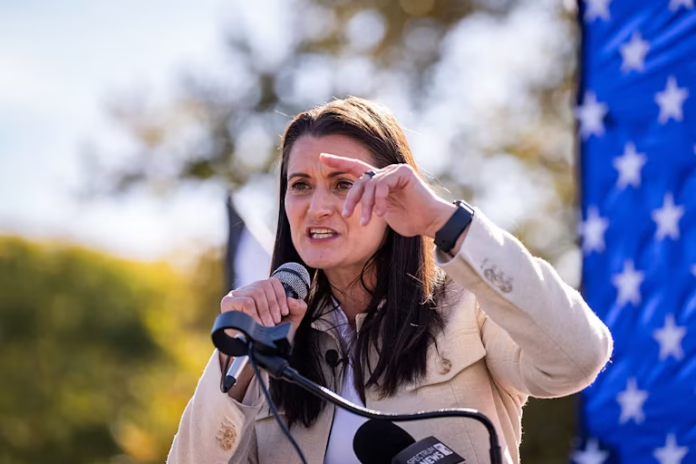

No, Republican Rep. Mike Lawler did not win reelection in 2026. Democrat Cait Conley defeated the two-term incumbent in New York’s 17th Congressional District on November 3, 2026, flipping the closely watched Hudson Valley swing seat.
Lawler conceded just before 11 p.m. on Election Night after calling Conley to congratulate her. He told supporters in Pearl River that remaining Westchester County ballots would not change the outcome: “When all of the votes are counted tomorrow in Westchester, it’s going to be pretty clear that we will be short.” Multiple outlets, including the New York Post, reported Conley leading by roughly 5–7 points in early counts (one report showed 53.3% to 46.6%). Unofficial Associated Press figures later showed Conley ahead approximately 52.2% to 47.7% with a majority of votes tallied, though full Westchester results were still being processed due to scanner issues.
Background on the NY-17 Race
New York’s 17th District covers all of Rockland and Putnam counties plus portions of Westchester and Dutchess. It is one of the state’s few true swing districts, with a large Jewish population (more than one in five residents) and a history of split-ticket voting. Lawler first won the seat in 2022 by defeating Democrat Sean Patrick Maloney and held it in 2024 despite a Democratic registration advantage (about 41% Democrats, 26% Republicans, and the rest unaffiliated among roughly 523,000 active voters).
Lawler, a Suffern native and former state assemblyman, positioned himself as a moderate suburban Republican. He served on the House Financial Services and Foreign Affairs committees and emphasized bipartisan work while maintaining strong pro-Israel credentials. He was endorsed by groups including AIPAC and the Republican Jewish Coalition.
Cait Conley, 41, is a West Point graduate, Army combat veteran (16 years of service, multiple deployments including Iraq and Afghanistan, three Bronze Stars), and former counterterrorism official who served as director for counterterrorism on the National Security Council. She entered politics as a first-time candidate, focusing on affordability, national security, and tying Lawler to President Donald Trump. She received endorsements from Democratic Majority for Israel and other progressive and mainstream Democratic groups.
The race was rated a toss-up by nonpartisan analysts and drew heavy national spending and attention as one of roughly 10 competitive seats that could help determine House control. Pre-election polls were tight, with some showing Lawler with a narrow edge.
Election Night Complications and Concession
Election Day was disrupted by ballot scanner malfunctions across Westchester County, which makes up about 40% of the district’s electorate. Machines rejected thousands of ballots due to a programming mismatch between early-voting and Election Day systems. Officials secured the ballots in emergency bags for later central counting under bipartisan oversight. No voters were turned away, and both campaigns stressed that every ballot would be counted.
Despite the incomplete Westchester count, Lawler conceded after seeing results from Rockland, Putnam, Dutchess, and partial Westchester returns. He led in the more Republican-leaning counties (for example, 55% in Putnam and a narrower edge in Dutchess) but not by enough to overcome Conley’s expected strength in Westchester. He noted he had never received a concession on Election Night in prior races and believed it was the right thing to do.
Conley celebrated in Pleasantville, declaring “We did it! We flipped New York-17.”
Implications for the House and National Politics
Conley’s victory represented a key Democratic pickup in the 2026 midterms amid a broader environment favoring Democrats. With Republicans holding a narrow 218-214 majority entering the cycle, flipping NY-17 contributed to Democratic gains and projections of a House majority shift. The seat’s status as a suburban battleground with a significant Jewish electorate also drew attention to debates over Israel policy, with both candidates staking pro-Israel positions (Conley distinguished herself by criticizing the Netanyahu government while affirming support for the alliance).
Lawler’s loss, despite his moderate branding and local roots, highlighted the challenges facing House Republicans in competitive districts during a midterm with low presidential approval. Democrats framed the race as a referendum on Trump-aligned governance and economic concerns.
As of early November 4, 2026, final certified results were still pending full Westchester tabulation, but the concession and consistent leads across reporting sources established Conley as the winner. The outcome adds to the narrative of a Democratic rebound in suburban New York and nationally, with lasting effects on the balance of power in the 120th Congress.
In short, Mike Lawler did not win. Cait Conley unseated him in a hard-fought NY-17 contest that helped reshape the House.