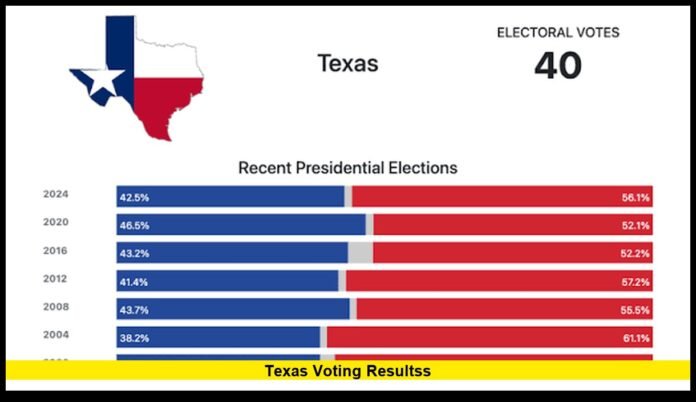

Texas voting results are becoming a major focus of the 2026 midterm elections as voters across the state decide important federal, statewide, and legislative contests on November 3. The election is attracting national attention because Texas plays a significant role in congressional politics, state government, and the broader political landscape. From the governor’s race to congressional district battles, the outcome will help shape political priorities in both Austin and Washington.
The election is particularly important because voters are choosing representatives who will influence decisions involving economic policy, immigration, education, healthcare, taxation, energy, and public safety. With millions of eligible voters across the state, the final outcome will depend on participation in major metropolitan areas, suburban communities, and rural counties.
As Election Day unfolds, preliminary vote totals are expected to provide an initial indication of candidate performance. However, election-night figures should not be confused with certified results. Close races may remain unresolved while election officials complete counting and verification procedures.
Why the 2026 Texas Midterms Are Receiving National Attention
Texas is one of the country’s most politically influential states. Its population gives it a substantial congressional delegation, while its statewide offices hold considerable authority over state policy.
The 2026 midterms could influence the balance of power in Congress and determine the political direction of Texas for the coming years.
Republicans and Democrats are competing for important positions, while independent and third-party candidates are also seeking support in selected contests.
The governor’s election is especially significant because the officeholder has considerable influence over state administration, legislative priorities, appointments, and the implementation of public policy.
Congressional elections are equally important. The results will contribute to determining which party controls the U.S. House of Representatives, affecting federal legislation, government oversight, and budget negotiations.
Governor’s Race Remains a Central Election Test
The contest for Texas governor is one of the defining races of the 2026 election. Republican incumbent Greg Abbott is facing Democratic nominee Gina Hinojosa and Libertarian candidate Pat Dixon.
The result will determine who leads the state’s executive branch and helps set the agenda for major policy decisions. Issues such as taxation, public education, border security, infrastructure, and economic development have been important subjects in Texas politics.
Voters should assess the final outcome through reported vote totals rather than assumptions based on party affiliation or past election performance. Texas has a diverse electorate, and individual counties can show different patterns from the statewide picture.
Congressional Races Could Influence Washington
Federal elections across Texas are also attracting attention as parties compete for seats in the U.S. House of Representatives.
The results from individual districts will determine which candidates represent Texans in Congress. Competitive districts can become particularly important if the national House majority is decided by a small number of seats.
District boundaries matter when interpreting these contests. A statewide candidate’s performance does not automatically indicate how congressional candidates will fare because each district has its own electorate and local concerns.
The U.S. Senate race is another major contest on the Texas ballot, featuring Republican Ken Paxton, Democrat James Talarico, and Libertarian Ted Brown, alongside certified write-in candidates.
State Legislative Elections Will Shape Austin’s Agenda
The Texas Legislature will be another important measure of the election’s outcome. Every Texas House seat is scheduled for election, along with 16 Texas Senate seats.
These contests will help determine the composition of the chambers responsible for passing state legislation and approving budgets. Education funding, property taxes, public safety, healthcare, and energy regulation could all feature in legislative debates after the election.
Local contests also deserve attention. Judicial races, county offices, and other positions can influence the administration of justice and public services in communities throughout the state.
Understanding the Latest Vote Count
Anyone tracking Texas voting results should distinguish between preliminary numbers and verified outcomes. Election officials may release results in stages as counties finish reporting their returns.
The timing of those updates can vary considerably. Large counties may need additional time to report all their ballots, while smaller counties may complete their initial reporting sooner.
Several factors help determine whether an apparent lead is meaningful:
- The number of votes reported so far.
- The margin separating the candidates.
- The counties and districts that have submitted totals.
- The number of ballots that remain outstanding.
- Whether election officials have completed the required procedures.
A race should not be described as officially decided merely because one candidate leads in an early count. Election-night projections and official certification serve different purposes.
The state results page available for this election lists the candidates but does not provide vote totals in its displayed results. Therefore, verified winners and final margins cannot be established from those figures alone.
What Comes After Election Day?
Once polls close and initial results begin arriving, election officials continue the work required to establish accurate returns. This includes completing applicable counting procedures, reconciling records, and conducting the legally required canvass.
If a contest is particularly close, the outcome may remain uncertain until additional information becomes available. Recounts or election challenges may be possible under the rules governing the specific race, but neither should be assumed simply because the margin is narrow.
The final results will determine which candidates take office and which political priorities receive greater influence in Texas government. The congressional outcomes will also contribute to the national balance of power.
For readers following the election, the most reliable approach is to evaluate confirmed numbers carefully and avoid treating speculation as a result.
The 2026 midterms represent an important moment for Texas politics, with consequences extending beyond Election Day. As the count progresses, statewide leadership, congressional representation, and legislative control will remain the central measures of the election’s impact.